Signs of Food Poisoning: Symptoms, Causes, and Treatment
You know that sinking feeling — the one that starts in your stomach and makes you instantly regret that last meal. Food poisoning hits millions of people every year, with the CDC (U.S. public health agency) estimating 48 million cases annually. Recognizing the early signs can help you act fast and recover faster, so let’s walk through what to watch for and what to do about it.
Annual food poisoning cases in the US: 48 million ·
Hospitalizations per year: 128,000 ·
Deaths per year: 3,000 ·
Most common causes: Norovirus, Salmonella, Campylobacter ·
Typical onset time: 1 to 48 hours
Quick snapshot
- The exact pathogen causing illness without lab testing (CDC)
- Whether symptoms are from food poisoning or another GI infection without a detailed exposure history (MedlinePlus)
- Focus on rest and oral rehydration (NIDDK)
- See a doctor if symptoms are severe or persist beyond 3 days (CDC)
Four key facts that define this illness — from onset time to who’s most at risk — give you a quick framework for understanding food poisoning.
| Fact | Detail |
|---|---|
| Typical onset | 1 to 48 hours after eating contaminated food (NHS) |
| Duration | Usually 1 to 3 days; some cases last longer (NHS) |
| Common pathogens | Norovirus, Salmonella, Campylobacter, E. coli (CDC) |
| At-risk groups | Children under 5, adults over 65, pregnant women, immunocompromised (CDC) |
What is food poisoning?
MedlinePlus (a service of the U.S. National Library of Medicine) defines food poisoning as an illness caused by swallowing food or water contaminated with bacteria, parasites, viruses, or toxins. The CDC (U.S. public health agency) stresses that symptoms depend on the type of germ — meaning a seafood toxin might hit you within 30 minutes while Campylobacter can take days.
What causes food poisoning?
- Bacteria: Salmonella, Campylobacter, E. coli O157:H7 — often from undercooked meat, unpasteurized milk, or contaminated produce (CDC)
- Viruses: Norovirus is the leading cause in the U.S., spread through contaminated food or surfaces (NHS)
- Parasites: Giardia and Cryptosporidium found in untreated water or improperly washed produce
- Toxins: Pre-formed toxins from Staphylococcus aureus or Bacillus cereus can cause rapid-onset vomiting (MedlinePlus)
What are common sources of contamination?
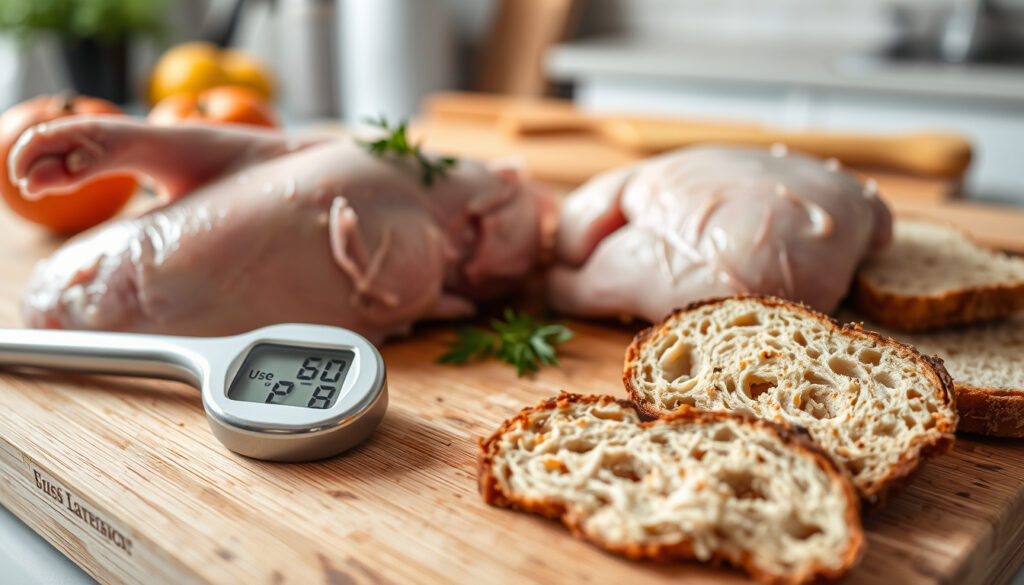
The NHS (U.K. health service) points to raw or undercooked meat, raw shellfish, unpasteurized dairy, eggs, and ready-to-eat foods like salads and deli meats. Cross-contamination in the kitchen — using the same cutting board for raw chicken then chopping vegetables — is a frequent culprit.
Nearly all cases of food poisoning are preventable with proper food handling, yet the CDC estimates 48 million Americans get sick each year. Kitchen habits — not grocery store sterility — are the biggest leverage point.
The implication: proper food handling and hygiene remain the most effective defense against food poisoning, despite the high annual case count.
What are the first signs of food poisoning?
The CDC (U.S. public health agency) lists diarrhea, stomach pain or cramps, nausea, vomiting, and fever as the most common symptoms. The NHS (U.K. health service) adds feeling generally unwell and a high temperature.
What are 6 symptoms of food poisoning?
Based on CDC and NHS guidance, the six hallmark signs are:
- Diarrhea (may be watery or bloody)
- Stomach cramps and abdominal pain
- Nausea and vomiting
- Fever and chills
- Headache and body aches
- Feeling tired or generally unwell
What are mild food poisoning symptoms?
Mild cases often involve just watery diarrhea and mild stomach discomfort, with no fever. The NIDDK (National Institute of Diabetes and Digestive and Kidney Diseases) notes that most people with mild symptoms recover at home without medical treatment.
What are the stages of food poisoning?
While not all cases follow a fixed pattern, a typical progression includes:
- Exposure: Ingesting the contaminated food or drink.
- Incubation: A symptom-free window ranging from 30 minutes to several days depending on the pathogen.
- Acute phase: Onset of diarrhea, vomiting, cramps — usually the worst 12–48 hours.
- Recovery: Gradual improvement over 2–7 days; lingering fatigue is common.
The NHS says most people feel better within a week.
The pattern: recognizing gastrointestinal symptoms early and acting quickly can prevent complications in most cases.
How quickly will food poisoning kick in?
Onset time varies wildly by pathogen. NHS (U.K. health service) states symptoms usually start within a few hours or a few days. CDC gives a range of 30 minutes to 6 weeks.
How soon after food poisoning do you vomit?
For toxins like Staphylococcus aureus, vomiting can begin within 30 minutes to 6 hours. For viral infections like norovirus, it’s typically 12–48 hours. The CDC notes that vomiting is more common with certain pathogens (norovirus, Bacillus cereus) than others (e.g., Salmonella often causes diarrhea first).
How long does food poisoning last?
Most cases resolve in 1–3 days. NHS says symptoms usually improve within a week. Infections from Campylobacter or Giardia may linger longer — up to 10 days or more — and the CDC advises seeing a doctor if diarrhea lasts more than 3 days.
Fast onset (under 6 hours) often points to a pre-formed toxin like Staph — severe vomiting but short-lived. Slower onset (1–5 days) suggests a replicating pathogen like Salmonella — the sickness may last longer but early rehydration buys you valuable recovery time.
What this means: the timing of symptom onset provides a clue to the likely pathogen, guiding both home care and decisions to seek medical help.
What is the fastest way to flush out food poisoning?
There’s no “flush” button — your body has to clear the pathogen itself. But you can support that process and prevent complications. NIDDK (U.S. digestive disease institute) ranks replacing lost fluids and electrolytes as the single most important treatment.
How to cure food poisoning fast?
- Rest your stomach: Avoid solid food for a few hours after vomiting starts (NHS)
- Sip clear liquids: Water, broth, or oral rehydration solutions. If vomiting is frequent, take small sips every 10 minutes (NIDDK)
- BRAT diet: Bananas, rice, applesauce, toast — bland foods that are gentle on the stomach (NHS)
- Avoid dairy, caffeine, alcohol, and fatty or spicy foods until fully recovered
What drink soothes food poisoning?
NHS recommends oral rehydration solution (ORS) — available as sachets at pharmacies — because it replaces both water and key electrolytes. Clear broth, diluted fruit juice, or sports drinks are second-best. Avoid plain water alone for severe dehydration because it lacks electrolytes.
What should I eat and drink when I have food poisoning?
Start with clear liquids. When you feel ready, try small portions of bland, low-fiber foods: crackers, toast, plain rice, bananas. The NIDDK says to return to a normal diet gradually over 2–3 days.
Over-the-counter anti-diarrheal medications like loperamide can make things worse if you have bloody diarrhea or a fever. The NIDDK advises against using them in those cases. Antibiotics are reserved for bacterial infections confirmed by a doctor.
The catch: While home remedies are effective for mild cases, severe symptoms require medical intervention to avoid dehydration and other complications.
What are the 4 C’s of food poisoning?
The 4 C’s are a prevention framework promoted by food safety authorities worldwide: Cleaning, Cooking, Chilling, and avoiding Cross-contamination. The NHS and CDC both emphasize these steps to reduce risk from common pathogens like Campylobacter and Salmonella.
What causes food poisoning? (Prevention-focused)
Food poisoning is caused by germs or toxins entering the body through contaminated food. The CDC identifies the top culprits as norovirus, Salmonella, Campylobacter, and E. coli. Prevention targets each link in the chain:
- Cleaning: Wash hands, utensils, and surfaces often (NHS)
- Cooking: Cook food to safe internal temperatures (e.g., 165°F for poultry)
- Chilling: Refrigerate perishables within 2 hours (the 2-hour rule)
- Cross-contamination: Keep raw meat separate from ready-to-eat foods
What is the 2 hour rule for food?
The CDC and NHS both state: refrigerate perishable food within 2 hours (1 hour if the ambient temperature is above 90°F). Bacteria multiply rapidly in the “danger zone” between 40°F and 140°F.
Following the 4 C’s could prevent most of the 48 million annual food poisoning cases in the U.S., according to CDC estimates. The simple act of chilling leftovers promptly — not letting them cool on the counter — eliminates the window for bacterial growth.
The implication: following the 4 C’s consistently can significantly reduce the risk of foodborne illness, but vigilance is key.
Steps to handle food poisoning at home
- Stop eating: Give your digestive system a break for a few hours after vomiting or severe diarrhea starts (NHS)
- Rehydrate: Sip oral rehydration solution, clear broth, or water frequently — don’t gulp (NIDDK)
- Introduce bland foods: After 6–12 hours without vomiting, try crackers, toast, bananas, or rice (NHS)
- Rest: Your body is fighting an infection — sleep helps recovery
- Know when to see a doctor: CDC says seek care if you have bloody diarrhea, fever over 102°F, frequent vomiting that prevents keeping liquids down, signs of dehydration (dry mouth, little or no urination, dizziness), or diarrhea lasting more than 3 days
The implication: Most food poisoning resolves on its own with simple home care, but red-flag symptoms should never be ignored. The NIDDK notes that hospital care may be needed for severe dehydration, hemolytic uremic syndrome, or paralysis — rare but serious complications.
What’s confirmed and what’s unclear about food poisoning
Confirmed facts
- Food poisoning results from ingesting pathogens or toxins (MedlinePlus)
- Diarrhea, vomiting, and abdominal cramps are hallmark symptoms (CDC)
- Most cases resolve without medical treatment (NIDDK)
- Rehydration is the cornerstone of home care (NHS)
What’s unclear
- Exact causative pathogen without laboratory testing (CDC)
- Whether symptoms are due to food poisoning or another gastrointestinal infection without a specific exposure history (MedlinePlus)
What this means: while many cases are straightforward, laboratory testing is often needed to confirm the exact cause, especially when symptoms are severe or atypical.
What the experts say
People with food poisoning usually recover without medical treatment, but some need hospitalization.
CDC (U.S. public health agency)
Food poisoning is caused by eating food contaminated with bacteria, viruses, or parasites.
NHS (U.K. health service)
Food poisoning is rarely a mystery — your body tells you something is wrong within hours or days. The mistake many people make is either dismissing mild symptoms or panicking when they appear. The truth sits in the middle: keep calm, prioritize hydration, watch for warning signs, and let your immune system do the rest.
For the millions who experience it each year, the choice is clear: learn the signs early, treat symptoms wisely, and call a doctor when the red flags wave — or risk a preventable emergency room visit.
Frequently asked questions
Can food poisoning be prevented?
Yes, to a large extent. Following the 4 C’s — Cleaning, Cooking, Chilling, and avoiding Cross-contamination — dramatically reduces risk. The CDC also recommends washing hands, cooking meat to safe temperatures, and refrigerating leftovers within 2 hours.
Is food poisoning contagious?
Some types are. Norovirus and Salmonella can spread through contaminated surfaces, food handling, or close contact. The CDC advises good hand hygiene and staying home while symptomatic to prevent spreading.
Should I take medication for diarrhea?
Not automatically. The NIDDK warns against using anti-diarrheal medicines if you have bloody diarrhea or fever, as they can trap harmful bacteria in your system. For watery diarrhea without fever, loperamide may be used in adults.
Can food poisoning cause fever?
Yes. Fever is a common symptom, especially with bacterial pathogens like Salmonella or Campylobacter. The CDC advises seeking medical care if the fever goes above 102°F.
What is the difference between food poisoning and stomach flu?
“Stomach flu” (viral gastroenteritis) is usually caused by norovirus or rotavirus and spreads from person to person. Food poisoning is caused by contaminated food or drink. The CDC says symptoms overlap, so a detailed history of what you ate is key to telling them apart.
When should I go to the emergency room for food poisoning?
The CDC lists these red flags: bloody diarrhea, fever higher than 102°F, frequent vomiting that prevents keeping liquids down, signs of severe dehydration (dry mouth, little or no urination, dizziness), and diarrhea lasting more than 3 days. For infants, older adults, or immunocompromised people, err on the side of caution.
More related posts
 Tom Ford Ombre Leather: Scent, Longevity & Best Versions Compared
 What Does ASMR Stand For? Definition & Slang
 Playoffs de la WNBA 2025 – Dates, Format, Teams & Results
 Sam Altman Net Worth 2026: How His $3.3B Fortune Is Built
 180 cm in Feet: Exact Conversion and Height Insights
 Olivia Cooke Movies and TV Shows: Complete Guide to Her Roles
 Average IQ in the USA: 98, State Rankings and Global Context
 Harry Potter and the Order of the Phoenix: In-Depth Guide
