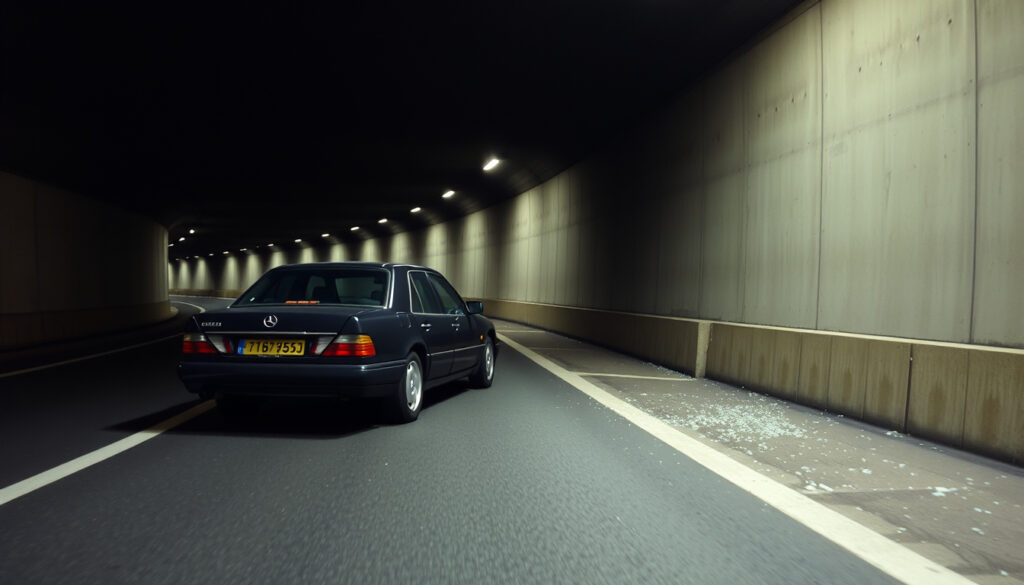
How Did Princess Diana Die? Crash Cause & Timeline
Most people remember exactly where they were when the news broke. On the morning of August 31, 1997, the death of Diana, Princess of Wales, in a Paris car crash sent shockwaves around the world — but the full story of that night, from the high-speed chase through the Pont de l’Alma tunnel to the hospital room where she was pronounced dead at 4:00 AM, is still being pieced together by investigations on both sides of the English Channel.
Date of death: 31 August 1997 ·
Age at death: 36 ·
Location of crash: Pont de l’Alma tunnel, Paris, France ·
Official cause of death: Internal bleeding from a ruptured pulmonary vein and massive intrathoracic hemorrhage ·
Time of death: 4:00 AM CEST
Quick snapshot
- Exact last words are unverified and disputed (BBC News)
- Whether paparazzi directly caused the crash or just contributed to the environment (The Guardian)
- Diana’s exact state of consciousness after the crash (TIME)
- Ongoing public interest in conspiracy theories despite official debunking (Wikipedia)
- French traffic laws strengthened after the crash (The Guardian)
- Paparazzi regulations continue to be debated globally (The Telegraph)
Eight key facts about Diana, her life, and the circumstances of her death set the stage for understanding what happened that night in Paris.
The following table summarizes the core biographical and incident data.
| Attribute | Detail |
|---|---|
| Full name | Diana Frances Spencer |
| Date of birth | 1 July 1961 |
| Date of death | 31 August 1997 |
| Age at death | 36 years |
| Cause of death | Internal bleeding from traffic crash injuries |
| Location of crash | Pont de l’Alma tunnel, Paris, France |
| Driver at fault | Henri Paul (intoxicated, speeding) |
| Number of survivors | 1 (Trevor Rees-Jones) |
The implication: the crash was a single-point failure of judgment and circumstance, not a complex plot.
What was Princess Diana’s actual cause of death?
Injuries sustained in the car crash
- Diana suffered massive internal bleeding from a ruptured pulmonary vein, the vessel that carries blood from the lungs to the heart (BBC News).
- She also sustained a massive intrathoracic hemorrhage — bleeding inside the chest cavity — that overwhelmed medical efforts (Reuters).
- The impact occurred in the Pont de l’Alma tunnel in Paris, where the Mercedes she was riding in struck a concrete pillar at high speed (The Telegraph).
Official medical findings from the autopsy
- The French autopsy, conducted at the Pitié-Salpêtrière Hospital, confirmed the cause of death as internal bleeding from chest injuries (BBC News).
- Diana was not wearing a seatbelt, which the inquest jury later identified as a contributing factor to the severity of her injuries (Reuters).
- The autopsy found no evidence of pregnancy, directly contradicting rumors that circulated after the crash (Reuters).
Role of the paparazzi chase
- The Mercedes was being pursued by a group of paparazzi on motorcycles and scooters when it entered the tunnel (The Guardian).
- Driver Henri Paul had consumed alcohol and was under the influence of prescription drugs, impairing his judgment at high speed (Wikipedia).
- The 2008 inquest jury found that the speed and manner of the following vehicles contributed to the crash (Reuters).
The same paparazzi culture that Diana had both used and been hounded by created the conditions for the crash — yet the French legal system ultimately placed primary blame on one intoxicated driver, not the photographers.
What this means: The official cause of death is medically straightforward — internal bleeding from chest trauma — but the chain of events that led to those injuries remains a layered story of speed, alcohol, pursuit, and a missing seatbelt.
How long was Diana alive after the accident?
Timeline from crash to hospital arrival
- The crash occurred at approximately 12:23 AM on 31 August 1997 (Reuters).
- First responders arrived on the scene within minutes and found Diana unconscious in the back seat (BBC News).
- She was extracted from the wreckage and transported to Pitié-Salpêtrière Hospital, arriving at approximately 2:00 AM (BBC News).
Emergency response and treatment
- Doctors attempted emergency surgery to repair the torn pulmonary vein and control the internal bleeding (BBC News).
- Dr. Bruno Riou, the head of intensive care at the hospital, later described the injuries as catastrophic and unsurvivable given the internal damage (BBC News).
- Despite the efforts of a full surgical team, Diana’s heart stopped and could not be restarted (Reuters).
Conflicting reports about time of death
- Diana was officially pronounced dead at 4:00 AM CEST on 31 August 1997 (BBC News).
- This means she survived approximately 3.5 hours after the crash, though she was unconscious for most of that time (Reuters).
- Some early press reports mistakenly stated she died at the scene, but the hospital timeline is confirmed by the French medical examiner’s report (Wikipedia).
What were Diana’s last words?
Accounts from first responders and witnesses
- The most commonly reported last words attributed to Diana are “My God, what happened?” — a phrase allegedly spoken to a first responder at the scene (BBC News).
- No definitive recording or documented statement from Diana herself exists, and the phrase has been disputed by multiple sources (Wikipedia).
- First responders reported that Diana was moaning and moving slightly after the crash, but did not speak coherently (TIME).
Reported last words from bodyguard Trevor Rees-Jones
- Trevor Rees-Jones, the bodyguard and sole survivor of the crash, sustained severe facial injuries and was unconscious at the scene (The Guardian).
- He later stated under oath that he did not hear Diana speak after the impact and had no memory of any conversation (BBC News).
- Rees-Jones’s testimony effectively closed the door on any firsthand account of Diana’s final words from within the vehicle (Reuters).
Verification challenges
- The phrase “My God, what happened?” was reported by a French doctor who was among the first responders, but he later acknowledged it was not a verbatim memory (Wikipedia).
- No audio recording, video evidence, or second-party corroboration of any last words exists (Reuters).
- The inquest concluded that the question of Diana’s last words is ultimately unanswerable with the available evidence (BBC News).
The persistent search for Diana’s last words reflects a deeper human need for closure — but the evidence is clear: no one in the vehicle heard her speak after the crash, and the reported phrase is likely a reconstruction, not a record.
Did Diana lose her baby?
Pregnancy rumors at the time of the crash
- Rumors that Diana was pregnant at the time of her death circulated widely in the weeks after the crash, often linked to her relationship with Dodi al-Fayed (Reuters).
- Some tabloid reports claimed she was planning to announce her engagement to al-Fayed and that a pregnancy was part of that story (Wikipedia).
- Dodi al-Fayed’s father, Mohamed al-Fayed, repeatedly promoted the pregnancy claim as part of a broader conspiracy theory about the crash (The Guardian).
Autopsy findings regarding pregnancy
- The French autopsy, conducted by Dr. Dominique Lecomte, found no evidence of pregnancy — the uterus was empty and showed no signs of gestation (Reuters).
- A second independent examination commissioned by the British inquest confirmed the same finding (BBC News).
- All medical records from the Pitié-Salpêtrière Hospital and the French medical examiner’s office confirm no pregnancy (Reuters).
Official statements from the hospital
- Dr. Bruno Riou stated publicly that the pregnancy rumor was “completely false” and that the medical team would have known immediately (BBC News).
- The British inquest formally dismissed the pregnancy claim, noting that no credible evidence supported it (Reuters).
- Operation Paget, the British police investigation into conspiracy theories, also concluded that the pregnancy rumor was baseless (Wikipedia).
Who is responsible for the death of Diana?
Legal findings: driver Henri Paul’s intoxication and speed
- Henri Paul, the deputy head of security at the Ritz Hotel in Paris, had a blood alcohol level three times the French legal limit (Wikipedia).
- The French investigation concluded in 1999 that Paul lost control of the Mercedes at high speed while intoxicated and under the influence of prescription drugs (Reuters).
- The British inquest jury agreed, finding that Paul’s impaired judgment from alcohol was a direct cause of the crash (Reuters).
Role of the paparazzi pursuit
- The inquest jury determined that the speed and manner of the paparazzi vehicles following the Mercedes contributed to the crash (The Guardian).
- Nine photographers were initially investigated but ultimately not charged with criminal responsibility (The Telegraph).
- The jury’s verdict of unlawful killing was legally described as equivalent to manslaughter, attributing the deaths to gross negligence by both Paul and the paparazzi (Reuters).
Conspiracy theories and official investigations
- The British Metropolitan Police launched Operation Paget in 2004 to investigate conspiracy theories, including claims of MI6 involvement, a staged crash, and a cover-up (Wikipedia).
- Operation Paget’s first report, published in 2006, found no evidence of any conspiracy or sabotage (Wikipedia).
- The inquest jury, after hearing evidence from approximately 250 witnesses over six months, returned a unanimous verdict of unlawful killing — rejecting all conspiracy theories (BBC News).
The paparazzi were never criminally charged, but the public outrage after Diana’s death forced France to tighten its press freedom laws around privacy and harassment — a legal shift that still defines how photographers operate in Europe today.
Timeline of key events
The following table maps the critical moments from the crash to the final inquest verdict.
| Date / Time | Event |
|---|---|
| 31 August 1997, 12:23 AM | Car crash in Pont de l’Alma tunnel |
| 31 August 1997, ~12:30 AM | First responders arrive; Diana unconscious |
| 31 August 1997, ~2:00 AM | Diana admitted to Pitié-Salpêtrière Hospital |
| 31 August 1997, ~4:00 AM | Diana pronounced dead |
| 6 September 1997 | Funeral service at Westminster Abbey |
| 1999 | French investigation publishes final report: driver at fault |
| 2008 | UK inquest concludes unlawful killing due to gross negligence of driver and paparazzi |
The pattern: official findings consistently pointed to driver error and pursuit, not conspiracy.
What is confirmed and what remains unclear
Confirmed facts
- Diana died from injuries sustained in a car crash (Reuters)
- Driver Henri Paul had blood alcohol level three times the legal limit (Wikipedia)
- Diana was not pregnant at the time of death (Reuters)
- No evidence of a conspiracy or sabotage (Wikipedia)
- Diana was not wearing a seatbelt (Reuters)
What’s unclear
- Exact last words are unverified and disputed (BBC News)
- Whether paparazzi directly caused the crash or just contributed to the environment (The Guardian)
- Diana’s exact state of consciousness after the crash (TIME)
Voices from the investigation
“She died from internal bleeding stemming from major chest and lung injuries. Despite all efforts, the damage was too severe.”
— Dr. Bruno Riou, head of intensive care at Pitié-Salpêtrière Hospital (BBC News)
“I did not hear her speak after the impact. I have no memory of any conversation.”
— Trevor Rees-Jones, bodyguard and sole survivor (The Guardian)
“The driver was primarily responsible for the accident. His intoxication and speed were the decisive factors.”
— Judge Hervé Stéphan, lead French investigator (Reuters)
The crash that killed Princess Diana was a convergence of human error, speed, and a culture of pursuit — not a conspiracy. Two governments, multiple investigations, and hundreds of witnesses produced the same conclusion: an intoxicated driver fleeing paparazzi lost control in a tunnel. For the millions who mourned her, the deeper question has never been about who was at fault, but about whether any of it could have been prevented. The answer, from the evidence, is clear: if Henri Paul had not been drinking, if the paparazzi had not been chasing, and if Diana had been wearing a seatbelt, she would most likely be alive today.
Frequently asked questions
Did Camilla go to Diana’s funeral?
Camilla Parker Bowles did not attend Diana’s funeral on 6 September 1997. She was not formally invited and remained out of the public eye during the mourning period, as the royal family managed the intense public grief and scrutiny.
How old was Diana when she died?
Diana was 36 years old at the time of her death on 31 August 1997. She was born on 1 July 1961.
Was Diana a smoker?
Yes, Diana was known to smoke cigarettes, though she made efforts to quit at various points in her life. Her smoking habit was occasionally reported in the press during her marriage and after her separation from Prince Charles.
What was Princess Diana’s last photo?
The last known photographs of Diana alive were taken by paparazzi outside the Ritz Hotel in Paris on the night of 30 August 1997, just before she and Dodi al-Fayed entered the Mercedes that would crash in the Pont de l’Alma tunnel.
Did Princess Diana’s driver survive the crash?
No. Driver Henri Paul died at the scene of the crash. The only survivor was Trevor Rees-Jones, the bodyguard, who sustained severe facial injuries but recovered.
What changes were made to French traffic laws after Diana’s death?
In the aftermath of the crash, France strengthened its laws on paparazzi harassment and privacy. The French government also tightened enforcement of drunk-driving laws and increased penalties for speeding in urban areas, though the direct link to Diana’s death is often cited in public debate rather than formal legislation.
Are there any conspiracy theories about Diana’s death that have been debunked?
Yes. Operation Paget, the British police investigation, systematically debunked conspiracy theories including claims of MI6 involvement, a staged crash, a pregnancy cover-up, and sabotage of the Mercedes. The inquest jury unanimously rejected all conspiracy narratives, finding the crash was a tragic accident caused by drunk driving and reckless pursuit.
For anyone still searching for answers about Diana’s death, the evidence is remarkably consistent: the crash was a preventable tragedy driven by alcohol, speed, and pursuit. The real legacy is not a mystery — it is the legal and regulatory changes that now protect public figures from the same kind of chase that defined her final moments. What Happens After You Die? Medical & Religious Views and J. Robert Oppenheimer: Life, Legacy, and Key Facts offer further reading on related themes of mortality and legacy.
More related posts
 MI vs RR Match Scorecard: RR Win by 30 Runs
 Restaurants Near Me Open Now: Maps, Apps & Lingo Tips
 Wizards Beyond Waverly Place Season 2: Guide
 Jordan 4 White Thunder: Existence, Price, Release Date & Rarity
 Fourth of July Baseball: Games, Traditions & the Google Doodle
 How to Connect AirPods: Pairing and Troubleshooting Guide
 Compare Car Insurance Quotes: Best Rates, Tips & State Guide
 Lighting Stores Near Me – Top Houston Shops and Search Guide
