Things to Do in New York: Budget, Safety & Local Laws
You’ve booked the flight, sorted the hotel, and now you’re staring at a map of Manhattan wondering how to squeeze everything in without blowing your budget. It’s a common New York dilemma: the city offers more than any one trip can hold, but with a little planning you can see the highlights, eat well, and keep your wallet intact—this guide breaks down costs, must-see spots, a day-by-day plan, and a few local rules that might surprise you.
Annual visitors to NYC: 62 million (2023) · Average hotel cost per night: $250 · Number of museums in NYC: Over 80 · Average daily food budget for a traveler: $50–$100
Quick snapshot
- Statue of Liberty & Ellis Island (National Park Service (U.S. monument authority))
- Central Park (Central Park Conservancy (nonprofit park steward))
- Times Square (Tripadvisor (traveler reviews platform))
- Empire State Building (Empire State Building (official site))
- Walk the High Line (The High Line (public park operator))
- Visit the New York Public Library (NYCgo (official tourism marketing))
- Explore Chelsea Market (Chelsea Market (official site))
- Free ferry to Staten Island (Taverna Travels (travel blog))
- Broadway show (Time Out New York (city guide))
- Rooftop bars with skyline views (Time Out New York (bars guide))
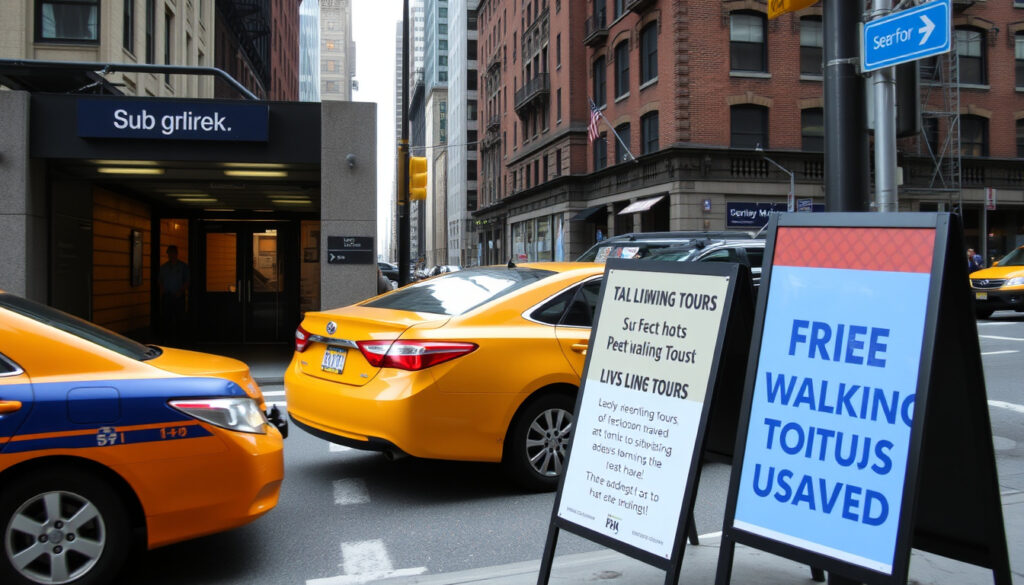
- Neighborhood walking tours (Greenwich Village, Williamsburg) (NYCgo (tour listings))
- Brooklyn Bridge walk at sunset (NYC Department of Transportation (city infrastructure agency))
- Buy a MetroCard for unlimited rides (MTA New York City Transit (transit authority))
- Book attractions in advance (NYCgo (planning tips))
- Stay in Midtown or near subway lines (NYCgo (Midtown guide))
- Check NYC’s paid sick leave policy if you work locally (NYC Department of Consumer and Worker Protection (consumer protection agency))
New York City packs a lot into 302.6 square miles. Here are the essential numbers to know before you go.
| Category | Value | Source |
|---|---|---|
| Population | 8.4 million | U.S. Census Bureau (federal statistics agency) |
| Area | 302.6 sq mi (783.8 km²) | Wikipedia (encyclopedic reference) |
| Founded | 1624 | Wikipedia (encyclopedic reference) |
| Boroughs | 5 (Manhattan, Brooklyn, Queens, The Bronx, Staten Island) | NYC.gov (city government portal) |
| Annual visitors | 62 million (2023) | NYCgo (official tourism marketing) |
| Average hotel rate | $250 per night | Lonely Planet (travel guide publisher) |
Is $1000 enough for 4 days in New York?
Four days in New York can cost anywhere from $600 to well over $2,000 depending on your choices. The key is knowing where the dollars go.
Budget breakdown for 4 days in New York
- Accommodation: $200–$300 per night for a mid-range hotel; budget options like hostels can drop to $80–$150. (Lonely Planet (travel accommodation guide))
- Transportation: A 7-day unlimited MetroCard costs $33 and covers subways and buses. (MTA (transit fare authority))
- Food: Budget $50–$100 per day for three meals; street food and pizza slices keep costs low. (Time Out New York (cheap eats guide))
- Attractions: Statue of Liberty ferry $24, Metropolitan Museum of Art $25 (pay-what-you-wish for NY residents). (National Park Service (fees page), Metropolitan Museum of Art (admission policy))
How to save money on attractions and food
- Use free attractions: Central Park, the High Line, Brooklyn Bridge walk, Staten Island Ferry.
- Take advantage of pay-what-you-wish hours at museums like the Met and the Whitney.
- Cook meals if staying in an Airbnb or hostel with kitchen access.
- Bring a reusable water bottle – tap water is safe and free.
A tight $1,000 budget means sacrificing flexibility – skip taxis, book hostels early, and be ready to walk. The payoff: you’ll see the real city, not just the tourist corridors.
The implication: a $1,000 budget demands discipline, but with the right choices, it’s achievable.
What can’t you miss in New York?
Some landmarks define New York so deeply that skipping them feels like you didn’t go. Here’s the shortlist, broken into three categories.
Iconic landmarks
- Statue of Liberty and Ellis Island – Ferry access starts at $24. Reserve pedestal or crown tickets well in advance. (National Park Service (monument fees))
- Central Park – Free and open daily; walk from 59th to 110th Street for the full experience. (Central Park Conservancy (park management))
- Times Square – Overwhelming by design, but you have to see it once. Best at night. (Tripadvisor (visitor reviews))
- Empire State Building – Observation deck tickets from $44; book online to avoid queues. (Empire State Building (official site))
Museums and cultural institutions
- Metropolitan Museum of Art – $25 suggested admission; NY residents can pay what they wish. (Met Museum (admission policy))
- American Museum of Natural History – Suggested admission $23; pay-what-you-wish for NY residents.
- Whitney Museum of American Art – Located at 99 Gansevoort Street, near the High Line. (Whitney Museum (visitor info))
Hidden gems and local favorites
- DUMBO’s Washington Street view of the Manhattan Bridge – free and Instagram-famous. (NYC Parks (Brooklyn Bridge Park details))
- Bryant Park and the New York Public Library’s main branch – close to each other and free. (NYCgo (free itinerary))
- Greenwich Village and SoHo walking tours – discover historic streets and independent shops.
The pattern: you can cover the essentials in 4 days without spending a fortune on admission fees. The catch is that Times Square and the Empire State Building will test your patience with crowds.
What to do in 4 days in New York?
A well-planned itinerary keeps you moving through neighborhoods instead of backtracking. Here’s a sample schedule that balances free and paid attractions.
Day 1: Downtown and Financial District
- Morning: Walk the Brooklyn Bridge from Brooklyn to Manhattan (free). (NYC DOT (bridge info))
- Late morning: Visit the 9/11 Memorial (free) and museum (paid). (9/11 Memorial & Museum (memorial info))
- Afternoon: Take the Staten Island Ferry for a free view of the Statue of Liberty. (Taverna Travels (budget tip))
- Evening: Explore the Seaport District and have dinner in the Financial District.
Day 2: Midtown and Central Park
- Morning: Stroll through Central Park – start at 59th Street, see Bethesda Fountain and Bow Bridge. (Central Park Conservancy (map and highlights))
- Late morning: Visit the Metropolitan Museum of Art on the park’s eastern edge.
- Afternoon: Walk down Fifth Avenue to Rockefeller Center and Times Square.
- Evening: Catch a Broadway show (tickets from $60 for rush or lottery). (Time Out New York (Broadway guide))
Day 3: Brooklyn and cultural hotspots
- Morning: Cross the Brooklyn Bridge (or take the subway) to DUMBO. Walk Washington Street for the iconic bridge photo. (NYC Parks (Brooklyn Bridge Park))
- Late morning: Explore Brooklyn Bridge Park and grab a coffee in Brooklyn Heights.
- Afternoon: Head to Williamsburg for vintage shops and street art.
- Evening: Return to Manhattan via the East River ferry or subway.
Day 4: Additional highlights and relaxation
- Morning: Walk the High Line from Gansevoort Street to 34th Street (free). (The High Line (visit page))
- Late morning: Visit Chelsea Market for food and shopping.
- Afternoon: Choose between the Whitney Museum or a round of shopping in SoHo.
- Evening: Sunset at Gantry Plaza State Park in Queens for a free skyline view. (NYC Parks (Gantry Plaza State Park))
The implication: this packed schedule maximizes free attractions, but requires stamina.
Where to avoid staying in NYC?
Most tourist areas are safe, but some neighborhoods have higher crime rates or are poorly connected by subway.
Neighborhoods with higher crime rates
- Parts of the Bronx (especially Hunts Point and Mott Haven) – less frequented by tourists and with elevated crime stats. (Wikipedia (crime by borough))
- Brownsville and East New York in Brooklyn – historically higher crime rates, though some blocks are improving.
- Areas far from subway lines – long walks at night can feel unsafe even in lower-crime zones.
Tips for choosing safe accommodation
- Stick to Midtown, Upper West Side, Upper East Side, Chelsea, or Greenwich Village. These are tourist-friendly and well-lit.
- Check NYC Crime Maps (city government data) for block-level statistics.
- Read recent hotel reviews on TripAdvisor or Booking.com for safety comments.
- Avoid booking Airbnbs in empty industrial zones – even if cheap, they can be isolating.
Why this matters: a bad neighborhood choice can add $20–$30 daily in taxi fares to get to attractions, erasing your budget savings.
Even in safe areas, keep valuables secure in crowds – Times Square and the subway are prime pickpocket zones. NYC’s 24-hour subway means you can get anywhere, but late-night cars can be empty. Use the same street smarts you would in any big city.
What is the 20 hour rule in New York?
New York City’s Paid Safe and Sick Leave Law requires most employers to provide paid sick leave to employees who work in the city.
Overview of NYC’s Paid Safe and Sick Leave
- Employers with 5 or more employees must provide up to 20 hours of paid sick leave per year. (NYC Department of Consumer and Worker Protection (official law overview))
- Employers with fewer than 5 employees must provide unpaid sick leave of the same amount.
- Leave can be used for medical appointments, family care, or safety reasons (e.g., domestic violence).
- Accrual rate: 1 hour of sick leave for every 30 hours worked, up to 20 hours per year.
Who qualifies and how to use it
- All part-time and full-time employees who work in New York City are covered, including domestic workers.
- Employees can start using leave after 90 days of employment.
- No reason to provide a doctor’s note unless the absence is more than 3 consecutive days.
- If you’re visiting and working remotely for an out-of-state employer, the law generally does not apply – but if you work for a NYC-based employer even occasionally, check your rights.
The implication for visitors: if you pick up freelance work while in town, you may be entitled to paid sick leave. It’s a good local protection to know about, even for short stays.
Upsides
- Unmatched variety of free attractions and world-class museums
- Excellent public transportation – you don’t need a car
- Neighborhood diversity – each borough offers a different vibe
- 24-hour city – something is always open
Downsides
- High accommodation costs – budget travel requires planning
- Crowds and queues at major attractions
- Can feel overwhelming for first-time visitors
- Some neighborhoods have safety concerns after dark
What we know and what’s still unclear
- Statue of Liberty is located on Liberty Island. (National Park Service)
- Central Park is free to enter. (Central Park Conservancy)
- MetroCard $33 for 7-day unlimited ride. (MTA)
- Brooklyn Bridge can be walked for free. (NYC DOT)
- Exact cost of a 4-day trip varies greatly depending on accommodation and dining choices.
- Safety perception of specific neighborhoods can change over time.
- Availability of free museum hours can shift seasonally – always check ahead.
“New York City welcomed 62 million visitors in 2023, reaffirming its status as a top global destination.”
— NYC Tourism Board spokesperson (NYCgo (official tourism statistics))
“I managed 4 days in NYC on $900 by staying in a budget hostel in Long Island City, eating street food, and using the subway. Free attractions like the High Line and Brooklyn Bridge made it possible.”
— Budget travel blogger (Taverna Travels (personal budget report))
“Under New York City law, employers must provide up to 20 hours of paid sick leave per year to covered employees who work in the city.”
— NYC Department of Consumer and Worker Protection (NYC DCWP (official consumer protection agency))
For the budget-conscious first-time visitor, the choice is clear: plan your free attractions and walking routes in advance, or blow your budget on taxis and last-minute tickets. New York rewards preparation – and punishes spontaneity with higher prices.
Related reading: **What to Do Near Me** · **Dreams Royal Beach Punta Cana Review**
carriegreenzinn.com, tripadvisor.com, theglobetrotterguys.com, youtube.com, migratingmiss.com
For travelers looking to maximize their experience without overspending, a detailed 3-day NYC itinerary offers practical advice on attractions and local regulations.
Frequently asked questions
What is the best time of year to visit New York?
Spring (April–June) and fall (September–November) offer mild weather and fewer crowds. December is magical but expensive and crowded.
Are there free walking tours in NYC?
Yes, several companies offer free walking tours (tip-based) covering neighborhoods like Greenwich Village, SoHo, and Lower Manhattan. Check NYCgo’s tour listings.
How much does a Broadway show cost?
Full-price tickets range from $80–$300. Rush tickets and lotteries sell for $30–$50 on the day of performance. (Time Out New York (Broadway tips))
What is the best way to get around NYC?
The subway is the fastest and cheapest option. A 7-day unlimited MetroCard ($33) is ideal for tourists. Walking is great for compact neighborhoods. Avoid taxis in heavy traffic. (MTA (transit authority))
Is New York safe for solo travelers?
Yes, especially in tourist-heavy areas. Use the same precautions as in any big city: keep valuables hidden, avoid empty subway cars late at night, and stay in well-lit neighborhoods.
What are the best neighborhoods for nightlife?
Lower East Side, East Village, Williamsburg, and Hell’s Kitchen offer bars, clubs, and live music. Cover charges vary; many places are free before 10 PM.
More related posts
 What Internet Is Available at My Address? | Broadband Checker
 How Does Bitcoin Work? Blockchain, Mining, and Investing
 Stuffed Bell Pepper Recipe: Tips, Fillings & Mistakes
 Playoffs de la WNBA 2025 – Dates, Format, Teams & Results
 Walgreens Photo Promo Code (2026): 50%, 60%, 70% Off Codes
 Catherine the Great Furniture: The Erotic Cabinet Mystery
 The Simpsons Marge Simpson: Voice, Family, Age & Season 37
 Under Sink Water Filter Guide: Do They Work & Which Is Best
