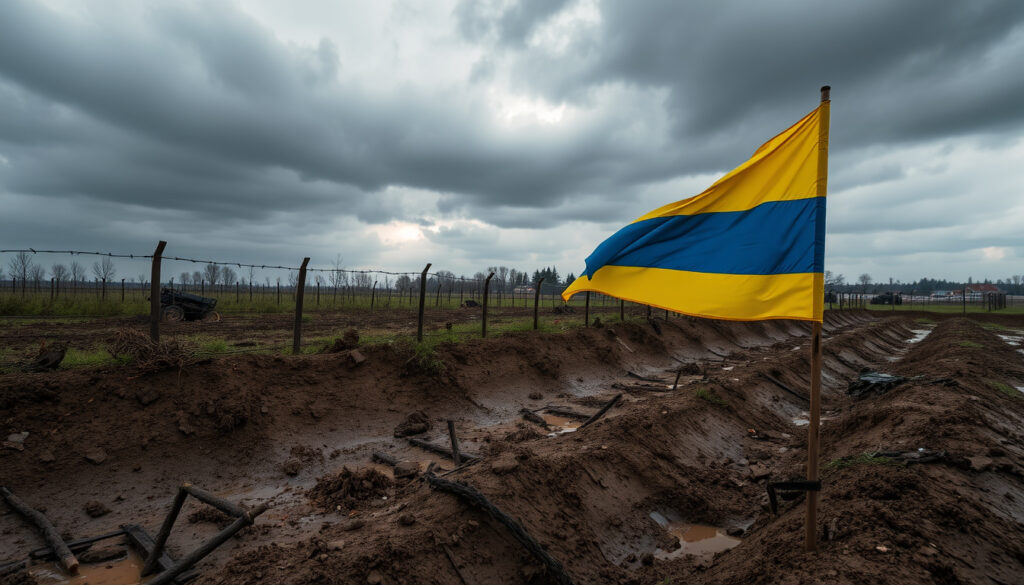
Ukraine War News Today – Key 2025 Developments
The information available for this report reflects developments through late 2025. Given that the current date is April 13, 2026, readers should note that the most recent data spans the period ending December 2025. This means this summary cannot account for events occurring in early 2026. The verified facts presented here draw from documented sources and reflect what was established as of late 2025.
The conflict between Russia and Ukraine continued to evolve through the latter part of 2025, with significant military activity occurring across multiple fronts. Russian forces accelerated their territorial gains compared to the previous year, while Ukraine sought to strengthen its air capabilities through international partnerships. Civilian populations remained under pressure from sustained strikes targeting critical infrastructure.
What is the Latest News on the Ukraine War Today?
As documented through late 2025, the territorial situation showed Russian forces making measurable advances. Throughout 2025, Russian military operations captured approximately 4,831 square kilometers of Ukrainian territory, representing roughly 0.8% of Ukraine’s total land area. This represented a notable acceleration in the pace of advances compared to 2024. By December 2025, Russian units had pushed approximately 15 kilometers toward Slovyansk and had likely secured control of Siversk, positioned about 30 kilometers from that city.
On the strategic level, Russian forces implemented an evolved operational framework that emphasized sustained battlefield air interdiction campaigns, tactical interdiction operations, infiltration tactics, and coordinated small group assaults. These methods facilitated faster advances particularly during the autumn months. The average daily advance across all fronts reached approximately 0.24 kilometers in 2025, surpassing the pace recorded in 2024.
- Russian forces captured 4,831 square kilometers in 2025, representing an acceleration from the previous year
- Russian troops advanced approximately 15 kilometers toward Slovyansk by December 2025
- Siversk likely fell under Russian control by late December 2025
- The average daily advance reached 0.24 kilometers across all fronts
- Russia sustained approximately 416,570 casualties throughout 2025
- Ukrainian forces faced significant manpower shortages affecting strategic decisions
- International military support continued through agreements such as the French Rafale deal
| Fact | Details | Source |
|---|---|---|
| Territorial Gains | 4,831 square kilometers captured in 2025 | Institute for the Study of War |
| Daily Advance Rate | Approximately 0.24 kilometers per day | Institute for the Study of War |
| Long-Range Drones | Over 54,000 launched against Ukraine in 2025 | Institute for the Study of War |
| Missiles Fired | More than 1,900 missiles launched in 2025 | Institute for the Study of War |
| Russian Casualties | 416,570 documented by Ukrainian General Staff | Ukrainian General Staff |
| Civilian Deaths | More than 53,000 documented | Documented reports |
| Military Injuries | Approximately 1.25 million | Documented reports |
| French Jets | Agreement for 100 Rafale aircraft over 10 years | Documented reports |
Key Military Updates from Ukraine Frontlines Today
The operational landscape through late 2025 reflected Russian forces employing a revamped tactical approach. Rather than relying primarily on massed armored formations, Russian commanders shifted toward sustained battlefield air interdiction campaigns combined with tactical interdiction operations. Infiltration tactics and coordinated small group assaults proved particularly effective in achieving advances across multiple sectors.
Weapons and Strike Operations
Russian forces deployed an extensive arsenal of long-range strike weapons throughout 2025. The volume of drone attacks reached unprecedented levels, with more than 54,000 long-range drones launched against Ukrainian territory. Alongside these, more than 1,900 missiles were fired at targets across the country. The scale of individual strike packages also intensified, with a record-setting attack occurring on September 6-7, 2025, when 810 drones and 13 missiles were deployed in a single operation.
Throughout the fall and winter months, Russian strikes concentrated heavily on Ukraine’s energy infrastructure, aiming to disrupt power supplies to civilian populations and military facilities. Railway networks also faced intensified attacks as Russian planners sought to degrade Ukraine’s logistics capabilities and supply chain operations.
Throughout 2025, Russian forces executed 18 separate strike packages containing more than 500 projectiles each. The most intensive single operation involved 810 drones combined with 13 missiles deployed over a 48-hour period.
Russian Casualties and Operational Costs
According to Ukrainian General Staff data, Russian forces incurred approximately 416,570 casualties during 2025. This figure translated to an average of roughly 78 casualties for every square kilometer gained during the year. By late 2025, Russian forces were sustaining estimated monthly losses of 15,000 to 20,000 soldiers killed and wounded on a regular basis.
Ukraine War Casualties, Impact, and International Response Today
The human cost of the conflict continued to mount through 2025. Relentless Russian attacks drove civilian casualties past 53,000 documented deaths, while military injuries reached approximately 1.25 million across Ukrainian forces. These figures reflect the grinding intensity of combat along multiple frontlines and the devastating effects of strikes on populated areas and civilian infrastructure.
Ukrainian Manpower Challenges
Ukraine faced significant manpower shortages throughout the latter part of 2025, according to documented reports. These shortages forced military commanders to divert troops from some sectors to reinforce others, and in certain areas, strategic withdrawals became necessary. The strain on Ukrainian forces underscored the broader challenge of maintaining defensive lines against an adversary willing to accept high casualty rates in exchange for incremental territorial gains.
Documented reports from late 2025 indicated that Ukrainian forces were managing significant personnel shortages, necessitating difficult operational decisions regarding force allocation and defensive positioning across active frontlines.
International Military Support
Despite ongoing challenges, Ukraine continued to secure international military support. A significant agreement reached with France involved the procurement of 100 Rafale fighter jets to be delivered over a 10-year period. This deal represented a substantial commitment to strengthening Ukraine’s air defense and strike capabilities through advanced Western military hardware.
Broader international responses to the conflict included continued sanctions against Russia and diplomatic efforts through bodies such as the United Nations. Military aid packages from NATO member states provided additional support for Ukrainian defensive operations, though the specifics of individual contributions evolved throughout the period.
Expert Analysis and Verified Reports on Ukraine War Today
Analysts tracking the conflict through late 2025 identified several key patterns. The acceleration of Russian territorial gains despite heavy casualties suggested a strategy willing to sustain significant personnel losses in exchange for incremental advances. The shift toward drone-centric strike operations, combined with infiltration tactics rather than large-scale mechanized assaults, represented a notable adaptation in Russian operational methods.
Operational Effectiveness
The Institute for the Study of War documented that Russian advances during autumn 2025 demonstrated improved tactical performance compared to earlier periods of the conflict. The combination of battlefield air interdiction to suppress Ukrainian defenses, followed by small unit infiltration and coordinated assaults, proved more effective than previous approaches relying heavily on massed armored movements. This methodological evolution allowed Russian forces to capture terrain at a faster rate while maintaining relatively lower equipment losses despite higher personnel costs.
Strategic Implications
The concentration of Russian strikes on energy infrastructure and railway networks reflected a strategic intent to degrade Ukraine’s capacity to sustain military operations and maintain civilian services. By targeting logistics nodes and power generation facilities, Russian planners sought to create cascading effects that would compound military pressure with civilian hardship.
For broader context on how governments respond to such crises, resources on the 3 Branches of Government – Roles Powers Checks Explained can provide insight into the institutional frameworks through which international responses are formulated and executed.
Timeline of Key Ukraine War Events Today
The following timeline reflects documented events through late 2025. Due to the temporal scope of available research, this sequence captures significant milestones from the latter part of 2025 rather than developments from early 2026.
- Early 2025 — Russian forces begin implementing revamped operational framework emphasizing battlefield air interdiction and infiltration tactics
- Autumn 2025 — Acceleration of Russian advances along multiple frontlines; average daily advance rate increases significantly
- September 6-7, 2025 — Record strike operation: 810 drones and 13 missiles deployed against Ukrainian targets
- Fall 2025 — Intensified strikes on energy infrastructure and railway networks
- December 2025 — Russian forces reach approximately 15 kilometers from Slovyansk; Siversk likely captured
- Late 2025 — France-Ukraine agreement finalized for 100 Rafale fighter jets over 10 years
Established Facts and Remaining Uncertainties
| What We Know | What Remains Unclear |
|---|---|
| Russian forces captured 4,831 square kilometers in 2025 | Precise current frontline positions as of April 2026 |
| Average daily advance was approximately 0.24 kilometers | Whether Russian offensive momentum has continued, slowed, or reversed in 2026 |
| 54,000+ drones and 1,900+ missiles launched in 2025 | Updated casualty figures for both sides in early 2026 |
| Russian casualties totaled approximately 416,570 through late 2025 | Current status of ongoing international aid negotiations |
| France agreed to supply 100 Rafale jets | Whether additional agreements have been reached since late 2025 |
| Civilian casualties exceeded 53,000 through late 2025 | Updated civilian impact figures for recent strikes |
This report is based on information through December 2025. The current date is April 13, 2026, meaning significant developments may have occurred that are not reflected in this summary. Readers seeking current frontline updates should consult the latest reporting from BBC News, Reuters, or other established news organizations with correspondents in the region.
Context and Background
The conflict between Russia and Ukraine, which began with Russia’s full-scale invasion in February 2022, has evolved through multiple phases. By late 2025, the war had settled into a pattern of attritional combat along extended frontlines, with both sides sustaining high casualties in exchange for limited territorial changes. Russian forces, despite substantial losses, continued to press forward in eastern Ukraine while maintaining pressure through long-range strikes targeting civilian infrastructure.
International involvement in the conflict has taken multiple forms, including direct military aid, sanctions regimes, and diplomatic initiatives. Organizations such as NATO have played roles in coordinating support among member states, while bilateral agreements like the French-Ukrainian fighter jet deal have provided specific capability enhancements. The President of Ukraine’s official website has served as a source for documenting official statements and policy positions throughout the conflict.
Sources and Expert Perspectives
The factual basis for this report draws from multiple categories of sources. Military analysis organizations including the Institute for the Study of War provided detailed assessments of operational developments and tactical patterns. Ukrainian General Staff data supplied figures on Russian casualties and territorial changes. International news organizations including Kyiv Post contributed reporting from within Ukraine, while wire services offered additional verification capacity.
The Institute for the Study of War documented that Russian forces adopted a revamped operational framework emphasizing sustained battlefield air interdiction campaigns, tactical interdiction operations, infiltration tactics, and coordinated small group assaults, which facilitated faster advances in autumn 2025.
— Institute for the Study of War, December 2025 Assessment
Ukrainian General Staff data indicated Russian forces incurred 416,570 casualties during 2025, averaging approximately 78 casualties per square kilometer gained throughout the year.
— Ukrainian General Staff, Reported Data
Summary
The most recent verified information about the Ukraine conflict extends through December 2025, meaning this summary cannot provide confirmed details about events occurring in early 2026. Through late 2025, Russian forces accelerated their territorial gains, capturing approximately 4,831 square kilometers while sustaining an estimated 416,570 casualties. The human cost remained severe, with civilian deaths exceeding 53,000 and military injuries reaching approximately 1.25 million. International support continued through agreements such as the French Rafale deal, though Ukraine faced significant manpower challenges that affected defensive operations. For historical context related to how similar events have been portrayed in media, readers may find the Chernobyl Miniseries – Plot, Cast, Accuracy and Facts resource informative regarding the intersection of dramatic storytelling and documented history.
Is the Ukraine war escalating today?
Based on available data through late 2025, Russian forces were accelerating territorial gains compared to the previous year. However, this report cannot confirm whether escalation has continued, stabilized, or de-escalated during early 2026 due to the absence of verified data from that period.
What cities are most affected by the conflict today?
Documented developments through late 2025 showed the heaviest combat occurring near Slovyansk and Siversk in eastern Ukraine. Energy infrastructure strikes affected multiple cities across the country, while railway networks serving military logistics faced repeated attacks.
What international aid has Ukraine received?
Through late 2025, Ukraine had secured agreements including a deal with France for 100 Rafale fighter jets over 10 years. Military aid from NATO member states continued, though specific contents of individual packages varied and evolved throughout the period.
How many casualties has Russia sustained?
Ukrainian General Staff data reported approximately 416,570 Russian casualties during 2025, averaging roughly 78 casualties for every square kilometer gained during that period.
What is Russia’s strategy in Ukraine?
Through late 2025, Russian operations relied heavily on drone and missile strikes targeting energy infrastructure and logistics networks, combined with tactical ground advances using infiltration methods and coordinated small unit assaults rather than large mechanized formations.
Are Ukrainian forces still holding their positions?
Documented reports from late 2025 indicated Ukrainian forces were managing significant manpower shortages that affected force allocation decisions. While strategic withdrawals occurred in some sectors, defensive operations continued across multiple frontlines.
Where can I find the latest verified news on Ukraine?
Current reporting is available from Reuters, BBC News, and other established international news organizations with correspondents in Ukraine. The information in this report reflects data through December 2025 and should not be considered current for events occurring in 2026.
More related posts
 Karate Kid Legends Cast – Stars, Roles, Franchise Ties
 Is Nancy Guthrie Alive – Verified Facts and Background
 How Old is Nezuko? Real Age Explained – Demon Slayer Guide
 Solo Leveling Season 2: Episodes, Ending & Season 3
 Dodgers vs Milwaukee Brewers Matches: History & Records
 McDonald’s Land Air and Sea Burger: Calories, Price, Review
 What Is a Woman? Dictionary, Medical, and Legal Definitions
 Cancer Lymph Nodes in Neck: Symptoms, Prognosis, Treatment
