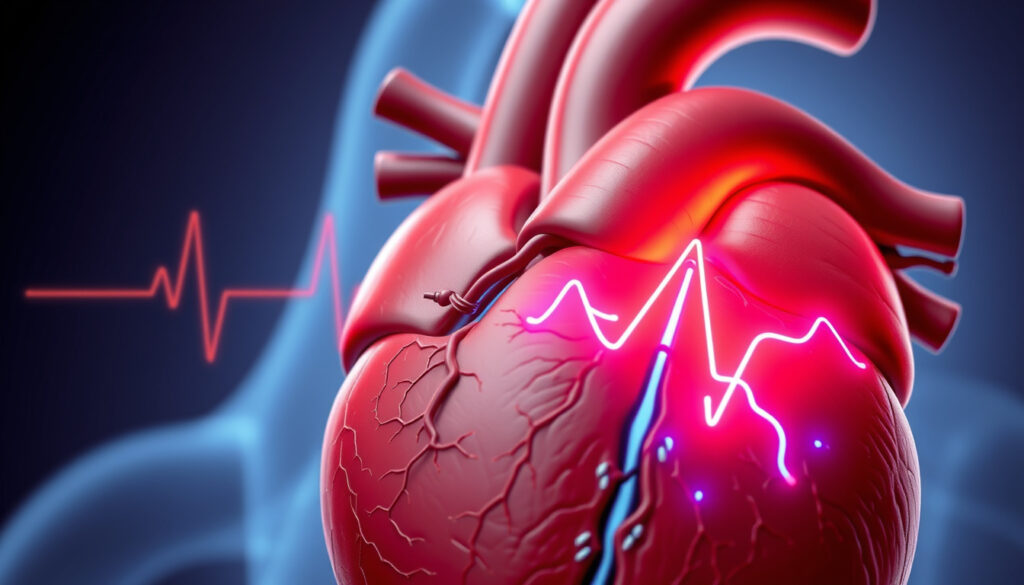
What Is AFib? Atrial Fibrillation: Symptoms, Causes, Treatment
That sensation could be atrial fibrillation (AFib)—the most common heart rhythm disorder with a hidden risk of stroke that many people don’t realize until it’s too late. If you’ve ever felt your heart flutter, skip a beat, or race for no obvious reason, you might have wondered what’s going on inside your chest.
Estimated prevalence in U.S.: ~6 million people (CDC) ·
Annual stroke risk increase: 5-fold ·
Leading modifiable risk factor: untreated high blood pressure ·
Typical heart rate during AFib: 100–175 beats per minute ·
Recurrence rate after first episode: up to 50% within 1 year
Quick snapshot
- Irregular heart rhythm (NHS (UK public health authority))
- Starts in upper chambers (NHS (UK public health authority)) (NHS (UK public health authority))
- Can cause blood clots (Merck Manual Professional Edition)
- Palpitations (NHS (UK public health authority))
- Fatigue (Merck Manual Professional Edition)
- Shortness of breath (NHS (UK public health authority))
- Dizziness (NHS (UK public health authority))
- Age >60 (NHS (UK public health authority))
- High blood pressure (Merck Manual Professional Edition)
- Obesity (NHS (UK public health authority))
- Sleep apnea (NHS (UK public health authority))
- Medications (NHS (UK public health authority))
- Cardioversion (Merck Manual Professional Edition)
- Ablation (NHS (UK public health authority))
- Lifestyle changes (NHS (UK public health authority))
Five key facts about atrial fibrillation at a glance.
| Fact | Detail |
|---|---|
| Formal medical name | Atrial fibrillation |
| Type of arrhythmia | Supraventricular tachyarrhythmia |
| Affected population (U.S.) | ~2% of people under 65; ~9% over 65 |
| Common diagnostic test | Electrocardiogram (ECG/EKG) |
| First-line stroke prevention | Anticoagulation (blood thinners) |
The pattern: risk climbs sharply with age, and the same test that first spotted AFib a century ago still remains the standard today.
What is a fib in medical terms?
Key takeaway: AFib is an electrical wiring problem that turns heart’s upper chambers into a chaotic quiver, raising stroke risk fivefold. Patients who recognize the symptom and start treatment can dramatically cut their odds of a disabling stroke.
Defining atrial fibrillation (AFib)
Atrial fibrillation — often called AFib — is a heart rhythm disorder where the upper chambers (atria) quiver chaotically instead of contracting effectively. The NHS (UK national health authority) describes it as a problem with the heart’s electrical system that makes the heart beat irregularly and often too fast. Instead of a steady sinus rhythm, electrical signals fire in a disorganized storm, and the atria never fully empty.
Think of the heart as a two-pump system: AFib turns the upper pump into a bag of worms, quivering without purpose. The result is blood pools, clots form, and the downstream pump (the ventricles) races to keep up.
How AFib differs from a normal heart rhythm
A normal heartbeat starts in the sinoatrial node and spreads smoothly. In AFib, multiple chaotic signals compete, producing an irregularly irregular pattern. Men and women over 55 are at increased risk, and AFib may be discovered incidentally in people who have no symptoms at all, according to the Merck Manual Professional Edition.
Why AFib increases stroke risk
When the atria don’t contract, blood can stagnate, especially in a pouch called the left atrial appendage. The Merck Manual Professional Edition states that these stagnant pools can form thrombi (clots) that travel to the brain. AFib boosts stroke risk about fivefold, making anticoagulation the cornerstone of prevention.
The implication: every irregular heartbeat is a clot waiting to happen if left untreated.
How serious is being in AFib?
Key takeaway: AFib patients who ignore the condition face a fivefold stroke risk and eventual heart failure, but those who stick with anticoagulation and blood‑pressure control can expect a near‑normal lifespan.
Short-term risks: stroke and blood clots
The most immediate danger is an embolic stroke. A clot that forms in the heart can lodge in a cerebral artery, cutting off blood supply. The 2014 AHA/ACC/HRS guideline recommends using the CHA2DS2-VASc score to estimate risk (NCBI Bookshelf, U.S. National Library of Medicine). Oral anticoagulation is indicated for scores of 2 or higher.
Long-term risks: heart failure and chronic fatigue
Over time, the ventricles wear out from racing inefficiently. Chronic AFib can weaken the heart muscle enough to cause heart failure. Patients often report debilitating fatigue and exercise intolerance. The NHS (UK national health authority) lists breathlessness and dizziness among the common symptoms that reduce quality of life.
Impact on life expectancy
With appropriate treatment — especially anticoagulation — many people with AFib maintain a normal lifespan. The catch: untreated or poorly managed AFib significantly shortens life expectancy because of stroke and heart failure risks. The ACC guideline summary (Journal of the American College of Cardiology (peer‑reviewed cardiology journal)) highlights that stroke-risk modifiers such as AF burden and blood‑pressure control matter most for patients at intermediate risk.
AFib isn’t a death sentence — it’s a call to action. The difference between a managed and an unmanaged case is the difference between a near-normal lifespan and one cut short by a preventable stroke.
The takeaway: managing AFib aggressively with anticoagulation and risk‑factor control is what converts a high‑risk condition into a manageable chronic disease.
What are the warning signs of AFib?
Key takeaway: Palpitations and exertional shortness of breath are classic clues, but silent AFib is equally dangerous. Routine pulse checks during doctor visits catch many cases that patients never noticed.
Common symptoms: palpitations, shortness of breath, fatigue
Most people describe a fluttering, pounding, or racing sensation in the chest. The Merck Manual Professional Edition lists palpitations, weakness, effort intolerance (dyspnea), and presyncope as typical. Some patients notice they can’t climb stairs without gasping, even if their lungs are clear.
Less common symptoms: chest pain, dizziness, fainting
Chest tightness or pain may accompany an AFib episode, though it’s less common. The NHS (UK national health authority) notes that faintness and lightheadedness can occur, especially when the heart rate is very high or blood pressure drops.
Warning signs at night
Nocturnal symptoms — waking up gasping, feeling your heart race while lying still — can indicate more severe arrhythmia. These symptoms warrant prompt evaluation because they suggest the heart is struggling even at rest.
Silent AFib is just as dangerous as the symptomatic kind. Routine pulse checks during doctor visits catch many cases that patients never noticed.
What this means: whether you feel every skipped beat or none at all, the stroke risk is the same — so diagnostic vigilance matters.
What are triggers for AFib?
Key takeaway: Untreated high blood pressure is the single most powerful modifiable trigger. Patients who get their BP under control can dramatically reduce episode frequency and stroke risk.
Lifestyle triggers: alcohol, caffeine, stress, sleep deprivation
Binge drinking is a well-known trigger. The Merck Manual Professional Edition lists alcohol bingeing as a common association. Caffeine affects some people but not all — the evidence is mixed. Stress, dehydration, and poor sleep can all lower the threshold for an episode.
Medical triggers: high blood pressure, sleep apnea, thyroid disorders
High blood pressure is the single most common modifiable risk factor. The NHS (UK national health authority) identifies hypertension, heart failure, valve disease, hyperthyroidism, diabetes, and sleep apnea as key associated conditions.
Untreated high blood pressure is the biggest modifiable trigger for AFib. A patient with hypertension who isn’t on medication is playing Russian roulette with their heart rhythm.
The biggest trigger: untreated hypertension
High blood pressure stretches the atrial walls, making them more irritable and prone to chaotic firing. The Merck Manual Professional Edition lists hypertension as the most common underlying cause. Managing blood pressure can reduce episode frequency dramatically.
Control your blood pressure, and you’ve removed the single most powerful trigger for AFib.
How do they fix an AFib?
Key takeaway: Treatment has moved from one‑size‑fits‑all drugs to a personalized toolbox: rate/rhythm control, anticoagulation, cardioversion, and ablation. For many patients, ablation can be curative.
Medications: rate/rhythm control and anticoagulation
Treatment has three goals: control how fast the heart beats (rate control), restore normal rhythm (rhythm control), and prevent strokes (anticoagulation). The NHS (UK national health authority) states that medicines are the first line, with beta-blockers and calcium channel blockers used for rate control. Blood thinners like DOACs (direct oral anticoagulants) reduce stroke risk by about 70%.
Cardioversion (electrical or chemical)
If medications don’t restore normal rhythm, doctors can reset the heart with a controlled electrical shock (electrical cardioversion) or strong antiarrhythmic drugs (chemical cardioversion). The Merck Manual Professional Edition notes that both approaches aim to convert AFib back to sinus rhythm.
Catheter ablation and surgical procedures
For patients who don’t respond to medication, catheter ablation is a minimally invasive procedure that scars the small areas of heart tissue causing the chaotic signals. The first catheter ablation for AFib was performed in 1998. Today, pulsed field ablation — FDA-approved in 2024 — is the latest advancement. The Lancet Regional Health (peer‑reviewed medical journal) summary recommends DOACs as the preferred anticoagulants for stroke prevention.
The implication: AFib treatment has evolved from a one-size-fits-all drug regimen to a personalized toolkit where ablation can be curative for many patients.
“Atrial fibrillation is an irregular and often rapid heart rhythm that can lead to blood clots, stroke, heart failure, and other heart-related complications.”
“The single most important step in stroke prevention for AFib is identifying low-risk patients first, then offering anticoagulation to everyone with one or more risk factors.”
— The Lancet Regional Health (peer‑reviewed medical journal)
“AFib is often not a disease in itself but a consequence of another condition affecting the heart or body.”
— NHS (UK national health authority)
Confirmed facts
- AFib increases stroke risk fivefold (Merck Manual Professional Edition)
- High blood pressure is the leading modifiable risk factor (NHS (UK public health authority))
- Anticoagulation reduces stroke risk by ~70% (NCBI Bookshelf (U.S. National Library of Medicine))
- AFib affects ~6 million people in the U.S. (CDC (U.S. public health agency))
- People aged 55+ and men are at higher risk (NHS (UK public health authority))
What’s unclear
- Exact triggers vary widely between individuals — no universal list exists
- Optimal timing for ablation vs. medication first is still debated among cardiologists
- Long-term effects of newer ablation technologies (pulsed field) are not yet fully known
- Whether all patients with AFib require anticoagulation regardless of CHA2DS2-VASc score remains a point of discussion (low-risk patients may not need it)
- The optimal heart rate target for rate control is not universally agreed
pcna.net, heart.org, heart.org, agingresearch.org, acc.org, thrombosis.org, uab.edu
Frequently asked questions
What is the difference between AFib and a normal arrhythmia?
A normal arrhythmia might include occasional premature beats. AFib is a sustained, chaotic quivering of the atria that prevents effective contraction and carries stroke risk.
Can AFib go away on its own?
Some people have paroxysmal AFib that stops without intervention. However, it often recurs — up to 50% of patients have another episode within a year. It rarely “cures” itself permanently.
Does caffeine cause AFib?
The evidence is mixed. For most people, moderate caffeine intake does not trigger AFib. However, some individuals are sensitive — it varies.
Is AFib hereditary?
Genetics plays a role. If a first-degree relative has AFib, your risk is higher. Specific gene mutations have been identified, but family history is one of many risk factors.
What should I do if I think I have AFib?
See a doctor promptly. An ECG can diagnose AFib. If you experience chest pain, fainting, or stroke symptoms (face drooping, arm weakness, speech trouble), call 911 immediately.
Can exercise help control AFib?
Yes, regular moderate exercise reduces AFib risk by controlling blood pressure and weight. But endurance athletes can paradoxically increase their risk — balance is key.
For the estimated 6 million Americans living with AFib — and the millions more who don’t yet know they have it — the choice is clear: get screened, treat underlying conditions like high blood pressure, and start anticoagulation if your CHA2DS2-VASc score warrants it. Ignoring the fluttering won’t make it go away, but acting on it can mean the difference between a preventable stroke and a long, healthy life.
More related posts
 Thursday Murder Club Books: Complete Reading Order Guide
 Which of the Following Statements Is True? Guide & Examples
 Star Trek Picard Cast: Full Cast Guide for All Seasons
 Things to Do in San Antonio: Top Attractions & Itineraries
 How Does Bitcoin Work? Blockchain, Mining, and Investing
 Sam Altman Net Worth 2026: How His $3.3B Fortune Is Built
 Gas Prices Near Me Ireland: Cheapest Stations & Days
 Texas Rangers vs Seattle Mariners Match Player Stats – 2024 Series Breakdown
