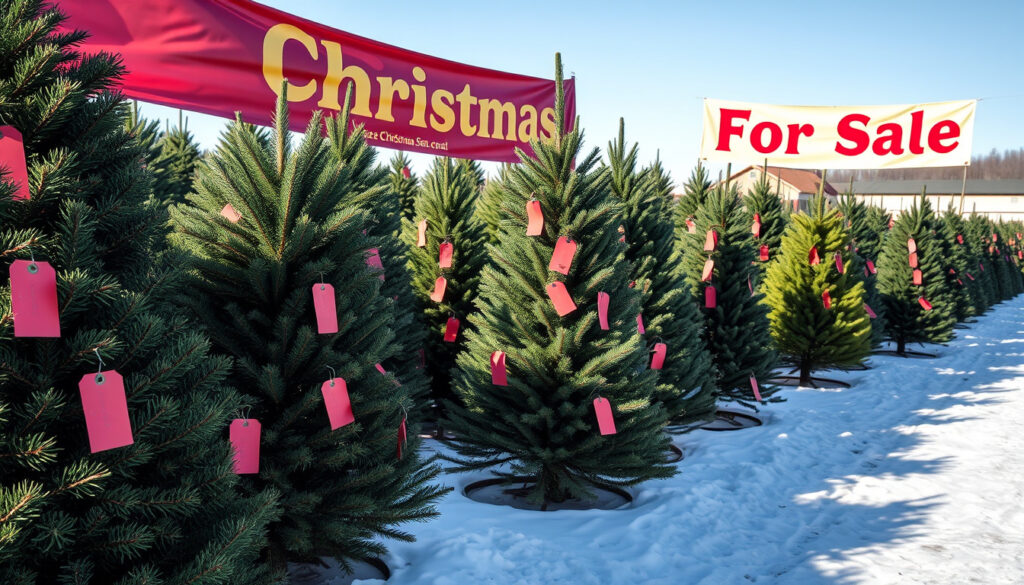
Christmas Trees Near Me: Cost, Deals & Where to Buy (2025)
Few things signal the start of the holiday season like the search for the perfect Christmas tree. Whether you’re after a real fir from a local lot or a reusable artificial model from a big-box retailer, the choices – and the costs – vary more than you might expect.
Real tree average cost (2025): $80–$100 (LiveNow Fox) ·
Artificial tree deals start at: $29.99 (Bob Vila) ·
Tariff-driven price increase expected: 10–20% (ABC News)
Quick snapshot
- Average $80–$100 for a 6-foot tree (LiveNow Fox) ((Fox 13 News))
- Farm-grown trees under $100; urban lots up to $300 (Fox 13 News)
- Premium species like Fraser fir cost toward the higher end (Fox 13 News) ((Fox 13 News))
- Home Depot and Lowes both sell real and artificial trees (Bob Vila)
- Competitive pricing, average $50–$120 (MPR News)
- Weekly ads and clearance events drive the best deals (Bob Vila) ((Bob Vila))
- Top brands for realism: Balsam Hill and National Tree Company (NBC Select)
- PE needles look more natural than PVC (Good Housekeeping)
- Premium artificial trees cost $109–$600+ (Good Housekeeping) ((NBC Select))
- Artificial trees appear in stores online from late October (LiveNow Fox)
- Peak selection: first week of December (LiveNow Fox)
- After-Christmas clearance sales on artificial models (Bob Vila)
Four distinct cost categories, one clear pattern: the earlier you buy, the more you pay for real trees, but the better the selection. Artificial trees, meanwhile, reward patience with deep discounts after Christmas.
| Category | Value |
|---|---|
| Most popular real tree | Fraser fir (LiveNow Fox) |
| Average real tree price (2024) | $80 (LiveNow Fox) |
| Top artificial tree brand for realism | Balsam Hill (NBC Select) |
| Home Depot best-selling artificial tree | 7.5-ft Prelit Fraser Fir (Bob Vila) |
How much should a real Christmas tree cost?
A real Christmas tree in 2025 will set you back anywhere from $40 to well over $100, depending on size, species, and where you live.
Most standard 6–7 foot trees fall between $80 and $100 at retail lots.
LiveNow Fox confirms that national average at farms hovers around $80–$100.
Average pricing by region and tree species
- Fraser fir: $75–$100 for a 6–7 ft tree (Fox 13 News)
- Noble fir and other premium species: up to $150 (Fox 13 News)
- Smaller tabletop trees (4–5 ft): as low as $30–$40 (Architectural Digest)
- Urban areas like Manhattan: prices can hit $300 (Fox 13 News)
For the average buyer in a mid-sized U.S. city, a 6-foot Fraser fir will cost about $80–$100. Suburban lots are generally cheaper than urban pop-ups, so driving 20 minutes can save you $40–$60.
Budget-friendly buying tips
- Shop the weekend after Thanksgiving for the widest selection at the lowest markup (LiveNow Fox)
- Look for independent farm lots that offer you-pick at lower prices than pre-cut retailers (Fox 13 News)
- Ask about “second cut” deals later in the season (MPR News)
The implication: real trees are a per-year expense. If you plan to buy for more than four seasons, an artificial tree may pay for itself.
How early can I buy a real Christmas tree?
Most real tree lots open the day after Thanksgiving, but that doesn’t mean you should rush. LiveNow Fox reports that the best selection appears during the first week of December, after the initial rush but before stocks run thin.
Optimal timing for freshness and selection
- Fresh-cut trees last 4–6 weeks indoors if watered regularly (Fox 13 News)
- A tree bought the first week of December stays fresh through Christmas and into early January (Fox 13 News)
- Waiting until mid-December risks limited availability, especially for large trees (LiveNow Fox)
When tree lots and farms open each season
- Artificial trees: on shelves by late October (Bob Vila)
- Real tree lots: open late November, usually the Friday after Thanksgiving (LiveNow Fox)
- U-cut farms: often open weekends from late November through mid-December (Fox 13 News)
If you want a specific shape or height, shop the first week of December. For the lowest price, wait until mid-December when sellers discount remaining inventory. But risk is real: popular sizes vanish fast.
The pattern: early birds pay full price for premium selection; patient shoppers get bargains but gamble on stock.
Does Lowes or Home Depot have better Christmas trees?
Both major retailers offer competitive pricing and similar quality, but subtle differences in species and promotion timing can sway your decision. Bob Vila notes that Home Depot often promotes Fraser fir and Noble fir, while MPR News indicates Lowes tends to stock Nordmann fir and Scotch pine.
| Feature | Home Depot | Lowes |
|---|---|---|
| Typical real tree species | Fraser fir, Noble fir (Bob Vila) | Nordmann fir, Scotch pine (MPR News) |
| Price range (real, 6–7 ft) | $50–$120 (Bob Vila) | $50–$120 (MPR News) |
| Popular artificial tree | 7.5-ft Prelit Fraser Fir (Bob Vila) | Holiday Living products (MPR News) |
| Clearance timing | Cyber Monday deals, post-Christmas (Bob Vila) | Mid-December discounts (MPR News) |
One pattern: both stores keep prices close, so the best choice may come down to which tree species you prefer and how close each store is to you.
Home Depot offers a wider variety of pre-lit artificial trees that sell out quickly. Lowes tends to have better stock of real trees later in the season. Check weekly ads – both retailers publish circulars that can save you 15–20%.
The bottom line: your choice between the two retailers should be guided by tree species preference and local stock, as pricing is essentially comparable.
Which fake Christmas tree looks the most real?
Artificial trees have come a long way from the cartoonish PVC cones of decades past. Today’s top-tier models use PE (polyethylene) needles that mimic the texture and color of real firs.
NBC Select ranks Balsam Hill and National Tree Company as the most realistic brands.
NBC Select
Top brands for realistic artificial trees
- Balsam Hill: known for True Needle technology; prices $399–$999 (Good Housekeeping)
- National Tree Company: affordable realism; $109–$599 (NBC Select)
- King of Christmas: premium handcrafted options; $500–$1,200 (Architectural Digest)
- Home Accents (Home Depot brand): good mid-range value; $129–$349 (Bob Vila)
Key features: PE needles, branch count, height options
- PE needles are molded from real branch tips, giving a natural curl and shine (Good Housekeeping)
- Look for trees with at least 2,000 branch tips per 7-foot tree for fullness (NBC Select)
- Height options: 4 ft (tabletop) to 12 ft (grand foyer). 6.5–7.5 ft fits most living rooms (Good Housekeeping)
- Pre-lit models save time; many use 260+ LED lights (Target)
The catch: realism costs. A Balsam Hill tree that fools your guests will set you back $400–$1,000, while a $109 National Tree Company model still looks good from five feet away.
What is the Christmas tree everyone wants from Home Depot?
Home Depot’s 7.5-ft Prelit Fraser Fir artificial tree has become a cult favorite, and for good reason. According to Bob Vila, it regularly sells out by early December. Priced at $200–$300, it offers realistic PE needles, 800+ branch tips, and built-in LED lighting – a combination that’s hard to beat.
Most popular Home Depot artificial tree model
- Height: 7.5 ft (fits 8–9 ft ceilings) (Bob Vila)
- Needle type: PE (polyethylene) for realistic texture (Good Housekeeping)
- Lights: 650+ warm white LED lights, color-changing options (Bob Vila)
- Price: $249 (regular) – often on sale for $199 (Bob Vila)
Why it sells out quickly each year
- Best value in its class: PE realism at mid-range pricing (NBC Select)
- Early December stock disappears; by mid-December it’s often gone (Bob Vila)
- Home Depot restocks online but shipping dates slip (LiveNow Fox)
If you see the 7.5-ft Prelit Fraser Fir in stock, buy it immediately. Prices rarely drop below $199 before clearance, and waiting for a sale means probably missing out.
Here’s how this Home Depot artificial tree compares to a typical real tree:
| Specification | Real Tree (Fraser Fir, 6–7 ft) | Artificial Tree (7.5 ft Prelit Fraser Fir) |
|---|---|---|
| Average cost | $80–$100 (LiveNow Fox) | $200–$300 (Bob Vila) |
| Lifespan | 4–6 weeks (Fox 13 News) | 10+ years (reusable) |
| Realism | Natural | Better with PE needles (Good Housekeeping) |
| Maintenance | Water daily, keep from heat (Fox 13 News) | None |
| Availability | Late Nov – Mid Dec (LiveNow Fox) | Late Oct – Dec (LiveNow Fox) |
| Seasonal commitment | Annual purchase | One-time investment |
| Top brand for realism | Fraser fir (most popular) (LiveNow Fox) | Balsam Hill, National Tree Company (NBC Select) |
Timeline signal
Key dates in the Christmas tree buying season include the following phases:
| Period | Event |
|---|---|
| Late October | Artificial trees appear in stores online (LiveNow Fox) |
| Day after Thanksgiving | Most real tree lots open (LiveNow Fox) |
| First week of December | Peak selection – best time to buy (LiveNow Fox) |
| Mid-December | Many farms and lots run low on large trees (Fox 13 News) |
| Late December / January | After-Christmas sales on artificial trees (Bob Vila) |
The pattern: real trees have a five-week window; artificial trees give you two buying peaks – early for full price, late for deep discounts.
What’s next
Tariff pressures could raise overall Christmas decor prices by 10–20% in 2025, ABC News reports, citing the American Christmas Tree Association. That means a $299 tree in 2024 might cost about $359 in 2025. Early buying may hedge against these increases, especially for artificial models.
Staying informed about these trends can help you maximize value.
Frequently asked questions
Can I buy a real Christmas tree online and have it delivered?
Yes. Many big-box retailers and local farms offer delivery. Home Depot, Lowes, and Amazon deliver real trees in select areas. Expect a $10–$30 delivery fee (Bob Vila).
How do I keep my real Christmas tree fresh through the holidays?
Cut ½ inch off the base, place it in water within an hour, and water daily. Keep away from heat vents and fireplaces. A fresh tree with proper care lasts 4–6 weeks (Fox 13 News).
What is the most allergy-friendly Christmas tree?
Artificial trees are generally best for allergy sufferers. If you prefer real trees, consider a fir or spruce – they produce less mold than pines. Wash the tree before bringing it inside to reduce allergens (Architectural Digest).
Are Home Depot or Lowes Christmas trees pre-cut or you-pick?
Both offer pre-cut trees in-store. Some locations also partner with local farms for you-pick events. Check your local store for details (Bob Vila).
Which artificial trees are fire-resistant?
Most artificial trees sold in the U.S. are labeled “flame-retardant” and meet UL standards. Look for tags that confirm fire resistance. Balsam Hill and National Tree Company models are certified fire-resistant (NBC Select).
How tall should my Christmas tree be for an 8-foot ceiling?
A 6.5–7.5 foot tree works best for an 8-foot ceiling. Allow at least 6 inches of space for the tree topper. For taller ceilings, add 1 foot of tree height per foot of ceiling above 8 feet (Good Housekeeping).
Do tree farms let you cut your own tree?
Yes. Many u‑cut farms operate on weekends from late November through mid-December. Prices are often lower than pre-cut retail lots. Bring a saw and gloves. Search “u-cut Christmas tree farm near me” for local options (Fox 13 News).
Related reading
- When Is Thanksgiving This Year? 2026 Date & History – Know the exact timing of Thanksgiving to plan your tree-buying weekend.
- Best Guiso de Lentejas Near Me – Explore more seasonal recipe guides for your holiday table.
More related posts
 Danessa Myricks Blurring Balm: What It Does & How to Use
 Blow the Man Down: Shanty Meaning and 2019 Film Review
 What Is a Woman? Dictionary, Medical, and Legal Definitions
 Earned Income Tax Credit Ireland: Who Qualifies and How to Claim
 Ulta Credit Card Payment: How to Pay Online, by Phone & Quick Pay
 Cost of Dental Implants in Ireland: Prices 2026 Guide
 Texas Rangers vs Seattle Mariners Match Player Stats – 2024 Series Breakdown
