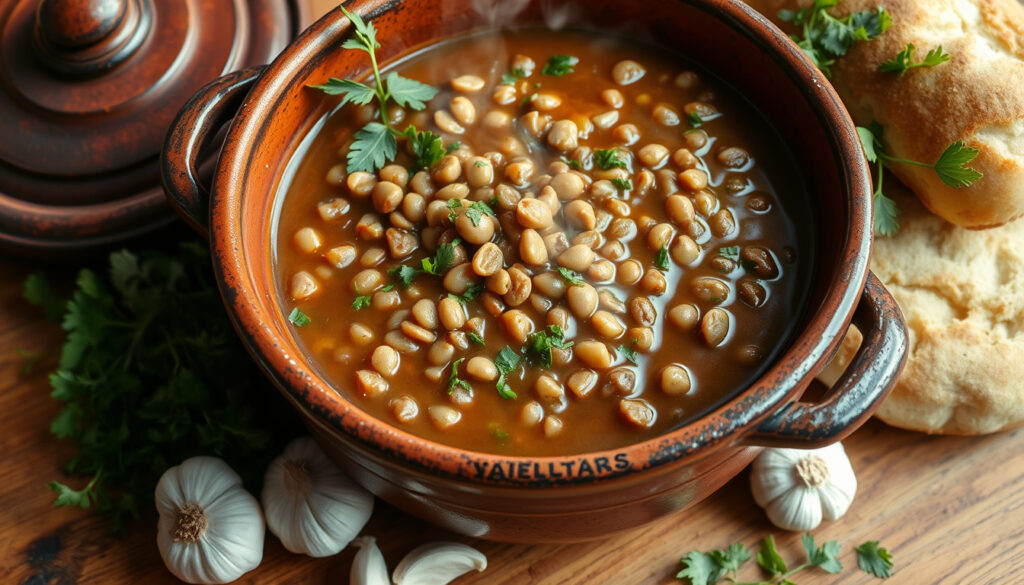
Best Guiso de Lentejas Near Me
A warm bowl of guiso de lentejas is more than just a meal — it’s a connection to home for many families across Argentina, Uruguay, and Spain. This lentil stew, rich with chorizo and vegetables, delivers 18 grams of protein per cooked cup (USDA FoodData Central).
Avg cooking time: 20-30 minutes ·
Protein per cup: 18g ·
Fiber per cup: 15.6g ·
Calories per cup: 230 kcal
Quick snapshot
- Lentils provide 18g protein per cooked cup (USDA FoodData Central)
- Soaking reduces cooking time by about 10 minutes (Infobae)
- Adding acid early can toughen lentils (DelishGlobe)
- Optimal soaking duration for maximum nutrient retention is not well-documented
- Exact flavor differences between regional guiso versions are not well-documented
- Try regional variations from Argentina, Spain, and Uruguay
- Experiment with different lentil types and broths
Five key facts about guiso de lentejas, from ingredients to nutrition:
| Fact | Value |
|---|---|
| Main ingredient | Brown or green lentils |
| Typical cooking time | 20-30 minutes |
| Protein per serving | 18 grams |
| Fiber per serving | 15.6 grams |
| Calories per serving | 308 kcal (Eat This Much) |
| Common meats | Chorizo, morcilla, pancetta |
The pattern: guiso de lentejas is a protein- and fiber-rich dish that can be customized with various meats and vegetables, with cooking times varying by recipe.
How long does it take for lentejas to be ready?
Cooking times by lentil type
- Brown or green lentils: 20-30 minutes unsoaked, 15-20 minutes soaked (DelishGlobe)
- Red or yellow lentils: 15-20 minutes
Soaked vs unsoaked timing
- Soaking for at least 4 hours reduces cooking time by about 10 minutes (Infobae)
- Soaking is not required but can improve texture and reduce gas
If you’re short on time, skip the soak and start cooking directly. The trade-off is a slightly longer simmer, but the flavor stays robust.
The implication: you control the timeline based on how much prep time you have — soaked lentils work for meal preppers, unsoaked for spontaneous cooks.
What goes with lentejas?
Traditional pairings (chorizo, morcilla, vegetables)
- Common additions: chorizo, pancetta, bell pepper, onion, garlic, carrot, potato, tomato (Cocineros Argentinos)
- Some Argentine recipes add sweet potato near the end of cooking (Cocineros Argentinos)
Serving suggestions
- Serve with crusty bread or white rice
- Top with fresh parsley or a squeeze of lemon
The pattern: guiso de lentejas is a complete meal on its own, but pairing it with bread or rice stretches it further and balances the rich stew.
How do you make lentils taste better?
Flavor enhancers: sofrito, smoked paprika, cumin
- Start with a sofrito of onion, garlic, and tomato (DelishGlobe)
- Add smoked paprika, cumin, and bay leaf (Bon Viveur)
- Cook in broth instead of water for deeper flavor
Avoiding blandness
- Season with salt only after lentils are tender to prevent toughness
- Let the stew rest after cooking — Paulina Cocina notes that resting for hours improves flavor (Paulina Cocina)
What is the best liquid to cook lentils in?
Broth options
- Chicken or vegetable broth adds depth (Cocineros Argentinos)
- Red wine can be added for complexity — let alcohol evaporate before adding tomatoes (Cocineros Argentinos)
Water and combinations
- Water works but yields milder flavor
- Some recipes use a mix of broth and water for balance
The pattern: broth is the default choice for richer taste, but wine adds a layer of complexity. Water is fine when you’re in a pinch — just boost the spices.
What are some common mistakes when cooking lentils?
Overcooking, under-seasoning, not rinsing
- Rinsing lentils removes debris and reduces foaming (DelishGlobe)
- Overcooking leads to mushy texture — aim for tender but intact
Acidic ingredients too early
- Adding salt or acidic ingredients (tomatoes, vinegar) early can toughen lentils (DelishGlobe)
- Add tomatoes and salt after lentils are nearly tender
Many home cooks add salt too early, thinking it seasons the lentils. In reality, salt and acid slow softening, leading to uneven cooking and a firmer bite.
Upsides
- Quick cooking time compared to dried beans
- No soaking required (though optional)
- High protein and fiber content
Downsides
- Overcooking can turn lentils mushy
- Flavor can be bland without proper seasoning
- Some people experience gas from lentils
How to Make Guiso de Lentejas: Step-by-Step
- Rinse 1 cup of brown or green lentils under cold water.
- In a large pot, heat oil and sauté diced onion, bell pepper, carrot, and garlic until soft (DelishGlobe).
- Add diced chorizo and pancetta (or beef) and brown for 5 minutes (Cocineros Argentinos).
- Stir in tomato paste, smoked paprika, cumin, and bay leaf.
- Pour in 4 cups of chicken or vegetable broth and add the lentils.
- Bring to a boil, then reduce to a simmer. Cook uncovered for 20–30 minutes (or 1 hour 30 minutes for a thicker stew as in Infobae’s recipe).
- Add diced potatoes or sweet potato if desired, and continue simmering until tender.
- Season with salt and pepper only after lentils are soft.
- Let the stew rest for at least 15 minutes before serving (Paulina Cocina).
Does cooking lentils destroy the protein?
No — cooking does not significantly reduce protein content. Lentils retain about 18 grams of protein per cooked cup (USDA FoodData Central). Protein remains stable at boiling temperatures, so you get the full nutritional benefit whether you simmer for 20 minutes or 90.
The implication: don’t worry about “overcooking” protein. The only risk to nutrition is overcooking into mush, which affects texture, not protein.
What to know: Confirmed facts and what’s still unclear
Confirmed facts
- Lentils provide 18g protein per cooked cup (USDA FoodData Central)
- Soaking reduces cooking time but is not required (Infobae)
- Adding acid early can slow softening (DelishGlobe)
What’s still unclear
- Optimal soaking duration for maximum nutrient retention is not well-documented
- Exact flavor differences between regional guiso versions are not well-documented
The pattern: most cooking advice is backed by experience, but scientific research on soaking’s effect on lentil nutrients is sparse. Rely on tested recipes.
Quotes from the kitchen
“Guiso de lentejas is the ultimate comfort food — it’s what my grandmother made, and it’s what I make when I need a taste of home.”
— Argentine Asado (Argentine Asado)
“Letting the guiso rest for hours after cooking makes it more flavorful. The flavors marry and deepen.”
— Paulina Cocina (Paulina Cocina)
“Lentils are a powerhouse: 18 grams of protein and 15.6 grams of fiber per cooked cup, with negligible fat.”
— USDA FoodData Central (USDA)
For anyone searching for the best guiso de lentejas near you, the choice is clear: either find a local Argentine or Spanish restaurant that serves this hearty stew, or make it at home following the tips above. The homemade version lets you control the ingredients, adjust the spice level, and enjoy leftovers that taste even better the next day.
argentineasado.com, inlivo.com, foods.fatsecret.com, eatthismuch.com, eatthismuch.com
Frequently asked questions
Can I freeze guiso de lentejas?
Yes, guiso de lentejas freezes well. Store in an airtight container for up to 3 months. Thaw overnight in the fridge and reheat gently.
Is guiso de lentejas gluten-free?
Yes, as long as all ingredients (including chorizo and broth) are gluten-free. Check labels, but the base stew is naturally gluten-free.
Can I make guiso de lentejas in an Instant Pot?
Absolutely. Use the sauté function for the sofrito and meat, then pressure cook on high for 15 minutes with natural release. Adjust liquid to 1:1.5 lentils to broth.
How do I thicken guiso de lentejas?
Simmer uncovered to reduce liquid, or mash a spoonful of lentils against the pot. Adding a diced potato also helps thicken the stew naturally.
Are lentils good for weight loss?
Yes, lentils are high in protein and fiber, which promote satiety. A cup of cooked lentils has about 230 calories and 15.6 grams of fiber, making it a filling, low-calorie food.
Related reading
More related posts
 Netflix Has Canceled a Popular Series After Three Seasons – Pattern and Reasons
 When Is Thanksgiving This Year? 2026 Date & History
 Sam Altman Net Worth 2026: How His $3.3B Fortune Is Built
 University of New Hampshire: Admissions, Prestige, and Reality
 How Long Do Dogs Live? Average Lifespan, Breed Facts & Human Years
 Where to Watch Tracker TV Show: All Streaming Options
 When Do Babies Start Walking? Average Age, Signs & Red Flags
