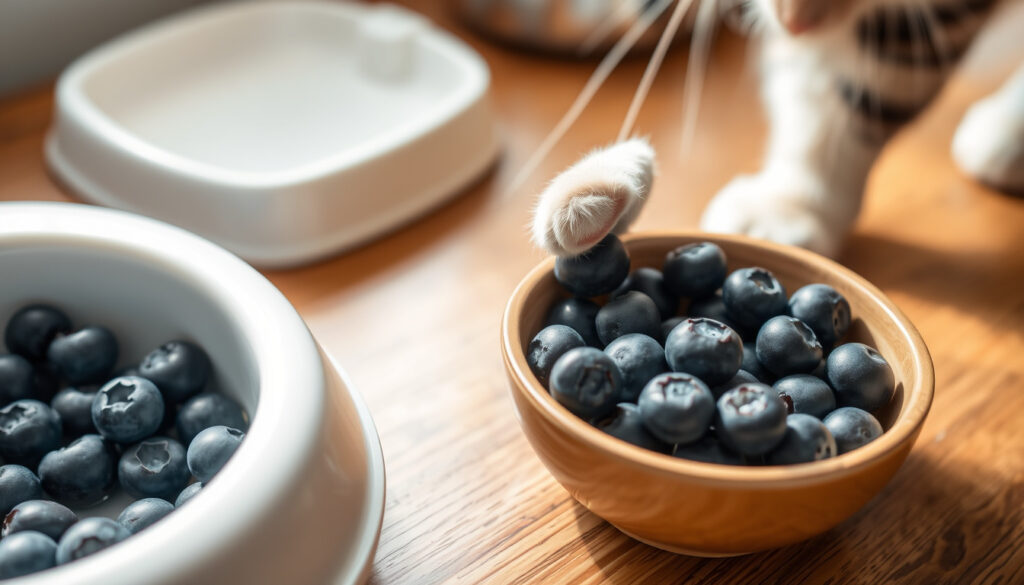
Can Cats Have Blueberries? Safety Guide
If you’ve caught your cat giving you “the look” while you snack on a punnet of blueberries, you’re probably wondering whether it’s safe to share. It’s a fair question — cats are curious creatures, and their pleading eyes can make any pet parent second-guess. The short answer is yes, blueberries are non-toxic to cats, but they should only ever be an occasional treat, not a dietary staple. Here’s exactly how many blueberries are safe, how to prepare them properly, and which berries and other human foods you should never let your cat near.
Safe daily blueberries: 2–3 for adult cats · Toxic fruits: Grapes, raisins, citrus, avocado, cherries (pits) · Chocolate toxicity ingredient: Theobromine · Cat dietary rule: Treats should be ≤10% of daily calories
Key Facts at a Glance
- Grapes and raisins — can cause kidney failure
- Unsafe for any amount — seek vet help immediately (Grapes and raisins — can cause kidney failure)
- Chocolate (theobromine toxicity)
- Onions, garlic, alcohol, caffeine, macadamia nuts (Chocolate (theobromine toxicity))
Can Cats Eat Blueberries?
Yes, blueberries are safe for cats to eat, but with firm caveats. According to PetMD (veterinary health resource), blueberries are non-toxic and can be offered as an occasional treat. The same source emphasizes that treats, including blueberries, should make up no more than 10% of a cat’s daily caloric intake. In practical terms, that means 2–3 blueberries at once, no more than a few times a week.
“Blueberries are a safe, low-calorie treat for cats when given in moderation. They offer antioxidants and fiber, but should never replace a complete diet.” — Dr. Judy Morgan, holistic veterinarian, quoted by PetMD
Despite their antioxidant content and fiber, blueberries offer no nutritional benefit that a cat’s regular diet doesn’t already provide. Cats are obligate carnivores, meaning their bodies are designed to extract nutrients from meat, not plant matter. Purina (pet food manufacturer and feline nutrition authority) reinforces this point, stating that treats and blueberries should account for no more than 10% of a cat’s diet.
What Happens If a Cat Eats One Blueberry?
One blueberry is harmless for an adult cat. The risk is in overfeeding, which can cause digestive upset. Always start with a single berry to test tolerance.
Can Kittens Eat Blueberries?
Kittens have more sensitive digestive systems and different nutritional needs focused on growth. Blueberries offer no benefits for kittens and can cause digestive upset. It’s best to avoid offering blueberries to kittens under one year of age. Database.pet (veterinary reference database) advises even more caution for kittens.
Can Cats Eat Raw Blueberries?
Yes, raw blueberries are the safest option. Serve them plain without any added sugar, syrup, or baking. Wash thoroughly and slice in half to prevent choking.
Can Cats Eat Blueberry Muffins?
No. Blueberry muffins may contain xylitol, chocolate, or raisins — all toxic to cats. Even without those, the sugar and butter can cause digestive upset. Serve only plain, raw blueberries.
Can Cats Have Blueberries with Yogurt?
Most cats are lactose intolerant, so yogurt — even plain — can cause diarrhea. If you give yogurt, choose lactose-free, plain, and xylitol-free yogurt in tiny amounts. The safest option is blueberries alone.
Which Fruit Is the Healthiest for Cats?
Blueberries contain antioxidants, fiber, and vitamin C, which sound impressive. However, cats produce their own vitamin C and have no dietary requirement for it. A 100g serving of blueberries contains just 57 kcal, 2.4g of fiber, and roughly 387mg of anthocyanins — but a cat’s digestive system simply isn’t built to process plant-based nutrients efficiently.
“For most adult cats, two or three blueberries a day is fine. Always wash them and cut large berries to prevent choking.” — Hill’s Pet Nutrition
According to Database.pet (veterinary reference database), there is no established therapeutic dose for blueberries in cats. The same source provides practical portion guidance instead, noting that blueberries are safe when fed raw, plain, and without any added ingredients.
The Spruce Pets (pet care resource) adds that blueberries are among the few fruits commonly listed as non-toxic for cats in consumer veterinary content, but they are not nutritionally necessary. While antioxidants sound appealing, your cat gets everything it needs from a complete and balanced commercial cat food.
Upsides
- Safe non-toxic treat
- Low in calories (about 1 kcal per berry)
- Provides antioxidants and fiber
- Can be used as a training reward
Downsides
- No essential nutrients for cats
- Can cause gastrointestinal upset if overfed
- Not a substitute for a balanced diet
- Some cats show no interest due to lack of sweet taste receptors
How Many Blueberries Can a Cat Safely Eat?
Portion control is everything. For an average adult cat needing 200–250 kcal daily, the 10% treat rule translates to 20–25 kcal from treats. Given that blueberries contain only 57 kcal per 100g, a single berry delivers roughly 1 kcal — meaning 2–3 berries fit comfortably within the treat allowance.
- Adult cats: 2–3 blueberries per serving
- Frequency: A few times a week, not daily
- Size: Chop each berry in half to prevent choking
- Preparation: Wash thoroughly, serve raw, no sugar or additives
Even non-toxic fruit can cause gastrointestinal upset if fed in large portions, warns The Spruce Pets (pet care resource). Start with a single berry and watch for any digestive reaction over 24 hours before offering more.
What Other Berries Are Safe or Toxic for Cats?
Not all berries are created equal. While blueberries are safe, other berries can be deadly.
Safe Berries
- Strawberries: Safe in small amounts, served without the green top
- Raspberries: Safe as an occasional treat, chopped
- Blackberries: Safe in moderation, no added sugar
- Cranberries: Safe fresh, but not dried or sweetened
Toxic Berries — Never Feed
- Grapes and raisins: Toxic — can cause acute kidney failure even in tiny amounts
- Cherries (pits, stems, leaves): Contain cyanide compounds — dangerous
According to PetMD (veterinary health resource), grapes and raisins are among the most dangerous fruits for cats — never feed them in any amount and seek veterinary help immediately if ingestion occurs.
Which Fruits Are Toxic to Cats?
Beyond the berry family, several common fruits are dangerous for cats. Never feed grapes, raisins, cherries (pits, stems, leaves), citrus fruits (oranges, lemons, limes), or avocado. All can cause severe health issues, from kidney failure to gastrointestinal distress. PetMD lists these as foods to avoid entirely.
What Other Human Foods Are Dangerous for Cats?
Beyond berries, several everyday foods pose serious risks to your cat’s health. Knowing these can prevent a costly emergency vet visit.
- Chocolate: Contains theobromine — toxic to cats, can cause heart arrhythmias
- Onions and garlic: Damage red blood cells, leading to anemia
- Alcohol: Even small amounts can cause severe liver damage
- Caffeine: Can cause restlessness, rapid breathing, and heart palpitations
- Macadamia nuts: Can cause weakness, tremors, and vomiting
- Avocado: Contains persin, which can cause gastrointestinal distress
- Citrus fruits (oranges, lemons, limes): Essential oils and psoralens can cause digestive upset
- Raw dough: Expands in the stomach and ferments, producing alcohol
As a general rule, according to PetMD (veterinary health resource), treats should make up no more than 10% of your cat’s daily caloric intake. If you’re ever in doubt about a food, consult your veterinarian before offering it.
What Other Healthy Fruit Options Exist for Cats?
If you want to diversify your cat’s treat options beyond blueberries, several fruits are considered safe in small quantities. These alternatives offer variety without compromising safety.
- Watermelon (no seeds): Hydrating and low-calorie, but remove all seeds and rind
- Apple slices (no seeds): Crisp texture cats enjoy, but remove seeds and core
- Cantaloupe: Many cats love the smell; offer in tiny cubes
- Pumpkin (plain, cooked): Supports fiber intake, helps with hairballs
These options should follow the same rules as blueberries — tiny portions, no added sugar, and never replacing a balanced cat food meal. PetMD highlights that even safe fruits can cause stomach upset if overfed, so moderation is the core principle.
Do Cats Even Like Blueberries?
Here’s an interesting quirk of feline biology: cats lack the sweet taste receptor (TAS1R2) that makes fruits appealing to humans and dogs. This means your cat isn’t drawn to blueberries because they taste sweet — they might be curious about the texture, movement, or simply what you’re eating.
Some cats show zero interest in fruit, and that’s perfectly normal. If your cat turns up their nose at a blueberry, don’t force it. According to PetMD, blueberries are optional treats, not nutritional requirements. A cat that refuses fruit is making a biologically informed choice.
How Should You Serve Blueberries to Your Cat?
Proper preparation reduces risks like choking and pesticide exposure.
- Wash thoroughly: Remove any pesticide residue or dirt
- Slice in half: Prevents choking, especially for smaller cats
- Serve raw: No sugar, syrup, or baking into treats
- Remove stems: Tough parts can cause digestive irritation
- Start with one: Test for individual tolerance before offering a portion
The Spruce Pets (pet care resource) reinforces that even non-toxic fruit can cause gastrointestinal upset if fed in large portions, so serving size discipline matters more than preparation style.
petnation.care, noblevetclinic.com, chewy.com, catgarden.app, catfoodcheck.com, fruitandgarden.com, cats.com
Frequently Asked Questions
Are any fruits toxic to cats?
Yes — grapes and raisins are highly toxic and can cause acute kidney failure. Cherry pits, stems, and leaves contain cyanide compounds. Citrus fruits (oranges, lemons, limes) can cause digestive upset due to essential oils. Avocado contains persin and can cause gastrointestinal distress.
Can cats eat frozen blueberries?
Yes, frozen blueberries are safe as long as they’re plain, unsweetened, and thawed slightly. Frozen berries can be a choking hazard if served too hard, so let them soften at room temperature and slice them in half before offering.
What should I do if my cat ate a grape or raisin?
Contact your veterinarian or an emergency animal poison control hotline immediately. Grapes and raisins can cause acute kidney failure in cats, and early intervention is critical for a positive outcome. Do not wait for symptoms to appear.
Can cats have blueberry yogurt or blueberry muffins?
No. Dairy products (with the exception of small amounts of plain yogurt) can cause digestive upset in lactose-intolerant cats. Blueberry muffins typically contain sugar, butter, and sometimes xylitol or chocolate — all of which are unsafe. Serve only plain, raw blueberries.
What are the signs of blueberry overfeeding or toxicity?
Even safe berries can cause gastrointestinal upset when overfed. Watch for vomiting, diarrhea, lethargy, or loss of appetite within 24 hours of feeding. If any of these symptoms appear, discontinue blueberries and contact your veterinarian. For truly toxic foods like grapes or chocolate, symptoms may include tremors, seizures, excessive thirst, or abnormal urination — seek emergency care.
What’s Still Unclear
- Whether organic blueberries confer additional health benefits over conventional for cats (no studies).
- Long-term effects of feeding blueberries as a daily treat (not studied).
Related Reading
Looking for more practical pet-care guidance? Check out these complementary resources on our site:
- How Long Do Dogs Live? — The closest thematic match for pet owners interested in animal health and wellness
- What Is MCH in Blood Test? — Evergreen informational health content aligned with the safety-guide and vet-style nature of this blueberries article
The Bottom Line: Blueberries Are Safe, But Optional
Blueberries are a safe, low-calorie treat for most adult cats — but they’re not a nutritional requirement, and they’re not a superfood for felines. The treat ceiling of 10% of daily calories is the hard rule that protects your cat from digestive upset and nutritional imbalance. If you stick to 2–3 berries a few times a week, properly washed and sliced, blueberries are a perfectly fine occasional reward. Just remember: grapes and raisins are toxic, chocolate is dangerous, and when in doubt, your veterinarian is the best source of advice.
More related posts
 Anatomy of a Fall: Plot, Cast, Oscars, and Streaming Guide
 Romance KPop Demon Hunters: Jinu & Rumi Kiss Explained
 How to Draw a Frog: Easy Step-by-Step Guide for Beginners
 Is McDonald’s Open on Christmas Day? 2025 Hours Guide
 What Is a Smart Home – Guide to Features, Devices and Benefits
 What Do Bed Bug Bites Look Like – Patterns on Light & Dark Skin
 Real Madrid vs Celta Vigo Stats: H2H, Red Cards & Predictions
 Cruises from New York 2026: Best Lines & Ports
