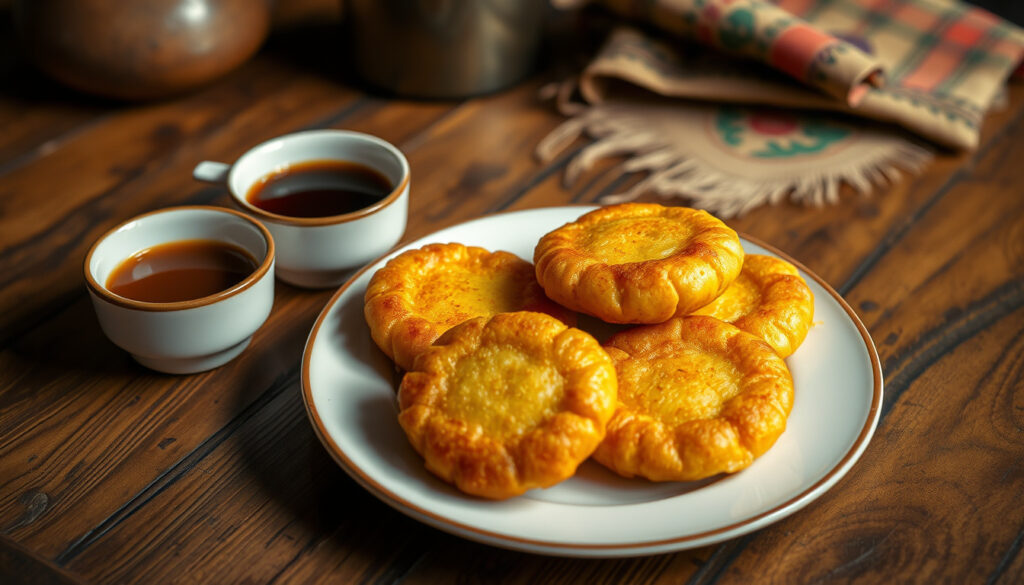
Best Buñuelos Colombianos Near Me: Find Authentic Cheese Fritters
Few street foods spark as much loyalty as a perfect Colombian buñuelo — that golden sphere of fried cheese dough that’s crispy on the outside and irresistibly soft within. If you’ve ever tried one and immediately asked “where can I find more?”, you’re not alone.
Average rating on Yelp for top bunuelos in Chicago: 4.0 stars (217 reviews) ·
Typical price at a Colombian bakery: $1.50 per buñuelo ·
Primary starch ingredient: Yucca (cassava) starch ·
Country of origin: Colombia
“Buñuelos are fried cheese fritters made from yucca starch and costeño cheese.” — Wikipedia – encyclopedia entry on buñuelo
“Buñuelo variations exist across Latin America — Mexico has its flat, syrup-topped version, while Puerto Rico and Cuba make theirs with cassava or malanga. But only in Colombia is the buñuelo primarily savory and cheese-based.” — The Spruce Eats – Latin American fritter guide
Quick snapshot
- Buñuelos are fried cheese fritters made from yucca starch and costeño cheese (Wikipedia – encyclopedia entry on buñuelo)
- They are savory and spherical, not sweet and flat like Mexican buñuelos (Flavors of Bogota – Colombian food blog)
- Exact geographic origin of buñuelos — multiple Latin American countries claim variations
- Whether all Colombian buñuelos are gluten-free (yucca is GF, but cross-contamination in bakeries may vary)
- Peak demand for buñuelos occurs in December during Colombian Christmas and New Year celebrations (Wikipedia – Colombian cuisine Christmas traditions)
- Check local Colombian bakery Yelp pages and social media for holiday buñuelo pre-orders starting late November (Yelp – Mekato’s Colombian Bakery listing)
| Attribute | Detail |
|---|---|
| Ingredient base | Yucca starch (cassava flour) |
| Typical cheese | Costeño cheese (fresh, salty) |
| Cooking method | Deep-fried |
| Typical price (Chicago) | $1.50 each |
| Top Yelp rating (Chicago) | 4.0 stars (217 reviews) |
| Cultural significance | Christmas and New Year’s treat in Colombia |
What is a buñuelos colombiano in English?
English translation of buñuelo colombiano
The direct translation of buñuelo colombiano is “Colombian buñuelo,” but English-language menus and food guides often call them Colombian cheese fritters or Colombian cheese dough balls (Flavors of Bogota – Colombian food blog). The term “fritter” captures the deep-fried preparation, while “dough ball” hints at their spherical shape.
Common names used internationally
Outside Colombia, you might also see them labeled as buñuelos de yuca (yucca buñuelos) or buñuelos de queso (cheese buñuelos). Some bakeries in the United States simply list them as “buñuelos” without the Colombian qualifier, which can confuse shoppers expecting a sweet, flat Mexican version (Food & Wine – Latin American food guide).
When searching on Uber Eats or browsing a bakery menu, look for “Colombian buñuelos” specifically. If the menu just says “buñuelo” without context, ask whether it’s the savory cheese kind — otherwise you might end up with a flat, cinnamon-sugar disc.
The implication: always double-check the style to ensure you get the authentic Colombian version.
Where are buñuelos most popular?
Popularity in Colombia
Buñuelos are a cornerstone of Colombian holiday cuisine, especially during Christmas and New Year’s celebrations (Wikipedia – Colombian cuisine Christmas traditions). Families fry large batches at home and serve them alongside natilla (a milk-based dessert). In Medellín and Bogotá, bakeries ramp up production in December, with some selling thousands of buñuelos daily during the season.
The implication: if you’re craving buñuelos in July, expect smaller batches and possible availability only at dedicated Colombian bakeries, not general Latin markets.
Popularity in Latin America
Buñuelo variations exist across Latin America — Mexico has its flat, syrup-topped version, while Puerto Rico and Cuba make theirs with cassava or malanga. But only in Colombia is the buñuelo primarily savory and cheese-based (The Spruce Eats – Latin American fritter guide).
Buñuelos in the United States
Colombian communities in cities like Chicago, New York, Miami, and Los Angeles support bakeries that sell buñuelos year-round. Mekato’s Colombian Bakery in Chicago, for example, holds a 4.0-star rating from 217 reviews on Yelp (Yelp – Mekato’s Colombian Bakery listing). Pasabocas Colombian Bakery in the same city sells them for about $1.50 each.
The pattern: US Colombian bakeries cluster in neighborhoods with high Colombian populations — Chicago’s Albany Park and Los Angeles’ Koreatown are good starting points for a search.
What is the difference between Mexican and Colombian buñuelos?
Three distinct differences separate these two beloved treats, and knowing them can save you from ordering the wrong thing.
| Attribute | Mexican buñuelos | Colombian buñuelos |
|---|---|---|
| Flour base | Wheat flour | Yucca (cassava) starch |
| Shape | Flat disc | Round sphere |
| Flavor profile | Sweet (syrup, cinnamon sugar) | Savory (cheese, salt) |
| Texture | Crispy, cracker-like | Crispy outside, soft and chewy inside |
| Serving occasion | Christmas, New Year, fairs | Christmas, New Year, breakfast snack |
| Toppings | Piloncillo syrup, cinnamon | None (plain) |
Mexican buñuelos are made with wheat flour, rolled thin, fried into flat discs, and drenched in sweet piloncillo syrup or dusted with cinnamon sugar. Think of them as a flaky, sweet cracker. Colombian buñuelos, on the other hand, are made with yucca starch and fresh cheese, shaped into small balls, and fried — they’re savory, with a crisp golden crust and a soft, stretchy interior (The Spruce Eats – Latin American fritter guide).
The catch: because both are called “buñuelos,” a casual diner may order Colombian buñuelos at a Mexican restaurant and get a flat, sweet disc. Always confirm the style before you order.
What is the difference between pan de bono and buñuelos colombianos?
These two Colombian baked goods are often confused by newcomers. Here’s the breakdown.
| Attribute | Pan de bono | Colombian buñuelo |
|---|---|---|
| Flour base | Corn flour (masarepa) + yucca starch | Yucca starch (cassava) predominates |
| Cheese type | Fresh farmer’s cheese (queso fresco) | Costeño cheese (salty, crumbly) |
| Cooking method | Baked (traditional) or fried | Deep-fried |
| Texture | Chewy, bread-like, slightly dense | Crispy crust, airy-soft interior |
| Shape | Small round bun or ring | Perfectly round ball |
| Typical use | Breakfast or afternoon snack | Holiday dish, any time snack |
Pan de bono uses a mix of corn flour and yucca starch, plus fresh cheese, and is typically baked — giving it a chewier, bread-like crumb. Buñuelos rely more heavily on yucca starch and are always fried, resulting in a lighter, airier interior encased in a brittle crust (196 Flavors – pan de bono history and recipe).
The trade-off: pan de bono is the everyday Colombian cheese bread you can grab at any panadería during the week; buñuelos are the special-occasion fried version that requires more oil and attention. If you’re watching calories, pan de bono is lighter (baked vs. fried). If you want the authentic holiday experience, you want the buñuelo.
Where can I buy Colombian buñuelos?
Colombian bakeries in the US
The most reliable source is a dedicated Colombian bakery. In Chicago, Pasabocas Colombian Bakery sells buñuelos at about $1.50 each, while Mekato’s Colombian Bakery holds a strong 4.0-star rating from 217 reviews on Yelp (Yelp – Mekato’s Colombian Bakery). In New York, La Nueva Colombia Bakery in Jackson Heights is a go-to. Los Angeles has Colombian Bakery & Deli in Van Nuys.
To find options near you, search “Colombian bakery near me” and scan the menu for “buñuelos” — but double-check they’re the Colombian version (see the comparison table above). Yelp and Google Maps are good starting points, though review volume and recency matter: a bakery with 200+ recent reviews is safer than one with 15 reviews from two years ago.
Online ordering options
Some bakeries now offer frozen buñuelos for shipping. Buñuelos de Colombia ships frozen buñuelos nationwide via Goldbelly. Pre-ordering is recommended, especially around Christmas when demand spikes and supply tightens.
Making at home
If you can’t find a local bakery, homemade buñuelos are surprisingly approachable. The essential ingredients are yucca starch (also called cassava flour or almidón de yuca), costeño cheese (or a substitute like queso fresco mixed with mozzarella for stretchiness), eggs, and oil for frying. Most recipes call for a 2:1 ratio of yucca starch to cheese by weight.
What this means for shoppers: if a bakery lists “buñuelos” at $3 or more each in a non-Colombian shop, they’re likely frozen and reheated — check the bakery’s origin story or ask about preparation.
Clarity section
Confirmed facts
- Buñuelos are made with yucca starch and cheese (Wikipedia)
- They are deep-fried (Wikipedia)
- They are savory, not sweet (Flavors of Bogota)
- They are a traditional Colombian Christmas and New Year’s treat (Wikipedia – Colombian cuisine)
What’s unclear
- Exact origin of buñuelos (multiple Latin American countries claim their own version)
- Whether all Colombian buñuelos are gluten-free (yucca is naturally GF, but bakery preparation may introduce cross-contamination)
- Precise nutritional content without a standardized recipe
Frequently asked questions
Are Colombian buñuelos vegetarian?
Traditional buñuelos use costeño cheese — an animal rennet-based cheese — so they are typically vegetarian (lacto-vegetarian), not vegan. Some bakeries use rennet-free cheese; ask before ordering if this matters to you.
How long do buñuelos stay fresh?
Freshly fried buñuelos are best within 2–3 hours, but they can be stored in an airtight container at room temperature for up to 1 day. Reheat in an oven at 350°F for 5 minutes to restore some crispness.
What drinks pair well with buñuelos?
Colombian buñuelos are traditionally served with agua de panela (hot unrefined cane sugar drink), chocolate santafereño (hot chocolate with cheese), or a simple cup of Colombian coffee. The savory-sweet contrast is the point.
Can I freeze Colombian buñuelos?
Yes — freeze unfried dough balls on a tray, then transfer to a freezer bag. When ready to eat, fry directly from frozen (extend frying time by 1–2 minutes). Avoid freezing already-fried buñuelos: the texture degrades significantly.
What is the best cheese substitute for buñuelos?
Costeño cheese is salty and crumbly. If unavailable, mix 2 parts queso fresco with 1 part mozzarella (shredded) to replicate the salty-stretchy balance. Avoid ricotta or cream cheese — they’re too wet and will cause the dough to spread during frying.
Are buñuelos eaten for breakfast in Colombia?
Yes — buñuelos are a common breakfast or mid-morning snack, especially during December. Many Colombians pair them with tinto (black coffee) for a quick, savory start to the day.
What does a Colombian buñuelo taste like?
Expect a salty, slightly tangy cheese flavor wrapped in a nutty, crispy crust from the yucca starch. The interior is soft, moist, and slightly stretchy from the cheese — think of a mozzarella stick crossed with a dense cheese bread roll.
For anyone searching for best buñuelos colombianos near me, the decision path is clear: zero in on a Colombian bakery specifically, not a generic Latin market; confirm the buñuelos are the fried cheese version (ask if the menu is ambiguous); and check Yelp or Google reviews for volume and recency rather than just star ratings alone. December is prime season, but dedicated Colombian bakeries in cities like Chicago, New York, and Los Angeles keep them available year-round — your move is to locate one now and save the holiday rush for the home fryer.
More related posts
 How Old Is Donald Trump? Age, Health, and Presidency Facts
 Dreams Royal Beach Punta Cana: Is It Worth It? (2025)
 A Big Bold Beautiful Journey (2025) Box Office Flop
 Doc (2025 TV Series) Season 1: Streaming & Episode Guide
 South Park Trump Episode: Guide to Season 27 Parodies
 Wizards Beyond Waverly Place Season 2: Guide
 On Cloud Running Shoes: Reviews vs HOKA, Nike & Top Picks
 3I/ATLAS Interstellar Object: Facts, Risk & NASA Updates
