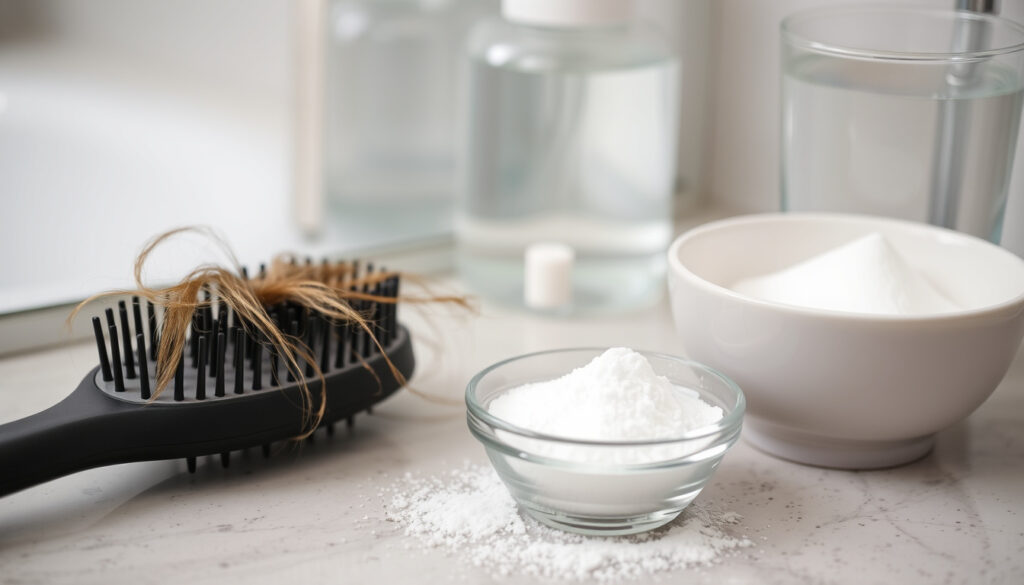
How to Clean a Hairbrush with Baking Soda: Step-by-Step
There’s a small, oddly satisfying ritual in giving your favorite hairbrush a proper wash—the kind of deep clean that goes beyond yanking out the stray strands. You might not think about it, but your brush is a magnet for natural oils, hairspray residue, and dead skin cells, and it’s collecting that gunk day after day. The good news? You likely have the two best cleaning agents sitting in your kitchen right now: baking soda and vinegar. In this guide, we’ll walk through the step-by-step method for a deep clean, explain how it works on different materials, and share a few hairdresser-approved tips to keep your brush (and your hair) in top shape.
Hairbrush deep-clean frequency: Every 1–2 weeks · Baking soda cost per use: < $0.05 · Brush lifespan with regular cleaning: 2–3 years
Before you start, know that baking soda is a gentle, non-toxic abrasive that tackles oil and buildup effectively, while vinegar helps dissolve the mineral deposits and soap scum. Let’s get into the nitty-gritty of how to clean a hairbrush with baking soda, step by step.
Deep-Clean Snapshot: What You Need to Know
- 8.3
- 15–30 minutes
- 4–6 hours
- Every 1–2 weeks
When people ask about “brine tanks,” they’re usually talking about water softeners, pool equipment, or sous-vide setups—industrial or food-grade systems where you do not want to introduce baking soda or vinegar casually. Adding baking soda or vinegar to the brine tank is not recommended. One guide from a home-chef community notes that a 1:1 vinegar-water soak is a safe, food-safe way to clean that kind of tank, but you must run several fresh-water cycles afterward to eliminate any taste. So, while baking soda and vinegar are brilliant for your hairbrush, they are not universal “miracle cleaners” for every water system. The only thing they share with the brine tank is a chemical reaction—but that reaction can be harmful if you don’t know your tank’s material and chemistry.
Bottom line: Do not mix baking soda or vinegar into a brine tank unless the tank’s manufacturer explicitly recommends it.
Can You Clean a Hairbrush with Baking Soda and Vinegar?
Yes. Baking soda and vinegar are a powerful, non-toxic combination for a deep-cleaning your hairbrush. The baking soda acts as a gentle abrasive to dislodge oil and residue, while vinegar, a mild acid, breaks down mineral deposits (hard-water minerals, hairspray film) and neutralizes odors. Together, they create a fizz that helps lift grime from the bristles and base, but we’ll do most of the heavy lifting manually, not chemically.
Baking soda (sodium bicarbonate) is a mild alkali that helps dissolve oils and dead skin cells.
For a brush that’s never been deep-cleaned, add ½ inch of warm water with a splash of vinegar to your sink and soak the bristles for up to 30 minutes.
How to Clean a Hairbrush with Baking Soda Step by Step
- Step 1: Remove all hair. Use a tail comb or old toothbrush to lift out every strand.
- Step 2: Mix a baking soda paste. Combine 1 tablespoon baking soda with 2–3 tablespoons warm water into a thick paste.
- Step 3: Apply the paste. Spread it over the bristles and base, avoiding the handle if it’s wooden.
- Step 4: Soak. Place the brush face-down so the water covers only the bristles, not the whole handle. Let it sit for 15–30 minutes.
- Step 5: Scrub and agitate. Use the toothbrush to remove any remaining residue. Rinse thoroughly.
- Step 6: Dry. Pat with a towel and set the brush bristle-down on a towel to air dry. Do not use hot water on natural bristles.
For wooden handles, avoid soaking below the bristle base. For a very dirty natural-bristle brush, you can use a paste of baking soda applied directly, leave for 5 minutes, then rinse quickly—but do not let it sit.
The “Two-Step” Method: Why Vinegar Isn’t Optional
When you combine a baking-soda scrub with a vinegar soak, you tackle two different problems at once: oil-based buildup (baking soda) and mineral-based film (vinegar). But do not mix them into a single paste—that just creates an unhelpful fizz and neutralizes both agents.
What NOT to Do: Red Flags from Hair Professionals
Baking soda is a cheap, effective cleanser, but its abrasive nature means you must use a soft toothbrush, not a wire brush, especially on natural bristles.
Baking soda is a cheap, effective cleanser, but its abrasive nature means you must use a soft toothbrush, not a wire brush, especially on natural bristles.
The Baking Soda Method: Why It Works (and When It Doesn’t)
- Baking soda is non-toxic and food-safe – good for households with kids or pets.
- It’s a natural deodorizer – neutralizes the oily, musty smell that builds up in the brush.
- It’s cheap – less than $0.05 per use, versus $5–15 for a commercial brush cleaner.
But this method is not perfect. Also, baking soda will not remove every chemical residue. However, they caution that this is not for natural bristles—only for synthetic rubber-cushion brushes.
The upshot: Baking soda is an excellent, non-toxic cleaner, but the way you use it must match your brush’s material. For natural bristles, think of baking soda as a quick “spot treatment” rather than a soak.
Hairdressers are divided on the best home method.
| Cleaning Agent | Effectiveness on Oil | Effectiveness on Hairspray/Product Film | Safety on Natural Bristles | Cost per Use |
|---|---|---|---|---|
| Baking Soda | High | Medium | Medium (use with care) | < $0.05 |
| Vinegar | Medium | High | High | < $0.10 |
Vinegar wins for removing hard-water spots and film, but it’s weaker on oily residue. This gives you the best of both worlds without oversudsing the natural oils away. Rotate your deep-clean method to preserve your brush’s lifespan.
As a rule of thumb, a quick removal of hair should happen every time you finish detangling, while a deep-clean should be done once a week to once every two weeks. If you use heavy styling products (serums, dry shampoo, hairspray), move the frequency to every 7 days.
- Occasional hairspray/oil: every 2 weeks
- Heavy product use: every 7 days
Related reading: How Long Does Lip Filler Last? Duration & Costs · Simple Human Trash Can Review: Worth the Price? Durability & FAQs
armandhammer.com, goodto.com, housedigest.com, lovetoknow.com, littleextralove.com, handwritingwithkatherine.com, lemon8-app.com, snehasishdey.wordpress.com, theglossylocks.com, mag.hji.co.uk, spornette.com, cleanipedia.com
Frequently Asked Questions
Can I use baking soda on a brush with natural boar bristles?
Mix a thin paste and apply it only to the bristle tips, not the base, and leave it on for 5 minutes.
Is vinegar safe for my brush every week?
To be safe, alternate deep-cleans: use a baking soda scrub one week, then a vinegar mix the next. For wood-handled brushes, stick to the baking soda paste method and use a vinegar spray for spot treatment.
Can I use baking soda and vinegar together in one step?
No—mixing them into a single paste neutralizes both agents. Use them as separate steps for best results.
Bottom line: Treat your hairbrush like a tool, not just an accessory. A 10-minute weekly cleaning with baking soda and vinegar will keep your brush glide-worthy, your scalp happier, and your hair free of greasy ghosts.
More related posts
 Is A History of Violence Worth Watching? (2005 Review)
 The War Between the Land and the Sea – Geopolitical Rivalry Explained
 Lemon Meringue Pie Recipe – How to Make Perfect Meringue
 Netflix Has Canceled a Popular Series After Three Seasons – Pattern and Reasons
 U.S. Embassy Qatar Warning: What Travelers Need to Know
 How Many Weeks Are Left in 2025? Current Week Number
 UFC Fight Card Tonight: Lineup, Times & Live Updates
 Academy Sports and Outdoors: Locations, Products, Credit Card
