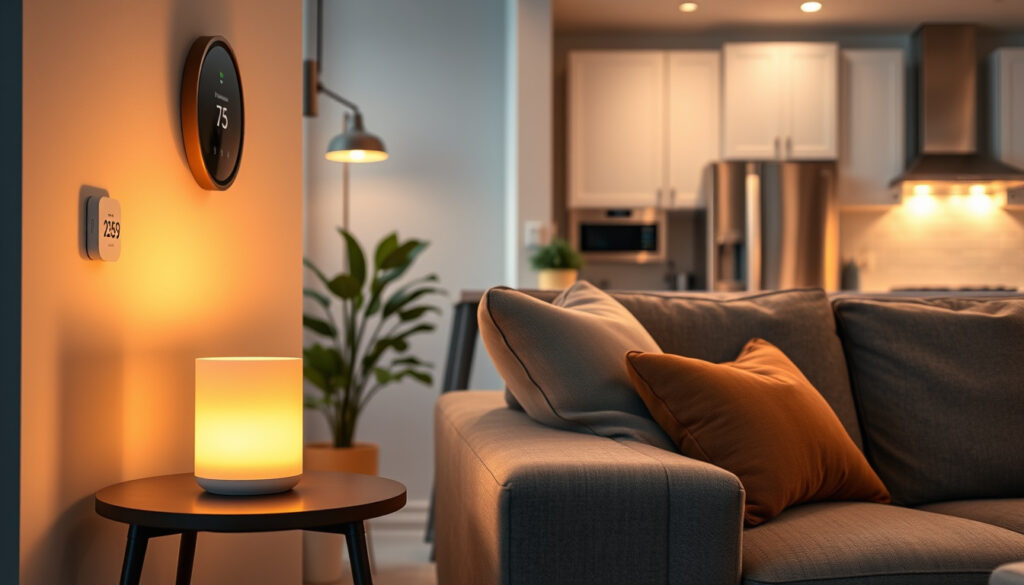
What Is a Smart Home – Guide to Features, Devices and Benefits
A smart home represents a significant shift in how people interact with their living spaces. By connecting everyday devices to the internet and to each other, homeowners gain unprecedented control over lighting, climate, security, and appliances. This connected approach transforms a traditional house into a responsive environment that adapts to resident habits and preferences.
The technology driving this transformation relies on sensors, central controllers, and actuators working together through established communication protocols. Whether managing energy consumption or enhancing home security, smart home systems offer practical solutions for modern households seeking efficiency and convenience.
Understanding what constitutes a smart home, how these systems operate, and what options exist for different budgets helps homeowners make informed decisions about adopting this technology.
What Is a Smart Home and How Does It Work?
A smart home consists of internet-enabled devices, appliances, and systems that communicate through the Internet of Things. These connected components include lighting fixtures, thermostats, security cameras, door locks, and household appliances that can be monitored and controlled remotely.
The operational framework follows the EVA principle: input through sensors, processing through a central network or hub, and output via actuators that perform actions such as activating lights or locking doors. Devices communicate using Wi-Fi, Zigbee, Z-Wave, or newer protocols like Matter, which enable cross-brand compatibility.
A connected network of internet-enabled devices allowing remote control and automation
Internet connectivity, smartphone apps, and central hubs coordinating device communication
Smart lights, thermostats, speakers, cameras, locks, and connected appliances
Convenience through automation and remote access from anywhere
Users interact with smart home systems through smartphone applications or voice assistants like Alexa and Google Assistant. These interfaces allow setting schedules, creating routines, and establishing triggers based on motion, time, location, or weather conditions. Devices can learn resident habits over time, automating responses without requiring manual input each time.
Key Components of Smart Home Systems
- Hubs: Central controllers such as Amazon Echo or Google Nest Hub that connect and coordinate multiple devices within the network
- Mobile Apps: Interfaces providing remote access, control dashboards, notifications, and customization options including preset scenes like “Good Morning” that adjust lights, blinds, and appliances simultaneously
- Automation Features: Capabilities including geofencing that automatically adjusts settings when residents arrive or leave, motion-triggered lighting, energy optimization routines, and emergency responses such as alerting authorities
- Matter Standard: A royalty-free protocol introduced in 2022, backed by Apple, Google, and Amazon, designed to ensure seamless cross-brand compatibility and reduce device silos
The Matter standard has gained substantial industry support since its introduction. By 2024-2025, this protocol has become widely adopted across hubs and devices, helping consumers avoid lock-in to single ecosystems while simplifying setup processes for new users.
Smart Home Automation Explained
Smart home automation refers to the programming of devices to perform actions automatically based on predefined conditions. Rather than manually adjusting thermostats or turning off lights, residents establish rules that govern device behavior. These rules can respond to environmental changes, time schedules, or presence detection.
For example, motion sensors can trigger hallway lights to illuminate when someone walks through at night, while smart thermostats can adjust heating based on whether anyone occupies specific rooms. This automation reduces energy waste and enhances daily comfort without requiring constant attention from residents.
| Aspect | Details |
|---|---|
| Communication Protocols | Wi-Fi, Zigbee, Z-Wave, Thread, Matter |
| Control Methods | Smartphone apps, voice commands, automated routines |
| Primary Benefits | Energy savings, enhanced security, convenience |
| Main Concerns | Privacy risks, internet dependency, compatibility |
| Industry Standard | Matter (2022+) for cross-platform compatibility |
Advantages and Disadvantages of Smart Homes
Smart home technology delivers measurable benefits across multiple areas, from reducing utility costs to enhancing personal safety. However, potential adopters should also consider the challenges and limitations that accompany connected device ecosystems.
Benefits of Smart Home Adoption
Remote control capabilities allow homeowners to manage lights, heating, cooling, and appliances from anywhere using a smartphone connection. This proves particularly valuable for monitoring property while traveling or adjusting home conditions before arrival.
Energy efficiency represents one of the most compelling advantages. Smart thermostats can learn temperature preferences and occupancy patterns, automatically optimizing heating and cooling cycles to reduce waste. Sensors detect when rooms are unoccupied and adjust settings accordingly, while smart plugs can shut off phantom loads from devices left in standby mode.
Security enhancements include motion-activated cameras, smart doorbells with video feeds, automated lighting that discourages intruders, and smoke detectors that send immediate alerts to smartphones. These systems provide real-time awareness of household status and can contact emergency services when necessary.
- Remote management of lighting, climate control, and appliances from any location
- Reduced energy consumption through automated scheduling and occupancy detection
- Comprehensive security monitoring with camera feeds, motion alerts, and emergency notifications
- Accessibility features benefiting elderly residents and individuals with mobility challenges
- Potential increases in property value and eligibility for insurance discounts
Challenges and Limitations
Initial investment costs can be substantial, particularly for comprehensive systems requiring multiple devices and a central hub. Full retrofits of existing homes may involve significant expense, though entry-level solutions exist at various price points.
Internet connectivity creates dependency. When broadband service experiences outages, many smart home features become unavailable until connections restore. Some devices may lose scheduled automations or fail to respond to remote commands during downtime periods.
Privacy considerations arise from the continuous data collection these systems perform. Internet-connected cameras and sensors generate information about household activities that could potentially be accessed by unauthorized parties if security measures prove inadequate.
- Higher upfront costs for quality devices, hubs, and professional installation when needed
- Vulnerability to internet service disruptions that disable connected features
- Privacy implications from devices that monitor and record household activities
- Historical compatibility issues between devices from different manufacturers
Prioritizing devices that support the Matter standard helps ensure future compatibility and reduces the risk of purchasing equipment that becomes obsolete quickly. Starting with a single category, such as smart lighting or security cameras, allows homeowners to build experience before expanding their ecosystem.
Key Features of Smart Homes
Smart home systems offer several interconnected capabilities that distinguish them from traditional household setups. Understanding these features helps prospective adopters identify which aspects align with their priorities and lifestyle needs.
Centralized Control Systems
The hub serves as the brain of a smart home, aggregating connections to multiple devices and enabling unified control through a single interface. Modern hubs like the Amazon Echo and Google Nest Hub combine voice assistant functionality with hub capabilities, allowing residents to issue commands naturally while managing complex automation routines.
Dashboards within mobile applications display device status, energy consumption data, and active routines. Users can quickly assess which lights remain on, check camera feeds, or review temperature settings without navigating through multiple screens.
Intelligent Automation Routines
Automation routines group multiple actions into single triggers. A “Good Morning” scene might gradually brighten bedroom lights, adjust thermostat settings, start the coffee maker, and open blinds at a scheduled time. These routines eliminate repetitive manual adjustments while ensuring consistent conditions throughout the home.
Geofencing uses smartphone location data to detect when residents approach or depart. Upon detecting arrival, the system can unlock doors, activate lights, and restore preferred temperature settings automatically without any voice command or app interaction required.
Energy Management Capabilities
Smart thermostats analyze heating and cooling patterns, learning when occupants typically wake, leave, and return home. They create optimized schedules that maintain comfort while minimizing energy expenditure. Many models provide detailed usage reports that highlight opportunities for further efficiency improvements.
Smart plugs with energy monitoring track power consumption of connected devices, revealing which appliances use the most electricity. This visibility helps homeowners identify energy-hungry devices and adjust usage patterns accordingly.
Research indicates that smart thermostats can reduce heating and cooling bills significantly for households that previously relied on manual temperature adjustments. Combined with smart lighting and plug-level monitoring, comprehensive smart home systems may generate noticeable reductions in monthly utility expenses.
Top Smart Home Devices
The market offers smart home devices across various categories and price points. Budget-conscious consumers can find capable options that deliver core functionality without premium pricing, particularly when prioritizing Matter-compatible equipment that ensures long-term compatibility.
| Rank | Device | Key Features | Price Range |
|---|---|---|---|
| 1 | TP-Link Kasa Smart Bulb | Matter/Zigbee support, app and voice control, scheduling | $15-20 |
| 2 | Wyze Cam v3 | 1080p outdoor capability, motion alerts, local storage | $30 |
| 3 | Amazon Echo Dot (5th Gen) | Built-in hub functionality, voice assistant, Matter support | $40-50 |
| 4 | Google Nest Thermostat E | Learning temperature control, energy reports, Matter ready | $80-100 |
| 5 | Philips Hue White Bulbs | Color-changing options, Matter-ready, routine support | $50/pack |
| 6 | Aqara Smart Plug | Energy monitoring, Matter/Zigbee, compact design | $20 |
| 7 | Ring Stick Up Cam Battery | Wireless operation, mobile alerts, Alexa integration | $80-100 |
| 8 | Meross Smart Garage Opener | App control, notifications, hub-free operation | $40 |
| 9 | Eve Motion Sensor | Matter protocol, battery-powered, scene triggers | $40 |
| 10 | Nanoleaf Essentials Bulbs | Thread/Matter support, app scene control, efficient operation | $20-30 |
These devices represent current recommendations emphasizing the Matter standard for interoperability. Selecting products from established manufacturers ensures regular firmware updates, reliable customer support, and compatible ecosystem integration.
Starting Your Smart Home Journey
Experts recommend beginning with a central hub that supports multiple protocols, then adding devices incrementally based on specific needs. Starting with smart lighting provides immediate tangible benefits while establishing foundational automation knowledge.
Security-focused consumers might prioritize cameras and smart locks, while those focused on energy efficiency could start with smart thermostats and plugs. Adding devices gradually allows learning the system’s capabilities before expanding to more complex configurations.
What Is a Smart Home App or Hub?
Smart home apps and hubs provide the interface through which residents interact with connected devices. These control points translate user intentions into commands that devices execute, while also aggregating status information and enabling automation programming.
Understanding Hub Functionality
A smart home hub serves as a central coordination point for devices that may use different communication protocols. While some devices connect directly to Wi-Fi networks, others require protocol translation that hubs provide. The latest hubs incorporate voice assistants, combining hub capabilities with natural language interfaces.
Hubs evaluate automation rules and determine when conditions trigger device actions. When a motion sensor detects movement, the hub processes this input against active rules and executes corresponding responses such as turning on lights or sending notification alerts.
Mobile Application Features
Smartphone applications provide access to home systems from any location with internet connectivity. Beyond basic on/off controls, these apps typically offer scene management, scheduling tools, energy consumption tracking, and camera live feeds.
Customization options allow creating personalized scenes for different activities. A “Movie Night” scene might dim living room lights and lower blinds, while a “Goodbye” scene ensures all lights are off and doors are locked when the last occupant leaves.
The Evolution of Smart Home Control
Early smart home systems required dedicated hubs with limited functionality. Modern approaches increasingly favor app-centric designs that may operate hub-free for simpler setups. The industry continues evolving toward greater simplicity, reducing barriers for mainstream adoption.
Many smart home systems support multiple control methods simultaneously. Users can employ voice commands when hands-free operation is convenient, switch to app control for detailed adjustments, and rely on physical switches or automation for routine tasks that require no interaction at all.
The Evolution of Smart Home Technology
Smart home technology has progressed through distinct phases, each bringing new capabilities and broader accessibility. Understanding this trajectory helps contextualize current offerings and anticipate future developments.
- Early Foundation (2010s): Pioneering products like the Nest Learning Thermostat introduced learning capabilities and smartphone connectivity, establishing core concepts for the industry
- Voice Assistant Integration (2010s-2020s): Amazon Alexa and Google Assistant brought natural voice control to smart homes, dramatically improving accessibility and everyday usability
- Protocol Standardization (2022-2023): Introduction of the Matter standard created a unified protocol supported by major technology companies, addressing long-standing compatibility challenges
- Mainstream Expansion (2024-2025): Industry projections suggest over 40% of U.S. households will adopt smart home technology, driven by falling device prices and improved user experiences
The shift toward interoperability standards represents a significant turning point. Previously, consumers risked purchasing devices that worked only within specific ecosystems. The Matter protocol enables devices from different manufacturers to communicate seamlessly, giving consumers greater freedom in device selection.
What We Know and What Remains Uncertain
Several aspects of smart home technology are well-established through industry experience and user reports, while others remain subject to ongoing development and individual circumstance.
| Established Information | Uncertain or Variable Factors |
|---|---|
| Remote control via apps and voice commands works reliably with stable internet | Actual energy savings vary significantly based on usage patterns and local utility rates |
| Matter standard provides cross-brand compatibility for supported devices | Long-term privacy implications depend on individual security practices and chosen providers |
| Smart thermostats can reduce heating and cooling costs compared to manual operation | Device longevity and reliability vary across manufacturers and product categories |
| Internet outages disable most smart home functionality | Total cost of ownership depends heavily on initial scope and expansion plans |
Security researchers continue studying vulnerabilities in connected devices, and manufacturers regularly release firmware updates addressing newly discovered issues. Homeowners should maintain awareness of available updates and follow security best practices to minimize risks.
Understanding Smart Home Context and Impact
Smart home technology reflects broader trends in connectivity and automation that affect daily life. The ability to monitor and control household systems remotely addresses genuine needs for flexibility and efficiency in busy households.
For individuals with disabilities or mobility limitations, smart home automation can provide meaningful improvements in independence and quality of life. Voice-controlled lighting, automated door locks, and coordinated emergency responses offer practical assistance that traditional home designs cannot match.
Environmental considerations also drive adoption. As energy costs rise and sustainability concerns grow, the potential for smart systems to optimize consumption appeals to environmentally conscious consumers. While individual savings vary, aggregate reductions in energy demand benefit communities and utilities alike.
Industry Perspectives on Smart Homes
Smart home technology transforms how homeowners interact with their living spaces, enabling unprecedented control over comfort, security, and energy consumption through interconnected devices and intelligent automation.
The interoperability standards emerging in recent years address historical barriers to adoption, making smart home technology accessible to mainstream consumers rather than requiring technical expertise or accepting ecosystem lock-in.
Professional associations including real estate organizations recognize smart home features as increasingly relevant to property valuation and marketability. Homes with pre-installed automation infrastructure may appeal to tech-savvy buyers seeking move-in ready convenience.
Summary: Smart Homes at a Glance
Smart homes represent the integration of internet-connected devices into coordinated systems that enhance convenience, efficiency, and security. The technology relies on sensors, central hubs, and automation routines that respond to resident preferences and environmental conditions.
Current market offerings span various price points, with the Matter standard providing confidence in long-term compatibility. Beginning with a hub and expanding incrementally allows homeowners to develop familiarity with smart home concepts before committing to comprehensive systems.
For those exploring connected living concepts further, understanding the underlying Telecommunications – Complete Guide to Definition, Types and Industry principles can provide helpful context for how these devices communicate and coordinate. Similarly, examining practical applications like smart lighting options illustrates how technology integrates into everyday household functions.
Frequently Asked Questions
What exactly are smart home devices?
Smart home devices are internet-connected household items including lights, thermostats, cameras, locks, and appliances that can be controlled remotely and automated based on schedules, motion, or other triggers.
What does Matter mean for smart homes?
Matter is a royalty-free interoperability standard introduced in 2022 that enables devices from different manufacturers to work together seamlessly, reducing compatibility concerns when building smart home systems.
Are smart homes expensive to set up?
Smart home costs vary widely. Entry-level devices like smart bulbs and plugs start around $15-30, while comprehensive systems with hubs, cameras, and thermostats may require several hundred dollars in initial investment.
Do smart homes require reliable internet connectivity?
Most smart home features depend on internet connectivity for remote control and cloud-based automation. Local control options exist for some devices, but functionality becomes limited during internet outages.
How do smart home apps work?
Smart home apps connect to devices through cloud services or local networks, providing dashboards for status monitoring, controls for device adjustment, and interfaces for programming automation routines and scenes.
Can smart homes save energy?
Smart thermostats and lighting systems can reduce energy consumption by optimizing heating, cooling, and illumination based on occupancy and schedules. Actual savings depend on previous usage patterns and local utility rates.
What privacy concerns exist with smart homes?
Connected devices that monitor household activities generate data that could potentially be accessed by unauthorized parties if security measures fail. Using strong passwords, enabling two-factor authentication, and selecting reputable manufacturers helps mitigate these risks.
More related posts
 Olivia Cooke Movies and TV Shows: Complete Guide to Her Roles
 Texans vs Vikings Player Stats, History & 2025 Outlook
 Tell Me Lies Cast: Real-Life Partners, Mental Health & Finale
 Danessa Myricks Blurring Balm: What It Does & How to Use
 Death from Boric Acid Suppo itorie : Safety Fact
 Season 4 The Chosen: Where to Watch, Plot, Controversy & Season 5
 A Small World Cup – Free Ragdoll Soccer Game Online
 Cast of Fountain of Youth (2025): Full List & Characters
