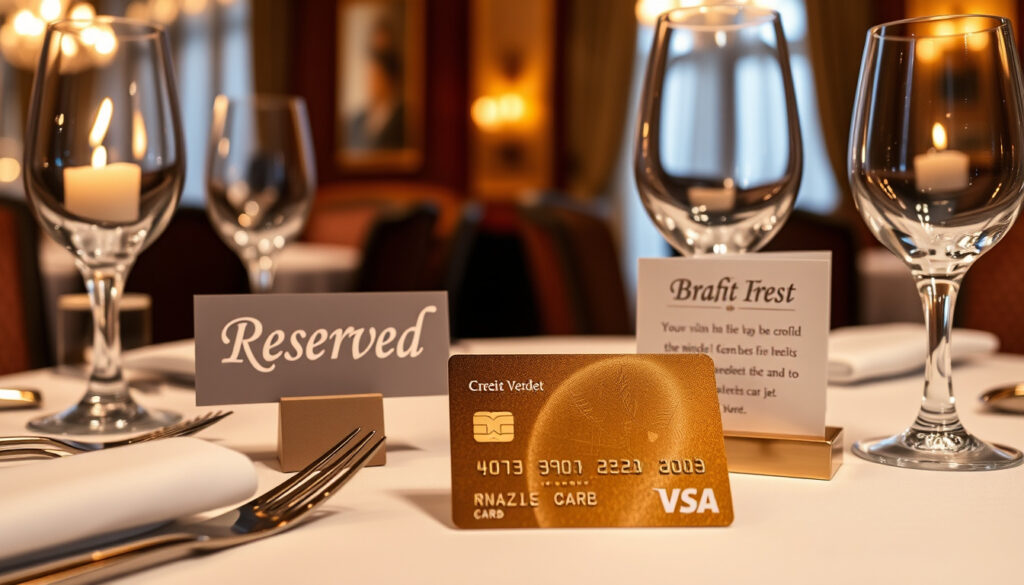
Sapphire Reserve Exclusive Tables: Dining Credit Guide
The Chase Sapphire Reserve’s $300 dining credit sounds straightforward, but the Exclusive Tables program has a catch: it only works at specific restaurants found through OpenTable. This guide explains exactly how the credit functions, which restaurants qualify, and how to avoid leaving money on the table.
Annual dining credit: $300 · Credit frequency: Twice a year ($150 each) · Points value for travel: 1.5 cents per point · Partner platform: OpenTable · Card required: Chase Sapphire Reserve
Key Facts at a Glance
Up to $300 in annual statement credits, split into two $150 semi-annual periods. – Chase
Participating restaurants in the Sapphire Reserve Exclusive Tables network, including cities like Las Vegas, New York, and Seattle. – Chase Guide
Pay with your Sapphire Reserve card at an eligible restaurant; the credit is applied automatically. – Chase
Link your card to OpenTable to see Exclusive Tables availability, but the credit does not require booking through OpenTable. – The Points Guy
What Are the Sapphire Reserve Exclusive Tables?
The Exclusive Tables program is a curated list of U.S. restaurants available through OpenTable for Chase Sapphire Reserve cardholders. Chase describes the benefit as up to $300 in annual statement credits for dining at participating restaurants, and the program includes primetime reservation access and special events, according to Chase (the issuing bank and program operator). The program is tied to the $300 annual dining credit and operates through a dedicated OpenTable portal.
Overview of the Program
Eligible Sapphire Reserve cardmembers and authorized users can make reservations through the program as a complimentary dining perk, per Chase. The annual dining credit is split into up to $150 from January through June and up to $150 from July through December, according to Chase. If you don’t use the credit by the end of each period, unused statement credits do not roll over to the next semi-annual period, as noted by The Points Guy (a frequent-flyer and credit card analysis site).
Key Benefits at Participating Restaurants
Participating restaurants offer a range of high-end dining experiences. In Seattle, Canlis and other fine dining establishments are included, and you should check OpenTable for the most up-to-date list, per The Points Guy. OpenTable’s city pages, such as those for New York City, repeat that diners can enjoy up to $300 in annual dining credits plus access to primetime reservations and events at participating restaurants.
The real value here is the access. Exclusive Tables often includes hard-to-book restaurants, and having the card can turn a “we’re fully booked” into a “we have a table for you.”
How to Find Sapphire Exclusive Tables on OpenTable
To start using the perk, Chase directs cardmembers to create a free OpenTable account and link an eligible Sapphire Reserve card through the OpenTable Chase Dining page. Once the card is linked, a dedicated Sapphire Reserve Exclusive Tables tab should appear within OpenTable, and eligible options are marked with visual indicators like blue badges or labels, according to Chase’s Las Vegas guide.
Step-by-Step Search on OpenTable
- Log in to OpenTable with your linked Chase account credentials.
- Navigate to the Sapphire Reserve Exclusive Tables section – either through a dedicated page like
/sapphire-reserve/[city]or via the filter after linking your card. - Look for the blue badge or “Sapphire Reserve Exclusive Tables” label on eligible restaurant listings.
- Book a table or walk in – the dining credit applies automatically when you pay with your Sapphire Reserve card.
Using the Chase Sapphire Reserve Filter
The filter view on OpenTable shows only participating restaurants. OpenTable’s help article explains that cardholders must log in with their linked Chase account to view these options. The credit automatically applies as a statement credit when paying with the card at these restaurants, per Chase.
How Does the $300 Annual Dining Credit Work?
The $300 credit is split into two $150 semi-annual credits — one for January through June, another for July through December, according to Chase. The credit applies automatically as a statement credit for eligible purchases at Exclusive Tables restaurants. Cardholders must pay with their eligible Sapphire Reserve card at an eligible restaurant to receive the dining credit, per Chase.
Credit Splitting and Timing
The annual dining credit is split into up to $150 from January through June and up to $150 from July through December, according to Chase. Unused statement credits do not roll over between semiannual periods, as clarified by The Points Guy.
How the Statement Credit Is Applied
The credit appears within 1–2 billing cycles after the purchase posts. Chase states that the credit applies automatically — no redemption code or claim form is needed. Quick Travel Guides notes that the credit can apply when paying at an eligible restaurant even without a reservation, including walk-ins.
| Detail | Value |
|---|---|
| Program name | Chase Sapphire Reserve Exclusive Tables |
| Annual dining credit | $300 ($150 per half-year) |
| Credit frequency | Twice a year ($150 each) |
| Points value for travel | 1.5 cents per point when redeemed through Chase Travel |
| Partner platform | OpenTable |
| Card required | Chase Sapphire Reserve |
What Is the Value of Chase Sapphire Reserve Points?
Chase Sapphire Reserve points are worth 1.5 cents each when redeemed for travel through Chase Ultimate Rewards, according to The Points Guy. That means 100,000 points equal $1,500 in travel value. Cash back or other redemptions yield lower value — typically 1 cent per point.
How Much Are 125,000 Points Worth?
At the 1.5-cent travel redemption rate, 125,000 points are worth $1,875. If redeemed for cash back at 1 cent per point, they’d be worth $1,250.
Is 150,000 Points a Lot?
150,000 points represent $2,250 in travel value through Chase Travel, or $1,500 in cash back. For comparison, a round-trip domestic flight often costs 25,000–50,000 points, so 150,000 points could cover several trips.
Is the Chase Sapphire Reserve Difficult to Get?
The Sapphire Reserve requires excellent credit, typically a FICO score of 750 or higher. Chase often enforces its 5/24 rule — no more than 5 new card accounts in 24 months — meaning applicants with many recent card openings are likely to be declined.
What Salary Do You Need?
Chase doesn’t publish a specific salary requirement, but the card’s $550 annual fee and premium positioning mean issuers expect a high income relative to debt. According to The Points Guy, existing banking relationships with Chase can improve approval odds.
Credit Score and Approval Chances
Excellent credit (750+ FICO) is the baseline. Chase also considers total available credit, existing Chase card relationships, and the applicant’s overall debt-to-income ratio.
Is It Worth It to Keep Chase Sapphire Reserve?
The $300 dining credit reduces the effective annual fee from $550 to $250. If you use the $300 travel credit, the effective fee drops to $0. The card also offers Priority Pass lounge access, Global Entry credit, and 3x points on dining and travel. The Points Guy notes that the dining credit alone doesn’t justify the $550 fee, but combined with other benefits it strengthens the card’s overall value.
Is Sapphire Reserve a Luxury Card?
Yes, it is considered a premium luxury travel card with a $550 annual fee, and the Exclusive Tables program is part of that positioning. The card’s broader travel and dining benefits, such as Priority Pass lounge access and a Global Entry credit, reinforce its luxury status, as noted by The Points Guy. The catch is that the luxury label comes with expectations that the perks actually work.
Is It a Pay-in-Full Card?
It is not a pay-in-full card; it’s a revolving credit card that allows you to carry a balance, though you’ll pay interest if you do. The dining credit is not tied to your payment behavior but to your spending at eligible restaurants.
Can My Wife Use My Card?
Authorized users, like a spouse, can have their own card and make purchases, but they do not receive the dining credit separately. According to The Points Guy, the credit is tied to the primary cardholder’s account, and each eligible card can generate the credit once per period.
Overall Value Assessment
The value proposition is solid if you dine out regularly and can easily spend $150 at a participating restaurant within six months. But if you’re not a frequent diner or prefer restaurants outside the curated list, the credit could go unused. Compared to other premium cards, the Sapphire Reserve’s dining benefit is unique because it’s tied to a specific program rather than a general dining credit. The implication: this can be a strength — access to exclusive tables — but also a weakness, as the limited list restricts your options.
“The dining credit alone doesn’t justify the $550 annual fee, but combined with other benefits like travel credits, lounge access, and points earning, it strengthens the card’s overall value.”
“To start using the perk, create a free OpenTable account and link an eligible Sapphire Reserve card through the OpenTable Chase Dining page.”
Related reading: How to use dining credit with Chase Sapphire Reserve Exclusive Tables · Chase Sapphire Reserve Exclusive Tables guide: How to use dining credit on OpenTable
opentable.com, opentable.com, opentable.com, chase.com, travel-on-points.com
Frequently Asked Questions
Can I use the credit at any restaurant on OpenTable?
No, the credit only applies at restaurants that are part of the Sapphire Reserve Exclusive Tables program. You’ll see a special badge or a separate tab in OpenTable after linking your card.
Can I combine the $300 credit with other offers or coupons?
The credit is a statement credit, not a coupon, so it works alongside most other offers or promotions at the restaurant. However, you must pay with your Sapphire Reserve card to trigger the credit.
What happens if I return a meal paid with the card?
If you receive a refund for a purchase that earned the dining credit, Chase may reverse the credit on your statement. It’s best to avoid returns at participating restaurants if you want to keep the benefit.
Do I need to book through OpenTable to get the credit?
No, you don’t have to book through OpenTable to receive the credit. You just need to dine at a participating restaurant and pay with your Sapphire Reserve card. However, booking through Exclusive Tables can help you secure a table.
Can authorized users get their own dining credit?
No, the dining credit is limited to the primary cardholder’s account. Each eligible card participating in the program can generate the credit once per period, but the credit is shared across the account.
What happens if I don’t use the credit by the end of the period?
Unused statement credits do not roll over to the next period, according to Chase. You’ll lose the $150 if you don’t use it by June 30 or December 31.
Is the Sapphire Reserve worth it for the dining credit alone?
The dining credit alone doesn’t justify the $550 annual fee, but combined with other benefits like travel credits, lounge access, and points earning, it strengthens the card’s overall value.
More related posts
 Lighting Stores Near Me – Top Houston Shops and Search Guide
 U.S. Embassy Qatar Warning: What Travelers Need to Know
 Ukraine War News Today – Key 2025 Developments
 South Park Trump Episode: Guide to Season 27 Parodies
 Strange New Worlds Season 3: Release, Cast, and Q Speculation
 What Is MCH in Blood Test? Low and High Levels Explained
 Doc (2025 TV Series) Season 1: Streaming & Episode Guide
 Elf on the Shelf: Rules, Meaning, Parental Guide 2025
