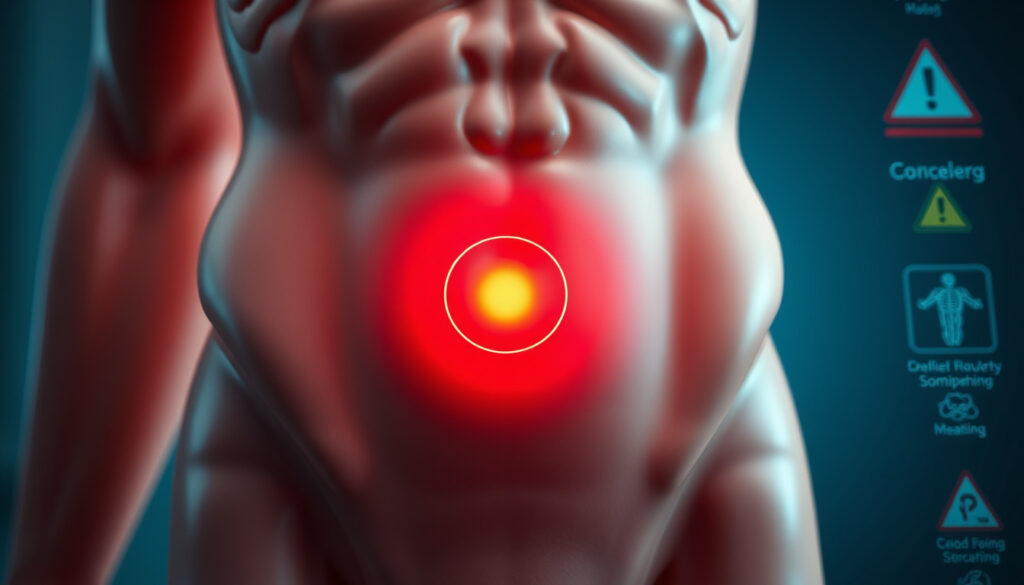
Lower Left Abdominal Pain: Causes, Red Flags, and When to Worry
Sitting still usually helps most aches, but lower left abdominal pain has a way of making you want to move and stay frozen at the same time. The area packs a lot of anatomy into a small space — the sigmoid colon, the left ovary, the ureter — and the causes run from a gas cramp to a surgical emergency. The evidence narrows the list to a few likely culprits, and it is clear about which warning signs deserve urgent attention — and why the answer often differs between men and women.
Most common cause in adults: Diverticulitis ·
Prevalence of diverticulosis in people over 60: About 50% ·
IBS prevalence in the general population: 10–15% ·
US emergency visits for abdominal pain per year: Approximately 7 million
Quick snapshot
- Diverticulitis is the most common cause of lower left abdominal pain in adults (American Family Physician)
- Fever, persistent vomiting, and blood in the stool are red flags that warrant urgent evaluation (Mayo Clinic)
- Ectopic pregnancy is a medical emergency (MedlinePlus)
- Exact prevalence of specific causes across age and sex groups
- Optimal timing for imaging in mild cases
- Effectiveness of over-the-counter pain relief before a diagnosis is made
- Pain that keeps coming back: schedule a medical visit instead of waiting for it to disappear (Cleveland Clinic)
- Pain severe enough that you can’t move without more pain: urgent care, not a wait-and-see approach (Cleveland Clinic)
- Sudden, severe pain: same-day evaluation, even if it arrives between other appointments (Cleveland Clinic)
- See a clinician if the pain recurs or changes your eating, sleeping, or bathroom habits
- Go to the emergency room if red flags like fever, persistent vomiting, or blood in the stool are present
- Expect a physical exam first; severe or chronic pain usually leads to CT imaging
Eight facts, one pattern: the lower left quadrant’s list of suspects is mostly colon, with the urinary and reproductive tracts close enough to imitate it.
| Fact | Detail |
|---|---|
| Most common cause in adults | Diverticulitis |
| Primary organ in the lower left abdomen | Sigmoid colon |
| Red flag #1 | Fever |
| Red flag #2 | Vomiting |
| Red flag #3 | Inability to pass gas or stool |
| Best imaging for acute severe pain | CT scan |
| Pelvic pain in women | Can signal problems with the uterus, ovaries, fallopian tubes, cervix, or vagina |
| Pelvic pain in men | Can be caused by a prostate problem |
What causes pain in the left lower abdomen?
The medical workup for this symptom usually sorts the suspects into four groups: digestive, reproductive, urinary, and musculoskeletal. The first group carries most of the weight.
Digestive causes (diverticulitis, IBS, constipation)
- Diverticulitis — inflammation of small pouches that form along the colon wall — heads the list. Cleveland Clinic’s guidance notes that lower left abdominal pain is most often related to diverticulosis and diverticulitis, because diverticula tend to develop on the lower left side (Cleveland Clinic).
- RadiologyInfo, a radiology patient-education resource, puts it even more bluntly: the most common cause of left lower abdominal pain in adults is diverticulitis.
- Irritable bowel syndrome (IBS) is another frequent cause of cramping in this quadrant. A Providence Health overview of the area lists diverticulitis and IBS as the common conditions in the lower left abdomen.
- Constipation produces a dull, pressure-like ache when stool collects in the sigmoid colon, and it is usually the first benign explanation a clinician rules in or out.
Diverticulitis leads the adult list, but the same quadrant can harbor gynecologic and urinary problems — so “it’s probably my colon” is a starting hypothesis, not a diagnosis.
Reproductive causes (ovarian cysts, ectopic pregnancy)
- In women, the left ovary and fallopian tube share the quadrant, so ovarian cysts, endometriosis, and pelvic inflammatory disease belong on the differential.
- Ectopic pregnancy is the emergency on this list — a pregnancy implanted outside the uterus can cause sudden left lower pain and is life-threatening.
Urinary causes (kidney stones, UTI)
- Kidney stones passing through the left ureter can refer pain into the lower left abdomen as they move.
- Urinary tract infections, especially when the bladder is involved, can create lower abdominal discomfort that mimics a digestive issue.
Musculoskeletal causes (muscle strain)
- Muscle strain from lifting, sports, or a sudden twist can cause a deep ache in the lower left side that worsens with movement or coughing.
The pattern: the colon leads the list, but the ureter and the reproductive tract sit close enough to imitate it. That overlap is why a diagnosis based on location alone tends to go wrong.
The evidence settles the main question: most lower left abdominal pain in adults traces to the colon, with diverticulitis at the top. But the reproductive and urinary systems sit close enough to mimic digestive pain — which is why a location-based hunch is not a diagnosis.
What organ is in the very lower left abdomen?
The lower left quadrant is a specific address, and knowing what lives there explains why the pain behaves the way it does.
Sigmoid colon and descending colon
- The sigmoid colon is the primary occupant — the S-shaped section of the large intestine where stool is stored before a bowel movement.
- The descending colon continues down the left side above it, which is why left-sided digestive pain so often centers on this column.
Left ovary and fallopian tube (in females)
- In women, the left ovary and fallopian tube occupy the same neighborhood, so gynecologic pain can masquerade as colon pain — and vice versa.
Left ureter
- The left ureter runs from the kidney to the bladder through the lower abdomen. A stone moving down it is a classic source of sharp, radiating left lower pain.
Left pelvic bone and muscles
- Bone and muscle sit beneath the organs, and both can generate pain that feels visceral — especially after lifting, exercise, or a fall.
What this means: the lower left quadrant is a crowded block of digestive, reproductive, and urinary real estate. The organ list explains why “left lower pain” is a starting point, not a conclusion.
How do you know if left side pain is serious?
Most left lower pain does not require an emergency room. The dangerous cases announce themselves — if you know what to listen for.
Red flags: fever, vomiting, inability to pass stool or gas
- Sudden and severe pain; blood in the urine or stool; an abdomen that is distended, rigid, or tender to the touch; days without eating or without a bowel movement; and pain after a recent injury — any of these warrants medical evaluation (Cleveland Clinic).
- Fever and persistent vomiting are the two flags that end the wait-and-see window fastest; they are covered in detail in the next section.
Sudden severe pain
- Pain that comes on fast and stays intense is the classic description of a perforation or rupture — the conditions that turn a manageable problem into a surgical one.
- If the pain is severe enough that you can’t move without aggravating it, that is the definition of urgent-care-level abdominal pain (Mayo Clinic).
Pain that worsens over hours
- Pain that escalates steadily over hours — instead of easing with rest, hydration, or passing gas — suggests something is progressing, not resolving. This pattern deserves a medical opinion the same day.
Signs of shock (dizziness, rapid heartbeat)
- Pain accompanied by dizziness, lightheadedness, a racing heart, or fainting can signal shock. Do not drive yourself to the hospital; call for emergency transport.
Imaging is the other half of the serious-pain answer. For acute, severe left lower-quadrant pain, CT is the most appropriate imaging test — and it is also the most appropriate test for chronic, intermittent, or low-grade pain, as well as for patients with obesity (American Family Physician).
The most dangerous causes — a perforated diverticulum, a ruptured ectopic pregnancy — do not start loud. They start as ordinary pain and escalate. For the person weighing whether to sleep on it, the risk is that the escalation happens hours later, farther from help.
The implication: severity is about more than the pain scale. It is about what travels with the pain — fever, bleeding, rigidity, or the inability to keep food down.
The distinction between watch and go-now comes down to what travels with the pain. Fever, vomiting, or an abdomen that is rigid or tender to the touch ends the wait-and-see window. CT imaging is the standard tool for both acute and chronic left lower-quadrant pain, and the rule is simple: when red flags appear, the answer is emergency evaluation, not observation.
What are the three red flags in abdominal pain?
Doctors use a short list to separate “watch” from “go now.” The three red flags are the clearest version of that list — fever, persistent vomiting, and blood in the stool or vomit — and they are the features that signal serious abdominal disease (Mayo Clinic).
Fever and chills
- Fever with left lower pain is the body’s infection signal. When that pair shows up, acute sigmoid diverticulitis is the first suspect, especially alongside an elevated white blood cell count (American Family Physician).
Persistent vomiting
- Vomiting that does not settle depletes fluids and can signal a blockage or severe inflammation. It is the body’s way of saying the problem is advancing, not improving.
Blood in stool or vomit
- Blood anywhere along the digestive tract is a structural warning sign — a source is bleeding, and bleeding needs an explanation rather than a symptom-masker.
The takeaway: fever, vomiting, and blood are the body’s way of saying the problem has moved past the lining of the colon. Treat them as a switch, not a suggestion.
What causes lower left abdominal pain in females?
Women carry a wider differential, because the same quadrant holds both digestive and reproductive organs.
Gynecological causes (ovarian cyst rupture, endometriosis, ectopic pregnancy)
- Pelvic pain in women can indicate problems with the uterus, ovaries, fallopian tubes, cervix, or vagina — which is why ovarian cysts and endometriosis are the usual gynecologic suspects in the lower left quadrant (MedlinePlus).
- An ovarian cyst can produce sharp pain that worsens with movement; endometriosis tends to cause chronic, cyclic pain that tracks the menstrual cycle.
- Ectopic pregnancy is a life-threatening emergency and is the diagnosis clinicians rule out first in women of reproductive age with sudden, severe lower left pain.
Digestive causes (diverticulitis, IBS)
- The same colon-centered causes from the general list — diverticulitis, IBS, constipation — apply to women, and they are often written off as menstrual cramps when they are not.
Urinary causes (UTI, kidney stones)
- Urinary tract infections and kidney stones produce the same referred lower left pain in women as in men; the gynecologic overlay just makes the diagnosis less obvious.
In women of reproductive age, “it feels like gas” does not rule out an ovarian or tubal problem. Ectopic pregnancy is the one diagnosis where a missed day changes the outcome — which is why sudden pain gets an emergency evaluation, not a heating pad.
The trade-off: women face a wider list of suspects — digestive and gynecologic — so a recurring “stomach issue” deserves a gynecologic workup, not another round of the same remedy.
What causes lower left abdominal pain in males?
The male list is shorter, but it has its own twists — and the most common cause is still the colon.
Digestive causes (diverticulitis, IBS, hernia)
- Diverticulitis is the most frequent adult cause regardless of sex, and the risk climbs with age.
- An inguinal hernia — a bulge through the abdominal wall — can refer pain into the lower left side, especially during lifting or straining.
- IBS follows the same pattern as in the general list: cramping and pain tied to bowel habits.
Urinary causes (kidney stones, prostatitis)
- In men, pelvic pain can be caused by a prostate problem — prostatitis, or inflammation of the prostate, can refer discomfort into the lower abdomen (MedlinePlus).
- Kidney stones produce the same sharp, radiating pain in men as in women.
Musculoskeletal causes (sports injury)
- A pulled abdominal muscle from lifting, sports, or a fall can cause localized lower left pain that worsens with movement or coughing.
The pattern: in men, the list leans digestive, but prostate and urinary conditions can refer pain into the same spot. “Over 40 with sudden left lower pain” should start a diverticulitis conversation, not a pulled-muscle assumption.
What is confirmed vs. still unclear
Confirmed facts
- Diverticulitis is the most common adult cause of lower left abdominal pain — the top diagnosis in American Family Physician’s clinical review of this quadrant.
- Fever, persistent vomiting, and blood in the stool are urgent features, per Mayo Clinic’s abdominal-pain guidance.
- In women, pelvic pain can trace to the uterus, ovaries, or fallopian tubes, which is why ectopic pregnancy is a first-line emergency check, per MedlinePlus.
What’s unclear
- Exact prevalence of specific causes across age and sex groups.
- Optimal timing for imaging in mild cases.
- Effectiveness of over-the-counter pain relief before a diagnosis.
- The threshold at which mild but persistent pain warrants same-day CT rather than observation.
The distinction matters: the confirmed facts are strong enough to act on, and the unclear items are exactly what a clinician’s exam, imaging, and follow-up are designed to resolve.
What the medical sources say
Lower left quadrant pain that’s specifically in your lower left abdomen is most often related to diverticulosis and diverticulitis.
Cleveland Clinic — health-system guidance
Common conditions in the lower left abdomen include diverticulitis and irritable bowel syndrome (IBS).
Providence — health-system consumer blog
The most common cause of left lower abdominal pain in adults is diverticulitis.
RadiologyInfo — radiology patient-education resource
The common thread: three independent medical sources converge on the same conclusion — this pain is usually colonic, and diverticulitis is the name to know.
For anyone sitting with lower left abdominal pain right now, the decision point isn’t whether it hurts — it’s what the pain is doing alongside. A mild ache that settles on its own is one story; pain that returns, or arrives with fever, vomiting, or blood, is another. The evidence is consistent: get a diagnosis early, and treat the red flags as a switch rather than a suggestion. For the person at home weighing whether to wait it out, the choice is concrete — book the appointment, or risk trading a doctor’s visit for an emergency room.
my.clevelandclinic.org, my.clevelandclinic.org, healthline.com, my.clevelandclinic.org, ubiehealth.com, medparkhospital.com, thelondonclinic.co.uk, ubiehealth.com
Frequently asked questions
How long is too long to have stomach pain?
There is no single number. The threshold is the red-flag trio: fever, persistent vomiting, or pain severe enough to stop you from moving. When any of those appears, the answer is “now,” not “let’s wait.” Without them, pain that returns after settling, or lasts beyond a few days, justifies a scheduled medical visit.
What are the first warning signs of a stomach tumor?
Stomach tumors are rare, and their early symptoms usually mimic common conditions like IBS. The features that warrant prompt evaluation are the urgent ones already listed in this article — unexplained weight loss, persistent vomiting, blood in the stool, and pain that does not settle. None is cancer-specific by itself, but pain combined with weight loss or bleeding should end self-diagnosis and start a doctor’s visit.
What are the six pains you should never ignore?
Mayo Clinic’s urgent-feature list condenses to six: severe pain that makes it hard to move, fever, bloody stools, persistent nausea and vomiting, unexplained weight loss, and severe abdominal tenderness. If any of these travels with left lower pain, it is an emergency-room conversation, not a “wait and see” one.
What could be causing lower abdominal pain before my bowel movement?
People with IBS often feel cramping build before a bowel movement and ease afterward — the lower left quadrant is a common site for that pattern. Constipation can cause a similar pressure-like ache as stool collects in the sigmoid colon. If the pain does not ease after passing stool or gas, or if blood appears, the red-flag rules take over.
What causes lower left abdominal pain in children?
The same digestive causes top the list in children — constipation and gastrointestinal infections are the usual suspects. The red flags do not change: fever, repeated vomiting, blood in the stool, or pain that stops a child from playing or sleeping warrants prompt evaluation.
What causes sharp lower left abdominal pain?
Sharp pain can come from a kidney stone moving through the left ureter, an ovarian cyst in women, or a muscle strain. Sharp and severe — especially with sudden onset — is the pattern that demands urgent evaluation, because a perforated diverticulum or a ruptured ectopic pregnancy can start the same way.
What are the treatments for lower left abdominal pain in males?
Treatment is cause-specific, and it starts with the right diagnosis. Diverticulitis is treated with antibiotics and a period of colon rest; prostatitis, a prostate problem, is typically treated with antibiotics and anti-inflammatory medication; kidney stones often pass with hydration; muscle strain responds to rest. Without a diagnosis, there is no best treatment — only guesswork.
More related posts
 How to Draw a Frog: Easy Step-by-Step Guide for Beginners
 Best High Yield Savings Account Sept 2026: Up to 4.10% APY
 How to Pair Apple Watch to a New Phone: Step by Step Guide
 2026 Winter Olympic Clo ing Ceremony: Time, Performer & More
 How to Connect AirPods: Pairing and Troubleshooting Guide
 Where Was Jesus Crucified – Golgotha Sites and Bible Evidence
 How to Pack a Suitcase Efficiently: Rolling & Rules
 Save A Lot Near Me: Find Locations, Hours, Weekly Ads & More
