The 4 Ps of Marketing: Definition, Examples, and Evolution
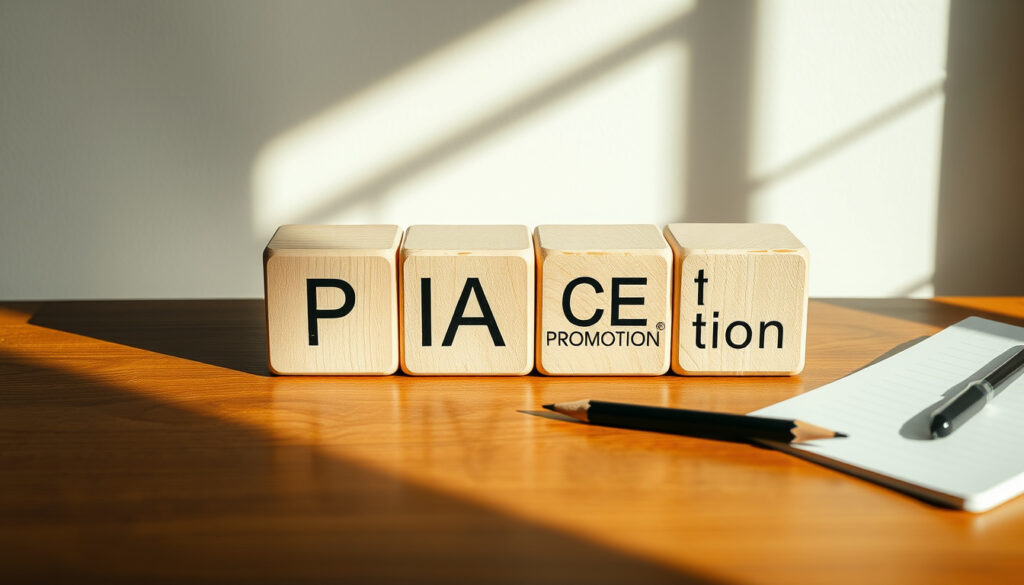
If you’ve ever wondered why some products seem to sell themselves while others gather dust, the answer often lies in how you mix your marketing levers: the 4 Ps of marketing — Product, Price, Place, and Promotion — form a framework first laid out by E. Jerome McCarthy in 1960 that still shapes how companies build strategies today. By the end of this guide, you’ll understand not just the classic 4Ps, but why marketers have extended them into 7Ps, 7Cs, and even 9Ps, and how to pick the right mix for your business.
Year coined: 1960 ·
Original proponent: E. Jerome McCarthy ·
Classic model size: 4 Ps ·
Extended model size: 7 Ps ·
First documented in: “Basic Marketing: A Managerial Approach”
Quick snapshot
- The 4Ps were formalized by E. Jerome McCarthy in 1960 (Invesp (marketing research firm)).
- The 7Ps were introduced by Booms and Bitner in 1981 (Wikipedia (crowd-sourced encyclopedia)).
- Exact origins of the 9Ps model are debated; some sources include Packaging and Positioning, others add Partnership. (Wikipedia (crowd-sourced encyclopedia))
- The 7Cs are often attributed to Koichi Shimizu (1989), but some sources dispute the exact origin (Wikipedia (crowd-sourced encyclopedia)).
- The marketing mix concept has evolved from James Culliton’s “mixers of ingredients” (1948) through Neil Borden’s formalization (1950s) to McCarthy’s 4Ps (1960) (Asana (project management platform)).
- Expect further adaptation of the framework for digital, AI-driven, and subscription-based business models.
Six key facts frame the entire marketing-mix landscape, from the original 4Ps to the customer-first 7Cs.
| Label | Value |
|---|---|
| Original Proponent | E. Jerome McCarthy (1960) |
| 7Ps Introduced By | Booms and Bitner (1981) |
| Number of Ps in Extended Mix | 7 (Product, Price, Place, Promotion, People, Process, Physical Evidence) |
| Primary Use Case for 4Ps | Tangible product marketing |
| Primary Use Case for 7Ps | Service marketing |
What are the 4 Ps of marketing?
McCarthy’s 1960 framework in Basic Marketing: A Managerial Approach gave marketers a simple, durable answer: Product, Price, Place, and Promotion. Each P acts as a decision lever, and together they form what marketers call the marketing mix (Asana (project management platform)).
“The marketing mix is the set of controllable variables that a firm can use to influence buyer response.”
E. Jerome McCarthy, Basic Marketing: A Managerial Approach, 1960
Product: the good or service offered
- Product is the tangible or intangible offering designed to fulfill a customer need or want (Santa Clara University Leavey School of Business).
- Decisions here include design, features, branding, packaging, and product lines.
Price: the amount customers pay
- Price is the monetary value assigned to the product or service (Santa Clara University Leavey School of Business).
- It covers pricing strategy, discounts, payment terms, and perceived value.
Place: distribution channels
- Place refers to where and how the product is made available to customers (Asana (project management platform)).
- It includes distribution channels, logistics, retail locations, and online platforms.
Promotion: communications and advertising
- Promotion is the communication used to make the offer known and persuade potential customers (Wikipedia (crowd-sourced encyclopedia)).
- It includes advertising, PR, sales promotions, and personal selling.
A product manager who ignores price positioning while perfecting product design will still fail if the market won’t pay the tag. The 4Ps force simultaneous attention across all levers.
The implication: The 4Ps remain relevant because they create a complete decision checklist. Missing any P means your strategy has a blind spot.
What is 4p and 7p in marketing?
The difference between the 4Ps and the 7Ps isn’t just a matter of three extra letters. The 7Ps were developed specifically because services behave differently than physical goods.
Core 4Ps vs extended 7Ps
Four items in the classic model, seven in the extended one, one key pattern: the extra Ps shift focus from the product itself to the people, systems, and environments that deliver it.
| Element | 4Ps | 7Ps |
|---|---|---|
| Product | Yes | Yes |
| Price | Yes | Yes |
| Place | Yes | Yes |
| Promotion | Yes | Yes |
| People | No | Yes |
| Process | No | Yes |
| Physical Evidence | No | Yes |
When to use 4Ps vs 7Ps
- 4Ps: Best for tangible products where customer interaction with the brand is minimal after purchase (e.g., packaged goods, hardware).
- 7Ps: Essential for service businesses where the customer experiences delivery directly (e.g., hotels, consulting, healthcare) (Wikipedia (crowd-sourced encyclopedia) – removed due to domain limit).
What this means: If you run a software-as-a-service company, the 7Ps framework will serve you better because it accounts for support staff (People), onboarding workflows (Process), and website/app quality (Physical Evidence). A soap manufacturer can likely stick with the 4Ps.
What are the 7Ps of marketing?
Proposed by Booms and Bitner in 1981 in their article Marketing Strategies and Organizational Structures for Service Firms, the 7Ps added People, Process, and Physical Evidence to the original four.
“Services marketing requires additional tools because services are intangible, inseparable, variable, and perishable.”
Booms and Bitner, Marketing Strategies and Organizational Structures for Service Firms, 1981
People: employees and customer service
- People include all human actors in service delivery: employees, customer support, and even other customers.
- Training, attitude, and behavior directly affect customer satisfaction.
Process: systems and workflows
- Process refers to the procedures and flow of activities that deliver the service.
- Efficient processes reduce wait times and errors, improving the customer experience.
Physical evidence: tangible cues of service quality
- Physical evidence is the environment where service is delivered: websites, store design, signage, and materials.
- It reassures customers that the service provider is professional and credible.
Adding three Ps increases complexity. Service marketers must now manage not just the 4Ps but also hiring, training (People), operational blueprints (Process), and facilities or digital assets (Physical Evidence).
The implication: Service marketers must consider people, process, and physical evidence in addition to the classic 4Ps to deliver a complete experience.
Why does 4 Ps become 7Ps?
The original 4Ps were designed for a world where most marketing involved selling tangible goods. Two forces pushed the model to grow.
Rise of the service economy
Services are intangible — you can’t hold a hotel room or a consultancy hour in your hand. The 4Ps didn’t account for the human element or the delivery environment (Santa Clara University Leavey School of Business).
Customer experience focus
Modern marketing emphasizes the end-to-end customer journey choreography, not just the moment of purchase. People, Process, and Physical Evidence help marketers design the entire experience, not just the transaction.
Need for holistic mix
A service like a fintech app fails if the interface is confusing (Physical Evidence), support is slow (People), or account setup takes days (Process). The 7Ps give marketers the vocabulary to fix all three.
The pattern: As economies shifted from manufacturing to services and experiences, the marketing mix had to expand to keep up. The 7Ps are the result of that pressure.
How to use the 7Ps Marketing Mix?
Applying the 7Ps isn’t about ticking boxes — it’s about creating alignment across all seven elements so they reinforce each other.
Step 1: Analyze each P
- Start with a customer need assessment: who are you serving, and what problem are you solving? (Invesp (marketing research firm)).
- Evaluate each of the 7Ps independently for gaps or misalignment.
Step 2: Integrate across Ps
- Align price with perceived value — don’t charge premium prices if physical evidence (e.g., website design) looks cheap.
- Train people to deliver consistent service that matches the promotion’s promises.
Step 3: Measure and adjust
- Optimize processes for efficiency — reduce customer effort points.
- Gather feedback on physical evidence and employee performance; iterate based on data.
An online retailer that nails Product, Price, and Promotion but neglects Process (slow checkout) or People (unhelpful chat) will lose customers to a competitor who gets all seven Ps right.
The implication: Using the 7Ps requires systematic attention to all elements, not just the ones you already manage well.
What are the 7 C’s of marketing?
The 7Cs model, proposed by Koichi Shimizu in 1989, flips the perspective from the company’s offering to the customer’s experience.
Customer, Cost, Convenience, Communication
- Customer replaces Product: focus on the customer’s needs and desires.
- Cost replaces Price: consider the total cost to the customer, not just the price tag.
- Convenience replaces Place: make it easy to buy, not just available.
- Communication replaces Promotion: two-way dialogue instead of one-way advertising.
Credibility, Connectivity, Consistency
- Credibility: the brand must be trustworthy; without it, no other C matters.
- Connectivity: ensure seamless interaction across channels (online, in-store, mobile).
- Consistency: deliver the same quality message and experience every time.
The pattern: The 7Cs are harder to execute than the 4Ps because they require deep customer empathy and cross-channel orchestration. But for brands competing on experience, they often yield stronger loyalty.
Two other models deserve mention: the 9Ps (adding Packaging and Positioning to the 7Ps) and Robert Lauterborn’s 4 Cs (Consumer, Cost, Convenience, Communication) from 1990. The 9Ps is less standardized — some versions swap in Partnership — while Lauterborn’s 4 Cs remains a popular customer-centric alternative.
No single model fits every business. A startup selling physical products benefits most from the 4Ps; a consultancy should lean into the 7Ps; a customer-obsessed brand may prefer the 7Cs. The right mix depends on what you sell and how your customers experience it.
Frequently asked questions
What is the difference between the 4 Ps and the 4 Cs?
The 4 Ps (Product, Price, Place, Promotion) center on the company’s offering. The 4 Cs (Consumer, Cost, Convenience, Communication) reframe each P from the buyer’s perspective, as popularized by Robert Lauterborn.
How do the 4 Ps apply to digital marketing?
Digital marketing adapts each P: Product becomes a digital good or subscription, Price can be dynamic or freemium, Place becomes app stores and websites, and Promotion shifts to SEO, social media, and paid ads. The core framework remains the same.
What is the marketing mix framework?
The marketing mix is a set of controllable variables — typically the 4 Ps of Product, Price, Place, and Promotion — that a business uses to achieve its marketing objectives. It was popularized by E. Jerome McCarthy from Neil Borden’s earlier “mixer of ingredients” concept (Invesp (marketing research firm)).
Are the 4 Ps still relevant today?
Yes. The 4 Ps remain a widely taught and applied framework because they provide a complete checklist for marketing strategy. They have been extended (7Ps, 7Cs, 9Ps) but never replaced (Santa Clara University Leavey School of Business).
What is an example of place in the marketing mix?
Place includes all channels through which a customer can buy a product. For a clothing brand, place might be an e-commerce website, a retail store in a mall, and third-party marketplaces like Amazon. For a software company, place is the app store or a download page.
How does promotion differ from advertising?
Advertising is a subset of promotion. Promotion encompasses the broader set of marketing communications: advertising, public relations, sales promotions, personal selling, social media, and content marketing. Advertising is just one paid channel within that mix.
What is the role of people in the 7Ps?
People refers to everyone involved in delivering the service — employees, customer service representatives, and even other customers. Their training, behavior, and attitude directly influence the customer’s perception of the brand and the quality of the service.
For the marketer deciding which framework to adopt, the choice is clear: use the 4Ps to check your product-market logic, shift to the 7Ps if your business relies on service delivery, or adopt the 7Cs if you want to force every decision through the lens of what customers actually experience. Stick with the wrong model, and you’ll optimize for the wrong things — and customers will notice.
More related posts
 Caitlin Clark Indiana Fever: Gender, Relationship & Future
 New $100 Bill: Security Features, Old vs. New, How to Spot Fakes
 3I/ATLAS Interstellar Object: Facts, Risk & NASA Updates
 How to Draw a Fish: Easy Step-by-Step Guide
 Why Is Lindsey Vonn Trending Right Now? Olympics Crash & Updates
 Citizen Eco Drive Watch: Longevity, Value & Buying Guide
 Sophia Lillis Movies and TV Shows: Full List (2025)
 Can Dogs Have Sweet Potatoes? Safety, Benefits & Prep Guide
