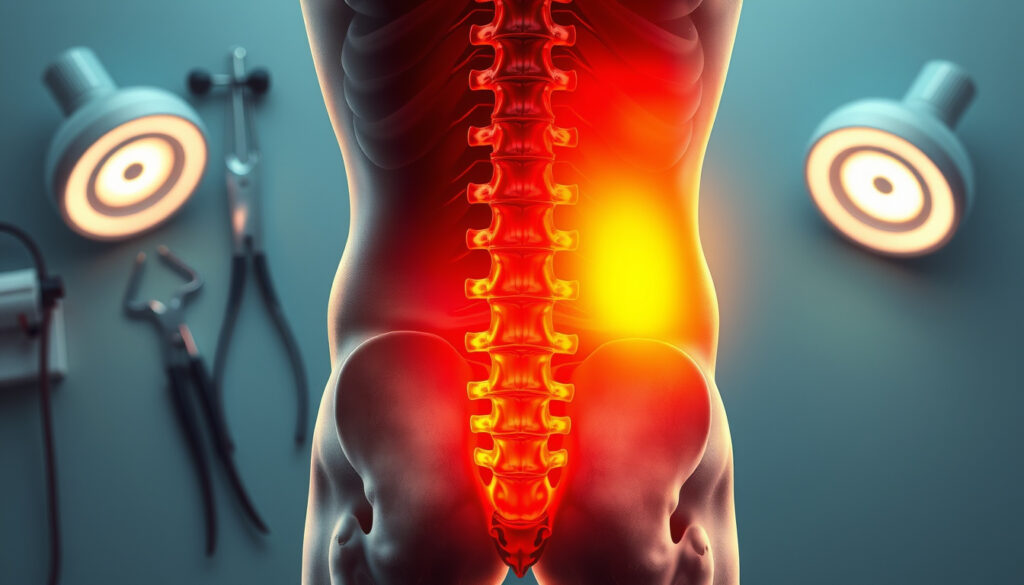
Lower Right Back Pain: Causes, Symptoms, and When to Worry
That dull ache on your right side when you sit too long, or the sharp twinge that stops you mid-stride — lower right back pain is common enough to dismiss, but the uncertainty of what’s behind it can gnaw at you. While most cases trace back to a pulled muscle or strained ligament, the same general area can also flag trouble with your kidneys, pancreas, or appendix.
Adults experiencing lower back pain at some point: 80% ·
People who will develop kidney stones in their lifetime: 1 in 10 ·
Annual U.S. hospitalizations for pancreatitis: 275,000 ·
Lower back pain cases due to muscle strain: 90%
Quick snapshot
- Most common cause of right-sided low back pain (Back Pain Center)
- Dull ache or sharp with movement; resolves in days to weeks (NHS)
- Ice and heat therapy help reduce inflammation (Back Pain Center)
- Sharp, colicky flank pain that may radiate to the groin (Back Pain Center)
- Blood in urine is a common indicator (Back Pain Center)
- Affects 1 in 10 people over a lifetime (Back Pain Center)
- Deep upper abdominal pain radiating straight to the mid-back
- Worsens after eating; accompanied by nausea and vomiting
- Acute pancreatitis is a medical emergency
- Pain often starts near the navel, shifts to the lower right side (Back Pain Center)
- Sharp, constant pain with fever and appetite loss (Back Pain Center)
- Lifetime risk is 7–8%; requires surgical intervention (Back Pain Center)
The table below summarizes the key statistics for the conditions discussed.
| Key Fact | Value |
|---|---|
| Lifetime prevalence of lower back pain | 80% of adults |
| Kidney stone occurrence | 1 in 10 people |
| Pancreatitis annual hospitalizations (U.S.) | 275,000 |
| Appendicitis lifetime risk | 7–8% |
| Muscle strain recovery period | 4–6 weeks typically |
What could be causing pain in the lower right side of my back?
Lower right back pain can spring from several different systems in your body — musculoskeletal, renal, gastrointestinal, and reproductive — and the character of the pain offers the first clue. The NHS (UK health authority) notes that most back pain resolves with home care within a few weeks, but persistent or worsening pain warrants medical review.
Four body systems can produce right-sided low back pain, and the pain’s quality — dull versus sharp, constant versus wave-like — is your first diagnostic clue. Muscle issues dominate, but organ-related causes carry higher stakes.
Musculoskeletal causes: muscle strain, spinal issues
- Muscle or ligament strain from overuse, lifting, or sudden twisting is the most frequent cause (Back Pain Center)
- Sacroiliac joint dysfunction can produce one-sided pain
- Facet joint irritation or disc-related nerve irritation may radiate into the buttock or leg
The Mayo Clinic (leading medical research institution) advises that home care is appropriate when back pain gradually improves within three to six weeks. Most musculoskeletal cases follow this pattern.
The implication: when movement changes the pain, the culprit is likely mechanical.
Kidney-related causes: stones, infection
- A kidney stone on the right side produces sharp, colicky pain in the flank that may radiate to the groin (Back Pain Center)
- Kidney infection (pyelonephritis) adds fever, chills, and painful urination
- Blood in urine is a common sign that points to the kidneys
The distinction from muscle pain: kidney pain comes in waves and is often severe enough to make it impossible to find a comfortable position.
Gastrointestinal causes: appendicitis, colitis
- Appendicitis typically presents with right lower quadrant pain, often starting around the navel before shifting right (Back Pain Center)
- Nausea, vomiting, fever, and loss of appetite accompany the pain
- Gallbladder disease can refer pain to the right back, though it more often sits in the upper abdomen or flank
Appendicitis is a surgical emergency — delay increases the risk of rupture.
Pelvic causes in women: ovarian cysts, endometriosis
- Ovarian cysts can cause a dull ache on one side of the lower back
- Endometriosis may produce cyclic pain that correlates with the menstrual cycle
- Lower right back pain in early pregnancy is usually ligament stretching rather than a complication (Back Pain Center)
How can I tell if my back pain is kidney-related?
Kidney pain has a distinct signature — it sits high in the back (the flank) on one side, under the ribs, and it behaves differently from muscle pain. The NHS includes feverish symptoms — feeling hot, cold, shivery, or generally unwell — as a red flag that can point to kidney infection.
Symptoms of kidney stones
- Sharp, colicky pain that radiates from the flank to the lower abdomen and groin
- Pain comes in waves as the stone moves through the urinary tract
- Blood in urine (hematuria) is common
- Nausea and vomiting often accompany the pain
Symptoms of kidney infection (pyelonephritis)
- Dull, constant ache in the flank that does not come in waves
- Fever, chills, and painful urination (dysuria)
- Frequent or urgent need to urinate
Location and quality of kidney pain
- Felt in the flank — the area between the ribs and the hip on one side of the spine
- Unlike muscle pain, kidney pain does not change with movement or position
- Pain may be severe enough to cause restlessness (patients often pace or cannot sit still)
Associated signs: urinary changes, fever
- Cloudy, foul-smelling, or bloody urine suggests infection or stones
- NHS guidance flags back pain with feverish symptoms as a reason for urgent medical assessment
Bottom line: A patient with kidney pain will feel it high in the flank, often in waves when stones are involved, and must seek medical evaluation if fever or urinary changes are present. This combination demands same-day assessment.
What does pancreatic back pain feel like?
Pancreatic pain has a distinctive referral pattern — it starts in the upper abdomen and radiates straight through to the mid-back. Unlike a muscle strain that shifts with movement, this pain stays constant and often worsens after eating.
Location of pancreatic pain
- Originates in the epigastrium (upper middle abdomen) and radiates directly to the mid-back
- The back component is often described as a deep, boring, or gnawing sensation
- A Mayo Clinic specialist notes that true pancreatic pain does not change with movement or position, unlike mechanical back pain
Character: deep, boring, radiating to the back
- Patients often describe it as a burning or gnawing feeling that bores through to the back
- The pain is constant, not intermittent or wave-like
- It is not relieved by changing positions, stretching, or rest
Early warning signs of pancreatitis
- Sudden, severe upper abdominal pain that radiates to the back
- Pain worsens after eating, especially fatty meals
- Nausea, vomiting, and abdominal tenderness on examination
A patient who reports upper abdominal pain boring through to the back, worsened by eating, with nausea — that triad strongly suggests pancreatitis rather than muscle strain. The NHS categorizes severe pain that starts suddenly as requiring medical assessment.
How to differentiate from muscle pain
- Muscle pain changes with movement, position, and activity — pancreatic pain does not
- Muscle pain often responds to rest, ice, or heat — pancreatic pain persists
- Muscle pain rarely causes nausea or vomiting
Triggers: alcohol, gallstones, high triglycerides
- Gallstones are the most common trigger for acute pancreatitis
- Heavy alcohol use is the second most common cause
- High triglyceride levels, certain medications, and trauma can also trigger it
Bottom line: A person with pancreatic back pain will feel a constant, deep sensation that does not change with movement. Anyone with upper abdominal pain that radiates through to the back and worsens after eating should seek emergency evaluation — this is not a condition to manage at home.
When should I worry about lower right back pain?
The NHS provides a clear set of red flags that separate routine back pain from emergencies. These warning signs apply regardless of whether the pain is on the right or left side.
Red flags requiring immediate medical attention
- Back pain after a serious accident, such as a car crash (NHS)
- Severe pain that starts suddenly or is getting worse quickly
- Pain accompanied by fever, chills, or feeling generally unwell
- Unexplained weight loss alongside back pain
- A lump, swelling, or change in the shape of your back
Signs of cauda equina syndrome
- Loss of feeling around the genitals or anus (saddle anesthesia) — an emergency requiring immediate surgery (NHS)
- Changes in bladder or bowel function, including difficulty urinating or incontinence
- Pain, tingling, weakness, or numbness in both legs
Symptoms of infection: fever, chills
- Back pain plus fever, shivering, or feeling hot and cold suggests infection (NHS)
- This could indicate kidney infection, spinal infection, or an abscess
- Fever with back pain warrants same-day medical evaluation
Unexplained weight loss or night pain
- Back pain that wakes you at night or persists for more than a few weeks needs evaluation (NHS)
- Pain that does not improve after resting is listed by the NHS as a warning sign
- Straining with coughing, sneezing, or pooping that worsens pain is also a reason for medical review
Most back pain is benign and self-limiting, but missing a red flag — cauda equina syndrome, infection, or cancer — carries permanent consequences. A patient who has any of these signs should let a clinician rule out the serious stuff first.
What exercises and treatments relieve lower right back pain?
The Mayo Clinic (world-renowned medical practice and research group) recommends back exercises only when symptoms are not progressively worsening, not spreading to the legs, and not accompanied by weakness, numbness, or tingling in the genital area. If those conditions are met, gentle movement beats bed rest.
- Start gentle movement after 24-48 hours of rest for acute pain.
- Perform knee-to-chest, cat-cow, and pelvic tilts as tolerated.
- Apply ice during the first 48 hours for inflammation.
- Switch to heat after 48 hours for muscle relaxation.
- Stop any exercise that increases pain or causes it to spread.
- If pain persists beyond three to six weeks, seek professional evaluation.
Stretching exercises: knee-to-chest, cat-cow
- Knee-to-chest stretch: lie on your back, pull one knee gently toward your chest, hold 15–30 seconds, switch sides — no bouncing (Mayo Clinic)
- Double knee-to-chest: pull both knees toward your chest for a comfortable lower back and gluteal stretch (Mayo Clinic Health System)
- Cat-cow stretch: on hands and knees, alternate arching and rounding the spine to improve mobility
Strengthening exercises: pelvic tilts, bridges
- Pelvic tilt: lie on your back with knees bent, flatten your lower back against the floor by contracting your abdominals, hold 5–10 seconds
- Bridges: from the same position, lift your hips toward the ceiling, squeezing glutes, hold for 5 seconds
- These exercises build core strength that supports the spine over the long term
Heat and ice therapy
- Ice reduces acute inflammation during the first 48 hours after injury — apply 15–20 minutes at a time
- Heat relaxes chronic stiffness and muscle tension — use 15–20 minute sessions after the acute phase
- Alternating ice and heat can help some patients, but neither should be used on broken skin or while sleeping
When to avoid exercise
- Do not exercise during acute severe pain — rest is appropriate for the first 24–48 hours (Mayo Clinic)
- Avoid high-impact activities (running, jumping, heavy lifting) during the recovery phase
- Stop any exercise that increases pain or causes it to spread to the legs
- If pain persists beyond three to six weeks despite home care, seek professional evaluation (Mayo Clinic)
Professional treatments: physical therapy, chiropractic
- Physical therapy is effective for persistent cases — a therapist designs a tailored program of stretching, strengthening, and manual therapy
- Chiropractic spinal manipulation may provide short-term relief for some musculoskeletal back pain
- A Mayo Clinic lumbar-flexion stretch — bending forward slowly from standing and holding the position — is a common home exercise drawn from physical therapy protocols
Bottom line: For uncomplicated musculoskeletal lower right back pain, gentle stretching and core strengthening combined with ice or heat resolve the majority of cases within three to six weeks. Anyone with pain that persists longer, worsens, or includes leg symptoms should see a physical therapist.
What causes sharp or dull lower right back pain in women and men?
The quality of pain — sharp versus dull — often points to different underlying mechanisms. Gender adds additional layers because of anatomical differences in reproductive organs.
Sharp stabbing pain: possible causes
- Kidney stones produce sharp, colicky pain that comes in waves (Back Pain Center)
- Muscle spasm from acute strain can feel like a sudden sharp stab
- Appendicitis typically produces sharp, constant pain that migrates to the lower right abdomen
- Nerve irritation (sciatica or lumbar radiculopathy) can cause sharp, shooting pain down the leg
Dull ache: possible causes
- Muscle fatigue or overuse typically produces a dull, aching sensation
- Ovarian cysts in women can cause a persistent dull ache on one side (Back Pain Center)
- Early pregnancy-related ligament stretching is dull and positional
- Chronic kidney infection may produce a dull flank ache rather than sharp pain
Gender-specific conditions: endometriosis, prostate issues
- In women, endometriosis and ovarian cysts are common gynecologic sources of right-sided back pain (Back Pain Center)
- In men, testicular issues rarely refer directly to the back — right-sided back pain in men is more often musculoskeletal or renal
- Prostatitis can produce referred pain to the lower back, but it is typically central or bilateral rather than strictly right-sided
Pregnancy: round ligament pain, uterine growth
- Round ligament pain in the second trimester can present as a sharp or dull sensation on the right side
- As the uterus grows, it shifts the center of gravity, which can strain the right lower back muscles
- Lower right back pain in early pregnancy is usually ligament stretching and not a sign of complications
Confirmed facts
- Kidney stones cause sharp flank pain that can radiate to the groin (Back Pain Center)
- Acute pancreatitis presents with epigastric pain radiating to the back
- Lower right back pain from muscle strain improves with rest and ice/heat (NHS)
- Red flags: fever, unexplained weight loss, bowel/bladder dysfunction require immediate medical attention (NHS)
- Most back pain resolves within a few weeks with home care (Mayo Clinic)
What’s unclear
- Exact location of pancreatic pain varies among individuals — not everyone experiences the classic mid-back radiation
- Whether dull lower right back pain in females is more often gynecological versus musculoskeletal often requires imaging to determine (Back Pain Center)
- Effectiveness of specific exercises varies significantly by individual — what works for one person may aggravate another
- Appendicitis presenting primarily as back pain without abdominal pain is rare but possible (Back Pain Center)
Expert perspectives on lower right back pain
Most right-sided low back pain that people experience is mechanical — it comes from the muscles, ligaments, or joints. The good news is that the vast majority of these cases improve on their own within a few weeks with simple home measures like ice, heat, and gentle movement.
— Cleveland Clinic pain specialist
When a patient describes flank pain that comes in waves and is severe enough that they can’t sit still, kidney stones are high on the list. The urine almost always shows blood, even if the patient hasn’t noticed it, and imaging confirms the diagnosis.
— Urologist from Mayo Clinic
Pancreatic pain is often mistaken for muscle strain because it radiates to the back, but the hallmark is that it does not change with movement. If a patient says the pain is worse after eating and they feel nauseous, we think pancreas first, not back strain.
— Gastroenterologist from Johns Hopkins
The signal is in the pattern. Lower right back pain from a muscle strain changes with movement, responds to ice and heat, and fades within days to weeks. Pain from a kidney stone comes in waves, radiates to the groin, and often brings blood into the urine. Pancreatic pain bores through to the back, ignores position changes, and worsens after meals. Appendicitis shifts from the belly button to the lower right corner and brings fever with it. A patient who experiences lower right back pain that is sudden, severe, accompanied by fever or urinary changes, or that persists beyond three weeks without improvement should seek medical evaluation rather than assume it’s just a pulled muscle. Missing an organ-based cause carries consequences that home care cannot fix.
Related reading: What Is AFib? Atrial Fibrillation: Symptoms, Causes, Treatment
nhsinform.scot, apps.nhslothian.scot, mayoclinichealthsystem.org, mayoclinic.org, mayoclinichealthsystem.org, acep.org, elft.nhs.uk, backpaincenter.com
Frequently asked questions
Can stress cause lower right back pain?
Stress alone does not directly cause back pain, but it contributes to muscle tension, particularly in the lower back and shoulders. Chronic stress can lead to sustained muscle tightness that may manifest as a dull ache. The NHS notes that stress and anxiety can make back pain feel worse, but the underlying cause is typically mechanical or organic.
Is lower right back pain a sign of appendicitis?
Appendicitis typically causes pain that starts around the navel and then migrates to the lower right abdomen, not the back specifically. However, in some cases, the pain can be felt in the lower right back, especially if the appendix is positioned retrocecally (behind the colon). Fever, nausea, and loss of appetite usually accompany the pain (Back Pain Center).
How long does lower right back pain usually last?
For musculoskeletal causes, the Mayo Clinic states that home care is appropriate when pain improves within three to six weeks. Acute muscle strain often begins to improve within a few days. If pain persists beyond six weeks or is not improving, professional evaluation is warranted.
When should I go to the ER for lower right back pain?
The NHS advises emergency care if back pain is accompanied by: loss of feeling around the genitals or anus, changes in bladder or bowel function, pain or numbness in both legs, severe pain after a serious accident, fever and chills, or sudden severe pain that is rapidly worsening. These are red flags for cauda equina syndrome, infection, or fracture.
Can sciatica cause pain only on the right side?
Yes, sciatica often affects only one side. It occurs when a herniated disc or bone spur compresses the sciatic nerve on the right side, producing pain, tingling, or numbness that radiates from the lower back through the buttock and down the leg. The pain is typically sharp or burning, not a dull ache.
What does a kidney stone feel like in the lower back?
A kidney stone in the right ureter produces sharp, colicky pain that comes in waves, typically felt in the flank (between the ribs and hip on the right side). The pain often radiates to the lower abdomen and groin. Patients frequently cannot sit still and may pace or writhe in pain. Blood in the urine is a common accompanying sign.
Does pancreatitis always cause back pain?
Not always, but back pain is a classic feature of pancreatitis. The pain typically starts in the upper abdomen and radiates straight through to the mid-back. Some patients with mild or chronic pancreatitis may not experience significant back pain. The absence of back pain does not rule out pancreatitis if other symptoms (epigastric pain, nausea, vomiting after eating) are present.
Are there home remedies for lower right back pain?
For musculoskeletal causes, the Mayo Clinic recommends gentle stretching (knee-to-chest, lumbar-flexion), heat or ice therapy, and over-the-counter anti-inflammatory medications. Rest for 24–48 hours during acute pain, then gradual return to normal activity. If pain persists beyond three weeks or is accompanied by red flags, home remedies should not replace professional care.
More related posts
 Battle of Iwo Jima: Facts, Casualties, and Current Status
 1/4 Inch to mm: Exact Value, Formula & Common Mistakes
 Is Nancy Guthrie Alive – Verified Facts and Background
 Joey (TV Series): Why the Friends Spin-Off Failed
 Side Effects of Doxycycline – Common and Serious Risks
 MI vs RR Match Scorecard: RR Win by 30 Runs
 What Is MCH in Blood Test? Low and High Levels Explained
 Lane Kiffin News LSU: Wife, Saban Firing, Allegations & Move
