What Cau e Pink Eye in Adult ? Key Trigger
You’ve gone to bed feeling fine, woken up, and caught a glimpse in the mirror — one eye is pink, swollen, and crusty. Before you panic about hygiene or start scrubbing every pillowcase in the house, it helps to know that most pink eye in adults is caused by a virus, not dirt. This article walks through the real triggers, the myths that fuel unnecessary shame, and exactly how to tell the difference between viral, bacterial, and allergic conjunctivitis.
Most common cause in adults: Viral infection (adenovirus) · Other viral causes: Herpes simplex, varicella-zoster · Bacterial causes: Staphylococcus, Streptococcus, Haemophilus · Non-contagious cause: Allergens (pollen, dust, pet dander)
Quick snapshot
- Caused by adenovirus (most common) (CDC)
- Watery discharge, often starts in one eye (CDC)
- Highly contagious, lasts 1‑2 weeks (Singapore NCID)
- Caused by Staphylococcus aureus, Streptococcus pneumoniae, Haemophilus influenzae (CDC)
- Thick yellow‑green discharge, both eyes often affected (CDC)
- Treated with antibiotic drops, contagious until 24h after treatment (BSW Health)
- Triggered by pollen, dust, pet dander (Cleveland Clinic)
- Itchy, watery eyes, no discharge (Cleveland Clinic)
- Not contagious, treated with antihistamine drops (Cleveland Clinic)
- Caused by smoke, chlorine, chemicals
- Redness and irritation, no infection
- Not contagious, resolves once irritant removed
Five key facts distil the landscape of adult pink eye — here is what the evidence shows at a glance.
| Label | Value |
|---|---|
| Primary cause in adults | Viral (adenovirus) (CDC) |
| Most common viral agent | Adenovirus (Cleveland Clinic) |
| Common bacterial agents | Staphylococcus aureus, Streptococcus pneumoniae, Haemophilus influenzae (CDC) |
| Contagious period (viral) | As long as symptoms are present (1‑2 weeks) (Singapore NCID) |
| Contagious period (bacterial) | Until 24 hours after starting antibiotics (BSW Health) |
Why did I get a pink eye out of nowhere?
Viral causes (adenovirus)
- Adenoviruses are the most frequent culprits behind acute pink eye in adults (CDC (public health authority)).
- These viruses spread through respiratory droplets and contaminated surfaces — a touch of a doorknob shared with an infected person can be enough.
- Other viral agents: herpes simplex (HSV), varicella‑zoster, and – in specific regions – enterovirus 70 and coxsackievirus A24 (CDC).
Bacterial causes
- Bacterial conjunctivitis in adults is less common but can involve Staphylococcus aureus, Streptococcus pneumoniae, Haemophilus influenzae, and Moraxella catarrhalis (CDC).
- In adults, Staphylococcus aureus is particularly prevalent, according to guidance from the Singapore National Centre for Infectious Diseases.
- Chlamydia trachomatis and Neisseria gonorrhoeae can also cause conjunctivitis, often linked to sexually transmitted infections.
Allergic conjunctivitis
- Allergens like pollen, mold, dust mites, and pet dander trigger an immune reaction in the conjunctiva (Cleveland Clinic).
- Symptoms appear seasonally or after exposure to specific environments.
- Unlike viral or bacterial forms, allergic pink eye is not contagious and often comes with intense itching.
Irritants and other causes
- Chemicals (chlorine in pools), smoke, air pollution, and contact lens overwear can irritate the conjunctiva without infection.
- Contact lens misuse – sleeping in lenses or using expired solutions – can lead to microbial keratitis that looks like pink eye.
Is pink eye due to bad hygiene?
Hygiene and pink eye: the facts
- Pink eye is not a sign of poor personal hygiene, though poor handwashing can facilitate spread (Prevent Blindness).
- Viral conjunctivitis spreads easily in households and schools regardless of cleanliness.
- Bacteria that cause pink eye – such as Staphylococcus aureus – naturally live on skin and can infect the eye when transferred by touch.
Fecal‑oral transmission of conjunctivitis
- Bacteria from feces (e.g., some strains of E. coli or Shigella) can cause conjunctivitis, but this path is uncommon in adults (CDC).
Role of dirty pillows and bedding
- Pillowcases and towels can harbour bacteria and viruses if contaminated by an infected person (Singapore NCID).
- Sharing these items with someone who has active pink eye increases transmission risk, but a clean pillow alone does not prevent infection – viral aerosol spread also plays a role.
How to tell if pink eye is bacterial or viral?
A few key symptoms help separate the two, but the discharge pattern is the most telling.
| Feature | Viral Conjunctivitis | Bacterial Conjunctivitis |
|---|---|---|
| Discharge | Watery, clear, sometimes light stringy mucus | Thick, yellow‑green, may crust eyelids shut |
| Affected eye(s) | Often starts in one eye, can spread to the other | Often both eyes simultaneously |
| Itching | Moderate | Less intense |
| Lymph node | Swollen pre‑auricular node common | Less common |
| Onset | Gradual, associated with cold symptoms | More rapid, often with crusting |
| Contagious period | Throughout symptoms (up to 14 days) (Singapore NCID) | Until 24‑48 hours after starting antibiotics (BSW Health) |
Symptoms of viral conjunctivitis
- Watery discharge, mild redness, and a gritty sensation (Cleveland Clinic).
- Often accompanied by upper respiratory infection symptoms (runny nose, sore throat).
Symptoms of bacterial conjunctivitis
- Thick, sticky discharge that can glue the eyelashes together, especially after sleep (Prevent Blindness).
- More likely to involve both eyes.
Eye discharge differences
- Watery discharge suggests viral; thick pus suggests bacterial.
- Green‑yellow colour is a strong indicator of bacterial infection.
When to see a doctor
- Severe pain, sensitivity to light (photophobia), blurred vision that doesn’t clear with blinking, or symptoms lasting more than a week.
- Contact lens wearers with red eyes should see a doctor immediately due to risk of corneal ulcer.
What’s the fastest way to cure pink eye?
Treatment for viral conjunctivitis
- No specific antiviral treatment exists for adenoviral pink eye; it resolves on its own in 1‑2 weeks (BSW Health).
- Artificial tears and cold compresses can soothe symptoms.
- If herpes simplex virus is involved, antiviral eye drops may be prescribed.
Treatment for bacterial conjunctivitis
- Antibiotic eye drops or ointments (e.g., moxifloxacin, erythromycin) speed recovery and reduce contagiousness (BSW Health).
- Improvement often within 24‑48 hours; finish the full course even if symptoms resolve.
- Oral antibiotics may be needed for Chlamydia trachomatis or Neisseria gonorrhoeae infections.
Home remedies and comfort measures
- Warm compresses (for bacterial) or cool compresses (for allergic) relieve irritation.
- Over‑the‑counter lubricating eye drops (artificial tears) can reduce dryness.
- Avoid eye makeup and contact lenses until symptoms clear.
When antibiotics are needed
- Only bacterial conjunctivitis requires antibiotics. Using them for viral pink eye is ineffective and contributes to resistance (CDC).
- If you’re unsure, a doctor can prescribe based on clinical exam or culture.
Is pink eye contagious?
How pink eye spreads
- Viral and bacterial conjunctivitis spread through direct contact with infected eye secretions, contaminated objects (towels, bedding), and respiratory droplets (CDC).
- Allergic conjunctivitis is not contagious.
Contagious period for viral vs bacterial
- Viral: contagious as long as symptoms persist – up to 14 days for adenovirus (Singapore NCID).
- Bacterial: contagious until 24‑48 hours after starting effective antibiotic treatment (BSW Health).
How to prevent spreading
- Wash hands frequently, avoid touching your eyes, and don’t share towels, pillows, or eye makeup.
- Stay home from school, work, or swimming while symptoms are active.
Misdiagnosis: conditions that mimic pink eye
- Commonly misdiagnosed as pink eye: dry eye syndrome, blepharitis (eyelid inflammation), uveitis (inflammation inside the eye), and subconjunctival hemorrhage (broken blood vessel) (Cleveland Clinic).
- Uveitis often has pain and light sensitivity; blepharitis involves crusty eyelid margins.
Expert perspectives
The most common cause of pink eye is adenovirus infection.
Cleveland Clinic (Otolaryngology & Ophthalmology)
The most common causes of conjunctivitis (pink eye) are viruses, bacteria, and allergens.
CDC (National Center for Immunization and Respiratory Diseases)
Viral and bacterial infections are the most common causes of pink eye.
Cleveland Clinic
These three institutions agree: infection drives most cases. But the nuance – which infection, and how to manage it – is where the actionable guidance lives. For adults, the viral‑predominant pattern means antibiotics should be the exception, not the reflex.
Confirmed facts
- Adenovirus causes most cases in adults (CDC)
- Bacterial conjunctivitis treated with antibiotics (BSW Health)
- Allergic conjunctivitis not contagious (Cleveland Clinic)
What’s unclear
- Exact proportion of cases caused by fecal‑oral transmission
- Contagious period for viral exact duration and persistence
- Contagious period for bacterial exact duration after antibiotics
- Role of bed bugs in transmission (anecdotal)
The evidence is clear: viral adenovirus accounts for the lion’s share of adult pink eye, and hygiene panic is misplaced. For the reader waking with a red, irritated eye, the fastest path to relief is simple – distinguish the discharge, see a doctor if it’s thick and yellow, and avoid sharing towels until symptoms resolve. The real risk isn’t a dirty pillow, but mistaking viral for bacterial – or worse, treating a mimic like uveitis or dry eye with an over‑the‑counter drop. For adults managing a packed schedule, the implication is straightforward: know the type, choose the right lane, and you’ll shorten both the illness and the worry.
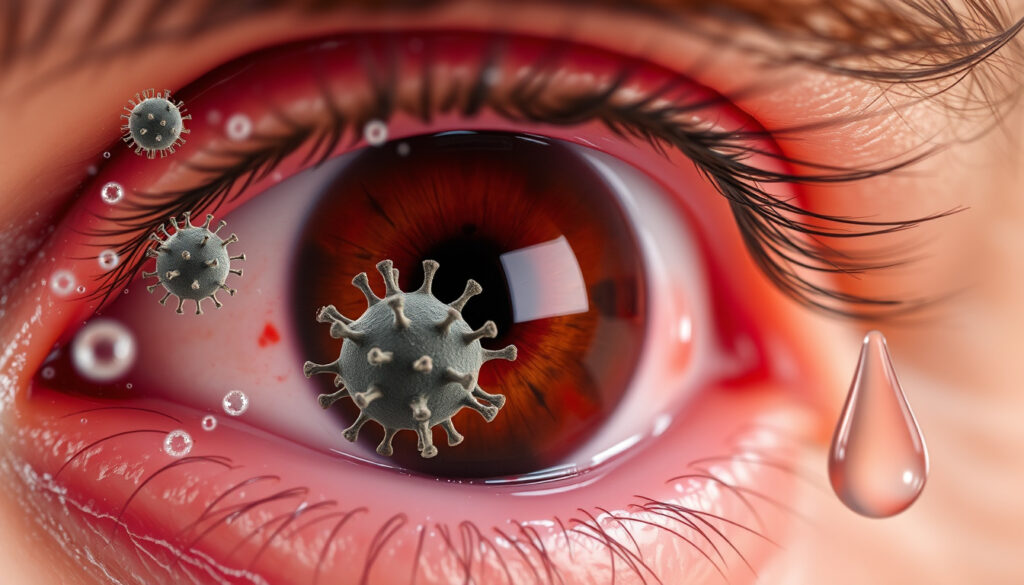
For a clearer picture of the common symptoms of pink eye, it helps to recognize how the condition typically appears in adults.
Frequently asked questions
Can pink eye cause vision loss?
While most cases resolve without lasting damage, severe or untreated bacterial infections – especially those caused by Neisseria gonorrhoeae or Chlamydia trachomatis – can lead to corneal scarring and vision loss. See a doctor immediately if you experience significant pain, light sensitivity, or blurred vision.
Should I go to work or school with pink eye?
If you have viral or bacterial conjunctivitis, stay home until symptoms improve. For viral, that means until tearing and redness subside; for bacterial, at least 24 hours after starting antibiotics. Check with your employer – many recommend remote work during the contagious period.
Can I swim with pink eye?
No. Swimming can spread the infection to others, and chlorine can further irritate the eye. Avoid pools, hot tubs, and lakes until symptoms are completely gone.
Is pink eye more common in children or adults?
Pink eye is more common in children due to close contact in schools and lower hygiene awareness. In adults, viral conjunctivitis still occurs frequently, typically in community or workplace outbreaks, but the bacterial proportion is lower.
How long does it take for pink eye to go away without treatment?
Viral pink eye usually resolves in 1‑2 weeks. Bacterial pink eye may linger or worsen without antibiotics; some mild cases can clear in 7‑10 days, but treatment shortens the course and reduces contagiousness.
Can I use over‑the‑counter eye drops for pink eye?
Artificial tears (lubricating drops) are safe for comfort. Avoid “red eye” drops (vasoconstrictors) for more than a few days – they can cause rebound redness. For bacterial infection, antibiotic drops require a prescription. Always consult a professional before self‑treating.
More related posts
 The War Between the Land and the Sea – Geopolitical Rivalry Explained
 How to Multiply Decimals: Step-by-Step Guide with Examples
 Dessert Places Near Me: Best in Dublin for Late Night & Delivery
 Simpsons Marge Death: Non-Canonical Flash-Forward Return
 Restaurants Near Me Open Now: Maps, Apps & Lingo Tips
 Romance KPop Demon Hunters: Jinu & Rumi Kiss Explained
 Elf on the Shelf: Rules, Meaning, Parental Guide 2025
 IRS 2026 Tax Season Readiness: Dates, Deductions & Tips
