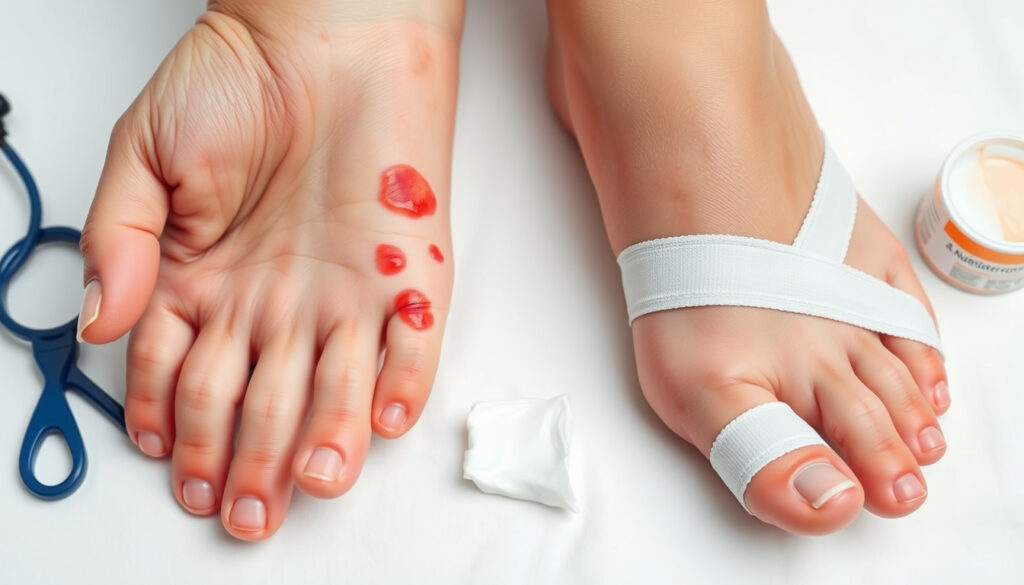
Hand, Foot and Mouth Disease: Symptoms, Stages & Treatment
If a child in daycare brings home hand, foot, and mouth disease, the odds are high that someone else in the household will catch it too—especially parents who assumed childhood illnesses were behind them. HFMD spreads with remarkable ease through close contact, and while children under 5 bear the brunt of symptoms, adults are far from immune. The CDC reports that the illness causes fever, mouth sores, and skin rash, and it can hit parents just as hard as it does kids. This guide covers how HFMD spreads, what the four stages look like, and how to care for your child at home.
Typical duration: 7-10 days · Most common in: young children · Contagiousness: highly contagious · Affects adults: possible but most immune · Common symptoms: fever, mouth sores, rash
Quick snapshot
- Precise adult immunity rates vary by prior exposure history
- Viral strain differences across regions need more study
- Long-term recurrence patterns in adults underreported
- Day 1-2: Fever, fatigue, sore throat onset (Intown Pediatrics)
- Day 2-3: Mouth sores and characteristic rash appear (Intown Pediatrics)
- Day 4-7: Symptoms peak, then recovery begins (Intown Pediatrics)
- Keep child home until fever-free 24+ hours without medication (Cleveland Clinic)
- Blisters typically dry within 10 days (Cleveland Clinic)
- Virus may linger in stool for weeks—hygiene matters (Cleveland Clinic)
| Detail | Information |
|---|---|
| Caused by | Enteroviruses (e.g., coxsackievirus) |
| Incubation period | 3-6 days |
| Peak season | Summer/fall |
| Complications rare | Dehydration, nail loss |
How contagious is hand, foot, and mouth to adults?
Hand, foot, and mouth disease is exceptionally contagious. The virus spreads through respiratory droplets from coughs and sneezes, contact with blister fluid, and fecal-oral routes that linger well after symptoms fade (CDC guidance). A single infected child can transmit HFMD to multiple family members within days.
Most adults have partial immunity from childhood exposure, but “partial” doesn’t mean bulletproof. Parents caring for sick children face real risk, especially in the first week when viral load peaks.
Transmission to adults
Adults catch HFMD the same ways children do: close contact with infected saliva, stool, or blister fluid. Changing diapers, wiping noses, and sharing utensils are common transmission routes in families. The CDC recommends avoiding close contact and disinfecting surfaces as primary prevention steps (CDC).
Risk factors for adults
Healthy adults with prior childhood exposure often resist symptomatic infection, but up to 90% of adult infections are asymptomatic, meaning adults can spread HFMD without knowing they have it (Carters Urgent Care). Immunocompromised adults face higher risk of developing noticeable symptoms and complications.
The implication: even if you feel fine, assume you’re potentially contagious after exposure. Hand hygiene and surface disinfection protect not just you but everyone in your household.
How to get rid of hand, foot, and mouth in kids?
There is no specific antiviral treatment for HFMD—the illness simply runs its course over 7-10 days (CDC). Management focuses on comfort: keeping the child hydrated, managing pain, and letting the virus clear naturally.
Home remedies
Soft, cool foods cause less pain when mouth sores strike. Yogurt, applesauce, pudding, and ice pops work well. Avoid acidic or spicy foods (oranges, tomatoes, hot sauce) that burn already-irritated tissues. Cold liquids soothe and hydrate without triggering discomfort.
Pain relief options
Acetaminophen (Tylenol) or ibuprofen (Advil, Motrin) handles fever and pain. Never give aspirin to children—it links to Reye’s syndrome, a rare but serious condition. Topical numbing mouthwashes (like benzocaine-free options) can reduce mouth ulcer pain before meals. For severe cases, a pediatrician may recommend prescription mouthwash.
When to seek medical help
Most cases clear at home, but dehydration is the chief danger sign. Watch for fewer wet diapers, crying without tears, dry lips, and lethargy. High fever lasting more than three days, difficulty breathing, or severe mouth pain preventing drinking also warrant a doctor’s visit.
What this means: HFMD home care is straightforward for most children, but parents must actively monitor hydration. The moment drinking drops off significantly, call your pediatrician.
What are the 4 stages of HFMD?
HFMD moves through distinct phases, and recognizing each stage helps parents know what to expect and when to worry. The four-stage progression typically spans 10-14 days from exposure to full recovery (NCBI StatPearls).
The Vinmec medical guide identifies four stages: incubation (3-7 days), initial symptoms (1-2 days), illness (3-10 days), and convalescent (3-5 days)—totaling roughly 10-14 days from exposure to full recovery.
Stage 1: Fever onset
The incubation period lasts 3-6 days before any symptoms appear (Intown Pediatrics). When symptoms begin, low-grade or high fever often leads, accompanied by fatigue, sore throat, decreased appetite, and sometimes vomiting or diarrhea.
Stage 2: Mouth sores
Painful ulcers develop inside the mouth, typically on the tongue, gums, and inner cheeks. These enanthem lesions appear as small red spots that evolve into vesicles and then ulcers. Eating and drinking become difficult, which is where dehydration risk spikes.
Stage 3: Rash on hands and feet
The characteristic vesicular rash emerges—flat or raised red spots on the palms, soles, and sometimes buttocks or legs (CDC). Blisters may form; they contain live virus and are contagious. The rash is typically non-itchy but can be uncomfortable.
Stage 4: Recovery
Fever subsides by days 4-7, and blisters begin drying. Skin peeling on hands and feet may occur 1-2 weeks after the rash fades—this is normal healing, not a new problem (Carters Urgent Care). Most children feel back to normal within 10 days.
The pattern: day-by-day progression is predictable in most cases, but children under 2 may stay sick longer than the standard 7-10 day window (Medical News Today). Don’t assume your child is fine just because the rash looks better.
How long is the quarantine for hand, foot, and mouth?
Isolation duration matters both for public health and for protecting vulnerable family members. The CDC notes that HFMD remains contagious for days or weeks after symptoms resolve, depending on the route (Medical News Today).
Contagious period
The virus is most contagious during the first week of illness or while fever persists. However, respiratory shedding continues as long as fever lasts, and stool can harbor the virus for weeks after all symptoms disappear (Duke Health).
Return to school or daycare rules
Most schools and daycares require children to stay home until fever-free for at least 24 hours without medication and until mouth blisters have crusted over. The Cleveland Clinic confirms that blisters typically dry within 10 days, marking the safest return point (Cleveland Clinic).
The catch: even after your child looks recovered, maintain diligent handwashing—especially after diaper changes or bathroom trips. Stool-based transmission can persist for weeks.
What triggers hand foot and mouth disease?
Hand, foot, and mouth disease is caused by enteroviruses, most commonly Coxsackievirus A16 and Enterovirus 71 (Vinmec). These viruses belong to the enterovirus family, which also causes polio, and they spread with remarkable efficiency in group settings.
Main causes
Coxsackieviruses account for the majority of HFMD cases, with Enterovirus 71 (EV71) responsible for more severe presentations, particularly in some Asian regions. EV71 can lead to neurological complications like encephalitis, though this remains rare. Most U.S. and European cases involve milder Coxsackievirus strains.
How it spreads
The virus spreads through multiple routes: respiratory droplets from coughing or sneezing, direct contact with blister fluid, contact with contaminated surfaces, and fecal-oral transmission. Outbreaks commonly occur in childcare settings where young children share toys, utensils, and close physical space.
Summer and fall see peak HFMD activity, with childcare centers and families bearing the brunt. A single infected child in a daycare room can spark an outbreak affecting multiple families within two weeks.
The trade-off: HFMD is so contagious that even perfect hygiene won’t guarantee prevention in households with young children. Focus on reducing spread rather than eliminating exposure entirely.
Confirmed facts
- HFMD self-resolves in 7-10 days per NHS/CDC
- Highly contagious via droplets, contact, and feces
- 95% of cases occur in children under 5
- Incubation spans 3-7 days; symptoms appear 3-5 days post-exposure
- Contagious during fever and until blisters crust over
- Most adults have partial immunity from prior exposure
What’s unclear
- Precise adult immunity rates based on exposure history
- Regional variations in viral strain severity
- Long-term recurrence patterns in adults
- Controlled data on treatment efficacy beyond symptom relief
What experts say
“I typically tell people to wait until their fever has gone down for at least 24 hours before it’s safe to be around people.”
— Dr. Vaughan, Duke Health
“Hand, foot and mouth disease is a common infection that causes sores in and around the mouth.”
— Dr. Yen, AMA
“It is not uncommon for adults to experience skin peeling on their hands and feet a week or two after the rash has faded. This is a normal part of the healing process as the damaged skin sheds.”
Most children recover fully from HFMD without complications. The rare complications that do occur—dehydration, secondary bacterial infections, or in immunocompromised patients, more serious outcomes—underscore why monitoring matters more than panicking. For parents, the takeaway is straightforward: comfort care at home works for the vast majority of cases, but watch hydration closely and know when to call the doctor.
Related reading: swollen lymph nodes treatment
The disease advances through distinct stages with varying symptom intensity, much like the progression detailed in this symptom timeline and care guide for effective home management.
Frequently asked questions
Can I hug my child with hand, foot, and mouth?
Yes, physical affection helps comfort a sick child. The risk is transmission to you—and if you’re an adult with prior childhood exposure, you may have partial immunity. Minimize contact with saliva and blister fluid, wash your hands thoroughly afterward, and don’t kiss on or near mouth sores.
Is hand, foot, and mouth dangerous?
For most healthy children and adults, HFMD is uncomfortable but not dangerous—it resolves on its own in 7-10 days. Complications are rare but can include dehydration, secondary infections, or (with EV71 strain) neurological issues. Immunocompromised individuals face higher risk and should consult a doctor promptly.
Is HFMD still contagious after 5 days?
Possibly yes. While the first week carries the highest contagion risk, the virus can shed in stool for weeks after symptoms resolve. Keep practicing good hygiene after day 5, and wait until your child is fever-free for 24+ hours without medication before returning to school or daycare.
Are parents contagious if kids have hand, foot, and mouth?
Parents can contract and spread HFMD, especially if they haven’t had it before or have weakened immunity. Up to 90% of adult infections are asymptomatic, meaning parents may carry and spread the virus unknowingly. Isolate sick children from other family members as much as possible and disinfect shared surfaces.
What are hand, foot, and mouth symptoms?
Fever, painful mouth sores, and a rash on the hands, feet, and sometimes buttocks or legs are the hallmark trio. Additional symptoms may include sore throat, decreased appetite, irritability, and fatigue. In adults, the rash tends to be more widespread and may last longer than in children.
How does hand foot and mouth spread?
HFMD spreads through respiratory droplets (coughing, sneezing), direct contact with blisters or contaminated surfaces, and fecal-oral contact. The virus can live on surfaces for hours. Preventing spread means frequent handwashing, disinfecting toys and surfaces, and keeping infected children away from group settings.
Can adults get hand foot and mouth from children?
Yes. Adults who haven’t had HFMD before—or who have compromised immune systems—can catch it from children. Most adults have partial immunity, so symptomatic infection is less common, but when adults do develop symptoms, the rash can be more severe and last up to three weeks with certain viral strains.
More related posts
 Las Vegas Raiders Schedule – Full 2024 Dates, Results, TV and Tickets
 How to Find the Official Dewapoker Link Alternatif
 Lane Kiffin News LSU: Wife, Saban Firing, Allegations & Move
 401k 2024 Contribution Limit IRS – $23,000 Cap, Catch-Ups Explained
 Full Moon May 2025: Flower Moon Date & Meaning
 Cast of Knives Out 3: Wake Up Dead Man Actors & Characters
 Under Sink Water Filter Guide: Do They Work & Which Is Best
 Real Oviedo vs Real Madrid Lineups: Confirmed XI 24/08/2025
