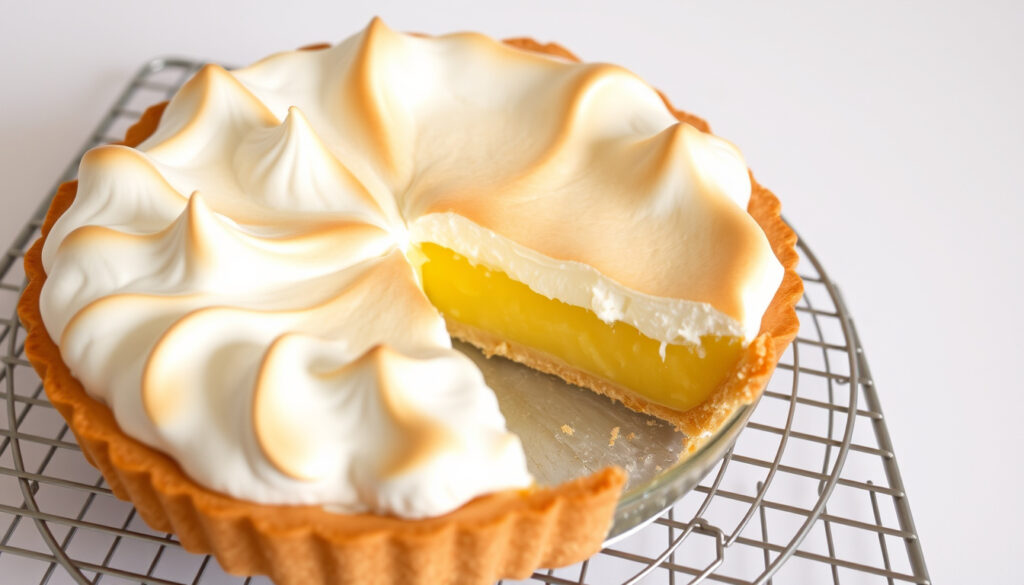
Lemon Meringue Pie Recipe – How to Make Perfect Meringue
There’s a reason lemon meringue pie has a reputation as the trickiest dessert in the American baking canon — one wrong move and the whole show collapses. This guide walks through the most common pitfalls using techniques from three trusted sources: Mary Berry (BBC Food), Sally’s Baking Addiction, and Once Upon a Chef.
Egg yolks in filling: 6 (from Mary Berry’s recipe) ·
Egg whites in meringue: 6 (from Mary Berry’s recipe) ·
Cream of tartar: 1/4 tsp per egg white (standard recommendation) ·
Bake temperature: 350°F (175°C) for meringue topping
Quick snapshot
- Use 6 large eggs (yolks and whites separated) Mary Berry (BBC Food)
- Room temperature whites whip best Sally’s Baking Addiction
- Add cream of tartar for stability Once Upon a Chef
- Gradually add sugar Sally’s Baking Addiction
- Cornstarch thickener Completely Delicious
- Cook until thick then add yolks Tastes Better From Scratch
- Can refrigerate overnight Completely Delicious
- Add meringue just before serving Once Upon a Chef
Six key facts that anchor every decision in this recipe — from egg count to oven temperature.
| Fact | Value |
|---|---|
| Eggs needed | 6 large eggs (6 yolks + 6 whites) — Mary Berry (BBC Food) |
| Cream of tartar | 1/4 tsp per egg white — Once Upon a Chef |
| Bake temperature | 350°F (175°C) — Sally’s Baking Addiction |
| Storage | Refrigerate, consume within 24 hours — USDA Food Safety |
| Filling thickens | About 6 minutes of cooking — Sally’s Baking Addiction |
| Final bake time | 20 minutes at 350°F — Chef Buck (YouTube) |
| Blind bake temp | 375°F then reduce to 350°F — Sally’s Baking Addiction |
| Lemon juice timing | Add after starch thickens to avoid inhibition — Completely Delicious |
How many eggs do you need for lemon meringue?
The short answer: six large eggs, divided — yolks into the filling, whites into the meringue. Mary Berry’s classic lemon meringue pie (BBC Food) uses exactly this ratio, and it’s the standard across virtually every published recipe from Sally’s Baking Addiction to Once Upon a Chef. But the number matters less than the temperature.
Is it better to make meringue with cold or room temperature eggs?
Room temperature egg whites consistently produce greater volume and a more stable foam. Sally’s Baking Addiction emphasizes this point because cold egg whites have tighter protein structure — they take longer to whip and the resulting foam is less aerated. If you’re pressed for time, place whole eggs in a bowl of warm water for 5 minutes before separating; the whites will warm up without cooking.
The implication: temperature control is the cheapest insurance you’ll buy all day. Cold eggs work, but they require more whipping time and produce a less stable foam — exactly the wrong characteristic for a pie that sits overnight.
What is the perfect meringue secret?
There is no single secret, but three non-negotiable principles: add an acid for stabilization, add sugar slowly, and watch the weather.
What is the trick to making good meringue?
Start with a scrupulously clean bowl — any trace of fat (including yolk) will sabotage the foam. Whip the whites with cream of tartar — Once Upon a Chef uses 1/4 teaspoon per egg white — until soft peaks form. Then begin adding sugar one tablespoon at a time, beating continuously. Sally’s Baking Addiction warns that dumping all the sugar at once deflates the whites and produces a grainy meringue.
What must be avoided when making meringue?
- Humidity. Sugar is hygroscopic — it absorbs moisture from the air, which can cause weeping. Domino Sugar’s baking guide suggests avoiding meringue on rainy days.
- Overwhipping. Once stiff peaks form, stop. Overwhipped meringue looks dry and curdled; it won’t spread smoothly and may break down during baking.
- Underbaking. Bake at 350°F until the peaks are lightly golden — about 20 minutes. An underbaked meringue weeps because the interior hasn’t stabilised.
A perfectly stable meringue is drier and slightly less marshmallowy. For maximum stability, use a Swiss meringue (egg whites and sugar heated over simmering water before whipping) — Completely Delicious notes this method reduces weeping because the cooked sugar proteins are locked in place.
The takeaway: treat meringue as a day-of-only component. It’s less a topper than a structural decision — and structural decisions don’t hold up to a night in the fridge.
Is cream of tartar or cornstarch better for meringue?
Cream of tartar is the preferred stabilizer for French meringue. It’s an acid that lowers the pH of the egg whites, which helps the protein network coagulate more evenly. Sugar Spun Run uses it in their recipe, as does virtually every authoritative source.
Two stabilizers, one clear champion — but cornstarch can step in when you’re out of cream of tartar.
| Stabilizer | How it works | Ratio | Result |
|---|---|---|---|
| Cream of tartar | Acid; lowers pH, stabilises protein network | 1/4 tsp per egg white | Firm, glossy, reliable |
| Cornstarch | Starch; absorbs moisture, adds body | 1 tsp per 2 egg whites | Softer, slightly denser |
What happens if I don’t have cream of tartar for meringue?
You have three options: cornstarch (1 teaspoon per 2 egg whites, whisked into the sugar before beating), lemon juice (1/2 teaspoon per egg white, added at the start), or white vinegar (same ratio as lemon juice). Each provides the acid that cream of tartar offers, though the flavor impact is minimal if you’re using lemon juice in a lemon pie anyway. Food Network’s substitution guide confirms these ratios.
The catch: cornstarch absorbs moisture instead of acidifying. It works but produces a less structured meringue. If you have only cornstarch, plan to serve the pie the same day.
How to make lemon meringue filling?
The lemon filling is a curd thickened with cornstarch (or a cornstarch-flour blend). The technique matters more than the ingredient list.
Completely Delicious cooks sugar, cornstarch, and water until thick — about 6 minutes per Sally’s Baking Addiction — then tempers the egg yolks by whisking a spoonful of the hot mixture into them before returning everything to the pan. Tastes Better From Scratch adds flour to the starch mix for extra body. Finally, butter and lemon juice go in off the heat.
- Key timing: Add lemon juice after the starch mixture thickens. Acid inhibits cornstarch’s thickening power — Completely Delicious flags this explicitly.
- Temperature check: If the filling is too hot when you spread the meringue on top, steam can leak through and cause weeping. Let it cool for 5 minutes.
- Butter finish: A tablespoon of butter stirred in at the end adds shine and rounds the acidity.
- Blind bake the pie crust at 375°F, then reduce to 350°F until golden.
- In a saucepan, whisk sugar, cornstarch, and water. Cook over medium heat until thick and bubbling (about 6 minutes).
- Temper the egg yolks: whisk a spoonful of the hot mixture into the yolks, then return to the pan. Cook 1 minute more.
- Remove from heat; stir in butter and lemon juice. Let cool for 5 minutes.
- In a clean bowl, whip egg whites and cream of tartar to soft peaks. Gradually add sugar, beating to stiff peaks.
- Spread filling into the baked crust. Top with meringue, sealing to the crust edge.
- Bake at 350°F for 20 minutes until meringue is lightly golden. Cool before serving.
A filling that’s too thin slumps under the meringue. A filling that’s too thick doesn’t flow into the crust. The target: a pudding-like consistency that holds its shape when spooned but is still pourable.
The editorial read: the filling is the unsung pressure point. Most home bakers obsess over meringue, but a weeping pie often starts with a filling that wasn’t thick enough or was too hot when sealed.
Is it okay to make a lemon meringue pie the day before?
Technically yes. Practically, you’ll trade convenience for meringue quality. Completely Delicious notes that many recipes chill the filled pie for hours before serving to firm up for cleaner slicing. But the meringue — especially a French meringue — will weep overnight. Once Upon a Chef anchors the meringue all the way to the crust edge to reduce shrinkage.
The smarter play: blind bake the crust and prepare the filling a day ahead, store separately, then assemble and bake the meringue on serving day. Sugar Spun Run advises chilling pie dough before blind baking and using pie weights to prevent shrinking — that prep can happen days in advance.
The pattern: lemon meringue pie is best consumed within 24 hours of assembly. For a dinner party, do the crust and filling the day before, then add meringue and bake 30 minutes before guests arrive.
“Heating egg whites and sugar before beating them helps stabilize the meringue so it does not weep.”
Once Upon a Chef
“Sally’s Baking Addiction instructs cooks to partially blind bake the crust in a 9-inch pie dish before making the filling.”
Sally’s Baking Addiction
“A common meringue technique is to add sugar gradually while beating egg whites to soft or stiff peaks rather than dumping all sugar in at once.”
Sally’s Baking Addiction
One final note on storage: USDA Food Safety guidelines recommend refrigerating egg-based pies and consuming within 3 to 4 days. For lemon meringue pie specifically, the meringue will begin to break down after 24 hours, so day-of serving is ideal.
What’s confirmed and what’s still unclear
Confirmed facts
- Room temperature egg whites produce more volume and stable foam. Sally’s Baking Addiction
- Cream of tartar is the classic stabilizer for French meringue. Once Upon a Chef
- Lemon meringue pie can be made a day ahead but meringue quality declines. Completely Delicious
What’s unclear
- Exact ratio of cornstarch to cream of tartar for substitution varies by recipe.
- Effect of altitude on meringue stability is not fully addressed in top sources.
Related reading: Easy Lemon Meringue Pie · Lemon Meringue Pie
Frequently asked questions
How do you prevent meringue from weeping?
Add cream of tartar for stability, bake at 350°F until lightly golden, and let the filling cool slightly before topping. Avoid making meringue on humid days. Domino Sugar’s meringue tips
What is the best crust for lemon meringue pie?
A classic shortcrust pastry, blind-baked until golden. Sugar Spun Run recommends chilling the dough and using pie weights to prevent shrinkage.
Can you freeze lemon meringue pie?
Not recommended. The meringue becomes watery upon thawing. Freeze the unbaked crust and filling separately instead.
How long does lemon meringue pie last in the refrigerator?
Up to 24 hours for best quality. USDA Food Safety recommends consuming within 3 to 4 days for egg-based pies, though meringue will degrade.
What is the difference between French and Swiss meringue?
French meringue is made by whipping raw egg whites with sugar. Swiss meringue heats the whites and sugar over simmering water before whipping, which stabilises the foam and reduces weeping — Completely Delicious explains the method.
Can I use bottled lemon juice for the filling?
Fresh lemon juice provides brighter flavor. Bottled juice works but may lack acidity and zest. Completely Delicious uses fresh lemons for both juice and zest.
For the home baker in New York or Des Moines who’s been burned by a weeping meringue, the choice is clear: invest 20 extra minutes in Swiss meringue technique and serve the pie the same day, or accept the trade-off between convenience and that perfect cloud-like top.
More related posts
 Doc (2025 TV Series) Season 1: Streaming & Episode Guide
 Palace of Fine Arts: SF Guide to History & Free Visits
 Jang Ki-yong: Relationship, Height, English, and 2025 Update
 How to Remove Tartar From Teeth Without a Dentist: Real Solutions
 2026 NCAA Women’s Basketball Schedule: Dates, Times, TV
 Build-A-Bear Near Me: Irish Stores & Prices
 How Much Is My House Worth? Free Property Valuation Ireland 2025
 Quick, Draw! Guide: The AI Game and Dataset Explained
