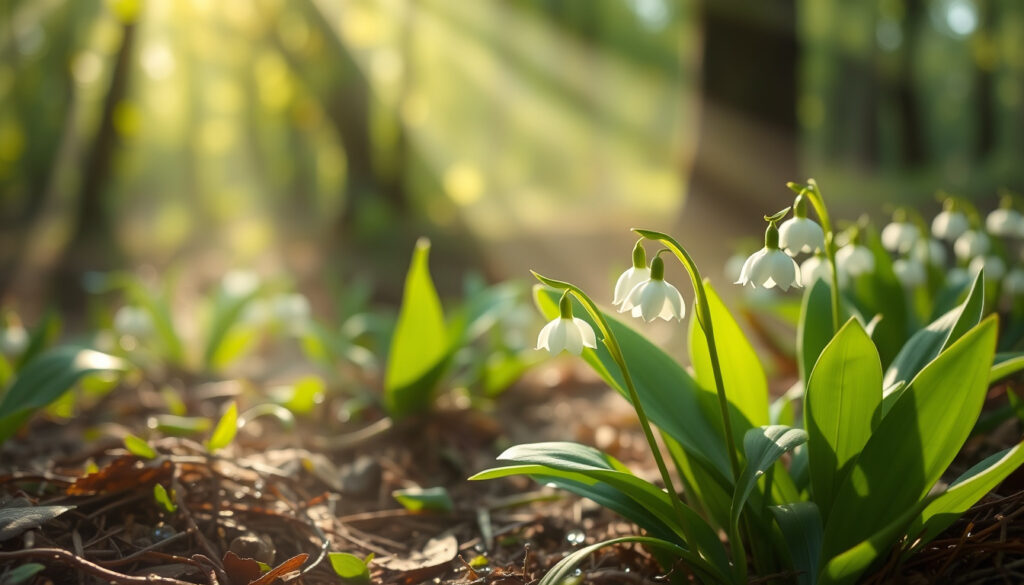
Lily of the Valley Meaning: Symbolism, Bible & More
There’s something quietly striking about the lily of the valley. A plant that crowns Finland’s national emblem, perfumes May weddings, and appears in the Bible—yet every root, stem, leaf and berry is packed with compounds powerful enough to stop a heart. That tension between sacred symbolism and genuine danger is what makes this small white flower worth knowing well.
Birth Flower Month: May · Victorian Symbolism: Return to Happiness · Christian Iconography: Purity and Humility · Toxicity: All Parts Poisonous · Traditional Meanings: Purity, Sweetness, Luck
Quick snapshot
- 15 Bible mentions, most in Song of Solomon (House Beautiful floral guide)
- May birth flower (House Beautiful floral guide)
- Finland’s national flower (House Beautiful floral guide)
- Exact lily species referenced in biblical verses
- Precise historical origin of death and funerary associations
- Charles IX inaugurates La Fête du Muguet (1561) (House Beautiful floral guide)
- Victorian “return to happiness” symbolism (19th century) (House Beautiful floral guide)
- Puritan purity associations (17th century) (House Beautiful floral guide)
- Garden popularity continues amid growing awareness of toxicity
- Increased use in symbolic wedding bouquets and spiritual gifting
| Fact | Detail |
|---|---|
| Scientific Name | Convallaria majalis |
| Primary Colors | White |
| Birth Month | May |
| Key Symbolism | Purity and Humility |
| Toxicity Level | Highly Poisonous |
What Does the Lily of the Valley Symbolize?
General and Traditional Meanings
The lily of the valley carries one of the richest symbol palettes in the plant world. Across centuries of Christian, European, and folk traditions, its white pendant blooms have stood for purity, humility, sweetness of disposition, chastity, and kindness (Death Scent botanical analysis). The plant appears 15 times in the Bible, most often in the Song of Solomon (House Beautiful floral guide), where the lily anchors some of the most poetic imagery in scripture.
In the Christian imagination, legend links the flower’s origin to tears. In one tradition, Eve wept as she left the Garden of Eden, and her tears became lilies of the valley upon the earth (Penn State Extension horticultural guide). In another, the Virgin Mary’s tears at her son’s crucifixion sprouted the first lily of the valley, giving the flower names like “Our Lady’s Tears” and “Mary’s Tears” (Undine Grimoires folklore reference). Both legends link the plant to loss, purity, and redemption.
Victorian Era Significance
Victorian flower language gave lily of the valley a specific meaning: “return to happiness.” During the 19th century, gifting this flower signaled a wish for renewed joy, often marking an apology or the rekindling of a relationship (Lotus Fun Blog cultural history). Victorian recipients may or may not have known about the flower’s toxicity, creating an ironic contrast between the era’s optimism about floral symbolism and modern awareness of the plant’s danger.
The symbolism runs wider across Europe. In Germany, the lily of the valley meant humility and purity, associated with Ostara, the Germanic spring goddess (Lotus Fun Blog cultural history). In France, lily of the valley is associated with May Day and Labour Day as a good luck charm (Death Scent botanical analysis), and in Finland it holds the rare distinction of serving as the country’s national flower—symbolizing purity and happiness at the state level (House Beautiful floral guide).
A flower that symbolizes purity, humility, and the return to happiness is also one of the most poisonous garden plants in the temperate world. Gardeners who plant it alongside vegetables or within reach of children and pets need to weigh that duality consciously.
What Does Lily of the Valley Mean Biblically?
Reference in Matthew 6:28
The most familiar biblical reference comes from Jesus’s Sermon on the Mount. In Matthew 6:28-29, Christ uses lilies to illustrate God’s provision and care: “Consider the lilies of the field, how they grow: they neither labor nor spin. Yet I tell you that not even Solomon in all his glory was adorned like one of these.” (Bible Hub scripture analysis). The point is divine abundance freely given, without human effort—lilies embody effortless grace and divine attention.
Connection to Jesus
In the Song of Solomon, the imagery deepens. Verse 2:1 contains what theologians have long read as Christ’s self-description: “I am the rose of Sharon, and the lily of the valleys.” (My God Morning theological commentary). Theologically, this frames the lily as a representation of Christ’s own purity and humility (Bible Hub scripture analysis). Verse 2:2 follows: “As a lily among thorns, so is my love among the daughters.”—portraying the beloved as the lily set apart among hardship (Rich Bitterman theological reflection).
Theologically, lily of the valley represents Christ thriving in humble, overlooked places—a flower that grows modestly at ground level but towers spiritually. Its white color denotes the purity of the bride of Christ (Kingdom Winds spiritual guide). Artists have used the lily to represent the Resurrection of Mary, with white petals as her spotless body (Learn The Bible exegesis).
Christians have historically associated the lily with humility and, in some traditions, with Christ’s second coming—a flower that returns each spring, echoing the promise of renewal (Lotus Fun Blog cultural history).
These biblical associations form the backbone of lily of the valley’s spiritual meaning in the Western world. Without the Song of Solomon and Matthew 6, the flower’s symbolism would be purely folkloric rather than deeply rooted in two millennia of theological reflection.
What Is the Spiritual Meaning of the Lily of the Valley?
Broader Lily Symbolism
At its core, the lily of the valley spiritual meaning centers on purity, humility, and renewal. In Christian legend, Eve’s tears turned into lilies of the valley as she left the Garden of Eden—a powerful image of purity lost and redemption possible (Penn State Extension horticultural guide). The flower’s downward-facing blooms echo a spirit of modesty and humility, qualities central to its spiritual resonance.
In magical and folk traditions, lily of the valley has served as a guardian flower for protection, divination, and sacred purity (Undine Grimoires folklore reference). Puritans associated the lily with purity, passion, holiness, and sacrifice (Rich Bitterman theological reflection), extending its symbolism beyond romantic love into the realm of spiritual devotion.
Specific Spiritual Associations
The most striking spiritual dimension of lily of the valley is the paradox it embodies. Its white blooms suggest absolute innocence; its internal chemistry contains cardiac glycosides potent enough to be fatal. Theologically, this can be read as a metaphor for what appears humble on the surface carrying immense spiritual power—a flower that points downward in modesty while containing compounds that act directly on the heart.
Fragrant white flowers have long been associated with motherhood, chastity, and sweetness (Penn State Extension horticultural guide). The lily of the valley captures all three in a single bloom, which explains its popularity in wedding bouquets as a traditional flower symbolizing chastity and the sweetness of married love (Death Scent botanical analysis).
What Does the Lily of the Valley Mean in Ireland?
Cultural Role in Ireland
In Ireland, lilies of the valley fit within a broader Celtic tradition where flowers marked seasonal transitions and carried symbolic weight in folk custom. The flower’s role in Ireland specifically—how it appears in tradition, whether in gifting, festival, or spiritual practice—has received comparatively little documentation compared to France or Finland, and the exact cultural contours remain less clearly mapped.
What is clear is that as a May birth flower, lily of the valley connects to a Celtic spring tradition where May 1st marked a festival of renewal. In France, where La Fête du Muguet dates to 1561 and was inaugurated by King Charles IX (House Beautiful floral guide), the parallel spring symbolism is well established. Irish spring customs likely share a related cultural logic, though the specific Irish associations with lily of the valley await fuller documentation.
The catch: until more primary sources surface, Irish-specific traditions around this flower remain speculative rather than documented fact.
What If I Touch Lily of the Valley?
Toxicity and Safety
All parts of lily of the valley—roots, stems, leaves, flowers, and the attractive red berries—contain cardiac glycosides that are poisonous to humans and animals alike (Penn State Extension horticultural guide). Exposure to these compounds causes abdominal pain, blurred vision, reduced heart rate, vomiting, diarrhoea, and skin rashes (House Beautiful floral guide). The plant is incredibly toxic to humans and animals, and ingestion—especially in children and pets—could prove harmful or fatal (Death Scent botanical analysis).
Skin contact is safer in isolation: the plant is safe to handle if you wash your hands thoroughly afterward (House Beautiful floral guide). Gloves are strongly recommended, and ingestion—whether accidental or intentional—demands immediate medical attention. Never burn lily of the valley, as the toxins become airborne in the smoke and can cause serious respiratory and cardiac problems when inhaled (Undine Grimoires folklore reference). For those who want the flower’s symbolism without physical contact, symbolic substitutes include drawings of the blooms or arrangements using other white flowers.
The most dangerous aspect of lily of the valley is how innocent it looks. The small white bell-shaped flowers and red berries are appealing to children and pets precisely because they appear harmless. A single ingestion of berries or leaves requires immediate emergency medical care.
What We Know and What We Don’t
Confirmed
- Victorian “return to happiness” symbolism established in 19th-century flower dictionaries
- May birth flower confirmed across multiple horticultural and cultural sources
- Christian purity and humility symbolism documented in theological literature
- Finland’s national flower status verified
- La Fête du Muguet tradition established in France in 1561
- All parts contain cardiac glycosides confirmed by Penn State Extension (tier-1 source)
Less certain
- Exact lily species referenced in biblical verses remains debated among botanists and theologians
- Death and funerary association origins lack precise historical documentation
- German Ostara mythology confidence rated medium
In their own words
“I am the rose of Sharon, and the lily of the valleys.”
— Song of Solomon 2:1, as cited by My God Morning theological commentary
“Consider how the lilies of the field grow: they do not labor or spin. Yet I tell you that not even Solomon in all his glory was adorned like one of these.”
— Jesus, Matthew 6:28-29, as cited by Bible Hub scripture analysis
Few garden flowers carry the dual weight of lily of the valley—appearing in scripture, shaping centuries of art and theology, and simultaneously demanding a poison-control-level of caution. For readers drawn to flowers with spiritual significance, the lily of the valley offers unmatched symbolic depth. For families with young children or pets, that same flower demands an honest safety conversation before it goes into a garden.
Related reading: biblical symbolism
Beyond biblical humility and Victorian joy, lily of the valley enchants May woodlands as seen in Ireland, blending delicate charm with hidden toxicity that warrants caution.
Frequently asked questions
What does lily of the valley mean in relation to death?
Lily of the valley carries death associations primarily through Christian legend (Mary’s tears, Eve’s tears) and some European funerary customs where it was placed on graves. These associations stem from its purity-in-loss symbolism rather than any morbid property of the plant itself.
What is the lily of the valley meaning in love?
In Victorian flower language, lily of the valley represented sincerity and a return to happiness in romantic contexts. It remains a traditional wedding bouquet flower symbolizing chastity, humility, and the sweetness of married love.
Is lily of the valley poisonous to humans?
Yes. Every part of the plant contains cardiac glycosides that can cause serious cardiac distress if ingested. Skin contact is less dangerous but requires thorough handwashing afterward. Even small amounts—especially berries—can be fatal to children.
What flower represents Jesus?
In Song of Solomon 2:1, Jesus describes Himself as “the rose of Sharon, and the lily of the valleys.” Theologically, this makes the lily a representation of Christ’s purity, humility, and divine love.
Does lily of the valley have any meaning in Breaking Bad?
In the television series Breaking Bad, lily of the valley appeared in a garden scene with symbolic overtones, but this references the plant’s general associations with hidden toxicity—the danger that looks beautiful—rather than a specific cultural tradition.
What is the white lily of the valley meaning?
The white blooms carry the full traditional symbolism of purity, humility, chastity, and sweetness. The color white amplifies associations with innocence, the Virgin Mary, and the spotless body of Christ in resurrection imagery.
Is lily of the valley a birth flower?
Yes. Lily of the valley is the birth flower for May, alongside the hawthorn. It symbolizes happiness, purity, and the renewal of spring—the qualities May birth flower traditions are built around.
More related posts
 Sky Zone Near Me: Dublin Trampoline Parks by Age, Cost & Safety
 Best Guiso de Lentejas Near Me
 Is A History of Violence Worth Watching? (2005 Review)
 Part Time Job Near Me: Find Jobs in Dublin & Get Hired 2025
 A Small World Cup – Free Ragdoll Soccer Game Online
 Olivia Cooke Movies and TV Shows: Complete Guide to Her Roles
 Harry Potter and the Order of the Phoenix: In-Depth Guide
 Hulu Customer Service Number: Official 24/7 Support & Billing Help
