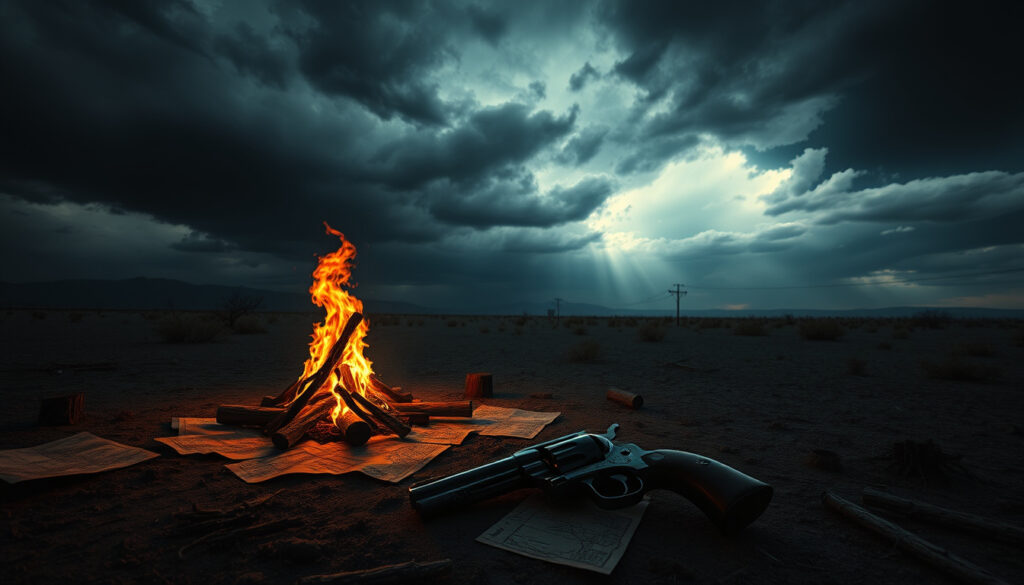
Dutch van der Linde: Betrayal, Evil, and the True Villain of RDR2
Few characters in modern gaming trigger as much debate as Dutch van der Linde. He is the charismatic outlaw leader from Red Dead Redemption 2 who starts the game promising his gang freedom and ends it as a paranoid killer — and players still argue over which version was the real him.
Set in: 1899, before the original Red Dead Redemption ·
Game appearance: RDR (2010) and RDR2 (2018) ·
Character role: Leader of the Van der Linde gang ·
Voice actor: Benjamin Byron Davis ·
Notable trait: charismatic, manipulative, idealist turned antagonist
Quick snapshot
- Micah worked as a Pinkerton informant from mid-1899 onward (GamesKeys.net’s story summary).
- Micah’s betrayal got many people killed over the course of the story (ScreenRant’s ending analysis).
- Dutch is killed by John Marston in the original Red Dead Redemption, and the cliff confrontation is the final scene of his arc. (GamesKeys.net’s story summary)
- The exact moment Dutch decided Arthur was no longer family.
- Whether Dutch genuinely believed his early ideals or used them to control his followers.
- Micah’s exact start date as an informant.
- Whether Dutch intended to die in the 1911 confrontation or simply slipped.
- Spring 1899 — Blackwater ferry heist fails; the gang goes on the run (per GamesKeys.net).
- Winter 1899 — Arthur dies or leaves; the gang dissolves (per TheGamer’s story explainer).
- 1907 — Dutch shoots Micah; John finishes it (per TheGamer’s story explainer).
- 1911 — Dutch dies after facing John Marston at the cliff (per ScreenRant’s ending analysis).
- Compare Dutch and Micah as villain archetypes.
- Trace how the timeline of RDR2 maps onto Dutch’s moral decline.
- Settle who the true villain is — and why it matters.
Key facts about Dutch van der Linde
Ten facts, one pattern: Dutch is designed as a mirror that cracks slowly across two games, and every detail below points at the same arc.
| Label | Value |
|---|---|
| Full name | Dutch van der Linde |
| Game series | Red Dead Redemption |
| First appearance | Red Dead Redemption (2010) |
| Voice actor | Benjamin Byron Davis |
| Role in RDR2 | Gang leader; primary antagonist by the final chapters |
| Role in RDR1 | Primary antagonist |
| Notable quote | “We have to have faith, Arthur.” |
| RDR2 setting | 1899, before the original Red Dead Redemption |
| Final act in RDR2 | Shoots Micah during the 1907 epilogue confrontation |
| Death | Falls from a cliff after his final confrontation with John Marston (RDR1) |
The same arc runs through every row: Dutch’s identity is built on a promise — freedom, family, faith — that erodes into control and violence by the time his story ends.
Why did Dutch betray Arthur?
Red Dead Redemption 2 stages the betrayal as an erosion rather than an ambush. Arthur confronts Dutch directly near the end of the game, and the moment cracks the gang open — a scene TheGamer’s story explainer uses as the hinge of its entire recap. Three forces brought it about before Arthur ever said a word.
Arthur’s illness and loss of trust
- Arthur learns he is dying in Chapter 6, which shifts his loyalty from the gang to John Marston’s family.
- He stops defending Dutch’s plans in camp, and the silences between them harden into hostility.
- Arthur’s refusal to kill for Dutch’s whims marks him, in Dutch’s eyes, as a liability.
Arthur’s tuberculosis is the story’s quiet turning point. A dying enforcer stops being an asset; a questioning one stops being a follower. The journal Arthur keeps across the game carries the verdict in plain words: “You gave me a way to live… now you’ve taken it away.”
Micah’s manipulation and influence
- Micah feeds Dutch’s paranoia after the Blackwater disaster, steering him away from Arthur and Hosea (ScreenRant’s character analysis).
- Agent Milton tells Arthur that Micah, not Molly, was the informant all along (per GamesKeys.net’s story summary).
- By the Beaver Hollow camp, Arthur is the outsider in the family he helped build.
ScreenRant’s character analysis reads Dutch’s loyalty to Micah as a kind of indebtedness: after the ferry job collapsed, Micah was the one who kept Dutch’s confidence alive, and Dutch repaid that loyalty even as it cost him everyone else.
Dutch’s paranoia after Blackwater
- The Blackwater ferry job in spring 1899 shattered the gang’s anonymity and put Pinkerton agents on their trail.
- The shipwreck on Guarma deepened Dutch’s suspicion; from that point, he trusts no one he cannot control.
Guarma is where the mask slips. Dutch returns from the island convinced that everyone around him is either plotting or useless, and the camp notices the change. The betrayal of Arthur was not a sudden change of heart — it was the accumulated weight of a leader who could no longer tolerate being seen clearly.
Dutch did not choose Micah because Micah was smarter or stronger. He chose Micah because Micah never once asked him to stop and think.
The pattern holds across every chapter: Dutch redefines loyalty the moment it confronts him with the truth.
Is Dutch van der Linde a good guy?
Players still argue this because the game refuses to pick a side. Dutch opens Red Dead Redemption 2 as the closest thing the outlaw West has to a philosopher-king: every robbery is framed as a blow against civilization, every death as collateral in a righteous fight. The story then spends six chapters testing how far that framing bends before it breaks.
Dutch’s early ideals and charisma
- He takes in orphans — Arthur Morgan and John Marston both grew up under his care.
- His camp speeches preach a future beyond the law, and his followers quote them back like scripture (per TV Tropes’ dialogue archive).
- “Faith” is his favorite word, and for two full chapters it seems enough.
Acts of apparent kindness versus manipulation
- Dutch helps the poor and shelters strangers when it suits his narrative — then weaponizes those gestures when he needs loyalty.
- He refuses to help Abigail after Micah’s influence takes hold, a decision that reveals his moral code was always conditional.
When Dutch refuses to help Abigail, the transformation is complete. The same man who once held the gang together with speeches is now holding it together with fear.
The shift from Robin Hood figure to tyrant
- By Chapter 6, Dutch’s moral code has collapsed into pure self-preservation.
- His own accounting of the difference is damning: “You kill, I kill. You rob, I rob. Only difference I can see is I choose whom I kill and rob while you destroy everything in your path” (TheGamer’s character quote analysis).
That quote is Dutch’s whole tragedy in one breath: he still believes he is the one with the code. The game’s answer to whether he was ever good is that he might have been — and that possibility is precisely what makes watching him fall so hard to bear.
The implication is that Dutch’s ambiguity is the point — the game wants players to feel the crack before they ever name it.
Why is Dutch evil in RDR1?
The Dutch who dies in 1911 is barely recognizable as the man who raised Arthur Morgan and John Marston. Between the 1907 epilogue of Red Dead Redemption 2 and the start of the original game, every remaining ideal collapsed. By the time John is sent to hunt him, Dutch is no longer trying to convince anyone that he is the hero — not even himself.
The events between RDR2 and RDR1
- 1907: Dutch kills Micah in the snow above Mount Hagen, then walks away without explanation.
- In the following years, Dutch builds a new gang on the edges of the American West, fighting both the state and anyone who questions him.
- 1911: the government puts Dutch on its list, and John Marston becomes the instrument sent to end him.
Dutch’s final descent into cruelty
- He leads a new gang of outlaws with no pretense of a moral cause; the old speeches are gone.
- His final confrontation with John Marston is framed as a refusal to accept that redemption was ever possible.
There is no “one last score” in Red Dead Redemption 1. Dutch’s war against civilization no longer has a goal — it has become the point. Where RDR2 shows violence in service of a dream, RDR1 shows violence with the dream already dead. Run the two games side by side and the arc is deliberate: in RDR2, Dutch kills to build a future; in RDR1, he kills because the future no longer exists. That difference is what makes him a tragic villain instead of a simple monster.
Who is more evil, Micah or Dutch?
Every Red Dead Redemption 2 argument eventually lands here: Micah is the rat who sold the family, but Dutch is the leader who let the family die. The script supports both readings, and the game refuses to hand down a verdict.
Four dimensions, one pattern: Micah’s cruelty is visible from his first scene, while Dutch’s cruelty waits until you have already trusted him. ScreenRant’s ending analysis makes the central distinction clear — Dutch turned on Micah only after realizing Micah had turned on him first.
| Dimension | Micah Bell | Dutch van der Linde |
|---|---|---|
| Motive | Greed and self-preservation — he sells the gang to save his own skin | Fear of losing control — he destroys anyone who questions the dream |
| Betrayal style | Active informant for the Pinkertons from mid-1899 | Passive manipulator who lets loyalists walk into ambushes |
| Remorse | None — his final shrug before death says as much | Shoots Micah, then walks away; the closest he comes to an apology |
| Player verdict | Sociopath from the first campfire | Idealist turned tyrant — sympathetic until the last chapter |
The pattern is unmistakable: one man’s evil is instinctive, the other’s is ideological — and the second kind is always harder to condemn because it once looked like virtue.
Micah’s sociopathy versus Dutch’s calculated manipulation
- Micah never hides what he is: cruel, violent, and proud of it.
- Dutch’s violence is always styled as principle, which makes him more dangerous — he could recruit people like Arthur to kill for a cause.
That difference matters more than a body count. Micah kills because he enjoys it and profits from it; Dutch kills because he has convinced himself the future depends on it. One is a villain in the present tense, the other a villain in the future tense.
Betrayal and body counts
- Micah’s betrayal is operational: every piece of information he leaks costs the gang lives.
- Dutch’s betrayal is structural: his choices put the gang in the path of those ambushes in the first place.
Player perspective and narrative framing
- Players watch Arthur lose faith first in Dutch, then in the gang, then in himself; Micah is only the trigger.
- The epilogue ruins the clean answer: Dutch shoots Micah, and John finishes the job, but Dutch walks away free.
If Micah is evil by nature and Dutch by calculation, the gang’s collapse was avoidable — which makes Dutch the more interesting villain, because he had the most chances to stop it.
What this means is that both men are responsible, but only one of them ever had a chance to be otherwise.
Did Micah regret killing Arthur?
The game offers no confession scene and no redemption beat for Micah. He continues living exactly as he did before, and the only outward emotion he shows at the end is a shrug.
Micah’s behavior after the fight
- Micah keeps working as an informant and never mentions Arthur with regret.
- He treats Arthur’s name as a punchline afterward, and the epilogue shows him still running the same playbook.
- The absence of any guilt scene is itself the answer — the script gives him zero moments of reflection.
Analysis of his final moment
- His shrug before dying reads as indifference, not remorse.
- He does not ask for forgiveness or make peace with anyone.
- The game frames his death as an administrative end, not a moral reckoning.
Contrast with Arthur’s redemption
- Arthur spends his final chapters trying to right wrongs; Micah spends his final chapters trying to survive.
- Arthur’s journal is full of self-doubt; Micah shows none.
- The contrast is deliberate: one character has a redemption arc, the other has a survival arc.
The implication is that remorse and survival are mutually exclusive in Micah’s world — and Arthur’s redemption exists to prove the opposite.
Who is the true villain of RDR2?
Forget the clean map: the villain is not just Dutch and not just Micah. The story uses both to indict a whole era. By the time Arthur dies, the real enemy is the shared fantasy that the outlaw life could have ended any other way.
Dutch as the architect of the gang’s fate
- Dutch’s leadership fails the gang long before Micah’s betrayal is exposed; every plan after Guarma is a gamble that costs someone.
- He never owns a single mistake — the Blackwater failure, the Saint Denis bank job, the deaths — and that refusal becomes the gang’s second wound.
Micah as the active betrayer
- Micah’s cooperation with the Pinkertons lines up with the gang’s repeated failures, from ambushes to the Saint Denis bank job.
- His survival instinct is the opposite of Dutch’s fantasy — Micah never believed in the dream, only in the odds.
The role of Pinkertons and the government
- Agent Milton’s reveal names Micah as the informant — but the Pinkertons had been hunting the gang since Blackwater, before Micah ever switched sides.
- The Van der Linde gang is trapped between a closing frontier and a state that no longer needs outlaws.
Arthur’s redemption arc is the counter-thesis: he breaks the cycle by doing the one thing Dutch cannot — seeing the gang clearly and walking away. The true villain of Red Dead Redemption 2 is the thing Dutch represents: the belief that freedom can be taken by force from a world that has already moved on.
How long was Micah a rat?
The game never gives exact dates, but the gap between the Blackwater ferry job and the final chapters allows a rough estimate — about six to eight months, starting after the gang went on the run.
Timeline of Micah’s cooperation with Pinkertons
- Agent Milton tells Arthur that Micah, not Molly, was the informant — a reveal that lands in Chapter 6 (GamesKeys.net’s story summary confirms this).
- The events between the spring 1899 ferry heist and the winter finale suggest roughly six to eight months of active cooperation.
- Whether Micah was a plant from the very beginning is never confirmed; the script leaves his start date to inference.
Evidence from in-game dialogue and letters
- Camp conversations hint at Micah’s growing distance from the group’s values.
- The gang’s repeated failures after Blackwater — the Saint Denis bank job included — align with an active informant.
- Agent Milton’s interrogation scene is the only explicit confirmation of Micah’s role.
Impact on key events like the Saint Denis bank job
- The Saint Denis heist ends in an ambush that kills Hosea and captures Abigail.
- Micah’s information makes those failures possible, even if the Pinkertons were already hunting the gang.
- Arthur’s confrontation with Dutch about the informant comes too late to save the gang.
The pattern is clear: every late-game failure traces back to a single informant whose clock started after Blackwater.
Dutch van der Linde: a timeline of the fall
The sequence below follows the same arc that TheGamer’s story explainer walks through in full, from the gang’s best days to Dutch’s last stand.
- 1880s — Dutch meets Hosea Matthews and forms the core of the Van der Linde gang.
- Spring 1899 — the Blackwater ferry heist fails; the gang becomes fugitives.
- Summer 1899 — Red Dead Redemption 2 opens in the mountains; Dutch still preaches faith and freedom.
- Late 1899 — the Guarma shipwreck deepens Dutch’s paranoia.
- Winter 1899 — Arthur dies or walks away; the gang dissolves.
- 1907 — Dutch kills Micah during the Mount Hagen confrontation.
- 1911 — Dutch’s final confrontation with John Marston ends with his death.
The timeline shows the pattern: Dutch’s worst acts come in clusters, each one following a loss of control — Blackwater, Guarma, then the end of everything.
Confirmed facts and what’s still unclear
Low research confidence means separating what the script verifies from what players infer. The confirmed list is short; the open questions are longer, and that imbalance is part of the story’s design.
- Dutch betrayed Arthur because he lost trust in him and fell under Micah’s influence (TheGamer’s story explainer).
- Arthur learns from Agent Milton that Micah, not Molly, was the informant (GamesKeys.net’s story summary).
- Micah worked as a Pinkerton informant from mid-1899 onward (GamesKeys.net’s story summary).
- Dutch kills Micah during the 1907 epilogue confrontation (TheGamer’s story explainer).
- The exact moment Dutch decided to abandon Arthur — the game never marks it on screen.
- Whether Dutch genuinely believed his early ideals or used them as a control mechanism.
- Micah’s exact start date as a rat.
- Why Dutch trusted Micah instead of Arthur; ScreenRant frames it as indebtedness, but the script never confirms his inner reasoning.
- Whether Dutch intended to die in the 1911 confrontation or simply slipped.
Key quotes from the story
“We have to have faith, Arthur.”
— Dutch van der Linde, Red Dead Redemption 2 (TV Tropes’ dialogue archive)
“You betrayed me!”
— Dutch van der Linde, toward Micah Bell (IMDb character page)
“Arthur’s been dead a long time. This is a new century.”
— Micah Bell, Red Dead Redemption 2 epilogue (IMDb quote listing)
“I don’t want to kill you, John.”
— Micah Bell, Red Dead Redemption 2 epilogue (IMDb quote listing)
Together, these lines chart the collapse: first faith, then accusation, then a cold acknowledgment that the old world is already gone.
What Dutch’s fall leaves behind
Dutch van der Linde is not one thing. He is the leader who gave Arthur Morgan a moral compass and the leader who left him to die; the father figure who turned every dream into a demand. That contradiction is why players keep arguing about him long after the credits roll — and why the argument itself is the point. The game never tells you whether Dutch was a good man who broke or a bad man who waited, and the design of his arc treats that ambiguity as the tragedy. For players deciding whether to trust Dutch’s early speeches, the choice is clear: read them as a genuine creed that rotted, or as a performance that finally slipped — the script supports both, and Dutch’s tragedy is that he could never admit it.
What this means is that Dutch’s arc works best as a cautionary tale about the price of self-mythology — and the series has never drawn that cost more clearly.
Frequently asked questions
Why did Dutch stop trusting Arthur?
Arthur’s tuberculosis diagnosis in Chapter 6 changed his role in the gang, and his open doubts made him a liability in Dutch’s eyes. Micah fed that doubt until Dutch saw loyalty as betrayal, and the camp confrontation near the end of the game confirms the split.
Is Dutch a hero or a villain?
He is written as a complex antihero. He shelters orphans and preaches freedom, but he kills without hesitation whenever his authority is challenged. Most players read him as a man who started good and became dangerous — but the game never settles it.
What makes Dutch evil in RDR1?
By 1911, Dutch has abandoned his ideals and leads a new gang with no pretense of morality. He has stopped explaining himself to anyone, and his final confrontation with John Marston rejects redemption as a lie. His death at the cliff caps the arc.
Which villain is worse, Micah or Dutch?
Micah is the active informant whose leaks cost the gang lives; Dutch is the leader whose decisions made those leaks fatal. The game’s final shootout complicates the comparison because Dutch kills Micah — then walks away.
Did Micah ever express remorse for Arthur’s death?
The game gives no sign of regret. Micah keeps working as an informant and treats Arthur’s name as a punchline afterward. His shrug before dying is the only response the script offers, and it reads as indifference, not apology.
Who is the main antagonist of RDR2?
The story presents two: Dutch, whose moral collapse drives the plot, and Micah, whose betrayal triggers the final destruction. Arthur’s redemption comes from rejecting both.
What evidence points to Micah’s start date as an informant?
The game never gives exact dates, but the events between the spring 1899 ferry job and the winter finale suggest roughly six to eight months. Agent Milton’s reveal confirms Micah was the informant — the start date is left to inference.
Related reading
- Ghost of Yotei PS5 Review — another big open-world story with a morally complex lead.
- LEGO Star Wars: The Skywalker Saga Guide — for the rare days you want a lighter ending than RDR2.
More related posts
 What Does ASMR Stand For? Definition & Slang
 Wolf of Wall Street: True Story, Controversy & Belfort Today
 Sevita Single Sign-On Login: Complete Guide for Employees
 Where to Watch Tracker TV Show: All Streaming Options
 Can Dogs Have Sweet Potatoes? Safety, Benefits & Prep Guide
 How Long Does COVID Last? Recovery & Contagious Timeline
 What Is GLP-1? Drugs, Side Effects & Natural Boosters
