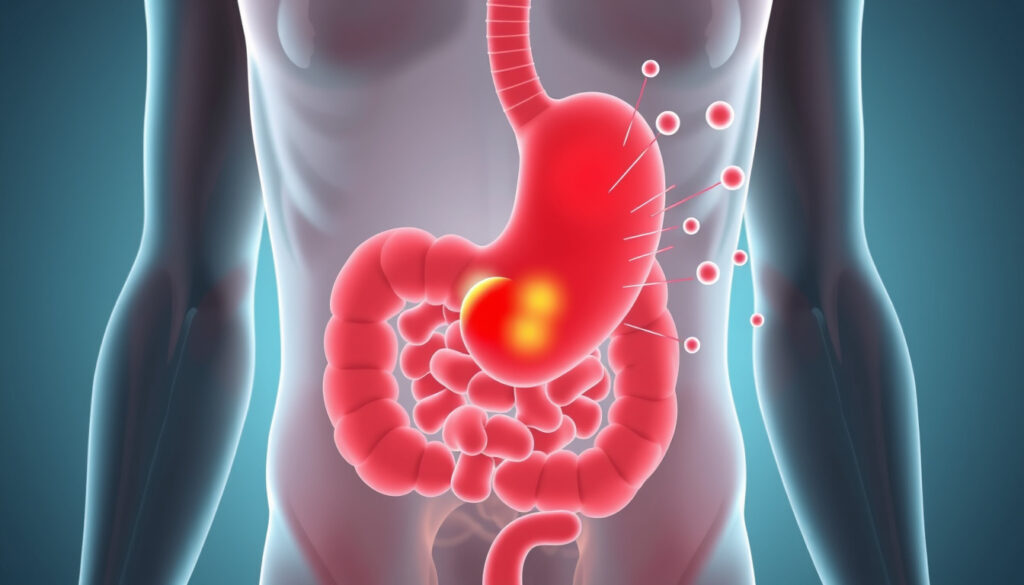
Peptic Ulcer Disease Symptoms: Signs, Pain & Early Warnings
If you’ve ever felt a deep, burning ache just below your ribs that seems to flare up when your stomach is empty, you’re not alone. Upper abdominal pain is one of the most common reasons people seek medical care, and it can point to a condition affecting millions: peptic ulcer disease. This guide walks through what peptic ulcers feel like, what warning signs demand attention, and how doctors distinguish them from other digestive problems—using the latest guidance from leading medical institutions.
Most common symptom: Stomach pain ·
Typical pain location: Upper abdomen ·
Common additional signs: Bloating, heartburn, nausea ·
Primary affected organs: Stomach and small intestine ·
Nighttime disturbance: Pain wakes you up
Quick snapshot
- Abdominal pain occurs in 80–90% of symptomatic cases (NIDDK)
- H. pylori infection causes most duodenal ulcers (Cleveland Clinic)
- Hemorrhage is the most common PUD complication (PMC Study)
- Whether female-specific symptom patterns differ significantly from males
- How early stress ulcer signs manifest before pain develops
- Whether viral NSAID alternatives reduce risk in high-risk patients
- New guidelines emphasize H. pylori eradication as first-line prevention
- US regional data informs targeted screening in high-burden areas
- Ongoing research into NSAID alternatives with lower GI risk
| Hallmark symptom | Upper abdominal pain |
|---|---|
| Prevalence site | Stomach or duodenum |
| Key trigger | Empty stomach |
| Relief method | Eating or antacids |
| Asymptomatic cases | Up to 70% of patients (Cleveland Clinic) |
| Primary causes | H. pylori infection, long-term NSAID use (Cleveland Clinic) |
| Most common complication | Gastrointestinal bleeding (PMC Study) |
What does a peptic ulcer feel like?
The sensation of a peptic ulcer is distinctive enough that many patients recognize it before seeing a doctor. According to the National Institute of Diabetes and Digestive and Kidney Diseases (NIDDK), abdominal pain is the most common symptom—and it has recognizable patterns that set it apart from ordinary indigestion.
Pain characteristics
Patients typically describe the pain as a burning or dull ache in the upper abdomen, between the breastbone and the navel. This sensation can last anywhere from a few minutes to several hours. The GoodRx medical team notes that the pain often comes and goes over time, which can lead people to dismiss it as recurring indigestion.
Timing and triggers
The timing of peptic ulcer pain provides important clues. Duodenal ulcer pain typically improves when you eat—food buffers the acid hitting the ulcerated area—but returns two to three hours later when the stomach empties. Gastric ulcer pain, by contrast, often worsens during or shortly after a meal, when acid contacts the damaged lining. The Healthdirect service (Australia’s health information platform) points out that duodenal ulcer pain frequently strikes at night, waking patients from sleep.
Associated sensations
Beyond the primary pain, several additional sensations often accompany peptic ulcers. The NIDDK lists nausea, vomiting, bloating, belching, feeling full quickly after eating only small amounts, decreased appetite, and weight loss as common companions. The Mayo Clinic adds that some patients experience anemia from slow internal bleeding—a sign that may not produce visible symptoms until the condition has progressed.
The pattern of pain relief after eating is a key differentiator: duodenal ulcers improve with food, while gastric ulcers worsen with it. Recognizing this distinction can help patients describe symptoms more precisely during a medical visit.
What are the first signs of a peptic ulcer?
Early detection hinges on recognizing the initial signals before the pain becomes severe or complications develop. The Cleveland Clinic identifies the earliest signs as epigastric pain, indigestion, and heartburn—symptoms that many people experience without linking them to a potentially serious condition.
Initial pain patterns
Stomach pain is the hallmark of peptic ulcer disease, appearing in the majority of symptomatic patients. The pain often begins as a vague discomfort that patients mistake for hunger pangs or mild indigestion. According to the NIDDK, the sensation is frequently described as a gnawing or burning pain that may be temporarily relieved by antacids but returns as the medication wears off.
Digestive disturbances
Bloating and excessive burping often appear before the pain becomes prominent. The GoodRx medical team associates belching and reflux with peptic ulcer disease, noting that these symptoms result from the stomach’s altered response to acid and impaired motility. Nausea or vomiting may also occur, particularly when the ulcer is in the active inflammatory phase.
Appetite changes
Many patients notice they feel full after eating only small amounts of food—a sensation called early satiety. This occurs because the ulcerated tissue can trigger spasms or delays in stomach emptying. Weight loss may follow, especially if the patient unconsciously reduces food intake to avoid the pain that follows eating. The NIDDK confirms that decreased appetite and unintended weight loss are documented symptoms of peptic ulcers.
Up to 70% of people with peptic ulcer disease have no symptoms at all, according to the Cleveland Clinic. This means the condition can silently progress to serious complications before any warning signs appear.
What is the cause of a peptic ulcer?
Understanding what causes peptic ulcers has evolved dramatically over the past few decades. The old belief that stress or spicy food were the primary culprits has been replaced by a clearer picture centered on two main mechanisms: bacterial infection and medication-related damage to the protective stomach lining.
Primary factors
The Cleveland Clinic identifies two primary causes of peptic ulcer disease. The first is infection with Helicobacter pylori (H. pylori), a bacterium that colonizes the stomach lining and weakens its protective mechanisms. The second is long-term use of nonsteroidal anti-inflammatory drugs (NSAIDs) such as ibuprofen, aspirin, and naproxen, which inhibit the production of prostaglandins that normally protect the stomach lining.
Risk contributors
Beyond the primary causes, several factors increase susceptibility. According to research published in PMC, patients with hypertension, diabetes, obesity, and those using anticoagulant medications have a higher prevalence of peptic ulcer hemorrhage. Smoking, alcohol consumption, and chronic stress can also exacerbate the condition or delay healing.
Pathophysiology basics
The stomach lining normally maintains a balance between acid secretion and protective mechanisms. When either acid production increases or protective factors decrease, the lining becomes vulnerable to erosion. The GoodRx medical team explains that increased stomach acid can break down the digestive tract lining, leading to ulcers if the lining is prone to injury. H. pylori directly damages the protective mucus layer, while NSAIDs remove the chemical signals that maintain it.
“Peptic ulcers are now known to be caused by H. pylori or NSAIDs, shifting from the historical view that acid alone was responsible.”
— News-Medical (Medical history documentation)
What are the warning signs of a peptic ulcer?
While the symptoms described above are uncomfortable, they typically don’t constitute emergencies. However, certain warning signs indicate that a peptic ulcer has progressed to a serious complication requiring immediate medical attention. The NIDDK and Cleveland Clinic both emphasize that recognizing these signals can prevent life-threatening outcomes.
Severe indicators
Complications of peptic ulcer disease include gastrointestinal bleeding, perforation (a hole through the stomach or intestinal wall), and gastric outlet obstruction. According to the Cleveland Clinic, the most serious complication is hemorrhage—internal bleeding that may not produce visible symptoms until significant blood loss has occurred.
When to seek care
The NIDDK lists specific warning signs that demand immediate medical evaluation: black or tarry stools (indicating digested blood), vomiting blood or material that looks like coffee grounds, sudden sharp abdominal pain that worsens rapidly, and dizziness or fainting. These symptoms suggest active bleeding or possible perforation.
Complication signals
Long-standing duodenal ulcers can cause gastric outlet obstruction, where the ulcer scar tissue blocks the passage between the stomach and small intestine. This complication typically presents with persistent nausea and vomiting, often of undigested food eaten hours earlier. The Mayo Clinic notes that peptic ulcer disease can also lead to anemia from slow, chronic bleeding that may go unnoticed until the patient becomes symptomatic from low blood counts.
Black, tarry stools (melena) and vomiting blood are medical emergencies. If you experience either symptom, seek immediate care rather than waiting for a scheduled appointment.
What can be mistaken for a peptic ulcer?
Several other conditions produce symptoms overlapping with peptic ulcer disease, which can lead to confusion without proper diagnostic testing. Understanding these mimics helps patients and clinicians pursue the correct treatment path more efficiently.
Similar conditions
The most common conditions confused with peptic ulcers include gastroesophageal reflux disease (GERD), gallstones, pancreatitis, and functional dyspepsia (digestive discomfort without an identifiable cause). The MedPark Hospital notes that gastric ulcer pain may be particularly difficult to distinguish from gallbladder disease, as both can cause pain after eating.
Key distinctions
While peptic ulcer pain typically follows the patterns described above—worse on an empty stomach, relieved by food for duodenal ulcers, worsened by food for gastric ulcers—GERD usually causes burning pain that moves upward toward the throat, often accompanied by heartburn and regurgitation. Gallstone pain tends to be more episodic and severe, often triggered by fatty meals, and may radiate to the right shoulder or back. The Radiopaedia resource emphasizes that imaging studies and endoscopy provide definitive diagnosis when symptoms overlap.
When evaluating persistent upper abdominal discomfort, a quick comparison of symptom patterns can help narrow down the possibilities before laboratory testing confirms the diagnosis.
| Condition | Pain timing | Relief with food | Other clues |
|---|---|---|---|
| Duodenal ulcer | 2–3 hours after eating, often at night | Yes | Relieved by antacids |
| Gastric ulcer | During or shortly after meals | No (often worsens) | May cause nausea with eating |
| GERD | After lying down, after large meals | Variable | Burning moves upward to throat |
| Gallstones | Episodic, after fatty meals | No | Radiates to right shoulder or back |
| Pancreatitis | Constant, worsens after eating | No | Pain radiates to back; often requires imaging |
Diagnostic hallmarks
The only definitive way to diagnose peptic ulcer disease is through direct visualization via endoscopy. However, physicians often begin with less invasive approaches. The Cleveland Clinic notes that breath tests, blood tests, and stool tests can detect H. pylori infection—the most common cause of peptic ulcers. Once an ulcer is suspected, upper endoscopy allows direct viewing and biopsy if needed.
If you’re experiencing persistent upper abdominal pain, bloating after meals, or any warning signs like black stools, see a healthcare provider. Peptic ulcer disease is highly treatable once diagnosed, but complications become serious quickly without intervention.
What we know vs. what remains uncertain
Confirmed facts
- Abdominal pain is the most common symptom in 80–90% of symptomatic cases
- H. pylori causes most duodenal ulcers and many gastric ulcers
- NSAIDs are the second major cause, particularly with long-term use
- Duodenal ulcer pain improves with eating; gastric ulcer pain worsens with it
- Hemorrhage is the most common complication, with regional variation in the US
- Up to 70% of patients may have no noticeable symptoms
What remains unclear
- Whether female-specific symptom patterns differ meaningfully from male patterns
- How early stress ulcer signs manifest before pain develops
- Whether alternative pain relievers genuinely reduce GI risk in clinical practice
- Whether viral infection triggers ulcers in patients without H. pylori or NSAID exposure
What do the experts say?
Medical institutions and researchers have documented peptic ulcer disease extensively, providing both clinical guidance and population-level data that inform how healthcare systems approach the condition.
“Up to 70% of people with peptic ulcer disease don’t notice symptoms, which is why the condition can silently progress to serious complications.”
— Cleveland Clinic (Medical institution, updated August 4, 2025)
“Seasonal and regional trends in hospitalizations due to peptic ulcer disease may help identify modifiable risk factors.”
— PMC Study Authors (US hospitalization analysis, 2015–2017)
Regional data from the US reveals significant geographic variation in outcomes. A study analyzing the Healthcare Cost and Utilization Project (HCUP) National Inpatient Sample found that the West had the highest rate of peptic ulcer hemorrhage at 64.5%, while the Northeast had the highest perforation rate at 14.3%, during the 2015–2017 period. The South recorded the most admissions overall. These patterns suggest that targeted screening and preventive efforts could be concentrated in high-burden regions to reduce complication rates.
For patients, the practical implication is clear: if you take NSAIDs regularly for chronic pain, talk to your doctor about your risk. If you experience any of the warning signs—black stools, vomiting blood, sudden severe abdominal pain—seek care immediately. Peptic ulcer disease is highly treatable, but the window for simple intervention closes quickly once complications develop.
Related reading: Hand, Foot and Mouth Disease: Symptoms, Stages & Treatment
Many dismiss the burning abdominal pain of peptic ulcer disease as mere indigestion, much like the stomach ulcer early signs that include bloating and nausea.
Frequently asked questions
Are peptic ulcer symptoms worse at night?
Duodenal ulcer pain frequently strikes at night, waking patients from sleep. This occurs because acid secretion peaks when the stomach is empty, typically two to three hours after eating. Gastric ulcer pain is less likely to be nocturnal and more likely to follow meals.
Do all peptic ulcers cause pain?
No. Up to 70% of people with peptic ulcer disease have no symptoms at all, according to the Cleveland Clinic. This silent progression means the condition can reach a serious or life-threatening stage without any warning pain.
What relieves peptic ulcer disease symptoms?
For duodenal ulcers, eating typically provides temporary relief as food buffers stomach acid. Antacids also help neutralize acid. However, these measures only address symptoms—the underlying cause (H. pylori or NSAID use) must be treated with antibiotics or by discontinuing the offending medication.
Can peptic ulcers cause weight loss?
Yes. Patients may reduce food intake to avoid the pain that follows eating, leading to unintended weight loss. Additionally, nausea, bloating, and early satiety can make eating uncomfortable, contributing to calorie deficit.
How do duodenal ulcer symptoms differ from gastric ulcer symptoms?
The key difference involves eating. Duodenal ulcer pain typically improves when you eat but returns two to three hours later or at night. Gastric ulcer pain often worsens during or shortly after a meal when acid contacts the damaged stomach lining.
Are peptic ulcer symptoms different in women?
Research has not definitively established whether symptom presentation differs significantly between sexes. Some studies suggest hormonal factors may influence ulcer location and severity, but female-specific symptom patterns remain an area where more research is needed.
What tests confirm peptic ulcer disease?
Physicians use several approaches: breath tests, blood tests, and stool tests can detect H. pylori infection. Upper endoscopy allows direct visualization of the stomach and duodenum and enables biopsy. Barium studies, though less common, can also identify ulcers via X-ray imaging.
More related posts
 What Happens After You Die? Medical & Religious Views
 NBA Game Today Live: How to Watch Tonight
 On Cloud Running Shoes: Reviews vs HOKA, Nike & Top Picks
 Where to Watch Tracker TV Show: All Streaming Options
 Solo Leveling Season 2: Episodes, Ending & Season 3
 Full Moon May 2025: Flower Moon Date & Meaning
 Strange New Worlds Season 3: Release, Cast, and Q Speculation
 Hand, Foot and Mouth Disease: Symptoms, Stages & Treatment
