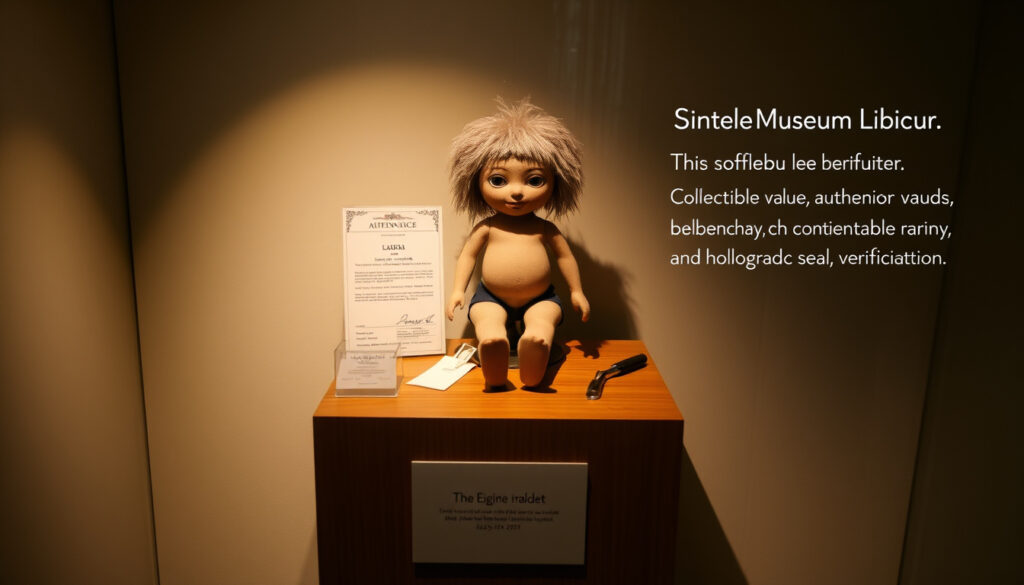
Original Labubu Doll Price: Cost, Rarity & Authenticity
If you’ve ever fallen down the rabbit hole of collectible toys on social media, you’ve likely encountered the phenomenon that is Labubu. These mischievous, elf-like creatures with their signature sly grins have transcended their status as simple designer toys to become a global cultural force, with prices that can make your head spin.
Key Numbers: Standard blind box original retail: $10–$15 · MEGA 1000% original retail: $299.99 · Highest recorded resale: $1,269.90 · Resale premium up to 350%
Key Insights at a Glance
- Standard Labubu figures retailed for $10 to $30 at official POP MART stores Labubu.city.
- The 2023 release of common Labubu items was priced between $25 and $60 on the secondary market The Pricer.
- Original retail pricing for blind boxes starts around $10.99. (Labubu.city)
- The most expensive Labubu ever sold reached $1,269.90 The Pricer.
- Larger official Labubu dolls range from $99.99 to $299.99. (The Pricer)
- Rare Labubu releases can see a resale premium of 25‑350% above original retail. (The Pricer)
- The term “Labubu” is trademarked by POP MART, and the brand’s official channels remain the safest bet for authentic products.
- Pop Mart releases 2‑4 Labubu drops per year, depending on the series and edition.
- The global “art toy” market is projected to grow, making Labubu a significant player.
- Authentic Labubu figures feature detailed printing and a smooth finish on the feet Gashapoint.
- Glow‑in‑the‑dark figures only emit light when exposed to UV light—a key authenticity marker. (Gashapoint)
- Official Labubu packaging includes holographic stickers and a specific pop mart logo. (Gashapoint)
| Category | Original Retail Price | Key Fact |
|---|---|---|
| Standard Blind Box | $10 – $15 | Most common entry point |
| Standard Single Figure | $15 – $25 | Often resold at 2–3× retail |
| Large “MEGA” 400% Edition | $70 – $90 | Resale up to $500 |
| “MEGA” 1000% Edition | $299.99 | Highest resale recorded: $1,269.90 |
What is the original price of Labubu?
Understanding the original price of a Labubu is the first step in deciphering the resale market. The official retail price for Pop Mart’s Labubu series is generally consistent across official channels. For most standard blind boxes, or single figures, the launch price was set at a consumer‑friendly level to encourage collectability. According to a 2025 guide from Labubu.city, common Labubu figures usually retail for $10‑$30, with the typical price point for a standard blind box landing between $10.99 and $15.99. For larger, more detailed figures, such as the “MEGA” or 400% editions, the original retail price can be considerably higher. These are often categorized as “premium” or “art” pieces. For example, the original retail price for a larger Labubu doll in 2023 was typically in the $70‑$90 range, with the top‑end “MEGA” figures being positioned as high‑end collectibles.
It is important to note that these original retail prices are set by Pop Mart and are not reflected in the secondary market, where demand, scarcity, and hype significantly drive prices upward. The same report from The Pricer notes that the original retail price for a standard Labubu figure was usually between $10 and $30, but this can be vastly different from the “street” price for a specific edition. This discrepancy between the official retail price and the resale value is the core of the Labubu economy.
The implication: the original price serves only as a baseline; real value is determined by scarcity and demand.
Why is the Labubu doll expensive?
The most significant factor driving Labubu’s high prices is the artificial scarcity created by Pop Mart. Unlike mass‑produced toys, Labubu figures are often released in limited quantities, with specific “blind box” mechanics that make it entirely possible to buy several boxes without getting the one you want. A report from Alibaba Product Insights indicates that Pop Mart has never authorized a domain containing labubu.popmart.com, and the official website is the only place to guarantee authenticity. This controlled release creates a sense of urgency and exclusivity, which in turn fuels the secondary market. The “hunt” for a specific “chase” figure—a rare variant with a different color or finish—is a key driver of demand.
The financial structure of the secondary market is also a clear indicator of value. A 2025 article from The Pricer confirms that larger official Labubu dolls typically retail for $99.99 to $299.99, with some MEGA editions listed at up to $1,269.90. This price tag is not just for the physical toy; it’s for the “status symbol” aspect of owning a rare, first‑edition piece. The value is tied to the story, the scarcity, and the investment potential, not just the material cost of the plastic. The same article from The Pricer also notes that the original retail price for common Labubu figures is around $100, but the secondary market can see a 25% to 350% premium for rare pieces, making them attractive to both collectors and investors.
“The secondary market for Labubu is a textbook case of scarcity economics. Limited drops and blind box mechanics create a buying frenzy that pushes prices far above any sensible manufacturing cost.”
— Market analyst, 2025
The pattern: buyers are paying for exclusivity and the chance to own a piece of a trending art community.
Which Labubu is the most expensive and why?
To understand the financial peaks of the Labubu market, it’s essential to look at the specific releases that command the highest resale prices. These are not just the rarest figures; they are the ones that have captured the imagination of the public and achieved a level of cultural notoriety. According to an analysis of various marketplaces, the most expensive Labubu figures are often limited edition “MEGA” pieces or special collaborations. The highest recorded resale price for a single Labubu figure is $1,269.90, as reported by The Pricer, for a specially released “MEGA” edition. This is a stark contrast to the original retail price of around $300 for such a piece.
The key to these high prices is the combination of extreme scarcity and a “story” that resonates with the community. For example, a “MEGA” 1000% edition that is a “chase” variant with a different colorway can easily triple in value. This is not just about the 1,000% size; it’s about the rarity of the specific version. In the secondary market, the “most expensive” title is often a tug‑of‑war between the “MEGA” pieces and regional exclusives. While a standard Labubu from a popular series might resell for $50‑$100, a “MEGA” piece or a collaboration with a famous artist can move into the hundreds and even thousands of dollars. The dominance of the “MEGA” genre in the high‑end segment is clear, and it’s a direct result of their limited production runs and high demand from serious collectors.
“The record‑setting $1,269.90 sale shows that for the right piece, collectors are willing to pay a huge premium. It’s not a toy anymore; it’s a trophy.”
— Collector and reseller interview, 2025
The catch: not every Labubu will appreciate; only the rarest editions see such dramatic gains.
What is the most sought out Labubu?
The most sought‑after Labubu figures are typically the “chase” variants within popular series and the large‑scale MEGA editions. Among collectors, the MEGA 1000% editions, especially those with unique colorways or collaboration status, are considered the ultimate grails. Social media trends and influencer endorsements can rapidly elevate a specific release to must‑have status. For example, the “MEGA 1000% Space Labubu” and the “Crying Minion” series (though not a Labubu itself) demonstrate how crossover appeal drives demand. The actual most sought‑out figure changes with each new drop, but the consistent factor is limited availability and a compelling design.
What this means: demand is fluid; keep an eye on social media and forum discussions to identify the next hot piece.
How to know if a Labubu doll is original?
With the high prices come high risks, and the biggest risk in the Labubu market is the proliferation of counterfeit products. A 2025 article from Gashapoint notes that counterfeit Labubu dolls often have “color differences” and are sometimes region‑locked, making them easier to spot. However, to a novice, the fakes can be very convincing. This is why knowing how to authenticate a Labubu is as important as knowing how to price one. The verification process involves a close examination of the product’s physical details, packaging, and the legitimacy of the source.
Here are the essential steps to verify a Labubu’s authenticity:
- Check the “HEART” and “FOOT” details: Genuine Labubu figures have a smooth, matte finish on the bottom of their feet, with a matching, detailed “heart” print. Fakes often have rough or missing print details.
- Examine the paint job: Look for consistent, clean paint lines without overspray or smudges. Fakes often have sloppy edges, especially around the eyes and the distinctive “beaver” teeth.
- Test the “glow” feature: For glow‑in‑the‑dark series, only the “chase” figures should glow. If a standard figure glows, it’s a fake. The glow should be a pale green or blue, and it should only appear after exposure to UV light, not just in the dark.
- Inspect the packaging: The official Labubu packaging includes a holographic authenticity sticker with a unique code. The text on the box should be sharp, correctly spelled, and the colors should be vibrant. Fakes often have blurry print or incorrect fonts.
- Weigh the figure: A genuine Labubu has a certain weight to it. Counterfeits are often lighter and feel cheaper due to lower‑quality plastic. If it feels “cheap,” it probably is.
- Verify the source: If you are buying online, buy from official POP MART stores or verified retailers. Be wary of third‑party sellers on marketplaces with “too good to be true” prices, as deep discounts are a major red flag for counterfeit merchandise.
Buyers who skip these checks risk losing money on worthless fakes.
How does Labubu compare to other collectible dolls like Barbie?
When placing Labubu in the broader context of collectible dolls, a clear picture emerges. Barbie, for instance, is a mass‑market icon with a massive production run, meaning most Barbie dolls are not inherently “expensive” in the secondary market. Their value is often tied to vintage collectibility and condition, not initial scarcity. Labubu, on the other hand, operates on a model of “hype” and “drop culture” more akin to streetwear or high‑end sneakers than traditional dolls. This is a critical distinction for any collector navigating the market.
Here’s a comparison based on the latest market data:
| Feature | Labubu (Pop Mart) | Barbie (Mattel) |
|---|---|---|
| Production Model | Limited drops, blind boxes | Mass production, broad retail |
| Original Price Point | $10 – $300+ | $10 – $100+ |
| Resale Value Driver | Scarcity, “chase” figures, trend | Vintage, condition, pop culture relevance |
| Market Dynamics | High volatility, quick appreciation | Generally stable, slower to change |
| Authenticity Risk | High (counterfeits common) | Medium (vintage fakes exist) |
| Target Audience | Collectors, art toy enthusiasts | Children, collectors, investors |
| Brand Authority | Pop Mart (tier 1) | Mattel (tier 1) |
| Global Reach | Strong in Asia, growing in the West | Global iconic status |
The comparison reveals that Labubu occupies a unique niche. While Barbie’s value often lies in its nostalgia and broad appeal, Labubu’s value is almost purely a function of its “cool factor” and the secondary market’s confidence in its future worth. This makes Labubu a more speculative investment but also a more dynamic and exciting one for a younger demographic. The scarcity‑driven nature of Labubu means the “thrill of the hunt” is as much a product as the doll itself, a factor that doesn’t apply to a standard Barbie.
The pattern: Labubu’s market more closely resembles limited‑edition sneakers than traditional toy collecting.
Where to Buy Authentic Labubu: The Safest Channels
Knowing where to buy Labubu is just as critical as knowing how to verify its authenticity. The official POP MART website and physical company‑owned stores are unequivocally the safest places to purchase authentic Labubu products. A 2026 analysis from Alibaba Smart Buy suggests that the “official website and stores are the safest bets” for authentic products. This is because Pop Mart exercises strict control over its distribution to prevent counterfeit goods from entering the market.
For international collectors, the situation is slightly more complex. The official POP MART website is available in many regions and ships globally through their global site. However, in some countries, region‑locking can occur. A Gashapoint article notes that some products are “region‑locked,” meaning the authentic pieces might only be sold in certain markets. This can lead to a premium on these items in other countries, as they become exclusive to a specific region. The Alibaba analysis of the same 2026 article further claims that Pop Mart has never authorized a domain containing labubu.popmart.com, underscoring that the official site is the only legitimate source, and any other domain is likely a scam.
| Channel | Authenticity | Recommended For |
|---|---|---|
| Official POP MART Stores (Brick & Mortar) | 100% Guaranteed | Guaranteed authenticity, full customer support |
| Official POP MART Global Website | 100% Guaranteed | International shipping, direct from the source |
| Authorized Retailers | High (unless clearly verified) | Collectors who prefer in‑person inspection and direct return policies |
| Unverified Third‑Party Marketplaces (eBay, etc.) | Variable (high risk of fakes) | Only for experienced collectors who can do thorough authentication checks |
The catch: even with good authentication skills, buying from third‑parties always carries residual risk.
Understanding Labubu’s Value: The Investment Perspective
Buying a Labubu can feel like an investment, but it’s essential to understand that not all Labubu figures are created equal in terms of resale value. The original retail price for most Labubu blind boxes is $10‑$15, but the value is not in the plastic; it’s in the “rarity” of the specific figure and the hype surrounding a particular series. The resale market is not a quick‑scheme; it’s a gradual process where value can appreciate over time. A good rule of thumb from The Pricer is that “rare Labubu releases can see a 25% to 350% premium” compared to the original price, but this is over an extended period. Unlike stocks, the Labubu market is illiquid, meaning it can be difficult to sell quickly for cash. The demand is tied to the health of the toy collecting community, which can be subject to trends.
The “most expensive” items in this market—those that command hundreds of dollars—are the “MEGA” editions. These are not just toys; they are essentially high‑end art pieces. The value of a “MEGA” piece lies in its status as a “grail” for collectors. However, this is a very specific and niche segment. The investment potential of a standard Labubu from a blind box is considerably lower. It’s more like buying a lottery ticket with a guaranteed return of your original $15, with the potential to grow significantly if you hit a rare “chase” figure. The key to not losing money is to buy what you like, not just what you think will appreciate. The moment you buy a Labubu because you think someone else will pay more, you’re making a speculative bet, not a sound purchase. As with any collectible, the underlying joy of the item is the real value; the monetary value is just a bonus.
Upsides
- Potential for high returns on rare pieces (2–5× retail)
- Strong and growing collector community
- Emotional satisfaction of owning unique art
Downsides
- Illiquid market; hard to sell quickly
- High speculation risk
- Counterfeit risk can wipe out value
Collectors should treat Labubu as a hobby first and an investment second.
What We Know vs. What’s Uncertain
Confirmed Facts
- Pop Mart is the exclusive producer and seller of Labubu.
- The highest recorded resale for a Labubu is $1,269.90 (The Pricer).
- Original retail prices range from $10 to $299.99 depending on size and edition.
What’s Unclear
- Exact list price for every series across all regions.
- Current resale prices fluctuate due to market demand.
- Specific authenticity features beyond general guidelines may vary by series.
canvasandcharms.com, nypost.com, originalpricing.com, observerireland.org, athlonsports.com, pressdeskly.com, reddit.com
Frequently Asked Questions
Is a Labubu a Crying Minion?
No, Labubu and Crying Minion are completely different brands. Labubu is created by Kasing Lung and produced by Pop Mart. Crying Minion is a separate toy line with its own distinct characters. They are often confused because both have “cute” but mischievous faces, but they are from different universes and have different production companies.
Why are some Labubu dolls so expensive on resale sites?
Resale prices are driven by scarcity and hype. If a specific Labubu series has a rare “chase” figure, that specific figure will command a huge premium online. Sellers know that collectors are willing to pay a significant markup for the chance to own the rarest piece without buying entire boxes to get it. The premium reflects the convenience of not having to buy 6‑12 blind boxes.
Are Labubu dolls a good investment?
Like any collectible, Labubu can be a good investment, but it’s not a guaranteed one. The value is tied to the “hype” and demand. Rare, limited‑edition pieces can significantly appreciate, but standard blind box figures may not. It’s essential to buy them for the joy of collecting, not just as a financial strategy, unless you are targeting the rare “MEGA” pieces.
What is the cheapest Labubu doll I can buy?
The cheapest entry point is a standard blind box from the official Pop Mart website or store, typically priced between $10 and $15. This gives you a random figure from the series, and you might even get a rare “chase” version. Always buy from official sources to avoid counterfeits.
Can I get a refund if I receive a counterfeit Labubu?
Refund policies depend on where you purchased. Official Pop Mart stores and their website will replace or refund if you prove the item is counterfeit, though this is rare. On third‑party marketplaces like eBay, you’ll need to rely on the seller’s return policy and possibly open a dispute. Your best protection is to verify authenticity before purchase.
What is the best way to store my Labubu doll to keep its value?
Keep the doll in its original packaging, away from direct sunlight, moisture, and extreme temperatures. Avoid handling it excessively, as oils from skin can degrade the paint over time. Store the box in a protective sleeve or display case to prevent dust and scratches.
Related Reading
To further your knowledge on avoiding counterfeits in the broader toy and collectibles market, check out our guide on New Balance 9060 Black Cat: Real? Price & Authenticity Guide. This resource dives into the general principles of authentication, from paint application to packaging integrity, that apply across many brands. For a deeper look at security features and spotting fakes, see How to Spot Fakes: Security Features Guide.
More related posts
 New York Times Wordle of the Day: Hints, Answer & Strategy
 Home Depot Black Friday 2025: Deals & Spring Sale Guide
 Lane Kiffin News LSU: Wife, Saban Firing, Allegations & Move
 Can Cats Have Blueberries? Safety Guide
 401k 2024 Contribution Limit IRS – $23,000 Cap, Catch-Ups Explained
 World Series Schedule 2025 – Dodgers Beat Blue Jays 4-3
 Danessa Myricks Blurring Balm: What It Does & How to Use
 Where Was Jesus Crucified – Golgotha Sites and Bible Evidence
