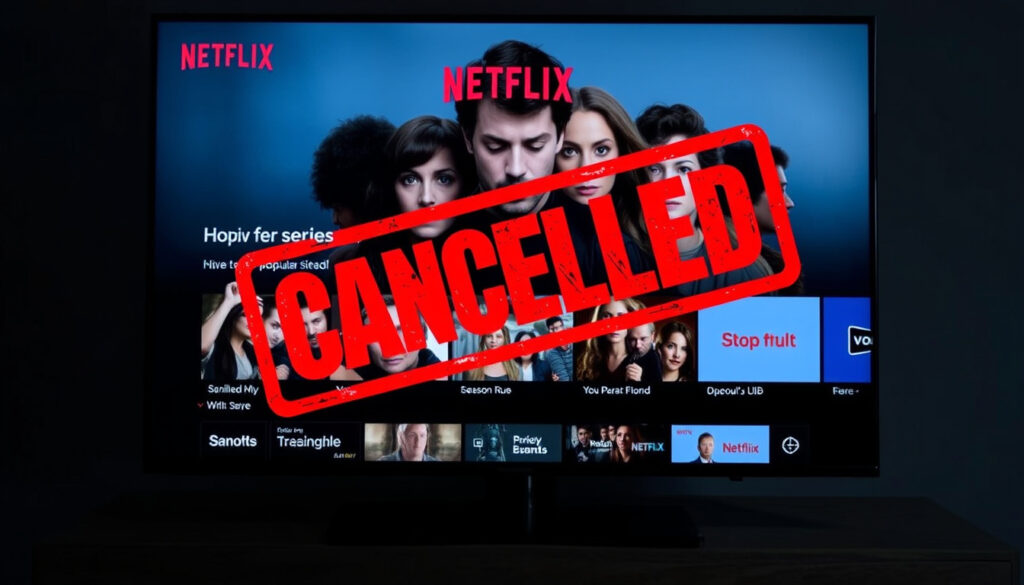
Netflix Has Canceled a Popular Series After Three Seasons – Pattern and Reasons
Netflix has built a reputation for canceling original series after just a few seasons, a pattern that has left countless fans disappointed and industry observers questioning the streaming giant’s strategy. Unlike traditional television networks that often rely on syndication profits to justify extended runs, Netflix operates on a model that prioritizes subscriber growth through constant new content.
The phenomenon, sometimes referred to as the “three-season ceiling,” reflects deeper financial and algorithmic considerations that drive the platform’s programming decisions. From escalating actor contracts to metrics-based performance evaluations, the reasons behind these cancellations are multifaceted and warrant closer examination.
Understanding this pattern requires looking at both the business logic driving Netflix’s decisions and the specific shows that have fallen victim to this approach. The cancellations affect everything from superhero adaptations to animated series, spanning genres and audiences alike.
Why Does Netflix Cancel Shows After 3 Seasons?
Three seasons represents the most common cutoff for Netflix cancellations, with many series ending precisely at this threshold.
Backend royalties and syndication profits are avoided by canceling before shows reach four or more seasons.
2025 brought new cancellations including titles like Exploding Kittens and Twilight of the Gods according to industry tracking.
Outrage frequently follows cancellation announcements, particularly for critically acclaimed or beloved series.
The Economics Behind Early Cancellations
Netflix operates under a fundamentally different financial structure compared to traditional television networks. In conventional TV, networks benefit from syndication deals once a show reaches approximately five to six seasons. These deals can generate substantial revenue that offsets production costs and incentivizes networks to maintain longer-running series.
Netflix’s upfront payment model eliminates this revenue stream entirely. According to industry analyses, the platform pays creators and actors a fixed amount at the time of production, with no subsequent income from syndication or library licensing. This means extended runs generate no additional financial benefits while costs continue to climb with each season.
Actor contracts typically include escalators that increase salaries significantly after successful initial seasons. For popular shows, these bonuses can reach multimillion-dollar amounts for ensemble casts, transforming what begins as an affordable original series into a costly enterprise. The lack of syndication windfall means Netflix must absorb these costs without offsetting revenue, creating a strong financial incentive to end series before expenses spiral further.
Viewer Metrics and Algorithm-Driven Decisions
Netflix bases its retention decisions on hours watched and viewer retention metrics, though the platform famously withholds specific ratings data from public view. Shows that fail to match the viewership performance of flagship titles face cancellation regardless of critical acclaim or dedicated fan bases.
The platform’s recommendation algorithm plays a central role in this process. Netflix’s system prioritizes subscriber engagement through new content discovery, meaning that longer-running shows with declining viewership per episode are systematically disadvantaged. Each season represents an opportunity to debut fresh programming that drives new sign-ups rather than maintaining existing subscriptions.
This approach fundamentally differs from networks like Disney+ and HBO, which often release episodes weekly to build sustained conversation and maintain audience momentum over extended periods. Netflix’s binge-release model provides a short burst of engagement but limited ongoing buzz, reducing the long-term promotional value of established series.
Unlike traditional broadcast or cable networks, Netflix does not generate revenue from commercial advertising or syndication licensing. This removes the primary financial incentive that traditionally supported longer television runs.
Key Insights on Netflix Cancellation Patterns
- Backend royalty payments to creators and actors become due after approximately three seasons, giving Netflix a strong financial incentive to end series before reaching that threshold
- Viewer retention metrics drive cancellation decisions more than critical reception or fan campaigns, with Netflix relying on internal data it does not publicly disclose
- Animated series face particular vulnerability due to higher per-episode production costs compared to live-action programming of similar scope
- The binge-release model limits the sustained social media conversation that weekly releases generate, reducing organic promotional value for existing shows
- New subscriber acquisition receives priority over retention, meaning established series compete against constant new content debuts
- Marvel adaptations faced early cancellations despite dedicated followings, as viewership failed to justify the licensing and production expenses involved
- Notable exceptions like Big Mouth, which ran for eight seasons, demonstrate that exceptional viewership can override the typical three-season pattern
| Show | Seasons Completed | Primary Cancellation Factor | Final Year |
|---|---|---|---|
| One Day at a Time | 3 | Viewership metrics, despite critical praise | 2020 |
| Bloodline | 3 | Declining viewership per episode | 2017 |
| Love | 3 | Performance versus cost analysis | 2018 |
| Santa Clarita Diet | 3 | Internal viewership thresholds | 2019 |
| Daredevil | 3 | Marvel licensing costs | 2018 |
| Jessica Jones | 3 | Marvel licensing costs | 2019 |
| Mindhunter | 2 | Rising production and talent costs | 2020 |
| The OA | 2 | Viewership retention metrics | 2019 |
| Lockwood & Co. | 1 | Performance versus animation costs | 2023 |
| The Society | 1 | Viewership metrics | 2022 |
Which Beloved Netflix Series Have Been Canceled After Three Seasons?
The three-season cutoff has claimed numerous series that had developed passionate fan communities and earned critical recognition. These cancellations often spark intense backlash, particularly when creators and cast members have publicly advocated for additional seasons.
Series Canceled at the Three-Season Mark
One Day at a Time remains one of the most cited examples of a show canceled despite vocal support. The sitcom, a reimagining of Norman Lear’s classic format, earned praise for its nuanced portrayal of a Cuban-American family navigating mental health, immigration, and LGBTQ+ themes. Despite campaigns from cast members including Rita Moreno and creator Norman Lear, Netflix declined to renew the series beyond its third season.
Bloodline offered a dark family drama set in the Florida Keys that built a devoted following through its atmospheric storytelling. The series concluded after three seasons in 2017, with Netflix citing declining viewership in later episodes as the primary factor. The decision illustrated how even quality programming faced challenges in the platform’s metrics-driven framework.
Love, a romantic comedy exploring modern relationships, ran its full course across three seasons before conclusion in 2018. The show’s creators had signaled from the beginning that they envisioned a finite story, but the timing of its ending still aligned with Netflix’s typical pattern rather than the creators’ stated preferences.
Santa Clarita Diet brought horror-comedy elements to the platform, earning a cult following during its three-season run that concluded in 2019. Cast members and fans launched campaigns requesting renewal, but Netflix determined that viewership did not justify continuation.
Marvel Adaptations and Shared Universes
Netflix hosted several Marvel Television productions that demonstrated the platform’s approach to genre programming. Daredevil concluded after three seasons in 2018, with star Charlie Cox and the creative team having expressed interest in continued development. The series had earned critical acclaim for its mature storytelling and grounded approach to superhero narrative.
Jessica Jones followed a similar trajectory, completing three seasons in 2019. The series had distinguished itself through its exploration of trauma, consent, and mental health, topics rarely addressed with similar gravity in superhero media. Krysten Ritter’s performance received particular recognition from critics.
Iron Fist, Luke Cage, and The Punisher each reached two seasons before cancellation, with the latter two also concluding in 2018 and 2019 respectively. The cumulative effect of these decisions effectively ended Netflix’s Marvel collaboration, though the characters later appeared in other Disney-controlled properties.
Marvel Television productions operated under separate licensing agreements than Netflix Originals, with Marvel maintaining greater creative control and Netflix handling distribution. These arrangements included specific revenue-sharing structures that influenced cancellation timelines.
What Netflix Shows Were Canceled in 2025?
Recent tracking by industry publications has documented continued cancellations throughout 2025, maintaining the established pattern despite ongoing fan criticism. While comprehensive lists remain limited in publicly available data, several notable cancellations have been reported through entertainment news outlets.
Reported 2025 Cancellations
According to industry sources tracking Netflix programming decisions, animated titles have faced particular pressure in recent cancellation waves. The streaming platform appears to be applying increased scrutiny to animation production costs, especially for series that failed to achieve breakout viewership in their initial seasons.
Live-action productions have also experienced continued cuts, with sports documentaries and limited series facing evaluation based on completion rates and subscriber engagement metrics. Netflix’s internal data suggests that content performing below threshold levels in the first 28 days of release faces significantly elevated cancellation risk.
The platform’s broader content strategy appears to favor projects with built-in audience recognition or those that can be developed into franchise properties. This approach prioritizes proven intellectual property over original concepts, a shift that has implications for both creative innovation and cancellation patterns.
Industry Tracking and Verification Challenges
Confirming specific cancellation details requires careful attention to sourcing, as entertainment news often combines confirmed programming decisions with rumored developments. Netflix does not publicly announce cancellation reasons, leaving analysts to infer motivations from available context and industry patterns.
Streaming industry publications have become primary sources for tracking these decisions, though transparency regarding methodology varies. Fans frequently express frustration at the difficulty of predicting which shows will receive renewal versus cancellation, particularly given the platform’s historical secrecy around viewership data.
Specific 2025 cancellation details remain partially unconfirmed in available sources. Claims regarding individual titles should be verified against multiple entertainment news outlets before acceptance, as early reports sometimes contain inaccuracies.
Popular Netflix Shows Canceled After Just One Season
The one-season cancellation category represents some of the most disappointing losses for audiences, particularly when shows demonstrate significant quality or originality in their initial runs. These decisions often generate the strongest backlash, as fans have had no time to develop deeper attachments to characters or narratives.
Notable First-Season Cancellations
Lockwood & Co. stands as a prominent example from recent years, canceled in 2023 despite positive reception and a storyline that appeared positioned for ongoing development. The supernatural detective series had generated sufficient interest for Netflix to commission substantial production value, making its cancellation particularly notable given the investment already committed.
The Society presented an ambitious young adult drama reimagining William Golding’s Lord of the Flies premise in a contemporary American setting. The series had earned renewals for additional seasons during production, with cancellation coming as a surprise to audiences anticipating the resolution of multiple cliffhangers.
Shadow and Bone received two seasons before cancellation in 2023, though its first season had successfully launched the fantasy franchise that had earned Netflix significant investment. The adaptation of Leigh Bardugo’s Grishaverse novels had attracted a dedicated readership eager for expanded world-building.
Factors Leading to Single-Season Cancellations
Shows canceled after one season typically fail to achieve the viewership thresholds Netflix establishes during initial release windows. The platform’s algorithm measures performance across multiple dimensions including completion rates, rewatching behavior, and new subscriber conversion attributed to the title.
Content that underperforms during the first 28 days following release faces automatic evaluation for cancellation, regardless of critical reception or social media buzz. This metrics-focused approach can disadvantage shows that require time to build audiences through word-of-mouth recommendation.
Budget considerations also factor heavily into first-season decisions, as Netflix assesses whether projected renewal costs align with demonstrated performance. High-production-value series face particularly rigorous evaluation, as their per-episode costs require corresponding viewership levels to justify continuation.
Timeline of Notable Netflix Cancellations
The pattern of early cancellations has evolved over the platform’s history, with specific shows marking significant moments in understanding Netflix’s programming strategy. The following timeline highlights key developments in this trajectory.
- – Bloodline concludes after three seasons, among the earliest prominent examples of Netflix canceling acclaimed programming at the three-season threshold
- – Daredevil canceled after three seasons, ending one of Netflix’s most critically celebrated Marvel adaptations
- – The OA canceled after two seasons despite an intensely loyal fan community that had organized multiple renewal campaigns
- – Santa Clarita Diet concludes after three seasons, prompting significant fan response and discussion of Netflix’s programming priorities
- – One Day at a Time canceled after three seasons despite critical acclaim and advocacy from prominent television creators
- – Mindhunter canceled after two seasons, with reports indicating escalating production costs as a primary factor
- – Lockwood & Co. canceled, representing an early post-pandemic example of the ongoing pattern
- – Shadow and Bone canceled after two seasons despite strong audience engagement
- – Continued cancellations reported across animated and live-action titles, maintaining established patterns
Confirmed vs. Rumored Cancellations
Navigating reports of Netflix cancellations requires distinguishing between confirmed programming decisions and speculative discussions circulating in entertainment media. This distinction has become increasingly important as social media amplifies both verified information and unconfirmed rumors.
Confirmed Cancellations
- One Day at a Time (2020)
- Santa Clarita Diet (2019)
- Mindhunter (2022)
- The OA (2019)
- Lockwood & Co. (2023)
- Daredevil (2018)
- Shadow and Bone (2023)
Unconfirmed Reports
- Specific 2025 title-by-title details
- Rumored upcoming cancellations for ongoing series
- Projected 2026 programming changes
- Internal viewership figures for active shows
- Specific reasons attributed to individual cancellations
Verified information typically emerges through official Netflix announcements, entertainment news outlets with direct industry connections, or statements from creators and cast members. Rumored developments often surface in fan communities before official confirmation, requiring verification against established sources.
Why the 3-Season Pattern Persists
The consistency of Netflix’s three-season cancellation pattern reflects deliberate business strategy rather than arbitrary decision-making. Understanding the incentives driving this approach illuminates both the platform’s priorities and the constraints that shape available content.
Industry analyses have identified backend royalty payments as a central factor in the three-season threshold. Under standard entertainment contracts, creators and talent typically become eligible for backend participation after completing a specific number of seasons, often three. This participation can include percentage points from revenue generated by the property across multiple windows and formats.
By canceling before reaching this threshold, Netflix avoids triggering these payments while the show remains fresh in viewer memory. This approach proves particularly significant for successful series where backend obligations could reach substantial sums. The savings compound when considering ensemble casts where multiple talent members hold such provisions in their contracts.
The strategy also serves Netflix’s subscriber acquisition priorities. Fresh content drives new sign-ups more effectively than library retention, meaning that announcing a new premiere generates more subscriber growth than continuing an existing series. Marketing budgets can be concentrated on promotional campaigns for new releases rather than ongoing series maintenance.
Backend participation provisions vary significantly by individual contract. Not all Netflix productions include such clauses, meaning the three-season threshold represents a general pattern rather than an absolute rule. Exceptions occur when contracts do not include backend provisions or when viewership justifies exception to typical cancellation practices.
Expert Quotes and Sources
Understanding Netflix’s cancellation patterns requires attention to available industry reporting and documented discussions from platform representatives and affected creators.
“Netflix has an incentive to cancel shows at three seasons specifically because that’s when backend royalties kick in. They avoid paying out those profits.”
— Industry discussion regarding Netflix cancellation strategy
Entertainment news outlets have documented fan response to numerous cancellations, capturing the tension between audience expectations and platform business models. These reports consistently highlight the gap between critical reception and renewal decisions, suggesting that Netflix’s internal metrics prioritize different factors than those valued by reviews and awards recognition.
Streaming industry analysts have increasingly focused on Netflix’s programming decisions as a model for broader platform strategy. The approach has influenced how competing services structure their own content libraries, with implications for both creative development and audience expectations.
Looking Ahead
Netflix has shown no indication of departing from the three-season cancellation pattern that has defined its original programming strategy. The business logic underpinning these decisions remains sound within the platform’s current revenue model, and no structural changes appear likely to alter the calculus in the near term.
For viewers, this reality means approaching Netflix originals with an awareness that even successful shows may not receive the extended runs necessary to explore their full potential. The platform’s library, while extensive, reflects a rotating selection of content rather than the stable foundation audiences might expect from traditional television.
Exceptions continue to exist for shows that achieve exceptional viewership performance. However, these outliers confirm the general rule rather than suggesting a shift in strategy. For comprehensive coverage of streaming trends, exploring additional resources on platform-specific programming approaches provides valuable context.
Frequently Asked Questions
Does Netflix cancel shows after exactly three seasons?
Netflix most commonly cancels shows after two to three seasons, though the exact timing varies by production. Not all cancellations occur at the three-season mark; some titles end after one or two seasons while others receive four or more seasons before conclusion.
Why did Netflix cancel The OA?
The OA concluded after two seasons in 2019. While Netflix did not publicly cite specific reasons, industry observers attributed the cancellation to viewership retention metrics that failed to meet internal thresholds despite a passionate fan community.
How many Netflix shows were canceled in 2025?
Industry tracking publications have documented cancellations throughout 2025, though comprehensive lists with verified details remain limited in available sources. The pattern appears consistent with previous years, affecting both animated and live-action productions.
Can canceled Netflix shows return on other platforms?
Occasionally, canceled shows find new life on competing platforms. However, this remains relatively rare due to complex licensing arrangements and the original platform’s ongoing ownership of streaming rights. Exceptions typically involve properties where rights have reverted to creators.
What recent Netflix shows were canceled in 2025?
Specific 2025 cancellation details should be verified against multiple entertainment news outlets. Early reports sometimes contain inaccuracies, and Netflix typically releases official statements through press releases or social media announcements.
Why does Netflix cancel popular shows?
Netflix cancels shows based on internal performance metrics rather than external popularity measures like social media engagement or critical acclaim. Financial considerations including production costs, talent compensation, and backend royalty obligations influence these decisions alongside viewership data.
Which Netflix shows were canceled after just one season?
Notable one-season cancellations include Lockwood & Co., The Society, Everything Sucks!, American Vandal, and Shadow and Bone (though the latter received two seasons). These decisions typically reflect viewership performance falling below thresholds during initial release windows.
More related posts
 Playoffs de la WNBA 2025 – Dates, Format, Teams & Results
 South Park Trump Episode: Guide to Season 27 Parodies
 Where Was Jesus Crucified – Golgotha Sites and Bible Evidence
 Chernobyl Miniseries – Plot, Cast, Accuracy and Facts
 Best Washer and Dryer Sets 2026: Brands, Costs, Lifespan
 iPhone 13 Release Date – Announcement, Preorder and Launch Timeline
 Sur La Table Cooking Classes: Reviews, Duration & Locations
 Is the Government Still Shut Down Right Now? Latest Update
