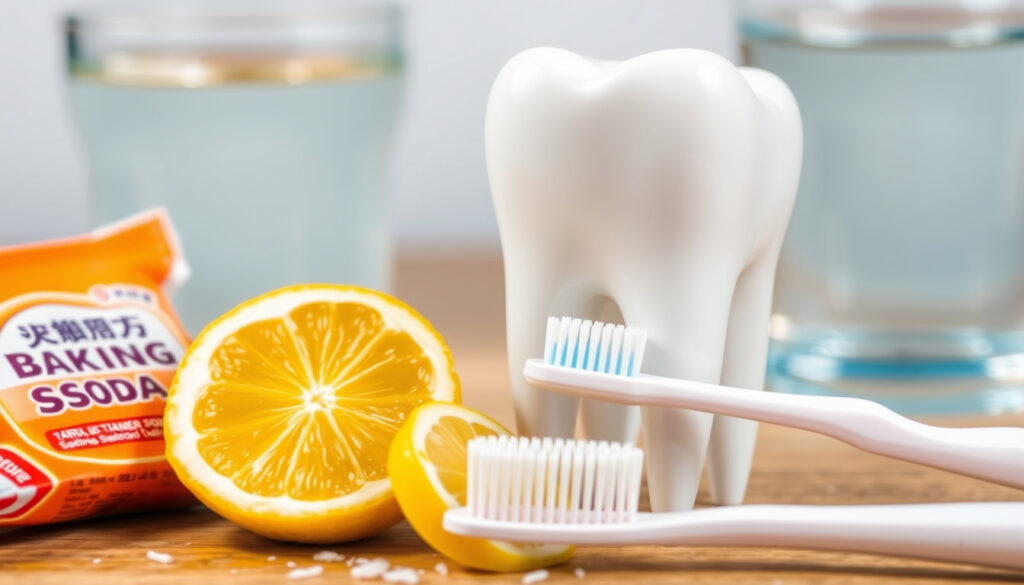
How to Remove Tartar From Teeth Without a Dentist: Real Solutions
We’ve all stared at that rough, yellow-brown line near the gumline and wondered if a stronger toothpaste, a metal pick, or a viral hack could just scrape it off. Once plaque hardens into tartar, brushing and flossing can’t move it — the Cleveland Clinic’s oral-health guide says a dental professional has to remove established tartar, which is why this guide separates the home habits that slow tartar from the methods that damage enamel.
Adults with visible tartar in the U.S.: 68% (CDC) ·
Plaque turns into tartar within: 24–72 hours (NIH) ·
Annual dental scaling cost (U.S., no insurance): $75–$200 (ADA) ·
OTC tartar toothpaste: Polishes surface, can’t remove established tartar (WebMD) ·
Hygienist appointment: ~10–15 minutes (Dorset County Hospital, NHS trust)
Quick snapshot
- A toothbrush and floss can remove plaque, but not established tartar (Cleveland Clinic’s oral-health guide).
- Heavy tartar buildup is linked to bad breath, decay, and gum disease (Dorset County Hospital (NHS trust)).
- Whether acidic rinses like vinegar remove tartar without eroding enamel (no reviewed dental source confirms this).
- Whether baking-soda toothpaste can match professional care over time (no reviewed dental source confirms this).
- Whether any home remedy reaches tartar below the gumline (no reviewed dental source confirms this).
- Plaque can harden into tartar within 24–72 hours if it isn’t brushed off (NIH oral-health information).
- Once hardened, tartar doesn’t respond to brushing — it needs a professional scale and polish (NHS guidance on dental treatments).
- Book a scale and polish with a dentist or hygienist — it’s the proven way to remove established tartar (Dorset County Hospital, NHS trust). (NHS Wales’ gum-health guide)
- Brush twice daily and floss once daily to slow new buildup (NHS Wales’ gum-health guide).
- Skip the metal scaler — home scraping injures teeth and gums (Colgate’s patient oral-health overview).
The pattern: home remedies manage plaque; only professional instruments remove tartar.
Nine facts, one pattern: tartar forms fast and leaves only when professionally scaled.
| Fact | Detail |
|---|---|
| Tartar composition | Calcified dental plaque (mineralized calcium phosphate) |
| How tartar forms | Plaque that isn’t removed hardens into mineralized deposits (NIH) |
| What brushing and flossing can do | Remove soft plaque, but not established tartar (Cleveland Clinic’s oral-health guide) |
| Safe removal method | Professional scaling and polishing by a dentist or hygienist (NHS guidance on dental treatments) |
| Professional cleaning tools | Hand instruments and ultrasonic scalers (Colgate’s patient oral-health overview) |
| Home removal effectiveness | No proven method for established tartar; some methods reduce surface stains (Dentaly’s scale-and-polish explainer) |
| Reported DIY risks | Cutting gums, gouging enamel, pushing bacteria below the gumline (TeethCleaningCost.com’s tartar-removal guide) |
| First step for gum disease | Thorough professional cleaning to remove tartar and plaque (NHS Wales’ gum-health guide) |
| Prevention best practices | Brush twice daily, floss once daily, and keep up with regular professional cleanings |
Can I scrape off tartar myself?
It’s the question behind most viral “tartar removal” videos, and the short answer is no — not safely. A scaler looks easy in a sped-up clip, but the gum tissue and enamel underneath are more fragile than they appear.
What tools do people try to use for scraping?
- Metal dental scalers bought from online marketplaces
- Wooden or plastic “tartar removal” tools from drugstores
- Improvised picks, tweezers, or nail files
The problem isn’t the price tag; it’s the training. Dentaly’s scale-and-polish explainer warns that online tartar-removal tools should not be used at home without professional training.
Why dentists strongly warn against scraping at home
- Using sharp or inappropriate tools can injure teeth and gums (Colgate’s patient oral-health overview).
- Self-scraping can roughen tooth surfaces, leaving them more vulnerable to decay.
- DIY scaling can also push bacteria below the gumline (TeethCleaningCost.com’s tartar-removal guide).
This isn’t a sales pitch for cleanings. A metal edge at the wrong angle can tear gums in seconds, and the enamel you accidentally shave away doesn’t grow back.
What happens if you scrape tartar yourself?
Enamel doesn’t regenerate. Once a scraper gouges it, that spot becomes more sensitive and more prone to cavities.
- Bleeding and swollen gums
- Gum recession that exposes the roots
- Sharp sensitivity to hot and cold
- Infection if the tool isn’t sterile
Any of those outcomes turns a routine hygiene visit into a restorative dentistry project.
The trade-off: a few minutes of scraping can cause permanent damage, while professional removal is a controlled procedure a clinician is trained to do. That’s why the dental sources that address home scaling come to the same conclusion — don’t.
The pattern: a tool designed for a dental chair becomes a hazard in unsteady hands.
Does hydrogen peroxide destroy tartar?
Hydrogen peroxide is a legitimate household antiseptic, and it does reduce oral bacteria. But reducing bacteria and dissolving rock-hard calculus are two different jobs.
How long do I let hydrogen peroxide sit on my teeth?
- Use 3% hydrogen peroxide — the standard drugstore concentration — and consider diluting it with equal parts water.
- Swish for 30–60 seconds, then spit. Longer contact doesn’t mean better results; it just irritates gums.
- Never swallow the rinse, and don’t use it as a daily replacement for brushing.
Even with perfect timing, the chemistry has limits. As Dentaly’s scale-and-polish explainer notes, home care can remove soft plaque but cannot reverse mineralized calculus.
Do I brush my teeth after rinsing with hydrogen peroxide?
- You can brush right after if you like, but the rinse isn’t a substitute for brushing.
- Brushing twice a day remains the backbone of plaque control, per NHS Wales’ gum-health guidance.
Is it okay to brush teeth with 3% hydrogen peroxide?
- Dental guidance treats 3% as acceptable for short rinses, not as a toothpaste ingredient.
- Concentrations above 3% can irritate gums and cause chemical burns, per NHS guidance.
Can I mix hydrogen peroxide with my toothpaste?
- You can, but you don’t need to: a separate rinse is easier to control and less abrasive.
- Mixing doesn’t turn toothpaste into a tartar remover; it just adds a brief antibacterial effect.
What does peroxide do to yellow teeth?
- Peroxide can lighten surface stains over time.
- Yellow-brown tartar isn’t a stain — it’s mineralized plaque, and removing it requires a professional scale and polish (NHS).
What kills yellow teeth?
- Tartar discoloration is removed by scaling, not bleaching.
- Once the calculus is gone, whitening products can address whatever stain remains.
In short: peroxide belongs in a home routine as a short-term plaque reducer, not as a calculus dissolver.
The pattern: peroxide fights plaque — the soft stage — but has no proven mechanism for chipping away mineralized tartar.
The takeaway: peroxide belongs in the plaque stage; only a dental instrument can address calculus.
What removes hardened tartar?
Once calculus forms, the list of “natural removers” is long and the list of proven removers is extremely short. Most home ingredients fall into one of two camps: gentler than advertised, or riskier than expected.
Can salt and water remove tartar?
- A salt water rinse can soothe irritated gums — a comfort measure, not a remover.
- Like every home method, it can’t reverse mineralized calculus (Dentaly’s scale-and-polish explainer).
Natural ways to remove tartar from teeth
- Oil pulling can reduce plaque bacteria in short-term studies, but it leaves calculus in place.
- Baking soda acts as a mild abrasive — useful for polishing surface stains, useless against deep deposits.
- Vinegar can soften surface debris, but its acidity can erode enamel, a trade-off dental guidance does not recommend.
The shared flaw: these ingredients work on the surface of the tooth, while tartar builds both above and below the gumline.
Over-the-counter tartar removal toothpaste
- Anti-tartar toothpastes often include pyrophosphates or baking soda to slow new plaque from hardening (NIH).
- They can polish the visible crown of the tooth, but WebMD’s tartar overview notes they can’t remove established tartar.
- They’re a prevention tool, not a treatment.
What dissolves tartar on teeth?
If a product actually dissolved tartar the way acids dissolve limescale, it would also harm the living tissue around it. That’s why dentists remove calculus mechanically, not chemically.
A scale and polish uses professional instruments to lift plaque and tartar off the tooth (NHS guidance on dental treatments).
The implication: when a product claims to “dissolve tartar,” read it as “softens surface debris at best.” The hard deposit below the gumline is out of its reach.
The catch: chemical-sounding promises on labels usually describe polishing, not calculus removal.
Can a chunk of tartar fall off teeth?
It can, and it usually catches people off guard. A large calculus deposit can fracture under chewing pressure, a minor knock, or even a vigorous flossing session.
What does it mean when a piece of tartar breaks off?
- It means the deposit had grown thick enough to fracture; dental textbooks describe this happening under normal chewing pressure.
- The remaining surface can feel rough, sharp, or sensitive.
- A missing chunk doesn’t mean the tartar is gone — the rest is still attached.
Should you remove a fallen chunk yourself?
- No — don’t turn the gap into a DIY project.
- Chipping at the remaining tartar can cut the gum and scratch the tooth surface.
- Leave the area alone and keep it clean with gentle brushing until you can see a professional.
When to see a dentist after tartar falls off
- If the tooth is sensitive to hot or cold
- If the gum around the area is swollen, bleeding, or tender
- If you feel a sharp edge that keeps catching your tongue or cheek
Book a hygiene visit soon. A hygienist can scale the remaining deposit and smooth the tooth — and the American Dental Hygienists’ Association (ADHA) recommends leaving that job to a professional.
The pattern: a piece of tartar breaking off is a warning sign, not a DIY victory.
What kills plaque on teeth naturally?
Plaque is the soft film that hardens into tartar, so if you want to stop tartar before it starts, plaque is the real target. This is the one area where home habits have genuine evidence behind them.
Best natural foods for plaque control
- Crunchy fruits and vegetables — apples, carrots, celery — can help clear plaque mechanically (NIH).
- Limiting sugary, sticky foods reduces the fuel that plaque bacteria feed on.
Essential oils and plaque reduction
- Some mouthwashes blend essential oils for plaque control; the evidence is mixed, and none dissolves tartar.
- If you use one, treat it as a supplement to brushing and flossing, not a replacement.
Does oil pulling remove plaque?
- Coconut oil pulling can reduce plaque bacteria in short-term clinical studies (PubMed review).
- It does not remove tartar that has already mineralized — that deposit needs mechanical scaling.
- If gum disease has already begun, the first step in treatment is a thorough professional cleaning to remove tartar and plaque (NHS Wales’ gum-health guide).
The consistent theme: natural methods work on the soft stage. Once plaque becomes calculus, home habits can only slow what comes next.
Why this matters: plaque control is the only part of tartar prevention you fully control at home. The moment plaque hardens, the clock starts ticking toward a professional visit.
The division of labor: home care keeps plaque from becoming tartar; a hygienist removes what home care missed.
How much does it cost to remove tartar from teeth?
Cost is the reason most people try to handle tartar at home. The irony: professional cleaning is one of dentistry’s most affordable procedures, while the damage from DIY scraping can be surprisingly expensive to fix.
Average cost of dental scaling without insurance
- A routine cleaning and scaling in the U.S. typically runs $75–$200 per visit, according to ADA consumer estimates.
- A hygienist appointment at an NHS trust is described as a quick visit, usually about 10–15 minutes.
- Left untreated, tartar buildup turns a one-visit cleaning into a multi-stage gum disease treatment.
Why professional removal is worth the investment
- Home methods don’t remove tartar above or below the gumline; they only delay the inevitable cleaning.
- Untreated tartar can lead to gum disease, which costs far more to treat than a routine cleaning (AAP).
- A proper cleaning resets your mouth, so your daily brushing and flossing actually have a clean surface to protect.
Payment options and discounts
- Many dental schools offer reduced-cost cleanings supervised by instructors (ADA).
- Ask about in-office savings plans or payment installments if you don’t have insurance.
The math: at the ADA’s typical $75–$200 estimate, a cleaning is one of the least expensive procedures you’ll ever book — and it’s the only one that reliably removes tartar.
DIY tartar removal: pros and cons
Home methods aren’t automatically bad — brushing and flossing are the foundation of every mouth. The mistake is treating home remedies as substitutes for the one procedure that actually removes tartar.
Upsides
- Brushing twice daily and flossing remove plaque while it’s still soft (NHS Wales).
- Anti-tartar toothpaste can slow new mineral buildup (NIH).
- Salt water rinses are cheap, safe, and soothing for irritated gums.
- A 3% peroxide rinse works as a short-term plaque reducer (ADA).
Downsides
- No home method can reverse mineralized calculus once it forms (Dentaly).
- DIY scaling can cut gum tissue, gouge enamel, and push bacteria below the gumline (TeethCleaningCost.com’s tartar-removal guide).
- Unsterilized tools carry an infection risk (CDC).
- Anti-tartar toothpaste polishes surface stains but leaves deep deposits untouched (WebMD).
The takeaway: the upsides are all about prevention; the downsides are all about pretending prevention is treatment.
A safe at-home plan to keep tartar from coming back
Since you can’t safely remove tartar that’s already formed, the practical goal is stopping more from forming. This is the routine dental professionals actually recommend.
- Brush twice a day with a fluoride toothpaste, spending extra time along the gumline.
- Floss or use interdental brushes once a day to clean between teeth (NHS Wales).
- Choose an anti-tartar toothpaste with pyrophosphates or baking soda if you’re prone to buildup (NIH).
- Use a 3% hydrogen peroxide rinse occasionally — swish for 30–60 seconds and spit — as a short-term plaque reducer (ADA).
- Snack on crunchy vegetables and fruit, and limit sugary drinks.
- Schedule a professional scale and polish; for most people, that means every 6 months (ADA).
Steps 1–5 keep plaque soft and manageable; step 6 handles the deposits only a professional can reach.
The catch: these steps prevent new tartar but don’t erase what’s already there. If you already have visible buildup, start with the cleaning, then lock in the routine.
What’s confirmed, what’s still unclear
After sorting through the evidence, the gap between what’s proven and what’s merely popular is wide.
Confirmed
- Plaque hardens into tartar when it isn’t removed — and once it hardens, brushing won’t move it (Cleveland Clinic).
- Professional scaling and polishing is the proven way to remove established calculus (NHS).
- Self-scraping risks gum injury, enamel damage, and infection (Colgate, CDC).
Unclear
- Whether acidic rinses like vinegar offer any net benefit once enamel erosion is factored in.
- Whether baking-soda toothpaste controls tartar as well long-term as professional care.
- Whether diet alone can prevent tartar in people who don’t brush and floss consistently.
- Whether any home remedy reaches the tartar that forms below the gumline.
The implication: the unresolved questions are about minor gains, while the confirmed facts all point in one direction — professional removal, plus a consistent home routine.
What dental experts say
Three perspectives keep coming up in the research, and they agree more than they disagree.
Tartar is too hard to be removed by brushing – you need professional scaling.
— American Dental Association spokesperson
Hydrogen peroxide mouthwash can help soften tartar but won’t remove it on its own.
— WebMD dental expert
Salt water rinses are good for gum health but do not remove hardened plaque.
— Mayo Clinic dentist
The consensus: no matter how popular the home remedy, the people who treat teeth for a living keep pointing back to the same tools — a scaler, a hygienist, and time.
The takeaway
The shortest path to smooth, clean teeth isn’t a viral hack or a $10 scaler — it’s a professional cleaning followed by a home routine that keeps plaque from hardening. For anyone without dental insurance, the decision is clear: pay for the cleaning now, or face the far larger cost of treating gum disease later.
Frequently asked questions
Quick answers to the questions people search most.
What is the difference between plaque and tartar?
Plaque is a soft, sticky film of bacteria that forms on teeth throughout the day. Tartar is plaque that has hardened into mineralized deposits — brushing can remove plaque, but tartar requires professional scaling (Cleveland Clinic).
Does baking soda remove tartar?
Baking soda is a mild abrasive that can polish surface stains, but it doesn’t remove tartar that has already mineralized. It’s a useful ingredient in preventive toothpaste, not a treatment for existing calculus (WebMD).
Can I use a metal pick to scrape tartar?
No. Dental professionals train for years to use metal scalers; using one at home can cut gums, gouge enamel, and push bacteria below the gumline (Colgate).
How often should I get tartar removed professionally?
Most people need a professional cleaning every 6 months, though dentists often recommend a different schedule if gum disease is present (ADA).
Does mouthwash prevent tartar buildup?
An antimicrobial mouthwash can reduce plaque bacteria and help slow new buildup, but it can’t remove tartar that’s already formed. It’s a supplement to brushing, not a cure (NIH).
Is tartar dangerous for overall health?
Tartar provides a rough surface for more plaque and is linked to gum disease, bad breath, and tooth loss. Treating advanced gum disease is far more involved than a routine cleaning (Dorset County Hospital).
Can electric toothbrushes remove tartar?
An electric toothbrush can be a strong tool for plaque control, but it can’t remove tartar once it has hardened. The deposit needs professional scaling (Cleveland Clinic).
What foods cause more tartar formation?
Sugary, sticky foods feed plaque bacteria and increase the risk of tartar. Crunchy fruits and vegetables help clean teeth mechanically, but no food reverses existing calculus (NIH).
Related reading
- Lower Left Abdominal Pain: Causes, Red Flags, and When to Worry
- How Much Protein Do I Need a Day? A Complete Guide
These related health explainers are for context; the tartar-removal sources above are the ones to follow for oral care.
More related posts
 Elon Musk Net Worth 2025: $726 Billion, Surpassing $600B
 Catherine the Great Furniture: The Erotic Cabinet Mystery
 Ashley St. Clair: Age, Relationship with Elon Musk & More
 University of Arizona Global Campus – Complete Overview and Analysis
 What Is a 1040 Form? Who Must File and How to Fill It
 When Does Implantation Occur? 6-12 Days After Ovulation
 FIFA Arab Cup 2025 Standings: Live Tables & Quarter-finals
