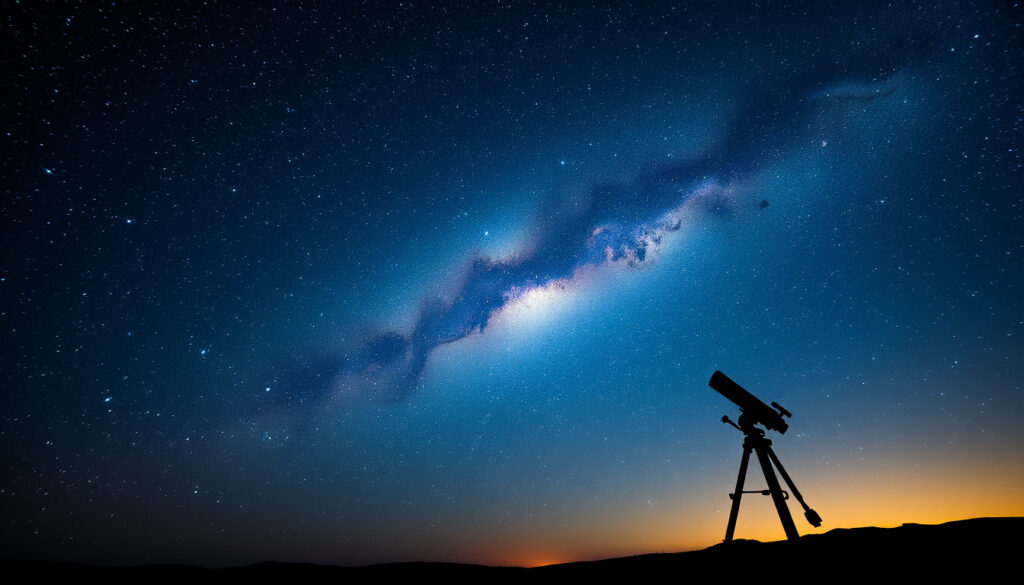
Astronomy Picture of the Day: NASA’s Daily Image and Archive
There’s a quiet ritual millions of people share: opening NASA’s Astronomy Picture of the Day to see what the universe looked like yesterday — or on the exact morning they were born. Every day since June 16, 1995, APOD has published one image and one astronomer-written explanation (NASA, the US space agency), so its archive now holds more than 10,000 dated checkpoints — and those checkpoints point backward as well as forward, making yesterday’s image, your birthday, or the day a mission launched all a few clicks away.
First APOD: ·
Update cadence: Daily ·
Archive size: 10,000+ dated images ·
Provider: NASA and Michigan Technological University ·
Official page: science.nasa.gov/apod
Quick snapshot
- APOD launched June 16, 1995 and has published daily since (NASA, the US space agency)
- Each entry pairs an image with a professional astronomer’s explanation (NASA, the US space agency)
- The official current page is at science.nasa.gov/apod (NASA Science, official APOD host)
- The archive is browsable by date back to 1995 (NASA APOD Archive, primary image log)
- Whether a space photo feels “terrifying” is subjective; NASA publishes no fear ranking (NASA APOD FAQ, official program guidance)
- No planet has a confirmed 99.7% chance of life in the records reviewed here (NASA Science, official APOD host)
- No event for March 23, 2178 appears in the APOD archive or sources reviewed here (NASA APOD Archive, primary image log)
- Which discovery becomes the “newest” changes as missions publish findings (NASA, the US space agency)
- June 16, 1995 — APOD publishes its first image (NASA, the US space agency)
- 1995-present — the archive grows past 10,000 entries (NASA, the US space agency)
- Today — the newest entry is always at science.nasa.gov/apod (NASA Science, official APOD host)
- APOD keeps publishing daily, including reruns of entries more than a year old (NASA APOD FAQ, official program guidance)
- Active missions continue to supply new imagery for future entries (NASA, the US space agency)
- For breaking news, watch NASA’s newsroom rather than APOD (NASA, the US space agency)
Six facts define APOD, and one pattern runs through them: every item below is a date-stamped, verifiable record rather than a marketing claim.
| Label | Value |
|---|---|
| Official name | Astronomy Picture of the Day (APOD) |
| First published | June 16, 1995 (NASA APOD Archive, primary image log) |
| First archived entry | June 16, 1995, “Neutron Star Earth” (NASA APOD Archive, primary image log) |
| Frequency | Daily (NASA Science, official APOD host) |
| Archive size | 10,000+ dated entries (NASA, the US space agency) |
| Provider | NASA and Michigan Technological University (NASA, the US space agency) |
| Founders | Jerry Bonnell and Robert Nemiroff (NASA, the US space agency) |
| Official URL | https://science.nasa.gov/apod/ (NASA Science, official APOD host) |
What is NASA’s picture of the day today?
NASA’s Astronomy Picture of the Day is a daily feature that posts one image of the universe — a photograph, a telescope observation, or a data visualization — and pairs it with an explanation written by a professional astronomer (NASA, the US space agency). The newest entry is always the first thing you see when you open the official page (NASA Science, official APOD host).
How do I find the NASA image of the day by date?
- Go to science.nasa.gov/apod (NASA Science, official APOD host); the current image and explanation sit at the top of the page.
- Click the image to open the highest-resolution version APOD hosts (NASA APOD FAQ, official program guidance).
- Use the < and > symbols near the bottom of a page to move to the previous or next day (NASA APOD About, official program background).
- For a specific date, jump straight to the archive instead of clicking day by day (NASA APOD Archive, primary image log).
To land on an exact date, open the archive page, which lists entries chronologically from June 16, 1995 onward; the earliest archived entry is titled “Neutron Star Earth” (NASA APOD Archive, primary image log).
The fastest way to prove what NASA published on any given day is to open the APOD archive for that exact date — no aggregator, no screenshot, no secondhand caption.
Where can I browse the Astronomy Picture of the Day archive?
- The searchable APOD archive returns thumbnails and links for any keyword you enter (NASA Science, searchable APOD tool).
- Type your search and press Enter; the search runs when you submit the text (NASA Science, searchable APOD tool).
- “Discover the Cosmos” on recent APOD pages also opens the archive (NASA APOD FAQ, official program guidance).
- The index page lists every daily entry by date and title since 1995 (NASA APOD Archive, primary image log).
The range inside the archive is wider than most people expect: APOD entries cover atmospheric phenomena, naked-eye astronomy, cosmology, and space exploration (NASA, the US space agency). That makes it both a teaching resource and a quiet time machine.
What this means: a date is the key that opens any APOD entry. No account, no search engine — just the archive and that day’s number on the calendar.
Is there a real picture of the sun from space?
Yes. The Sun has been photographed from space by multiple spacecraft, and those images are genuine. The confusion starts when a wavelength-filtered image — colored to show a flare or a coronal loop — circulates as if it were an ordinary photograph.
What spacecraft have real photos of the Sun?
- NASA’s solar observatories — SOHO, SDO, and Parker Solar Probe among them — have returned real images of the Sun, several of which have appeared on APOD (NASA, the US space agency).
- APOD has featured solar observations across the electromagnetic spectrum, from radio to gamma rays (NASA, the US space agency).
- Visible-light solar images show sunspots and granulation; ultraviolet images reveal flares and coronal loops (NASA, the US space agency).
Are colorized solar images real?
- Colorized solar images are real measurements, but the colors usually stand for wavelengths the human eye cannot see (NASA, the US space agency).
- A false-color map is how scientists encode invisible data, not how the Sun actually looks (NASA, the US space agency).
- The APOD entry always identifies the instrument and processing, so the label tells you what you’re seeing (NASA APOD FAQ, official program guidance).
A colorized solar image is a real measurement, not a manipulated fake — but sharing it without the wavelength label invites the “that’s not a photo” backlash. The label is the difference between science and decoration.
How are sun photos created?
- Space telescopes capture the Sun through filters that isolate specific wavelengths (NASA, the US space agency).
- Color coding maps data values to a visible palette so scientists can read features like flares and coronal loops (NASA, the US space agency).
- The credit line on each APOD entry names the spacecraft, the instrument, and the person who processed the image (NASA APOD FAQ, official program guidance).
When a dramatic solar image lands in your feed, check the caption. If it names a spacecraft and a wavelength, you are looking at a real measurement of light that happens to be invisible to your eyes.
The trade-off: scientific images carry more information than an eyeball view, but they demand caption discipline. Without it, a genuine observation becomes another viral fake.
What is going on in astronomy right now?
Astronomy does not pause when you close the browser. NASA spacecraft and ground observatories are collecting data at this moment, and APOD is turning one of those observations into a public image every single day (NASA Science, official APOD host).
How do I read NASA’s daily skywatching updates?
- NASA posts skywatching tips and mission notes on its official pages (NASA, the US space agency).
- APOD adds one curated image plus an expert explanation each day (NASA, the US space agency).
- NASA’s official mission feeds and newsroom pages flag upcoming launches and sky events; APOD is the image record, not the alert system (NASA, the US space agency).
That split matters more than it looks: APOD answers what the sky looked like, while NASA’s mission pages answer what is happening right now.
What active missions are returning images right now?
- The James Webb Space Telescope and Hubble Space Telescope are both releasing new observations on a regular cadence (NASA, the US space agency).
- Parker Solar Probe and other heliophysics missions keep returning data from near the Sun (NASA, the US space agency).
- APOD regularly draws on active missions for its daily entries (NASA, the US space agency).
Where can I find today’s APOD entry?
- Open science.nasa.gov/apod (NASA Science, official APOD host); the newest image is at the top.
- The page updates daily, and each image moves into the archive afterward (NASA Science, official APOD host).
- If a reposted image has no date, compare it with the official page before assuming it is today’s (NASA APOD FAQ, official program guidance).
What did NASA say about today?
NASA publishes different kinds of “today” content on different pages. APOD answers which image represents today; NASA’s newsroom answers which official statement, mission update, or discovery was released today. Both are authoritative, and they are not interchangeable.
What is an official NASA announcement?
- An official announcement appears on NASA’s website or through NASA’s news channels (NASA, the US space agency).
- A statement becomes official when NASA publishes it, not when an aggregator account repeats it (NASA, the US space agency).
- APOD is the image-of-the-day record, not a breaking-news delivery system (NASA APOD FAQ, official program guidance).
Where does NASA post its daily statement?
- NASA’s official site is the reference point for anything the agency says today (NASA, the US space agency).
- APOD’s page is the reference point for today’s selected image (NASA Science, official APOD host).
- Social posts should be checked against the original, date-stamped entry (NASA APOD FAQ, official program guidance).
Why is APOD separate from NASA news?
- APOD delivers one image plus one explanation; the newsroom delivers announcements and discoveries (NASA, the US space agency).
- The APOD archive is a record of imagery; the newsroom archive is a record of institutional statements (NASA, the US space agency).
- The two pages answer different questions, and both deserve a bookmark (NASA, the US space agency).
When a viral “NASA just announced” post lands in your feed, find the date stamp. A photo with no date and no link to science.nasa.gov/apod or a NASA news release is unverified until matched to an official page.
What is the newest thing discovered in space?
The honest answer is that “newest” changes every few weeks. NASA and scientific journals publish discoveries after data review, so the newest announced discovery is rarely the newest actual observation.
How are new discoveries announced?
- Discoveries reach the public through NASA news releases and peer-reviewed publications (NASA, the US space agency).
- Most findings begin as instrument data long before they become announcements (NASA, the US space agency).
- APOD can feature the imagery behind a discovery once the work is public (NASA, the US space agency).
What counts as a confirmed discovery?
- A finding becomes conclusive only after data analysis and scientific review (NASA, the US space agency).
- Preprints and social posts are not the same as a reviewed publication (NASA, the US space agency).
- NASA describes results as confirmed only when the evidence clears that bar (NASA, the US space agency).
Why does “newest” keep changing?
- Missions like James Webb and Hubble release new data on their own schedules (NASA, the US space agency).
- Each mission team controls when its findings become public (NASA, the US space agency).
- Your best “newest” checkpoint is the date stamped on the official APOD page (NASA Science, official APOD host).
The pattern: announcements lag behind the light that carried the information. APOD is useful because it dates the imagery, even when the science around it is still being reviewed.
What is the most terrifying space photo?
NASA does not rank space photos by fear, so the APOD archive contains no official “most terrifying” entry (NASA, the US space agency). What feels terrifying is a subjective reaction, not a scientific category.
What makes a space photo feel terrifying?
- Scale, darkness, and unfamiliar wavelengths trigger a strong emotional response (NASA APOD FAQ, official program guidance).
- Cameras record processes — flares, collisions, black-hole shadows — that human eyes have never observed directly (NASA, the US space agency).
- An image feels alarming when its physical meaning is missing from the caption (NASA APOD FAQ, official program guidance).
How should I interpret an extreme space image?
- Read the APOD explanation before judging the image (NASA APOD FAQ, official program guidance).
- Check whether the image is visible light, false-color, or a simulation (NASA, the US space agency).
- Non-visible-wavelength images are real measurements, but they are visualizations of light your eyes cannot perceive (NASA, the US space agency).
Where can I find context for an APOD image?
- The APOD page itself carries the explanation written by a professional astronomer (NASA, the US space agency).
- Credit links under each entry lead to the original instrument or mission source (NASA APOD FAQ, official program guidance).
- The searchable archive lets you compare similar images across years (NASA Science, searchable APOD tool).
The implication: the scariest space photo is usually a mislabeled one. Read the APOD explanation before you share it, and the dread usually turns into curiosity.
How to use the APOD archive, step by step
You can reach almost everything APOD has published in seven steps. It takes about two minutes once you know where the controls live.
- Open the official page at science.nasa.gov/apod (NASA Science, official APOD host).
- Read today’s image and its astronomer-authored explanation (NASA, the US space agency).
- Click the image to open the highest-resolution version APOD hosts (NASA APOD FAQ, official program guidance).
- Use the < and > symbols near the bottom to move between consecutive days (NASA APOD About, official program background).
- For a specific date, open the archive page and browse chronologically (NASA APOD Archive, primary image log).
- For keyword searches, use the APOD search page and press Enter after typing (NASA Science, searchable APOD tool).
- Follow the credit links under the explanation to reach the original source and its reuse terms (NASA APOD FAQ, official program guidance).
The archive is the feature most casual visitors miss. One URL, two clicks, and the credit line turn APOD from a daily post into a research tool that spans three decades.
Why this works: the same controls that let you check yesterday let you verify a date from the 1990s. Once the archive feels familiar, APOD stops being a scroll-and-forget feed.
APOD timeline: a daily record since 1995
- June 16, 1995 — APOD publishes its first image (NASA, the US space agency)
- 1995-present — the daily archive grows past 10,000 entries (NASA, the US space agency)
- Founders — Jerry Bonnell and Robert Nemiroff created APOD; Bonnell worked at NASA Goddard and the University of Maryland, and Nemiroff is associated with Michigan Technological University (NASA, the US space agency)
- Today — the official homepage lives at science.nasa.gov/apod (NASA Science, official APOD host)
The pattern: APOD has kept the same publishing promise for three decades — one image, one date, one explanation. Few science websites can say the same.
What’s confirmed, and what’s still unclear
Confirmed facts
- APOD launched on June 16, 1995 (NASA, the US space agency).
- Each APOD entry includes an explanation written by a professional astronomer (NASA, the US space agency).
- The official APOD page is at science.nasa.gov/apod (NASA Science, official APOD host).
- The archive is searchable by date and runs from June 16, 1995 to the present (NASA APOD Archive, primary image log).
- NASA spacecraft have returned genuine images of the Sun from space (NASA, the US space agency).
What’s still unclear
- Whether a photo feels “terrifying” is subjective; no NASA ranking exists (NASA APOD FAQ, official program guidance).
- No planet has a confirmed 99.7% chance of life in the sources reviewed here (NASA Science, official APOD host).
- No event for March 23, 2178 is established in the reviewed sources (NASA APOD Archive, primary image log).
- The next major discovery, and the exact date of its announcement, is unknown (NASA, the US space agency).
- The “newest discovery” title shifts every few weeks as NASA and journals publish findings (NASA, the US space agency).
Why this matters: the confirmed list is specific and easy to verify; the unclear list describes absence of evidence, not absence of science. Claims that belong in the second list deserve a raised eyebrow.
Voices from the APOD project
Each day APOD presents a different image or photograph of the universe, with an explanation written by a professional astronomer.
NASA, the US space agency
About half of APOD images are submitted by volunteers.
NASA, the US space agency
Clicking the APOD image opens the highest-resolution version available from APOD.
NASA APOD FAQ, official program guidance
The archive contains past images dating back to the program’s first image on June 16, 1995.
NASA APOD Archive, primary image log
What this means: the people behind APOD describe it as a steady, volunteer-supported record — not a rolling news feed. That distinction shapes what you should expect from the page.
Summary
APOD works because it keeps a deliberately plain promise: one dated image, one expert explanation, every day. That consistency has turned the page into a documentary record of modern astronomy, and it gives casual readers a reliable way to answer “what was the sky showing on my birthday?” with a primary source. For teachers building a sky-science lesson, the choice is clear: bookmark science.nasa.gov/apod and treat the archive as a dated primary source — or keep depending on reposts that arrive without a timestamp or a citation.
api.nasa.gov, en.wikipedia.org, nasa.gov, science.nasa.gov, science.nasa.gov
Frequently asked questions
When did Astronomy Picture of the Day start?
APOD launched on June 16, 1995. The first archived entry, titled “Neutron Star Earth,” carries that date (NASA APOD Archive, primary image log).
How often is APOD updated?
Daily. The newest image appears at the top of science.nasa.gov/apod (NASA Science, official APOD host), and each previous image moves into the archive.
How do I find the NASA picture of the day from the day I was born?
Open the archive page and browse chronologically to your birth date, or use the searchable APOD search page with a keyword (NASA APOD Archive, primary image log; NASA Science, searchable APOD tool). The archive starts on June 16, 1995, so earlier birth dates do not have an APOD entry.
Can I reuse an APOD image?
Check the credit line and the linked original source on each APOD page. The FAQ directs users to the explanatory links, where the source lists copyright terms and may host a larger version (NASA APOD FAQ, official program guidance).
What did Hubble see on your birthday?
NASA’s Hubble mission page has a birthday-image lookup, and APOD’s archive serves the same purpose for APOD’s own daily picks. Match a date in either tool to see which images were published that day (NASA APOD Archive, primary image log).
What is the difference between APOD and NASA breaking news?
APOD posts one daily image and its explanation; NASA’s newsroom publishes announcements, mission updates, and confirmed discoveries (NASA, the US space agency). Use APOD for the daily sky record and NASA news for official statements.
Those answers cover the questions people most often search for; for a date-specific APOD query, the official archive is the tie-breaker.
Related reading
- Art Institute of Chicago Guide: Tickets, Free Days, Must-See Art
- Distance Between Two Points: Great Circle Formula Explained
Both guides take the same source-first approach to practical questions.
More related posts
 Anatomy of a Fall: Plot, Cast, Oscars, and Streaming Guide
 AutoZone Near Me: Locations, Hours & Finder Tool
 Alaska Cruise from Seattle – Best 2025 Guide
 Fourth of July Baseball: Games, Traditions & the Google Doodle
 Atlanta Airport Flight Cancellations July 4th: What to Know
 What Happens After You Die? Medical & Religious Views
 Real Oviedo vs Real Madrid Lineups: Confirmed XI 24/08/2025
