How Much Protein Do I Need a Day? A Complete Guide
Few nutrition numbers cause as much head-scratching as the daily protein target. For a 150-pound adult, the standard Recommended Dietary Allowance lands around 54–55 grams per day — roughly the protein in an 8-ounce steak (Harvard Health) — but that figure is a floor, not a ceiling: actual needs depend on activity, age, and health goals, and the evidence points to a wider range than most people realize.
RDA for sedentary adults: 0.8 g per kg body weight ·
Protein for a 150 lb adult at RDA: ~55 g per day ·
Optimal range for active individuals: 1.2–2.7 g per kg ·
Upper safe limit (trained): ~2.5 g per kg ·
Protein deficiency prevalence (developed nations): Rare
Quick snapshot
- RDA: 0.8 g per kg of body weight (Harvard Health)
- Example: 55 g/day for a 150 lb person (American Heart Association)
- Focus on preventing deficiency (National Kidney Foundation)
- Optimal range: 1.2–2.7 g per kg (Stanford Medicine)
- Higher end for muscle gain (Examine.com)
- Timing around workouts may help (NIH / PMC)
- May need 1.0–1.2 g per kg to prevent sarcopenia (Stanford Medicine)
- Increased protein synthesis resistance (Academy of Nutrition and Dietetics)
- Emphasize high-quality sources (NIH Office of Dietary Supplements)
- Higher protein supports satiety and muscle preservation (Harvard Health)
- Often recommended 1.2–1.5 g per kg (American Heart Association)
- Consult provider for individual needs (Tufts Nutrition Letter)
Six key numbers sum up the protein landscape, one pattern: needs vary widely by lifestyle and goals.
| Metric | Value |
|---|---|
| RDA (sedentary) | 0.8 g per kg body weight (Harvard Health) |
| Optimal for muscle building | 1.6–2.2 g per kg (Examine.com) |
| Upper safe limit (trained) | ~2.5 g per kg (NIH / PMC) |
| Protein in one large egg | 6 g (NIH Office of Dietary Supplements) |
| Protein in 3 oz chicken breast | 26 g (Academy of Nutrition and Dietetics) |
| Protein deficiency prevalence (developed nations) | Rare (World Health Organization) |
How much protein do I need a day?
How much protein do I need to build muscle?
- Active individuals aiming for muscle gain should target 1.6–2.2 g per kg of body weight daily (Examine.com).
- This range is supported by a 2018 review in the Journal of the International Society of Sports Nutrition (NIH / PMC).
- For a 180-pound (82 kg) man, that translates to 131–180 g of protein per day.
How much protein do I need to lose weight?
- Higher protein intake (1.2–1.5 g per kg) helps preserve lean mass during calorie restriction (Harvard Health).
- The American Heart Association notes that protein also increases satiety, making it easier to stick to a calorie deficit (American Heart Association).
How much protein do I need for women?
- Women have similar per-kg protein needs as men. The RDA for adult women is 46 g/day (based on 0.8 g/kg) (UC Davis Nutrition).
- During pregnancy and lactation, needs increase to about 1.1 g/kg (NIH Office of Dietary Supplements).
How much protein do I need to gain weight?
- For healthy weight gain, combine a calorie surplus with protein at 1.6–2.2 g/kg (Examine.com).
- Excess protein beyond 2.5 g/kg is unlikely to accelerate muscle gain and may displace other nutrients (NIH / PMC).
How much protein do I need on GLP-1?
- People on GLP-1 receptor agonists (e.g., semaglutide) are often advised to increase protein to 1.2–1.5 g/kg to counter muscle loss during rapid weight loss (Stanford Medicine).
- Individual needs should be discussed with a healthcare provider (Academy of Nutrition and Dietetics).
How much protein for a 60 kg man?
- For a 60 kg (132 lb) man, the RDA is 48 g/day (0.8 g/kg) (Harvard Health).
- For muscle building, a target of 96–132 g/day (1.6–2.2 g/kg) is recommended (Examine.com).
For a 60-kg man trying to build muscle, the difference between the RDA (48 g) and an optimal intake (96 g) is roughly an extra chicken breast and a protein shake each day. That gap can decide whether you gain lean mass or just tread water.
The pattern: the RDA is a safety net, not a performance target. Everyone’s “enough” is different, and the most important lever is activity level.
Is 100 grams of protein too much?
Is 30g of protein a day too little?
- 30 g per day falls below the RDA for nearly all adults. For a 150-lb person, the RDA is ~55 g (Harvard Health).
- Consuming 30 g consistently risks deficiency, including muscle wasting and weakened immunity (National Kidney Foundation).
Is 2 eggs a day too much protein?
- Two large eggs provide about 12 g of protein (NIH Office of Dietary Supplements).
- That is far from excessive. For most adults, 2 eggs fit easily within a healthy protein budget of 50–100+ g per day.
What this means: 100 g is safe for most active adults, while 30 g is dangerously low. Two eggs supply only a fraction of daily needs—don’t worry about overdoing it.
What might the 5 signs of a protein deficiency be?
- Edema (fluid retention) – low protein reduces oncotic pressure in blood vessels (World Health Organization).
- Muscle wasting – the body breaks down muscle tissue for amino acids (NIH / PMC).
- Weak immune system – antibodies and immune cells depend on protein (CDC (public health agency)).
- Skin, hair, and nail issues – keratin production stalls without adequate protein (Stanford Medicine).
- Delayed growth in children – inadequate protein stunts height and cognitive development (World Health Organization).
What depletes the body of protein?
- Inadequate dietary intake is the primary cause (e.g., very low-calorie diets) (Academy of Nutrition and Dietetics).
- Malabsorption conditions (Crohn’s, celiac) or increased losses (kidney disease, burns) can also cause depletion (National Kidney Foundation).
The catch: protein deficiency is rare in developed countries, but it can creep in during restrictive diets or chronic illness. The five signs are a useful checklist if you suspect your intake has fallen too low.
What are 7 foods rich in protein?
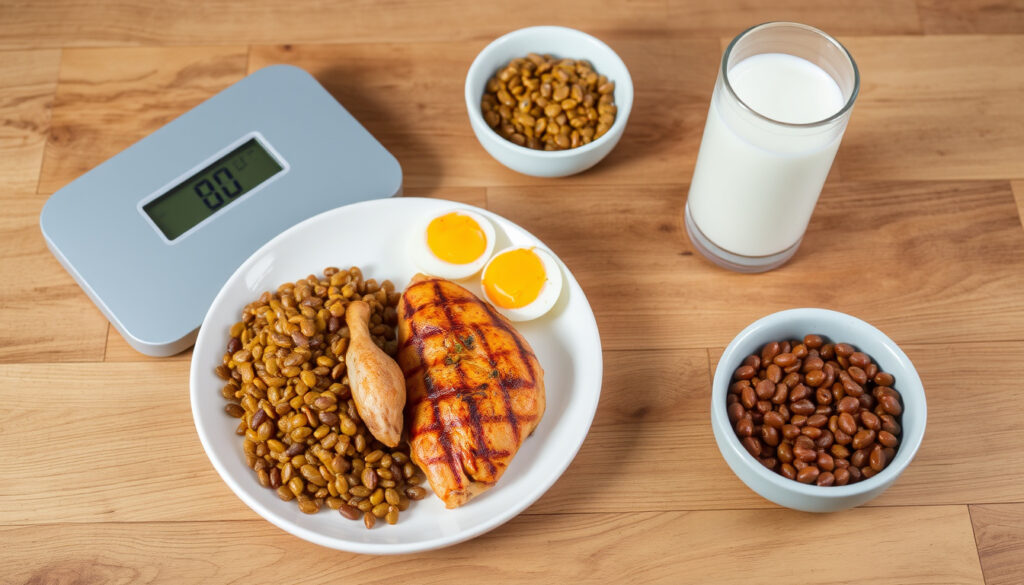
- Eggs – 6 g per large egg (NIH Office of Dietary Supplements)
- Chicken breast – 26 g per 3-oz serving (Academy of Nutrition and Dietetics)
- Fish (salmon, tuna) – 22 g per 3-oz serving (American Heart Association)
- Dairy (Greek yogurt, cottage cheese) – 15–20 g per cup (American Heart Association)
- Legumes (lentils, chickpeas) – 15 g per cooked cup (Academy of Nutrition and Dietetics)
- Tofu (firm) – 20 g per cup (NIH Office of Dietary Supplements)
- Quinoa – 8 g per cooked cup (Academy of Nutrition and Dietetics)
What food is almost 100% protein?
- Egg whites are nearly pure protein (about 3.6 g per large white, almost no fat or carbs) (NIH Office of Dietary Supplements).
What is the unhealthiest protein?
- Processed red meats (bacon, sausages, deli meats) are linked to higher risks of heart disease and colorectal cancer due to sodium, nitrates, and saturated fat (American Heart Association).
What is the number one protein to avoid?
- Heavily processed meats, especially those high in preservatives, are the top avoid (World Health Organization).
What is poor man’s protein?
- Beans, lentils, and peanuts are affordable, nutrient-dense sources of protein (Academy of Nutrition and Dietetics).
The trade-off: the healthiest protein sources are whole foods—eggs, fish, legumes, tofu. Processed meats offer convenience but come with health costs that outweigh their protein content.
What are 10 strange signs that I might be eating too much protein?
- Digestive issues – bloating, diarrhea, or constipation from excess protein, especially if fiber is low (Harvard Health).
- Dehydration – the kidneys need extra water to excrete urea (National Kidney Foundation).
- Kidney strain – especially in people with pre-existing kidney issues (National Kidney Foundation).
- Weight gain – excess calories from protein, like any macronutrient, can be stored as fat.
- Bad breath – from ketosis when protein displaces carbs.
- Constipation – if high-protein foods replace high-fiber fruits and vegetables.
- Fatigue – extremely high protein can crowd out carbohydrates needed for energy.
- Brain fog – linked to low glucose availability in the brain.
- Increased hunger – some people feel less satisfied on very high protein without adequate fat or fiber.
- Nutrient imbalances – overemphasis on protein can lead to low intake of other essential nutrients.
The pattern: too much protein usually comes from over-relying on supplements or processed meats, not from whole food sources. Signs like bad breath and constipation are your body’s way of saying “ease up.”
Your Simple Step-by-Step Guide to Protein Intake
- Know your weight in kilograms. Divide your weight in pounds by 2.2. Example: 150 lb ÷ 2.2 = 68 kg.
- Calculate the RDA baseline. Multiply by 0.8. For 68 kg: 54 g/day. This prevents deficiency (Harvard Health).
- Adjust for activity: Multiply by 1.2–2.2 if you exercise regularly (Examine.com). For 68 kg: 82–150 g/day.
- Consider age and health: If over 65, target 1.0–1.2 g/kg (Stanford Medicine). On GLP-1 medication? Aim for 1.2–1.5 g/kg (Stanford Medicine).
- Spread across meals. Aim for 20–40 g per meal to maximize muscle protein synthesis (NIH / PMC).
Following these five steps turns a confusing guideline into a daily habit. For the average active adult, the difference between the RDA and an optimal intake is about one extra serving of protein per meal—a small change with measurable impact on body composition.
The implication: the RDA tells you what avoids deficiency; these steps tell you what performs—and the difference is a daily habit, not a medical intervention.
Confirmed facts
- RDA of 0.8 g/kg prevents deficiency in most sedentary adults (Harvard Health)
- Protein needs increase with physical activity (Examine.com)
- Signs of deficiency include edema, muscle loss, and poor immune function (World Health Organization)
What’s unclear
- Exact optimal protein intake for longevity
- Long-term safety of very high protein intakes (>2.5 g/kg) in healthy individuals
- Whether protein timing significantly affects muscle gain
“For a 150-pound adult, that’s around 55 grams of protein a day, or the equivalent of an 8-ounce steak.”
Stanford Medicine
“The recommended dietary allowance to prevent deficiency for an average sedentary adult is 0.8 grams per kilogram of body weight.”
“The Recommended Dietary Allowance (RDA) for protein is a modest 0.8 grams of protein per kilogram of body weight, or 0.36 grams per pound.”
Harvard Health
For the average American trying to maintain or build muscle on a standard diet, the implication is clear: aim for at least 1.6 g per kg of body weight daily, or risk losing out on strength gains that time and effort alone won’t replace. If you’re older, pregnant, or on a GLP-1 medication, push closer to 1.5 g/kg—the evidence shows that the default RDA is simply not enough for those groups.
health.harvard.edu, med.stanford.edu, consumerreports.org, health.com, utmb.edu
Frequently asked questions
Can you eat too much protein?
Yes, excessive protein (>2.5 g/kg) can cause digestive discomfort, dehydration, and kidney strain in susceptible individuals (National Kidney Foundation).
Is protein powder necessary to meet daily needs?
No—whole food sources like chicken, fish, eggs, and legumes can easily meet protein goals. Powders are a convenient supplement, not a requirement (Academy of Nutrition and Dietetics).
How do I calculate my protein intake?
Multiply your weight in kg by 0.8 (RDA) or by 1.2–2.2 (active). Use an online protein calculator RDA for a quick estimate.
What is the best protein source for vegans?
Legumes, tofu, tempeh, edamame, quinoa, and seitan are excellent. Combining different plant proteins ensures a complete amino acid profile (Academy of Nutrition and Dietetics).
Does cooking destroy protein?
Cooking can denature protein (change its shape), but it does not destroy its nutritional value. Your body digests denatured protein as effectively (NIH Office of Dietary Supplements).
Can high protein diets damage kidneys?
In healthy individuals, high protein intake does not cause kidney damage. Those with pre-existing kidney disease should be cautious (National Kidney Foundation).
How much protein do children need each day?
Children aged 4–13 need about 0.95 g/kg. A 30-kg child would need ~28 g/day. Needs vary by age and growth phase (CDC).
Related reading
More related posts
 U.S. Embassy Qatar Warning: What Travelers Need to Know
 Part Time Job Near Me: Find Jobs in Dublin & Get Hired 2025
 Tom Ford Ombre Leather: Scent, Longevity & Best Versions Compared
 Lower Right Back Pain: Causes, Symptoms, and When to Worry
 Stuffed Bell Pepper Recipe: Tips, Fillings & Mistakes
 Patrick J. Adams: Suits Exit, Family & Friendships
 How to Play Pickleball: Rules, Scoring, and Tips for Beginners
 NBA Mock Draft 2026: Simulator, Projections & Lottery Odds
