How to Cook Lentils Perfectly: Stovetop Guide + Tips
Few pantry staples reward so little effort with so much payoff. Lentils go from bag to bowl in under an hour, require no overnight soaking, and adapt to everything from a quick weeknight soup to a spiced dal. The catch is that a few easy-to-miss details separate creamy, tender results from a pot of mush. This guide walks through the stovetop method, type-by-type timing, and the handful of mistakes that trip most people up.
Water ratio: 3 cups per 1 cup lentils · Stovetop cook time: 20-40 minutes · Pre-soak: Not required · Common types: red, green, brown · Yield: ~2.5-3 cups cooked per cup dry
Quick snapshot
- Lentils do not require soaking before cooking (Sweet Potato Soul)
- Standard water ratio is 1:2 to 1:3 lentils to water (Sweet Potato Soul)
- Sort and rinse lentils under cold water before cooking (Jessica Gavin)
- Exact cook time adjustments by altitude have not been widely tested
- Yield per cup dry varies by lentil type and may need verification per batch
- Red lentils ready in 15-20 minutes (Sweet Potato Soul)
- Green and brown lentils ready in 20-30 minutes (Sweet Potato Soul)
- Black lentils reportedly take 25-30 minutes (The Wimpy Vegetarian)
- Cooked lentils keep 4-5 days in the fridge (Jessica Gavin)
- Red lentils break down into creamy soups; green hold shape for salads and sides (Jessica Gavin)
| Attribute | Value |
|---|---|
| Standard ratio | 1:3 lentils to water |
| Avg cook time | 25-35 minutes |
| Pre-soak | Not required |
| Storage cooked | 4-5 days fridge |
| Yield per cup dry | 2.5-3 cups cooked |
| Foam to skim | Yes, during initial boil |
How do you cook dried lentils?
Getting dried lentils from bag to table follows a straightforward sequence that barely varies by type. The core steps are rinse, boil, simmer, drain—each step matters less for flavor than for texture.
Rinse and sort
Before anything else, spread the lentils on a plate or in a fine-mesh strainer and pick out any small stones or debris. Rinse under cool running water until the water runs clear (Jessica Gavin, culinary scientist). This step is quick and protects your teeth.
Stovetop boiling method
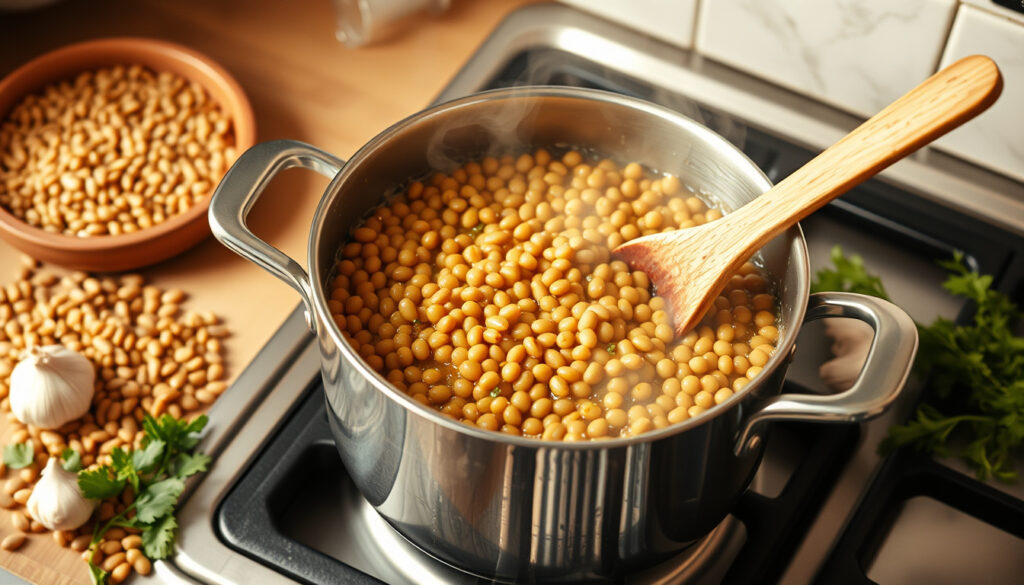
Combine 1 cup lentils with 3 cups water or broth in a medium saucepan. Bring to a boil over high heat, then immediately reduce to medium-low. Skim any foam that rises in the first few minutes (Sweet Potato Soul, plant-based chef).
Skimming foam removes starch and impurities that can make the final dish taste bitter or cloudy. It takes 30 seconds and makes a noticeable difference.
Simmering times
- Red lentils: 15-20 minutes until soft and mashable
- Brown lentils: 20-30 minutes until tender but intact
- Green lentils: 20-30 minutes, hold shape due to firmer exterior
- Black lentils: 25-30 minutes, firm texture throughout
The implication: red lentils behave almost like a thickening agent once cooked, while green and brown varieties stay structurally intact. Choosing the right type depends entirely on what you plan to do with them afterward.
Do you have to soak lentils before you cook them?
No. Unlike beans, lentils cook quickly enough that soaking is unnecessary and, for most home cooks, pointless. You can technically soak them for 2-4 hours or even blanch and cool them for an hour to cut cook time in half, but the standard no-soak method works perfectly well (The Wimpy Vegetarian). The key is simply rinsing them well.
Red vs green lentils
Red lentils have a thinner skin and cook down faster regardless of soaking. Green and brown lentils have a tougher outer layer that holds up better during cooking, which is why they work better in salads and side dishes where you want distinct pieces.
When soaking helps
If you are using older lentils that have been sitting in the pantry for months, a brief soak of 30 minutes to an hour can help restore moisture. Older lentils may also need extra liquid during cooking (Forks Over Knives, plant-based authority).
Buy lentils labeled “no soaking required” when possible. Older inventory tends to cook unevenly and may stay firm at the center even when the outside looks done.
What are some common mistakes when cooking lentils?
Most lentil disasters follow a handful of predictable patterns. Avoiding these saves a meal.
Overcooking mush
A rolling boil breaks down the cell walls faster than intended, turning even firm-textured lentils into a pot of sludge. Keep the simmer gentle and the lid slightly ajar so steam escapes and temperature stays even (Sweet Potato Soul). Red lentils are especially prone to this.
Adding acid early
Tomatoes, vinegar, wine, or citrus added before lentils are fully tender will prevent them from softening properly. Save acidic ingredients for the last 10 minutes of cooking or add them after draining (Jessica Gavin).
Wrong water ratio
Using too little water leaves lentils dried out before they cook through; too much dilutes flavor. The sweet spot is roughly 2-3 cups of liquid per cup of dry lentils, and you can add more during cooking if needed. One cup of dry lentils typically yields about 2.5-3 cups cooked, so plan portions accordingly (Downshiftology).
Salting too early draws out moisture before the lentils soften, extending cook time and sometimes leaving centers firm. Add salt only once the lentils are already tender.
What’s the best liquid for cooking lentils?
Plain water produces a neutral base that takes on whatever flavors you add later. Broth or stock builds depth from the start. Either works; the choice depends on your recipe.
Water vs broth
Vegetable broth adds subtle savory notes that water alone cannot. For Indian-style dal or Middle Eastern dishes, water with aromatics like bay leaf, cumin, or coriander often works better than a heavy broth that might overpower the finished dish.
Flavor additions
A bay leaf, a few peppercorns, or a strip of kombu seaweed can be added at the start of cooking for flavor without strong aromatics competing. Avoid vinegar, wine, or acidic liquids until the end unless your recipe calls for a longer simmer.
Using water means you control every flavor element from scratch. Using broth saves a step but limits your ability to season precisely.
How to cook red lentils
Red lentils deserve their own spotlight because they behave differently from every other variety. They are the fastest cooking, the most likely to dissolve, and the best choice when you want a creamy, thick texture.
Quick cook times
Red lentils cook in 15-20 minutes on the stovetop, compared to 20-30 minutes for green and brown varieties. Because they break down so readily, they are ideal for soups, curries, and stews where you want thickening without chunks (Sweet Potato Soul).
Green and brown differences
Green lentils hold their shape better and can handle a gentler simmer without disintegrating. Brown lentils fall between red and green in both cooking time and structural integrity, making them versatile for burgers, stews, and side dishes.
Step-by-step: Stovetop lentil cooking method
- Sort and rinse: Spread 1 cup dried lentils on a plate, pick out any stones or debris, then rinse under cold water until clear.
- Combine with liquid: Add 3 cups water or vegetable broth to a medium saucepan with the rinsed lentils.
- Bring to boil: Heat over high heat until the mixture reaches a full boil. Skim off any foam that rises in the first 2-3 minutes.
- Reduce and simmer: Lower the heat to medium-low, cover with the lid slightly ajar, and simmer for the time appropriate to your lentil type.
- Check doneness: Lentils are done when they are tender but not falling apart. Green and brown should still hold their shape; red will look soft and mash easily.
- Drain and season: Drain any excess liquid, then season with salt and any additional ingredients. Do not add acidic ingredients like tomatoes or vinegar until after lentils are fully tender.
Upsides
- No overnight soaking required
- Fast stovetop cooking: 15-45 minutes depending on type
- High yield: 1 cup dry equals about 2.5-3 cups cooked
- Versatile for soups, salads, sides, and stews
- Stores well: 4-5 days refrigerated
Downsides
- Acid added too early prevents proper softening
- Rolling boil makes lentils mushy
- Salting early extends cook time and firms centers
- Older lentils cook unevenly
- Red lentils dissolve if overcooked even slightly
What the experts say
“Lentils do not need to be soaked before cooking. Simply sort and rinse them before cooking or adding to recipes.”
— Jenné Claiborne, Chef and Author, Sweet Potato Soul
“A rolling boil can break down the lentils, making them mushy. For the best texture, cook on a gentle simmer with the lid ajar.”
— Jenné Claiborne, Chef and Author, Sweet Potato Soul
“Cooking lentils is so easy. Just 1 cup of lentils with 2 cups of water or vegetable broth, for about 30 minutes, and voila.”
— Jenné Claiborne, Chef and Author, Sweet Potato Soul
“Sort and rinse lentils under cold water before cooking. Lentils don’t need soaking unlike beans, quick-cooking on stovetop.”
— Jessica Gavin, Culinary Scientist and Food Writer
The pattern is consistent across professional and home-cooking sources: simple technique beats fancy equipment. The biggest variable is knowing which lentil type matches your intended dish—and resisting the urge to stir, salt early, or boil hard.
For weeknight cooking, a single pot of lentils can anchor multiple meals. Cook a batch of green lentils on Sunday, then portion them into salads, side dishes, and grain bowls throughout the week. Red lentils work best made fresh each time since they keep poorly once cooled.
Related reading: Restaurants Near Me Open Now · How Much Does McDonald’s Pay
While perfecting your lentils, explore quinoa—a similar superfood that rinses and simmers to fluffy perfection using this quinoa stovetop guide.
Frequently asked questions
How do you cook 1 cup of lentils?
Combine 1 cup dried lentils with 3 cups water or broth. Bring to a boil, skim foam, then simmer 20-30 minutes for green and brown lentils, or 15-20 minutes for red. Drain when tender and season to taste.
What is the best way to cook lentils?
The stovetop no-soak method using 1:3 ratio of lentils to water is the simplest and most reliable approach. Keep at a gentle simmer with the lid ajar, and do not add salt or acidic ingredients until the lentils are fully tender.
How to cook lentils quickly?
Choose red lentils, which cook in 15-20 minutes—half the time of green or brown varieties. Ensure you use enough water and avoid the temptation to boil hard, which can actually slow the process by breaking the lentils apart.
How to cook lentils Indian style?
Indian-style dal typically uses red or yellow lentils cooked in water with turmeric and cumin. Simmer until soft and creamy, then finish with a tadka (tempered oil with cumin, garlic, or mustard seeds) added after cooking. Avoid tomatoes or acid until the final garnish.
How to cook lentils in a soup?
Add red lentils directly to broth-based soups in the last 15-20 minutes of cooking. They will dissolve and thicken the soup naturally. For chunky soups, use green or brown lentils and add them earlier so they have time to tenderize without losing structure.
How to cook lentils in a curry?
Sauté aromatics first, add lentils with water or coconut milk, and simmer until tender—about 20 minutes for red, 30 for green. Add the curry base and spices early, but save tomatoes, yogurt, or lime juice for the last 10 minutes so the lentils soften properly.
What to add to lentils when cooking?
Bay leaf, cumin, coriander, black pepper, and a strip of kombu all work well added at the start. Avoid acidic ingredients like tomatoes, vinegar, or wine until the lentils are fully cooked, as they can prevent softening. Salt only once tender.
Should diabetics eat lentils?
Lentils have a low glycemic index and provide plant-based protein and fiber, which can help manage blood sugar spikes. According to dietary guidance from sources like the American Diabetes Association, legumes including lentils are generally recommended as part of a balanced diet. Individual dietary needs vary, so consulting a healthcare provider is advisable.
More related posts
 How Much Is Health Insurance – 2025 Costs Explained
 World Series Schedule 2025 – Dodgers Beat Blue Jays 4-3
 Karate Kid Legends Cast – Stars, Roles, Franchise Ties
 Interview Questions to Ask: Top 10 Best for Employers & Candidates
 How to Multiply Decimals: Step-by-Step Guide with Examples
 Rosuvastatin Side Effects: Common, Long-Term, What to Avoid
 Formal Dresses Near Me: Cost, Fit & 2026 Trends Guide
 401k 2024 Contribution Limit IRS – $23,000 Cap, Catch-Ups Explained
