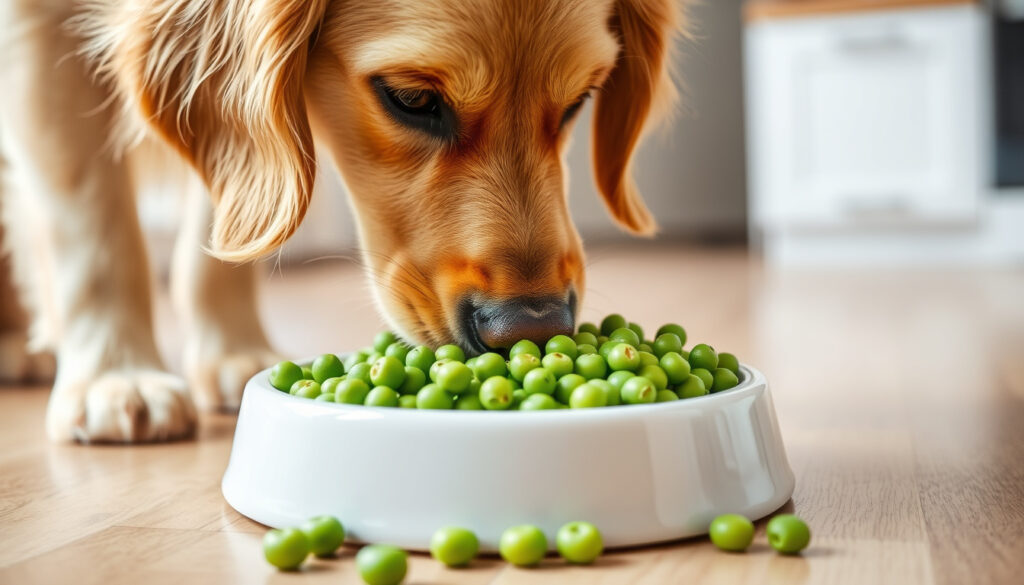
Can Dogs Eat Peas? Benefits, Risks, and Serving Tips
Have you ever been mid-meal, peas rolling off your fork, and caught your dog staring at you with those can’t-resist eyes? It’s a moment that prompts a quick mental checklist of whether this green bite is friend or foe.
Calories (per 100g): 81 kcal · Protein: 5.4 g · Fiber: 5.7 g · Vitamin K: 31% of DV
- Best served: Fresh or frozen, steamed (AKC)
- Vitamin K per 100g: 31% of DV (USDA)
- Dogs that can eat peas: Most healthy dogs (moderation) (USDA)
| Nutrient / Fact | Value | Source |
|---|---|---|
| Scientific name | Pisum sativum | AKC |
| Safe for dogs | Yes | ASPCA |
| Calories per cup | 117 | USDA |
| Protein per cup | 8g | USDA |
| Fiber per cup | 7g | USDA |
| Best served | Fresh or frozen, steamed | AKC |
| Vitamin K (per 100g) | 31% of DV | USDA |
Can Dogs Eat Peas?
Yes, dogs can eat peas. This isn’t a controversial gray area—the plain green pea (Pisum sativum) is safe for canines to enjoy as a snack. The American Kennel Club notes that you can feed your dog green peas in moderation, highlighting that they contain vitamins A, K, and B, along with dietary fiber and minerals. They’re often a key ingredient in many high-quality commercial dog foods because they provide a plant-based protein source without the allergens associated with grains like wheat or corn. The catch is they are a snack, not a meal replacement, and how you serve them matters more than you think.
When we look at the nutritional profile from USDA data, peas pack a surprising punch: they offer about 5.4 grams of protein and 5.7 grams of fiber per 100-gram serving, making them a nutrient-dense filler for a dog’s diet. However, nutritionists are quick to point out that dogs process carbohydrates differently than humans. While the fiber in peas is excellent for a dog’s digestive system—helping to regulate bowel movements—the natural sugars can accumulate if you’re also feeding your dog other starchy veggies like corn or potatoes. A single serving should be treated as a treat, not a side dish.
“Peas are safe as long as they are plain and fed in moderation.” — AKC veterinarian
The real danger isn’t the pea itself but the way we prepare them. Peas served from a can often have added sodium or seasonings like garlic and onion powder, which are toxic to dogs. Fresh or frozen peas—steamed or boiled without any salt, butter, or oils—are the safest route. In fact, the AKC explicitly suggests offering your furry friend the frozen peas right out of the bag to keep them cool on a hot day, although frozen can pose a choking hazard for very small breeds. The fundamental rule is to keep it plain and moderate.
The implication: peas are a safe, low-calorie snack when prepared correctly and fed in moderation.
Which Veggies Should Dogs Not Eat?
While peas are safe, several common vegetables are toxic to dogs. Onions and garlic, whether raw, cooked, or powdered, damage red blood cells and can cause anemia. ASPCA lists them as highly dangerous. Avocado contains persin, which can cause vomiting and diarrhea. Wild mushrooms are often toxic, and grapes and raisins can trigger acute kidney failure even in small amounts. PetMD warns that these foods should never be given to dogs.
“Peas are non-toxic to dogs, but onions, garlic, and grapes are among the most dangerous.” — ASPCA Animal Poison Control
Always check with your veterinarian before introducing new vegetables, especially if your dog has underlying health conditions.
The Nutrient Question: Fresh vs. Frozen vs. Canned
If peas are a yes, the next logical question is how the form affects the nutritional payoff and safety. A nutrient comparison of fresh and frozen peas shows that frozen peas are often picked and flash-frozen at peak ripeness, retaining more Vitamin C and B-vitamins than their fresh counterparts that may sit on a truck for days. According to the USDA food data, a half-cup of frozen peas has slightly more sugar (4.2g) than fresh (3.6g) but is otherwise largely identical in protein and fiber. For dogs, this is a marginal difference that doesn’t necessitate a strict preference.
The “fresh” label, however, can be misleading when we talk about safety. Fresh peas from the pod are safe if you shell them, but the pod itself—while not toxic—is fibrous and tough, and for small dogs, it can cause an intestinal blockage. Also, fresh peas are often served raw, and while humans love them raw, the cooking process (steaming) releases more of the antioxidant ferulic acid, which has cancer-fighting properties. The pound-for-pound nutrient retention is best in frozen, but the digestibility is best in steamed, making the combination of “frozen and steamed” the gold standard for dogs, mirroring how we prepare human food for optimal absorption.
Canned peas are the outlier and where well-meaning owners often get into trouble. A can of sweet peas can contain up to 300mg of sodium per half-cup—dramatically over a dog’s daily requirement of just 100mg. This can lead to salt poisoning in severe cases, with symptoms like excessive thirst, vomiting, and even seizures. If you absolutely must use canned peas, you must rinse them thoroughly in a colander under running water for at least 30 seconds—that hands-on step removes up to 40% of the salt. But the clear editorial preference, and one supported by veterinary nutritionists, is to make peas a “fresh or frozen” vegetable on your dog’s dinner plate, not a canned one.
Another preparation tip that holds weight is the consideration of sugar snap and snow peas. While these are also technically edible, they are much higher in sugar—about 6 to 7 grams per serving. Dogs don’t have a nutritional requirement for sugar; they need no more than the simplest starches for quick energy. If you’re training your dog with treats, the lower sugar content of standard green peas makes them a safer frequent-feed option. The contrast is stark: standard green peas yield a lower glycemic index, meaning they won’t spike your dog’s insulin as much as their sweeter relatives, which is crucial for breeds prone to diabetes like Beagles and Pugs.
The pattern: the form of the pea dramatically affects its safety and nutritional value, with frozen steamed peas offering the best balance.
What Is the Best Vegetable for Dogs?
Most veterinary dietary guidelines from the World Small Animal Veterinary Association point to carrots as the overall #1 because of their vitamin A content and low calorie density. But if that’s the case, why do we see so many dog foods list “peas” as a primary ingredient? It’s because peas act as a carbohydrate binder—they give the kibble structure without using cheap grains like corn or soy, which are top allergens for canines. Peas are often a filler, while carrots are a true supplement. The choice between them, then, is not just about which veggie is more nutritious in isolation, but which lacks the starchy profile that could interfere with a dog’s fat metabolism.
Other excellent vegetables include green beans (low-calorie and high in fiber), pumpkin (great for digestion), and broccoli (when steamed, offers cancer-fighting sulforaphane). Rotating these vegetables provides variety and a range of nutrients. Always introduce new veggies one at a time and monitor for any adverse reactions.
The catch: while carrots are nutritionally dense, peas offer protein and fiber that carrots lack, making peas a better choice for dogs needing a protein boost without high calories.
How Many Frozen Peas Can I Give My Dog?
Frozen peas make a great hot-weather treat, but portion size depends on your dog’s weight. For small dogs (under 15 lbs), give 1 to 2 tablespoons; for medium dogs (15-30 lbs), 2 to 3 tablespoons; and for large dogs (over 50 lbs), up to a quarter cup. Always supervise chewing, especially for small dogs, to prevent choking on the hard, dry skin. These amounts are based on AKC guidelines for treat distribution.
How often can dogs eat peas? Treats, including peas, should make up no more than 10% of your dog’s daily diet. For a 30-pound dog with a daily caloric need of about 800 kcal, that’s 80 kcal worth of treats—roughly a quarter cup of peas. Overfeeding can lead to flatulence, bloating, and weight gain. Signs of overfeeding include changes in stool consistency, excessive gas, or a reluctance to eat regular meals.
What this means: portion control is key to safely incorporating peas into your dog’s diet.
What’s Better for Dogs, Broccoli or Peas?
When given the choice between a pea and a broccoli floret, the answer depends on what you’re targeting: digestive health or dental health. Broccoli is a superfood for humans, but for dogs it comes with a significant caveat—it contains isothiocyanates, which can cause gastric irritation in sensitive stomachs, and the florets are a top choking hazard. Peas, softer and smaller, don’t carry that same choking risk, making them a more universally safe choice for small breeds. However, broccoli offers one distinct advantage: sulforaphane, a chemical that research suggests helps lower inflammation and could inhibit cancer cell growth in certain animals.
| Attribute | Peas | Broccoli |
|---|---|---|
| Calories per half-cup | 62 kcal | 15 kcal |
| Protein per half-cup | 4g | 1g |
| Fiber per half-cup | 3.5g | 2.5g |
| Choking risk | Low | Moderate to high |
| Phosphorus per half-cup | 26 mg | 15 mg |
In terms of the daily nutrient ceiling, both are low-calorie, but peas win on calorie density per cup. Half a cup of peas has about 62 calories, whereas half a cup of broccoli has just 15 calories. If your dog is overweight, broccoli is the caloric winner; if your dog is picky, peas have a sweeter taste, making them a better carrier for hiding supplements. The preparation needs diverge widely: broccoli florets must ALWAYS be steamed (never raw, due to compounds that inhibit thyroid function, and never with salt), while peas are slightly more forgiving. The bottom line is that neither is superior across the board; it’s about your dog’s specific dietary needs.
Pros of Peas
- Higher protein and fiber content
- Lower choking risk
- Sweeter taste, easy to hide supplements
- Safe for daily snacking
Cons of Peas
- Higher calorie density
- Moderate phosphorus (caution for kidney issues)
- May cause gas if overfed
“Peas are the safer choice for daily snacking, but broccoli can be a rare, steamed delicacy.” — Veterinary nutritionist at PetMD
One crucial distinction for dogs with kidney issues is phosphorus. Peas contain a moderate amount of phosphorus (about 26mg per half-cup), while broccoli has just 15mg. For dogs with chronic kidney disease, excess phosphorus can accelerate kidney failure. In that specific case, broccoli is the safer bet. Yet for dogs with sensitive guts, peas are less likely to cause gas and bloating—the Brussels sprouts of the legume world, but milder. A holistic vet approach would be to rotate both: use broccoli as a Monday snack and peas as a Wednesday training treat, but never feed a hungry dog a loaded bowl of either on top of their meals.
When we put them side-by-side in a comparison: peas win on protein and fiber content, while broccoli wins on Vitamin C and calcium. But the “edible” column for broccoli is heavier because of the choking hazard and the presence of goitrogens, which can suppress thyroid function if eaten in large quantities. The takeaway from research is that peas are the safer choice for daily snacking, but broccoli can be a rare, steamed delicacy. If you’re asking “which should I feed my dog,” the answer is to choose peas for frequency and broccoli for variety—a 4 to 1 ratio in servings is what veterinary nutritionists suggest.
The implication: there is no single “best” vegetable; the choice depends on the dog’s health, weight, and digestive tolerance.
Related reading: How Long Do Dogs Live?
metrotvnews.com, reuters.com, en.antaranews.com, lowyinstitute.org, investortrust.id, reuters.com, scmp.com, setkab.go.id, dw.com, straitstimes.com, scmp.com, en.antaranews.com
Frequently Asked Questions
Can dogs eat pea pods?
Pea pods are not toxic, but they are tough and fibrous. For large dogs, they can pass through, but they offer no nutritional benefit and pose a blockage risk for small breeds. It’s best to stick to shelled peas—the actual round green seeds—to avoid intestinal upset.
What is the number one food you should never feed your dog?
While many foods are harmful, grapes and raisins top the list as the most dangerous. Even a small amount can cause acute, potentially fatal kidney failure in dogs. This is a strictly non-negotiable item to keep away from your pet, unlike the vegetables we’ve discussed.
How do I prepare peas for my dog to maximize safety?
Steam or boil plain peas (frozen or fresh) without adding salt, butter, oil, or seasonings. Steaming is preferred because it makes the peas soft and easier to chew while breaking down the cell walls to release nutrients. Let them cool to room temperature before serving to avoid burning your dog’s mouth.
Can dogs eat canned peas?
Canned peas are not recommended due to the high sodium content used in preservation. If you have no alternative, rinsing them under cold water for one minute can reduce the salt, but you’ll also wash away some water-soluble vitamins. It’s better to keep frozen peas on hand.
Are peas good for dogs with allergies?
Yes, as a hypoallergenic carbohydrate source, peas are often recommended for dogs with grain allergies. They do not contain the gluten proteins found in wheat, barley, or rye, making them an excellent alternative energy source for dogs with food sensitivities.
More related posts
 Joey (TV Series): Why the Friends Spin-Off Failed
 Cash App Class Action Settlement: Payout Amounts
 Elon Musk Net Worth 2025: $726 Billion, Surpassing $600B
 Miami vs. Ohio State 2025 Cotton Bowl: How the Hurricanes Stunned the Buckeyes
 Don Lemon Taken Into Custody: Arrest Details and Updates
 How to Treat Swollen Lymph Nodes in Neck Naturally – Safe Home Remedies
 NBA Game Today Live: How to Watch Tonight
 Restaurants Near Me Open Now: Maps, Apps & Lingo Tips
