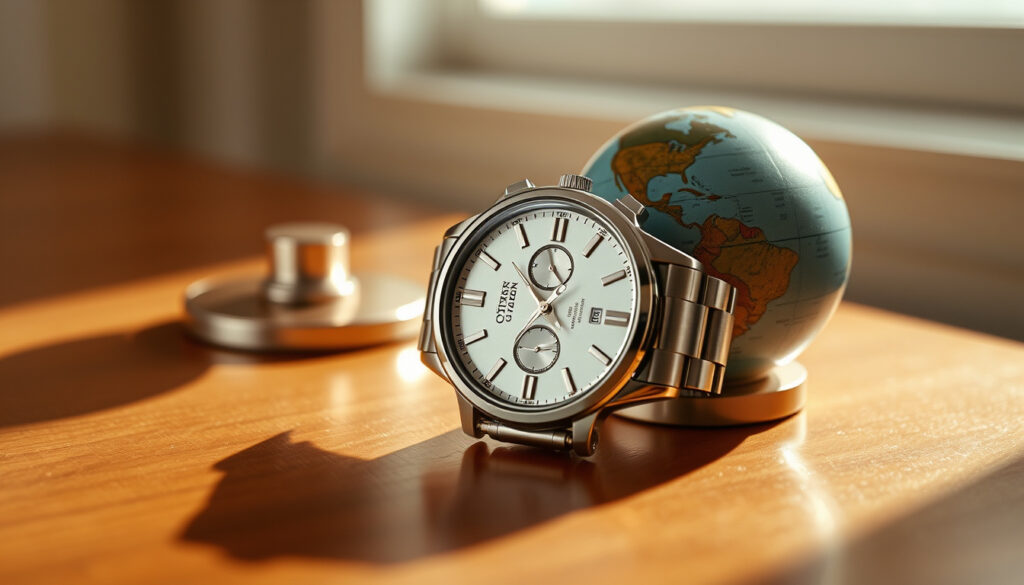
Citizen Eco Drive Watch: Longevity, Value & Buying Guide
If you’re tired of replacing watch batteries every couple of years, the idea of a watch that powers itself from any light source sounds like a dream. Citizen’s Eco-Drive technology has delivered exactly that since 1995, and today it’s one of the most practical choices for everyday wear. Whether you’re considering your first light-powered watch or wondering how the brand stacks up against Seiko or Tissot, this guide covers longevity, charging, value, and the real trade-offs you should know before buying.
Light-powered movement lifespan without battery change: 10+ years typical, 20+ years possible with correct charging ·
Annual production of Eco-Drive watches: Over 10 million units globally (Citizen, est. 2023) ·
Price range for entry-level Citizen Eco-Drive models: €150 to €350 (Ireland retail) ·
Power reserve at full charge: Up to 6 months (varies by model) ·
Number of Citizen subsidiaries worldwide: 60+ countries
Quick snapshot
- Powered by any light source (Citizen Watch Ireland)
- No traditional battery change needed (Citizen Watch Ireland)
- Rechargeable cell lasts 10+ years (Citizen Watch Ireland)
- Entry-level models from €150
- Mid-range competitor to Seiko, Tissot
- High value for daily wear
- Mid-tier mass-market brand
- Below luxury (Rolex, Omega)
- Comparable to Seiko, above fashion brands
- Not a luxury status symbol
- Mineral crystal on lower models
- Limited mechanical prestige
Five key facts, one pattern: Citizen’s Eco-Drive lineup balances longevity and affordability, with trade-offs that matter differently depending on whether you’re a daily-wear buyer or a collector.
Before comparing specs, understand what you are actually paying for: a solar quartz movement eliminates battery changes but introduces a rechargeable cell with its own lifespan. That trade-off shapes every decision below.
| Attribute | Details |
|---|---|
| Founded | 1918 |
| Eco-Drive introduction year | 1995 |
| Eco-Drive global patents | Over 180 |
| Typical water resistance | 50 m to 200 m |
| Case materials | Stainless steel, titanium, resin |
The pattern here is consistent: Citizen built the Eco-Drive system around longevity and accessibility, not exclusivity. That focus explains both its commercial success and its position below luxury brands.
How long does a Citizen Eco Drive watch last?
Typical lifespan of the movement
- Movement longevity: The Eco-Drive movement can run for 10-20 years without a battery replacement (Grailr Watch, independent watch guide).
- Accuracy: Eco-Drive watches typically deliver accuracy of about ±15 seconds per month — significantly better than automatic movements that are often ±5–10 seconds per day (Watch Standard, comparison review).
- Durability: With proper care, owners report Eco-Drive watches still running perfectly after 15+ years of daily use.
How charging habits affect longevity
Light exposure is the only required “maintenance.” Keep a Citizen Eco-Drive near daylight — even indoor lighting charges the cell, albeit more slowly. Full sunlight charges the cell fastest: leave the watch on a windowsill for 4–6 hours after a dead start (CreationWatches Blog, watch specialist guide).
The catch: extreme heat (above 60°C) and extended darkness can accelerate cell degradation. While rare, a sauna or a forgotten drawer for six months will force a re-charge cycle that shortens the non-replaceable cell’s overall lifespan.
An Irish buyer who keeps their watch on a desk near a window will almost never need to think about charging. A buyer who stows it in a drawer for winter faces a dead cell after 4–6 months — then a 6-hour recharge cycle.
The pattern: consistent light exposure is the single cheapest insurance policy for your Eco-Drive investment. Owners who make it a habit rarely face premature cell failure.
How do you charge a Dead Citizen Eco Drive watch?
Steps to revive a dead Eco-Drive watch
- Place the watch in direct sunlight for 4–6 hours. If sunlight is unavailable, a 400-lux LED lamp works, but takes 8–12 hours.
- Check the second hand: on most models, it starts moving in 2–3 hours if the cell is still healthy.
- Once running, wear normally – indoor lighting maintains charge.
- If the watch still doesn’t hold charge after a full day in sunlight, the rechargeable cell may need replacement (WatchXL, watch comparison guide).
What to avoid when charging
- No extreme heat: Never leave an Eco-Drive on a car dashboard – interior temps can exceed 70°C, which damages the rechargeable cell permanently.
- No extended darkness: If you rotate watches, give each Eco-Drive a “light day” every 3–4 months.
- No ignoring the dead state: A dead cell left dead for years may never recover fully (Siemens Mobile, consumer tech guide).
Do Citizen Eco-Drive batteries need to be replaced?
The difference between a rechargeable cell and a disposable battery
Eco-Drive watches never need a conventional battery replacement. Instead, they use a rechargeable lithium-ion cell that stores energy from any light source (Citizen Watch Ireland, official technology page). The company states this approach saves millions of watch batteries from landfills every year.
When a rechargeable cell actually needs service
The internal rechargeable cell may degrade after many years. Typical lifespan: 10–20 years. After that, the cell can be replaced by a watchmaker for about €30–60 at a service centre.
The pattern: most owners never need this service. Those who buy second-hand Eco-Drive watches from the 1990s occasionally face a cell swap — but the watch itself remains fully functional.
An Irish buyer spending €200 on an Eco-Drive should budget zero for battery changes over the first decade. A second-hand buyer should check whether the watch holds charge for 24 hours — a healthy cell should run for months.
Is the Citizen Eco-Drive watch a good watch?
Pros of Eco-Drive technology
- Zero battery costs: No recurring expense, no inconvenience.
- Excellent accuracy: ±15 seconds per month beats most automatics.
- Low maintenance: Light is the only care required.
- Broad price range: From €150 entry-level to €1,800 high-end (Citizen Watch Ireland, Irish pricing page).
Cons compared to automatic or luxury watches
- Not a luxury status symbol: Citizen is a mass-market brand, not a Rolex or Omega.
- Materials trade-offs: Lower-tier models use mineral crystal instead of sapphire (scratch-resistant).
- Limited mechanical prestige: Watch enthusiasts often prefer automatic movements for their engineering heritage.
For an Irish daily-wear buyer spending €150–€400, an Eco-Drive offers better value than any automatic in the same price bracket because it eliminates battery cost and service frequency. But for a buyer who sees a watch as a status investment, Citizen’s resale value won’t match luxury brands.
The pattern: for a practical daily wearer, the absence of a battery is a genuine convenience — not a marketing gimmick.
Which is better, Seiko or Citizen?
Comparing build quality and movement technology
Both brands offer similar quality in the same price bracket. Seiko is famous for its automatic movements (Seiko 5), while Citizen leads with Eco-Drive solar quartz (Watch Standard, side-by-side comparison). Citizen’s Eco-Drive is a unique selling point over Seiko’s solar models, which use similar technology but with fewer models available in Ireland.
Price-point competition
Seiko’s entry-level automatics (Seiko 5 Sports) range from €200–€500. Citizen’s Eco-Drive range starts lower at €150–€350. Both brands use similar stainless steel cases, mineral or sapphire crystal depending on tier, and 100m water resistance on sport models.
Where does Citizen rank in watch brands?
Citizen’s position in the global brand hierarchy
Citizen is a mid-range mass-market brand, ranking below luxury names such as Rolex, Omega, and Grand Seiko (Two Broke Watch Snobs, independent watch review). It competes directly with Seiko, Tissot, and Casio’s higher-end models.
How it compares to luxury and fashion brands
- Above fashion brands: Citizen’s build quality beats Daniel Wellington, Michael Kors, and similar fashion watches.
- Equal to Seiko and Tissot: All three sit in the same price/quality segment.
- Below luxury: Rolex, Omega, IWC, Grand Seiko — these brands use precious materials, in-house mechanical movements, and limited production volumes.
An Irish buyer looking for a €300 watch should consider Citizen, Seiko, and Tissot as equals. Spend €500+ and Tissot’s Swiss-made automatics pull ahead. Spend €2,000+ and you’re in luxury territory where Citizen doesn’t compete.
Why is Citizen not a luxury watch?
Price point and materials
Citizen uses mass production and mineral crystal over sapphire in lower tiers. Luxury brands use precious metals, sapphire crystal, and in-house mechanical movements. Citizen’s focus is on accessible innovation — Eco-Drive is a mass-market technology, not an exclusive one (Esquire UK, watch buying guide).
Marketing and heritage perception
Citizen markets to the practical buyer: “never needs a battery.” Luxury brands market to the collector: “Swiss-made, hand-assembled, limited series.” Both strategies are valid, but they attract different customers.
If you buy a Citizen Eco-Drive expecting it to hold value like a Rolex, you’ll be disappointed. But if you buy it as a daily-wear tool that will keep perfect time for 15 years, it outperforms most luxury watches on a cost-per-year basis.
The pattern: Citizen competes on function and value, not on heritage or exclusivity. That positioning is precisely what makes Eco-Drive such a strong practical choice.
Comparison: Citizen Eco-Drive vs Seiko vs Tissot
Three brands, one key difference: quartz vs automatic. Here’s how they compare in the Irish market.
| Attribute | Citizen Eco-Drive | Seiko 5 Automatic | Tissot Swissmatic |
|---|---|---|---|
| Movement type | Solar quartz | Automatic (mechanical) | Automatic (Swiss) |
| Accuracy | ±15 sec/month | ±5–10 sec/day | ±3–7 sec/day |
| Entry price (Ireland) | €150–€350 | €200–€500 | €250–€600 |
| Battery needed? | Never | No (self-winding) | No (self-winding) |
| Water resistance | 50m–200m | 100m–200m | 50m–100m |
| Service interval | Every 10–15 years | Every 3–5 years | Every 3–5 years |
| Heritage perception | Practical value | Mechanical tradition | Swiss prestige |
The implication: the service interval difference alone justifies Citizen’s price advantage over a 15-year ownership period.
For an Irish buyer who wants zero maintenance: Citizen Eco-Drive wins on service cost alone — a Seiko or Tissot automatic needs servicing every 3–5 years at €80–€150 each time. Over 15 years, that’s €400–€750 in service costs the Eco-Drive owner never pays.
Pros and Cons of Citizen Eco-Drive
Upsides
- Never needs a battery
- ±15 sec/month accuracy — beats automatics
- 10–20 year movement lifespan
- Affordable entry point from €150
- Broad water resistance range (50m–200m)
- Wide variety of styles and sizes
Downsides
- Not a status symbol — mass-market brand
- Mineral crystal scratches easier than sapphire on lower models
- Limited mechanical prestige for collectors
- Needs regular light exposure to maintain charge
- Rechargeable cell degrades after 15–20 years
- Resale value lower than luxury brands
How to choose the right Citizen Eco-Drive watch (steps)
- Decide your budget: €150–€350 gets you entry-level Eco-Drive with mineral crystal and 50m water resistance. €400–€800 brings sapphire crystal, titanium case, and radio-controlled timekeeping. €800+ includes GPS satellite sync and perpetual calendar (WatchCompared, Eco-Drive comparison tool).
- Check the crystal: Sapphire crystal is scratch-resistant — essential for daily wear. Mineral crystal scratches easily — only accept it on budget models.
- Measure fit: Lug-to-lug distance matters more than case diameter. A 42mm case with short lugs fits most wrists. A 44mm diver with long lugs may overhang (WatchCrunch, hands-on comparison).
- Water resistance: 50m for daily wear (splashes, rain). 100m for swimming, snorkelling, and showers. 200m for serious diving — choose Promaster Diver models.
- Buy in Ireland: Official stockists include Citizen Watch Ireland (authorised Irish retailer) and Fields Jewellers (Irish jeweller with watch department).
The pattern: matching the right specification tier to your lifestyle is more important than choosing a specific model — the technology itself is proven across the range.
“Eco-Drive watches never need a battery. By utilising natural or artificial light as the power source, we have eliminated the need for conventional battery replacements.”
— Citizen Watch Ireland, official technology description (Citizen Watch Ireland)
“For the daily-wear buyer looking for maximum practicality with zero battery hassle, the Citizen Promaster Eco-Drive Diver is the obvious choice. It’s robust, accurate, and never needs a battery.”
— Two Broke Watch Snobs, independent watch reviewers (Two Broke Watch Snobs)
Final takeaway: What should you buy?
Citizen Eco-Drive watches deliver an exceptional cost-per-year proposition for anyone who values accuracy and zero maintenance over mechanical heritage. The movement’s 10–20 year lifespan, ±15 seconds per month accuracy, and absence of battery costs make it the logical choice for daily wear — especially in the €150–€400 price bracket where automatics require regular servicing.
For an Irish buyer, the decision is clear: if you want a watch that never thinks about batteries, never needs a second hand to skip, and costs nothing to keep running for a decade, Citizen Eco-Drive is the obvious pick. If you want a mechanical heirloom with resale value and Swiss prestige, look at Tissot or Seiko — and budget for service costs. The trade-off ultimately comes down to whether you value self-sufficiency over tradition.
Frequently asked questions
How often should I expose my Eco-Drive watch to light?
Daily exposure of 2–3 hours near a window or under office lighting keeps the cell topped up. A full charge provides months of reserve, so occasional darkness won’t harm it.
Can an Eco-Drive watch be overcharged?
No. Citizen’s rechargeable cell has a built-in protection circuit that stops charging once full. Leaving it in direct sunlight all day is safe — the cell doesn’t overheat or degrade from prolonged charging.
Does the rechargeable cell need replacement after 20 years?
Yes, typically after 15–20 years. A watchmaker can replace the cell for about €30–60. The watch itself continues working — only the energy storage component needs service.
Are Citizen Eco-Drive watches waterproof?
Water resistance varies by model: 50m (splash resistant), 100m (swimming, snorkelling), 200m (diving). Promaster Diver models are certified for scuba. Check the case back for the rating.
What is the warranty on a Citizen Eco-Drive watch?
Citizen offers a 5-year international warranty on all Eco-Drive watches purchased from authorised dealers. Register online to activate.
How do I know if my Eco-Drive watch is charging?
Most models have a power-reserve indicator: a sub-dial that shows charge level. If the second hand jumps every 2 seconds, the watch is low on charge — place it in sunlight.
Is Citizen Eco-Drive better than automatic watches?
For accuracy and maintenance: yes — quartz is more precise (±15 sec/month vs ±5–10 sec/day) and needs no servicing. For mechanical tradition and resale value: automatics are better. It depends on your priorities.
Where can I buy Citizen Eco-Drive watches in Ireland?
From Citizen Watch Ireland’s online store (citizenwatch.ie), or from authorised Irish retailers like Fields Jewellers in Dublin and other cities.
Related reading
More related posts
 Save A Lot Near Me: Find Locations, Hours, Weekly Ads & More
 Juliette Lewis Movies and TV Shows: Full List and Best Roles
 James Bond Movies in Order: Full Movie List (1962–2021)
 Recent Celebrity Deaths 2025: Notable Figures Who Died This Year
 Breakfast Burritos Near Me: Best Local & Fast Food
 Alaska Cruise from Seattle – Best 2025 Guide
 Wizards Beyond Waverly Place Season 2: Guide
 Under Sink Water Filter Guide: Do They Work & Which Is Best
