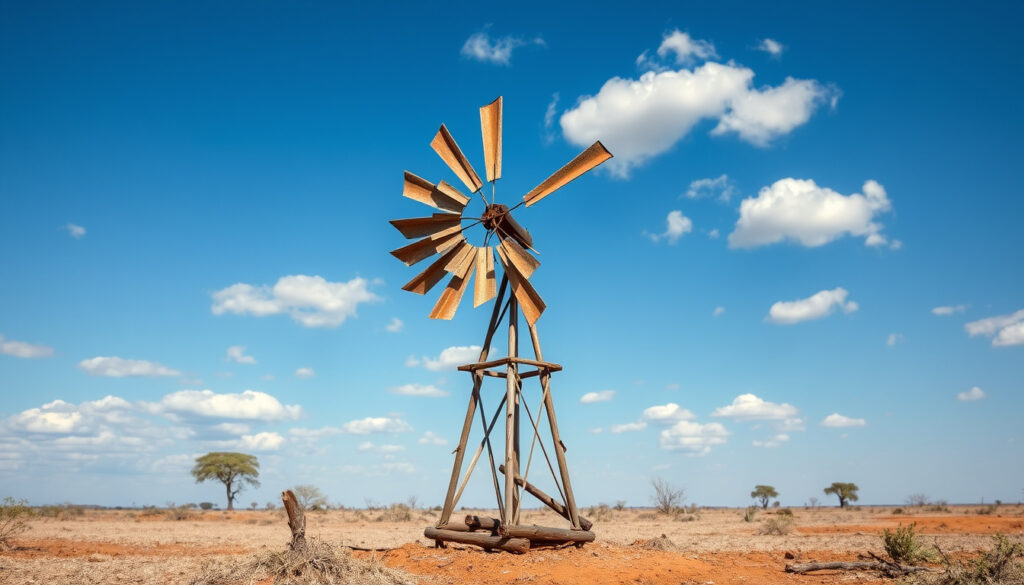
The Boy Who Harnessed the Wind: True Story & Facts
It’s the kind of story that feels too good to be true: a 14-year-old boy in rural Malawi, forced out of school by famine, builds a windmill from scrap metal and brings electricity to his village. Yet William Kamkwamba’s windmill was real, and his journey from that dusty yard in Kasungu to a Netflix film and a Broadway-bound musical has inspired millions. This guide separates fact from fiction and answers the questions readers keep asking in 2025.
William Kamkwamba’s birth date: August 5, 1987 ·
Age when he built the windmill: 14 ·
Year the book was published: 2009 ·
Year the Netflix film was released: 2019 ·
Netflix film runtime: 113 minutes ·
William Kamkwamba’s current age (2025): 38
Quick snapshot
- Based on real events in Malawi (2002) (Britannica)
- William Kamkwamba built a windmill from spare parts and scrap (Moving Windmills Project)
- Film and book are largely faithful to the core story (Newsweek)
- Age 38 (born August 5, 1987) (Wikipedia)
- Splits time between the U.S. and Malawi (Moving Windmills Project)
- Works full-time with Moving Windmills Project and mentors young problem-solvers (TED Fellows)
- Memoir published in 2009 (Spirit Blog)
- Netflix film released in 2019 (Wikipedia)
- Film runtime 113 minutes (Wikipedia)
Five key facts about the man behind the windmill:
| Label | Value |
|---|---|
| Full name | William Kamkwamba (Wikipedia) |
| Birth date | August 5, 1987 (Britannica) |
| Nationality | Malawian (Britannica) |
| Known for | Building a windmill to power his family’s home (Moving Windmills Project) |
| Notable work | The Boy Who Harnessed the Wind (book, film, musical) (Wikipedia) |
Is The Boy Who Harnessed the Wind a true story?
Real events behind the film
- William Kamkwamba was born August 5, 1987 in Dowa, Malawi (Britannica (encyclopedia)).
- In 2001, a severe drought and famine struck Malawi; Kamkwamba’s family was affected and he had to leave school (Moving Windmills Project (non-profit)).
- Using a textbook image from Using Energy as a guide, he built a windmill from spare parts and scrap (Moving Windmills Project).
- The windmill brought electricity and pumped water, changing life in his village (Newsweek (editorial news magazine)).
William Kamkwamba’s biography
Kamkwamba’s story first gained international attention through a TED talk in 2007 (TED conference). He later co-wrote the memoir The Boy Who Harnessed the Wind with journalist Bryan Mealer, published in 2009 (Spirit Blog (literary commentary)). He went on to earn a degree in Environmental Studies from Dartmouth College (accredited U.S. university) and has worked with IDEO.org and the WiderNet Project.
The implication: the emotional core of Kamkwamba’s story is grounded in reality, but the narrative has been streamlined for impact.
For educators and families choosing content for young viewers, the film’s emotional truth is backed by a documented real-life achievement — that rare combination of a feel-good story that actually happened.
How accurate is the movie The Boy Who Harnessed the Wind?
Major deviations from real events
- The film compresses the timeline of events into a single drought season; in reality the windmill project spanned several years (Newsweek).
- Several characters are composites: for example, William’s mother and sister are combined into one character with a larger role (Newsweek).
- The movie shows William’s father Trywell initially opposing the windmill; in reality Trywell was supportive after seeing the potential (Newsweek).
- A third windmill that pumped grey water for irrigation is not shown in the film (Newsweek).
Here is a direct comparison between the film’s depiction and the recorded facts:
| Aspect | Movie Portrayal | Real Life |
|---|---|---|
| Timeline of events | Compressed into a single drought season | Spanned several years |
| Family characters | Mother and sister combined into one character | Separate individuals |
| Father’s reaction to windmill | Initially opposed | Supportive after seeing potential |
| Number of windmills | One primary windmill shown | Third windmill built for grey water irrigation |
Critical reception on historical accuracy
Reviewers generally agree that the film captures the spirit of the true story while taking creative liberties. The Newsweek fact-check article (journalistic fact-checking) notes that the core achievement — a young boy building a windmill to save his village — is preserved accurately. The film holds a 79% critic score on Rotten Tomatoes (review aggregator, via Wikipedia).
The catch: for strict historical accuracy, the memoir offers greater detail.
Where is William Kamkwamba now?
Current work and advocacy
Kamkwamba currently splits his time between Malawi and the United States (Moving Windmills Project). He works full-time with the Moving Windmills Project (grassroots development organization), which is building an Innovation Center in Kasungu, Malawi. According to TED Fellows (international fellowship network), his recent designs include electric motorcycles and maize mills made from recycled materials.
Recent public appearances
He mentors young innovators in Malawi and speaks globally about renewable energy and education. In 2025, Red Bull (energy drink media outlet) reported that he is focused on completing the Innovation Center and developing curricula that bridge “knowing” and “doing.”
What this means: his current work extends the spirit of his original windmill into a permanent institution.
How old is William Kamkwamba now?
Age calculation from birth date
Born August 5, 1987 (Wikipedia), William Kamkwamba is 38 years old as of 2025.
Early life milestones
- Age 14: built his first windmill (2001-2002) during the famine (Moving Windmills Project).
- Age 19: delivered his first TED talk in 2007 (YouTube/TED).
- Age 22: memoir published (2009).
- Age 32: Netflix film released (2019).
The pattern: each major milestone came at a remarkably young age, underlining the power of early innovation.
What is the summary of The Boy Who Harnessed the Wind?
Plot overview
The story follows William Kamkwamba, a 14-year-old boy in Malawi whose family cannot afford school fees after a devastating drought. He sneaks into the school library and finds a book called Using Energy. From the diagrams, he learns how to build a windmill. After scavenging scrap metal, a broken bicycle, and a tractor fan, he constructs a wind turbine that powers his family’s home and pumps water for irrigation — saving his village from famine.
Main characters and themes
- William Kamkwamba: curious, determined protagonist.
- Trywell Kamkwamba: William’s father, a farmer who initially struggles with the idea.
- Agnes Kamkwamba: William’s mother, supportive.
- Themes: innovation, perseverance, education, hope, and community.
The implication: the narrative’s simplicity masks a complex reality of resilience and resourcefulness.
The film’s emotional impact relies on simplifying complex family dynamics and the long recovery from drought; viewers seeking a strict documentary should read the memoir, which offers more nuance.
Timeline: Key dates in William Kamkwamba’s journey
- 1987: William Kamkwamba born in Dowa, Malawi (Wikipedia).
- 2001-2002: Severe drought and famine; forced to leave school (Moving Windmills Project).
- 2002: Builds a windmill using scrap parts, brings electricity and water to his home (Moving Windmills Project).
- 2007: TED Global talk brings international attention (YouTube/TED).
- 2009: Publication of memoir The Boy Who Harnessed the Wind (Spirit Blog).
- 2019: Netflix film released (Wikipedia).
- 2026 (planned): World premiere of the stage musical adaptation.
The pattern: each step shows a steady expansion from local innovation to global recognition.
The musical’s 2026 premiere is not yet confirmed by official sources; theatre announcements may change. Check the Moving Windmills Project website for updates.
Confirmed facts vs. what remains unclear
Confirmed facts
- William Kamkwamba built a windmill in 2002 (Moving Windmills Project).
- He was born August 5, 1987 (Wikipedia).
- The Netflix film was released in 2019 (Wikipedia).
- He attended Dartmouth College (Moving Windmills Project).
What’s unclear
- Specific details of some conversations in the film (dramatic license).
- Exact timeline of events in the film vs. real life (compressed).
- Financial terms of the musical deal (not publicly disclosed).
The takeaway: what is documented is strong enough to anchor the story’s credibility.
“I try to make a windmill. I want to bring electricity and water to my village.”
— William Kamkwamba, 2007 TED talk (TED conference)
“The film stays true to the spirit of William’s story while making adjustments for the screen.”
— Newsweek fact-check article, Newsweek (editorial magazine)
William Kamkwamba’s story is more than a feel-good movie. It is a living blueprint for how grassroots innovation can meet global attention. For educators, parents, and aspiring inventors, Kamkwamba’s journey proves that the most remarkable stories are often the ones that actually happened.
For a deeper look at the real events behind the film, you can read more about the true story of William Kamkwamba and his remarkable journey.
Frequently asked questions
Who wrote the book The Boy Who Harnessed the Wind?
The memoir was co-written by William Kamkwamba and journalist Bryan Mealer, published in 2009 (Spirit Blog).
When was the film released on Netflix?
The Netflix film was released on March 1, 2019 (Wikipedia).
Did William Kamkwamba really build the windmill himself?
Yes, he designed and built the windmill from scrap materials using a library book as a guide (Moving Windmills Project).
What happened to William Kamkwamba’s family after the film?
His family remains in Malawi; William continues to work on community projects through the Moving Windmills Project (Moving Windmills Project).
Is there a sequel to The Boy Who Harnessed the Wind?
No, there is no sequel. A stage musical adaptation is planned for 2026 (theatre announcements).
What awards did the film win?
The film received several festival awards and nominations, including the Alfred P. Sloan Prize at Sundance (Wikipedia).
Where was the film shot?
The film was shot on location in Malawi, with some scenes filmed in South Africa (Wikipedia).
What age is appropriate to watch The Boy Who Harnessed the Wind?
The film is rated PG for thematic elements and mild language; suitable for ages 10 and up according to parent guides.
For families, the takeaway is that the film offers inspiration without intense content.
More related posts
 IRS 2026 Tax Season Readiness: Dates, Deductions & Tips
 New York Jets vs New England Patriots Player Stats 2025
 Dining Table Set for 6: Verified Facts & Dimensions
 Liquor Store Near Me Open Now: Dublin Off Licence Hours
 Mission Impossible Dead Reckoning – Complete Guide
 Is McDonald’s Open on Christmas Day? 2025 Hours Guide
 What Is Whole Life Insurance? How It Works, Costs & Expert Views
 Engagement Rings for Women: Ireland Buying Guide (2025)
