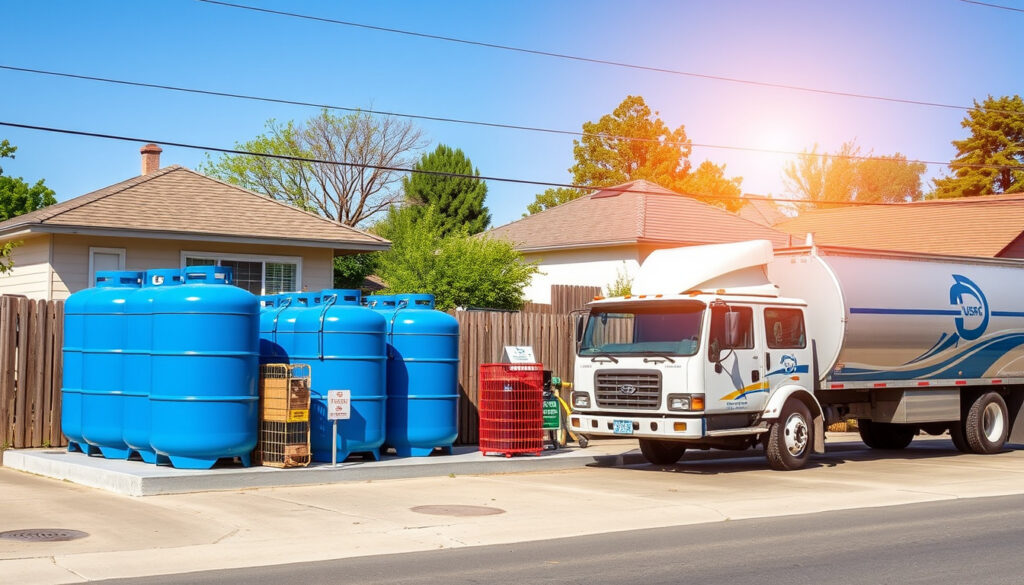
Propane Gas Near Me – Refill Stations, Exchanges & Delivery
Propane Gas Near Me: Refill Stations, Exchanges, Prices & Delivery
Propane powers everything from backyard grills to recreational vehicles and home heating systems. For millions of households across the country, finding reliable propane gas near me has become a routine necessity rather than an occasional convenience. Whether you need to refill a 20-pound tank for weekend cooking or arrange bulk delivery for colder months, understanding your options can save both time and money.
This guide covers the practical aspects of locating propane services in your area, comparing refill versus exchange options, and navigating current pricing structures. The information here draws from industry data and major provider resources to help you make informed decisions about your propane needs.
Local availability varies significantly depending on your zip code, with major retailers and independent suppliers operating across different service models. Knowing what questions to ask and where to look can streamline the process considerably.
Where Can I Find Propane Gas Stations Near Me?
Locating propane services has become increasingly straightforward as major retailers and dedicated suppliers have expanded their footprint across the country. Several national chains operate refill stations and exchange programs at thousands of locations, making propane access relatively convenient for most consumers.
Start your search by checking major home improvement stores and hardware retailers in your area. These establishments frequently offer both refill services and tank exchange programs, often with extended hours that accommodate weekend and evening customers.
Locator tools + major chains
Walmart, Home Depot, Lowe’s
Dynamic $2.80-$3.50 range
Yes/No by zip code
Major National Providers
The propane industry features several dominant players who have built extensive networks of service locations. U-Haul operates over 1,200 propane refill locations across the country, positioning itself as a convenient option for both existing customers and new users. AmeriGas claims the title of the nation’s largest propane provider, maintaining presence in all 50 states through thousands of service points.
Blue Rhino has built an extensive exchange network available at gas stations, hardware stores, pharmacies, and drugstores throughout the United States. This widespread availability makes Blue Rhino one of the most accessible options for consumers seeking quick tank exchanges without appointment scheduling.
Retail giants have also entered the propane market, with Walmart, Home Depot, Lowe’s, and Dollar General offering AmeriGas tank exchange programs in-store. These partnerships bring propane services into familiar shopping destinations, eliminating the need for separate trips to specialized providers.
Specialty and Commercial Providers
For users with larger tanks or specialized requirements, Tractor Supply offers refill services for tanks up to 100 pounds, including those used in recreational vehicles. This capacity makes Tractor Supply particularly valuable for RV owners and agricultural operations that require more substantial propane supplies.
Regional independent suppliers also serve many communities, particularly in rural areas where national chains may have limited presence. These local providers often offer delivery services that major retailers do not, making them essential for homeowners who rely on propane as a primary heating fuel.
Key Service Insights
- Refill operations generally prove cheaper long-term than exchange programs for frequent users
- Propane prices tend to fluctuate seasonally, with summer months often offering lower rates
- Tank expiration dates should always be verified before refilling or exchanging
- Delivery services save significant time for bulk propane users
- Exchange programs provide convenience but typically deliver less propane per transaction
- Location hours vary considerably; always confirm operating times before visiting
- Pre-certification requirements differ between providers and service types
Provider Availability Snapshot
| Provider | Service Type | Typical Tank Size |
|---|---|---|
| U-Haul | Refill only | Up to 100 lbs |
| Blue Rhino | Exchange | 15-20 lbs |
| AmeriGas | Refill + Exchange | Multiple sizes |
| Tractor Supply | Refill | Up to 100 lbs |
| Walmart | Exchange | 15-20 lbs |
| Lowe’s | Exchange | 15 lbs |
| Home Depot | Exchange | 20 lbs |
| Dollar General | Exchange | 20 lbs |
How Much Does Propane Refill Cost Near Me?
Understanding propane pricing requires familiarity with the distinction between refill and exchange services, as these two delivery methods operate under different pricing structures that significantly impact consumer costs over time.
Refill Pricing Fundamentals
Propane refills typically cost between $3.00 and $4.00 per gallon, making this approach the more economical choice for regular propane users. The price reflects the actual amount of fuel delivered, with no additional markup for pre-filled tank convenience or exchange service overhead.
For a standard 20-pound propane tank, refill costs generally range from $15 to $25 depending on local market conditions and the provider selected. These tanks hold approximately 4.7 gallons when completely full, meaning that the per-gallon rate directly translates to the total transaction cost.
Exchange Pricing Considerations
Propane tank exchanges command prices between $5.00 and $6.00 per gallon, representing a substantial premium over refill rates. This higher cost covers the convenience of receiving a pre-filled tank and the logistics of managing the exchange inventory. For budget-conscious consumers, this premium often outweighs the convenience benefit.
Beyond the per-gallon cost differential, exchange programs frequently deliver tanks that are only partially filled. Many operations fill exchange tanks to approximately 15 pounds rather than the full 20-pound capacity, effectively reducing the value received per transaction.
When refilling a 20-pound tank instead of exchanging, consumers receive up to 33% more propane. This difference translates to approximately four additional hours of grilling time for typical gas grill users.
Regional Price Variation
Current propane prices in your area may differ from national averages due to transportation costs, regional supply conditions, and local market competition. Contacting providers directly or using online pricing tools remains the most reliable method for obtaining accurate quotes specific to your location.
Seasonal fluctuations also affect propane pricing, with summer months typically offering lower rates due to reduced heating demand. Planning major refills during off-peak seasons can yield meaningful savings for high-volume users.
Propane Tank Exchange vs Refill: Which is Better Near Me?
The choice between propane tank exchange and refill services depends on several factors including usage patterns, budget constraints, and personal preferences regarding convenience and control over fuel purchases.
Economic Comparison
Refilling propane tanks consistently delivers better value per gallon, with savings that compound significantly for frequent users. A household that grills several times weekly or relies on propane for heating can save $50 or more annually by choosing refills over exchanges.
The economic advantage extends beyond per-gallon pricing. Refill transactions allow users to pay only for the exact amount of propane delivered, with no minimum fill charges or additional fees embedded in the exchange process.
Service Convenience Factors
Exchange programs appeal to consumers prioritizing convenience over cost savings. Receiving a pre-filled tank eliminates the wait time associated with refilling, though modern refill operations at major chains like U-Haul have streamlined their processes considerably.
The no-waste benefit of refilling deserves particular attention. When exchanging a tank that still contains propane, users effectively discard that remaining fuel and pay for a full tank replacement. Refilling only charges for the actual amount needed, making it the logical choice when the existing tank contains residual fuel.
Exchange programs often provide tanks filled to only 75% capacity (approximately 15 lbs instead of 20 lbs). This practice means you receive less propane while paying for what appears to be a standard-sized tank.
Making the Right Choice
For occasional users who value speed and simplicity above all else, exchange programs at major retailers offer a reasonable compromise. The premium cost becomes more acceptable when considering the minimal time investment required.
Regular propane users should strongly consider establishing refill relationships with local providers. The cost savings accumulate rapidly, and most refill stations can accommodate recurring customers through scheduled appointments or standing orders.
Propane Delivery Options Near Me
Bulk propane delivery represents a significant service category that serves homes and businesses requiring consistent fuel supplies for heating, cooking, or operational equipment. Understanding delivery options helps consumers evaluate whether this service model suits their needs.
Delivery Service Availability
Regional propane suppliers including AmeriGas and independent providers offer delivery services ranging from scheduled tank fills to on-demand deliveries for customers with larger storage systems. These services typically target residential customers using propane as a primary heating fuel and commercial operations with substantial consumption requirements.
Delivery availability varies considerably by location and provider. Urban and suburban areas generally enjoy robust delivery options, while rural locations may face longer wait times or limited provider availability. Online locators and direct provider contact represent the most reliable methods for confirming delivery options in specific areas.
Delivery vs Self-Service
Choosing between delivery and self-service refilling depends on consumption volume, storage capacity, and personal scheduling flexibility. Delivery services prove economical for high-volume users who can commit to scheduled deliveries, eliminating the need for frequent self-service trips.
Self-service refilling appeals to consumers with smaller tanks or irregular usage patterns. The ability to refill on demand without scheduling appointments offers flexibility that delivery services cannot match, though at the cost of requiring personal transportation of tanks.
Consider scheduling propane deliveries before periods of heavy use, such as before winter heating season. Early booking often ensures timely service and may provide pricing advantages during off-peak booking periods.
Propane Price Trends and Market Factors
Propane markets experience ongoing price fluctuations driven by supply conditions, seasonal demand patterns, and broader energy market dynamics. Understanding these factors helps consumers anticipate cost changes and make strategic purchasing decisions.
Historical Pricing Context
National propane prices have demonstrated considerable volatility over recent years, with regional markets experiencing divergent conditions based on production patterns and distribution infrastructure. Current pricing in most areas reflects per-gallon costs between $2.80 and $3.50 for standard refill services.
The summer months typically offer the lowest propane prices due to reduced heating demand, creating an opportunity for consumers to stock up at advantageous rates. Conversely, winter months see price increases driven by heating sector demand, though these patterns can vary significantly by region.
Factors Influencing Local Prices
Several variables affect propane pricing in specific markets. Transportation costs from regional distribution points to retail locations add to final consumer prices. Local supplier competition influences pricing strategies, with more competitive markets generally offering better consumer rates. Supply disruptions in production or distribution can create temporary price spikes that resolve as conditions normalize.
- Crude oil and natural gas prices
- Seasonal heating demand fluctuations
- Regional supply infrastructure capacity
- Transportation and distribution costs
- Local market competition among providers
- Storage capacity and inventory management
What We Know vs What Remains Uncertain
Transparency regarding the boundaries of available information helps consumers make appropriate decisions about how to use this guidance and where additional research may be needed.
| Established Information | Information Requiring Local Verification |
|---|---|
| Refill costs between $3.00-$4.00 per gallon | Specific prices at local providers |
| Exchange costs between $5.00-$6.00 per gallon | 24-hour availability at specific locations |
| U-Haul operates 1,200+ refill locations | Delivery service coverage in your area |
| Blue Rhino exchange available at thousands of locations | Current wait times at local stations |
| Federal safety regulations govern tank certification | Tank recertification requirements specific to your provider |
The Role of Propane in American Energy Consumption
Propane serves as a versatile energy source across residential, commercial, and agricultural sectors, making it an essential commodity for millions of Americans. Understanding propane’s role in the broader energy landscape provides context for why reliable access matters to so many households.
The most common applications include outdoor cooking and grilling, RV and recreational vehicle fuel, home heating in areas without natural gas service, commercial equipment operation, and agricultural processes. This versatility drives consistent demand across multiple consumer segments.
Two primary service models dominate the propane market. Refill services allow users to maintain their existing tanks and pay only for fuel received, while exchange programs provide pre-filled tanks at convenient retail locations. Each approach carries distinct advantages depending on usage patterns and consumer priorities.
Industry Standards and Safety Requirements
Federal regulations establish clear requirements for propane tank certification and safety standards, ensuring consistent quality control across the industry. These standards protect consumers and ensure proper handling procedures at all service points.
The propane industry operates under comprehensive federal safety frameworks administered by the Department of Transportation, establishing requirements for tank construction, testing intervals, and handling procedures that all licensed providers must follow.
Consumers should verify that their tanks remain within certification validity periods before seeking refill or exchange services. Expired tanks require recertification or replacement before they can be legally refilled, a requirement that protects both users and service providers.
Summary and Recommendations
Finding propane gas near me involves evaluating multiple service options, understanding pricing structures, and selecting the approach that best matches your consumption patterns and preferences. Refill services consistently offer better economic value through lower per-gallon costs and full-tank fills, while exchange programs provide convenience that appeals to occasional users.
Major providers including U-Haul, AmeriGas, Blue Rhino, and retail partners have built extensive networks that make propane access relatively straightforward across most of the country. Online locators and direct provider contact provide the most accurate information for specific locations and current pricing.
For those seeking additional local resources, exploring Lighting Stores Near Me and What to Do Near Me guides can help identify complementary services and retail locations that may also stock propane and related supplies.
Frequently Asked Questions
What safety tips should I follow when refilling a propane tank?
Ensure the tank shows no visible damage or corrosion, confirm the tank certification has not expired, keep the tank upright during transport, and avoid overfilling. Never attempt to refill damaged tanks and always maintain proper ventilation when handling propane.
How do I know if my propane tank needs refilling?
Weigh your tank against its tare weight (stamped on the collar). A full 20-pound tank should weigh approximately 35-36 pounds total. If the weight falls significantly below this threshold, refilling is advisable before the tank empties completely.
Can I exchange a tank that still has propane in it?
Yes, but doing so means losing any remaining fuel, as exchange programs replace your tank entirely with a pre-filled unit. If your current tank still contains propane, refilling typically proves more economical than exchanging.
How long does propane last in a tank?
A standard 20-pound propane tank powering a typical gas grill provides approximately 10-12 hours of cooking time. Actual duration depends on burner settings and usage intensity.
What happens if my propane tank expires?
Expired tanks cannot be legally refilled until recertified or replaced. Recertification involves inspection by a qualified professional who verifies the tank meets current safety standards. Many providers offer this service, though replacement may prove more economical for older tanks.
Is propane delivery available in residential areas?
Delivery availability depends on your location and the providers serving your area. Major regional suppliers typically offer delivery for customers with larger storage systems or scheduled supply contracts. Contact local propane providers to confirm delivery options in your neighborhood.
Why do exchange tanks sometimes arrive partially filled?
Exchange programs often fill tanks to approximately 15 pounds rather than the full 20-pound capacity. This practice reduces the propane delivered per exchange while maintaining pricing at standard rates, making exchanges less economical than they initially appear.
More related posts
 What Is MCH in Blood Test? Low and High Levels Explained
 Landman Season 2, Cast, Streaming & Filming (2025)
 Where to Watch Tracker TV Show: All Streaming Options
 Proverbs 27:9 Explained: Friendship, Advice & Bible Verses
 How Long Does Lip Filler Last? Duration & Costs
 How to Pair Apple Watch to a New Phone: Step by Step Guide
 Stranger Things Release Date: Season 5 Schedule & Finale
 How to Multiply Decimals: Step-by-Step Guide with Examples
