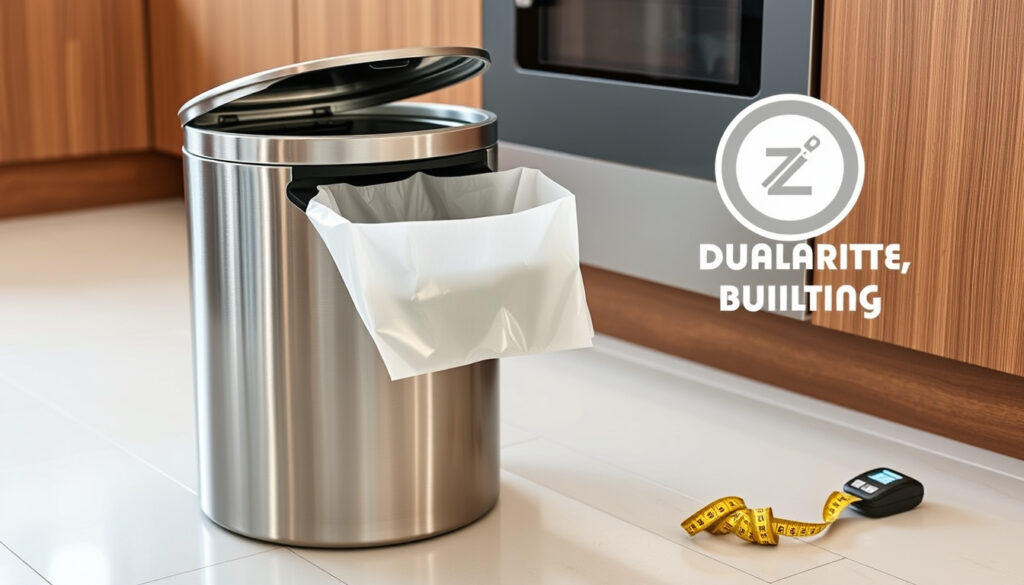
Simple Human Trash Can Review: Worth the Price? Durability & FAQs
A kitchen trash can should last more than a year without falling apart. Simplehuman has built a reputation for premium stainless steel bins that promise to last, but with prices ranging from $50 to $200, this guide examines real user experiences, manufacturer specs, and total cost of ownership to decide if the durability matches the cost.
Average lifespan: 5 to 15 years depending on model and usage · Price range: $50 to $200 · Pedal durability: 150,000 steps rated · Capacity range: 16L to 58L · Material: Brushed stainless steel
Quick snapshot
- Pedal rated 150,000 steps (Bob Vila (home improvement authority))
- Stainless steel body (Forbes (business publication))
- Typical lifespan 5–15 years (HomeLabHappy (home product reviewer))
- Premium pricing $50–$200 (Interior Insider (home design blog))
- Proprietary bags cost ~$0.30 per bag (Interior Insider (home design blog))
- Warranty covers 5 years on pedal (HGTV (home improvement channel))
- Lid Shox silent close technology (Forbes (business publication))
- Fingerprint-resistant finish (Bob Vila (home improvement authority))
- Sensor models require batteries (Interior Insider (home design blog))
- Brabantia (similar design, standard liners) (Interior Insider (home design blog))
- Nine Stars (cheaper sensor bins) (Interior Insider (home design blog))
- Costco store brand (lower cost) (Interior Insider (home design blog))
Simplehuman’s company background provides context for its premium positioning.
| Founded | 2000 |
| Headquarters | California, USA |
| Product range | 20+ trash can models from 4.5L to 58L |
| Patented features | Lid Shox, 150,000-step pedal, custom bag system |
| Warranty | 5 years on pedal mechanism, 1 year on electronics (HGTV (home improvement channel)) |
Are simplehuman bins worth it?
Real user experiences from Reddit and forums
On Reddit’s BuyItForLife community, users often praise the build quality of Simplehuman step cans but complain about the difficulty of cleaning the crevices around the lid. One user described the design as “trapping grime” and said the brushed finish shows water spots. Meanwhile, on Thingtesting (community review platform), 91% of 1,300+ reviewers say they would recommend the brand to a friend.
Comparison with lower-priced alternatives
Compared to a $30 basic step can from a big-box store, Simplehuman’s $100–$180 price tag is 3–6× higher. But the company uses heavy-gauge stainless steel and a steel rod pedal linkage, which HomeLabHappy (home product reviewer) argues is more durable than the plastic linkages found in cheaper bins. The trade-off is that you pay upfront for longevity.
Long-term cost of ownership including bags
Simplehuman’s proprietary bags cost roughly $0.30 per bag — about 2–3× the price of standard 13-gallon kitchen bags. Over 10 years of weekly use, that adds up to roughly $150 in extra bag costs. However, the bags are custom-sized and include leak-proof bottoms and drawstrings, which some users find worth the premium.
How long do simplehuman bins last?
Manufacturer lifespan claims vs. user reports
Simplehuman says its rectangular step can is tested for more than 150,000 pedal steps — which Bob Vila (home improvement authority) translates to roughly 20 lid openings per day for 20 years. In practice, many users report ownership periods of 10 years or more, according to Lowe’s (home improvement retailer) customer reviews. However, Interior Insider (home design blog) notes that sensor-operated models are more prone to failure after 2–3 years.
Factors affecting longevity
Usage frequency, cleaning habits, and the type of model matter. SPY (product review site) tested a Simplehuman can over three years and found no scratches or rust, except for one dent from moving furniture. TechGearLab (product testing lab) warns that the lid can dent if heavy items are dropped on it.
Common failure points
On manual step cans, the pedal mechanism is the most stressed part. The New York Times Wirecutter (product review authority) says it has used Simplehuman cans in office settings and found that active foot traffic did not break the step mechanism. On sensor models, battery corrosion and circuit board issues are the typical culprits, per Interior Insider (home design blog).
Manual step cans from Simplehuman can realistically last 10–15 years with proper care, but sensor models trade that durability for convenience — and often fail within 3 years. Buyers who prioritize longevity should stick with the step models.
The implication: sensor convenience comes at a steep cost to lifespan, making the choice between durability and automation a permanent trade-off.
Why are simplehuman bins so expensive?
Design and materials used
Simplehuman uses heavy-gauge brushed stainless steel, which resists fingerprints and rust. The company also invests in patented designs like Lid Shox (a silent-close mechanism) and the steel rod pedal system. Forbes (business publication) notes that the step can comes with a 10-year warranty, which is unusually long for a trash can.
Proprietary bag system and R&D costs
The custom bag system is a key differentiator. Simplehuman bags are sized to fit perfectly, preventing slipping and hiding the bag edge. The company holds patents on the bag attachment mechanism, which adds to the R&D cost that is passed on to consumers.
Brand positioning and warranty
Simplehuman positions itself as a premium brand, and its pricing reflects that. 10News (local news affiliate) reports that a Simplehuman can listed at $159.99 has more than 13,000 reviews with a 4.8/5 average. The 5-year warranty on the pedal mechanism (and 10-year on some models per Reviewed (product review site)) helps justify the upfront cost.
Can you use normal bin liners in Simplehuman bins?
Compatibility issues with standard bags
Standard 13-gallon kitchen bags are too large for most Simplehuman step cans, which are designed for custom sizes (e.g., 10L, 30L, 45L). Using a standard bag often results in the bag slipping into the can or bunching up around the lid, causing odor and cleanliness issues.
How to adjust fit if using cheap liners
Some users on forums report success with generic “tall kitchen” bags that are slightly smaller than 13 gallons. But the fit is rarely perfect, and the bag may not stay tucked under the rim. Interior Insider (home design blog) notes that using non-Simplehuman bags can cause the lid to not close fully, leading to odors.
Proprietary bag sizes and why they are recommended
Simplehuman’s proprietary bags come in sizes matched to each model, with drawstrings and leak-proof bottoms. The company claims the bags are designed to maximize capacity and prevent leaks. While they are more expensive, many users find the convenience worth the extra cost.
You can save money by using generic bags, but you will likely sacrifice fit and convenience. Simplehuman’s bag lock system works best with its own bags, and using alternatives may void the lid’s smooth operation.
The pattern: proprietary bags lock in recurring revenue but deliver a fit that generic bags cannot match.
How do I fix my simple human trash can?
Common problems: pedal sticking, lid not closing, sensor malfunction
The most frequent complaints on forums involve the pedal mechanism sticking, the lid not closing completely, and sensor models failing to open. HGTV (home improvement channel) notes that Simplehuman offers a 45-day risk-free return and a 5-year warranty, so many issues are covered.
Step-by-step troubleshooting guide
For a pedal that sticks, check for debris under the can — food scraps or dust can jam the linkage. The Lid Shox mechanism can often be reset by removing the lid and reinserting it. For sensor models, replace the batteries and clean the sensor window with a damp cloth. TechGearLab (product testing lab) recommends checking the lid hinge for alignment if the lid doesn’t close fully.
When to contact support vs. order replacement parts
Simplehuman sells replacement parts (pedal, lid, hinges) directly on its website. If the issue is under warranty (5 years on pedal, 1 year on electronics), contacting support is free. For out-of-warranty problems, replacement parts are usually affordable — a new pedal assembly costs around $20.
Before buying a replacement part, check if the problem is simply a dirty sensor or a piece of debris — many fixes take less than 5 minutes and cost nothing.
The catch: most failures stem from easily fixable debris or battery issues, so always inspect before ordering parts.
Simplehuman 45L Rectangular Step Can specifications
Five key specs from the most popular model, one pattern: the 45L can balances capacity with a slim footprint, making it a kitchen workhorse.
| Spec | Value |
|---|---|
| Capacity | 45 liters (12 gallons) |
| Dimensions (H × W × D) | 28.7 × 16.5 × 12.5 inches |
| Weight | 12.5 lbs |
| Material | Brushed stainless steel |
| Pedal warranty | 5 years (10 years on some models, per Forbes (business publication)) |
| Bag size | Simplehuman code L (custom) |
| Lid type | Lid Shox silent close |
Upsides
- Sturdy stainless steel construction resists rust and fingerprints
- Pedal mechanism rated for 150,000 steps, backed by long warranty
- Custom bag system prevents slipping and traps odors
- Lid Shox technology ensures silent, gentle closing
Downsides
- High upfront cost compared to standard bins
- Proprietary bags are expensive and create ongoing cost
- Sensor models prone to failure after 2–3 years
- Lid can dent if heavy objects are dropped on it
Confirmed facts
- Simplehuman sells step cans, sensor cans, and dual compartments
- Proprietary bags are available only from Simplehuman (Interior Insider (home design blog))
- The company offers replacement parts online
- Pedal mechanism rated for 150,000 steps (Bob Vila (home improvement authority))
What’s unclear
- Exact failure rate of the pedal mechanism after 5 years — no independent durability test data
- Whether sensor cans are more reliable than step cans long-term (Interior Insider (home design blog) suggests they are not)
- Actual customer satisfaction with warranty claims process — limited reports online
- Whether manual step cans consistently achieve 15-year lifespans under daily family use
What users say
“I’ve had my Simplehuman step can for over 10 years and it’s still going strong. The pedal never broke, but I did have to replace the lid hinge once.”
— Lowe’s customer review (5 stars, more than 10 years of use, per Lowe’s (home improvement retailer))
“After three years, the only blemish on my can is a small dent from moving furniture. The brushed finish still looks new.”
— SPY reviewer (3-year test, per SPY (product review site))
“I love the dual-compartment design for recycling, but cleaning the crevices around the lid is a pain. The bags are expensive but fit perfectly.”
— Food52 reviewer (editorial review, per Food52 (food and home publication))
Summary: Simplehuman’s manual step cans deliver on their durability promise, but the premium price and proprietary bag costs make them a calculated investment. For households that want a bin that lasts a decade or more and don’t mind paying for convenience, the simplehuman trash can is a solid choice. For budget-minded buyers, the cost of entry plus ongoing bag expenses may outweigh the benefits.
Frequently asked questions
Where can you buy simplehuman products?
Simplehuman products are sold directly on their official website, as well as through major retailers like Amazon, Lowe’s, Home Depot, Wayfair, and Target. Prices vary by retailer, so it’s worth comparing.
What sizes do simple human trash cans come in?
Simplehuman offers more than 20 models ranging from 4.5 liters (mini step can) to 58 liters (large dual-compartment can). The most popular sizes are 30L, 45L, and 58L for kitchen use.
How does the simplehuman trash can sensor work?
The sensor models use infrared motion detection to open the lid automatically when you wave your hand or approach. They require 4–6 D-cell batteries (or an AC adapter) and have a sensor range of about 6 inches.
Is the simplehuman trash can easy to clean?
The brushed stainless steel exterior is fingerprint-resistant and easy to wipe down. The interior can be cleaned with mild soap and water. However, some users find the lid’s crevices trap grime, especially around the step mechanism.
What materials are simplehuman trash cans made of?
Most models use heavy-gauge brushed stainless steel for the body and lid. The pedal mechanism uses steel rods and plastic bushings. Sensor models include plastic electronic housings.
How do I get replacement parts for my simplehuman trash can?
Replacement parts (pedals, lids, hinges, sensor boards) are available directly from Simplehuman’s website. Many parts are also sold on Amazon. The company’s customer service can help identify the correct part for your model.
Are simplehuman trash cans recyclable at end of life?
The stainless steel body is fully recyclable. The plastic components and electronic parts should be separated and disposed of according to local e-waste recycling guidelines.
Related reading
- Citizen Eco Drive Watch: Longevity, Value & Buying Guide — a similar look at a premium product’s durability versus cost.
- Tom Ford Ombre Leather: Scent, Longevity & Best Versions Compared — another deep dive into whether a premium product delivers on its promises.
More related posts
 Towing Company Near Me: Prices, Costs & 24/7 Ireland Services
 Ecuador vs Argentina Lineups: Confirmed XI (2026 Qualifier)
 Side Effects of Doxycycline – Common and Serious Risks
 Harry Potter and the Order of the Phoenix: In-Depth Guide
 How to Connect AirPods: Pairing and Troubleshooting Guide
 Bears vs 49ers Player Stats: Week 17 Final Score 42-38
 Dreams Royal Beach Punta Cana: Is It Worth It? (2025)
