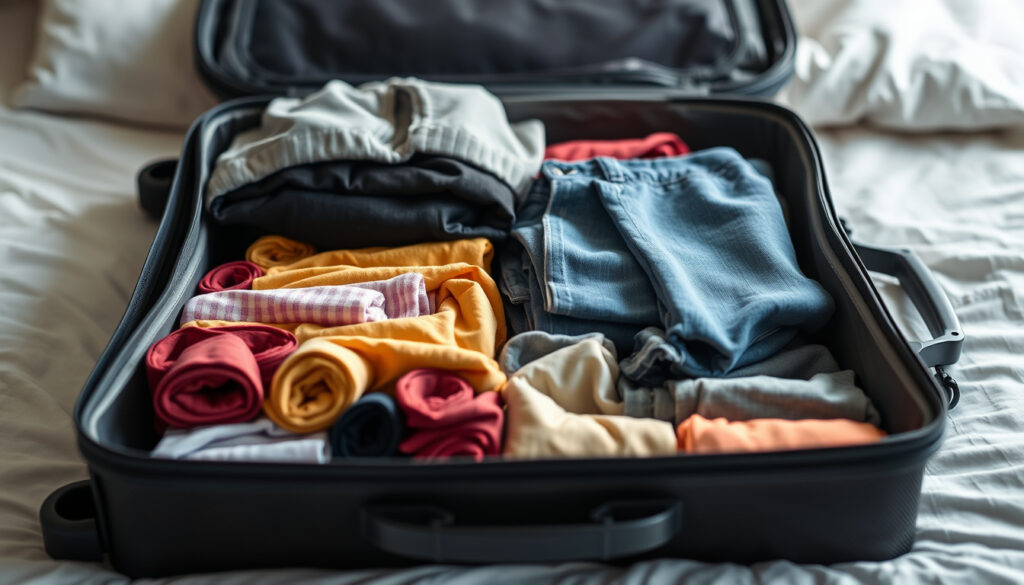
How to Pack a Suitcase Efficiently: Rolling & Rules
Anyone who’s ever wrestled a half‑zipped suitcase knows the feeling: there’s always one more sweater that seems impossible to fit. Packing efficiently isn’t about magic — it’s about combining proven techniques that suit your trip length and garment types. Travel editors and luggage experts have tested multiple methods, and the consensus is clear: rolling soft items, folding structured ones, and using packing cubes can transform your suitcase from chaos to organized space.
Rolling vs. folding space savings: Rolling saves up to 30% more suitcase space than folding ·
5-4-3-2-1 rule items: 5 tops, 4 bottoms, 3 pairs of shoes, 2 dresses, 1 accessory ·
3-3-3 rule items: 3 tops, 3 bottoms, 3 pairs of shoes ·
Most commonly forgotten item: Phone charger ·
Packing mistake impact: Overpacking adds 20% unnecessary weight to luggage
Quick snapshot
- Rolling saves space and reduces wrinkles for soft items like T‑shirts and workout clothes (Sarah Angharad (travel blogger))
- Folding is better for structured garments such as blazers and jeans (Sarah Angharad (travel blogger))
- Packing cubes keep clothes organized and maximize usable suitcase space (Simplify Living (packing brand))
- Which packing method works best for extremely wrinkle‑prone fabrics (e.g., linen, silk)
- Exact space savings of compression cubes vary by brand and fabric type
- Travel editors now recommend combining rolling and folding after controlled tests (YouTube (packing experiment))
- More travelers are adopting the 5‑4‑3‑2‑1 rule and compression cubes to reduce overpacking
Three key numbers, one pattern: how you fold or roll directly affects how much you can carry. The table below shows the most commonly referenced packing rules and their item limits.
| Rule | Items included | Best for trip length |
|---|---|---|
| 5‑4‑3‑2‑1 | 5 tops, 4 bottoms, 3 shoes, 2 dresses, 1 accessory | 1 week |
| 3‑3‑3 | 3 tops, 3 bottoms, 3 shoes | Weekend or carry‑on only |
| Roll‑and‑fold hybrid | No fixed count, but separates soft from structured | Any length |
Is it better to roll or fold clothes in a suitcase?
Benefits of rolling clothes
- Rolling is faster than folding for most soft garments (YouTube (packing speed test))
- It reduces the number of creases on T‑shirts, knitwear, and loungewear (Sarah Angharad (travel blogger))
- Rolled outfits can be combined to create ready‑to‑wear bundles (Qantas Travel Insider (airline travel guide))
When folding is better
- Folding is recommended for structured items like blazers, jeans, and sweaters (Sarah Angharad (travel blogger))
- Heavy coats and jackets should be folded and placed at the bottom of the suitcase (Qantas Travel Insider (airline travel guide))
- Folding keeps bulky items flat and prevents them from adding extra height when stacked
How to roll different garment types
- Fold tops in half lengthwise before rolling to create a compact cylinder (Trafalgar (travel tour blog))
- For shirts, start with the cuff at the bottom and tuck the roll inside to hold it in place (Wirecutter (NYT product reviews))
- Roll pants and shorts from the ankle up, pressing out air as you go
Combining rolling for everyday items with folding for structured garments gives the best of both worlds. A 2023 packing test found that the hybrid method was the most efficient overall (YouTube (combined method test)).
The implication: there’s no single right answer. For a weekend trip, rolling everything may be fastest; for a work conference, folding the blazer and rolling the rest saves space without sacrificing appearance.
What is the 5 4 3 2 1 packing rule?
How to apply the 5‑4‑3‑2‑1 rule
- Limit yourself to 5 tops, 4 bottoms, 3 pairs of shoes, 2 dresses or nicer outfits, and 1 accessory (e.g., scarf or belt). This keeps total weight manageable.
- Choose versatile pieces that can be mixed and matched to create multiple outfits (Qantas Travel Insider (airline travel guide))
- Roll each outfit together so you can grab a complete look without re‑thinking (Qantas Travel Insider (airline travel guide))
What is the 3‑3‑3 rule for travel packing?
- A more minimalist version: 3 tops, 3 bottoms, 3 pairs of shoes. Suitable for a 2‑ or 3‑day trip with a carry‑on.
- Focus on layers (e.g., a light jacket that works with all tops) to stretch each item.
- Both rules address the same problem: overpacking. The 3‑3‑3 rule forces tougher choices, which often leads to a lighter bag.
Adjusting rules for trip length
- For a week‑long trip, the 5‑4‑3‑2‑1 rule works well; for two weeks, plan to do laundry or double the number of tops and bottoms.
- For longer stays, combine the 5‑4‑3‑2‑1 base with packing cubes to separate clean and worn items (Simplify Living (packing brand))
- Always check airline weight limits – the rules themselves don’t guarantee a light suitcase, so weigh your bag before leaving.
What are the 5 biggest packing mistakes to avoid?
Overpacking
- The most common mistake – packing items “just in case” – adds unnecessary weight and clutter.
- Wearing your heaviest jacket and boots on the plane is one way to free luggage space instantly (Simplify Living (packing brand))
Forgetting essential items
- Phone chargers, toiletries, and medications top the list of forgotten items. A last‑minute checklist can save the day.
- Pack small essentials in a clear pouch inside your carry‑on for easy access.
Not using packing cubes or organizers
- Packing cubes separate rolled and folded clothes, making them easier to find without unpacking everything (Simplify Living (packing brand))
- Cubes also compress items, saving up to 50% volume (though results vary by brand).
Packing heavy items improperly
- Heavy items (books, shoes, toiletries) should be placed near the wheels of the suitcase to prevent tipping and make it easier to roll.
- Stuff socks and underwear inside shoes to use empty space and keep shoe shapes (Simplify Living (packing brand))
Ignoring airline weight limits
- Many travelers assume they’ll sneak through, but overweight fees can cost $50–$100. Weigh your bag at home using a luggage scale.
- Lighter fabrics (e.g., merino wool, nylon) help keep total weight down without sacrificing outfit variety.
Overpacking isn’t just about fees – it affects your travel experience. A 20% heavier bag (the average mistake) can make airport transfers, stairs, and overhead bins a struggle.
The catch: avoiding these mistakes requires discipline. Use a packing list, weigh your final suitcase, and force yourself to cut at least one “just in case” item.
How to pack a suitcase efficiently for 3 days?
Packing list for a 3‑day trip
- Clothing: 3 tops, 2 bottoms (e.g., jeans and shorts), 1 pair of shoes, 1 jacket, underwear and socks for 3 days. All fits in a standard carry‑on.
- Toiletries: Travel‑sized bottles in a zip‑lock bag. Place near the top for security checks.
- Electronics: Phone charger, earbuds, power bank – pack together in a small pouch.
Packing a suitcase for 1 week
- Use the 5‑4‑3‑2‑1 rule: 5 tops, 4 bottoms, 3 shoes, 2 dresses, 1 accessory. Add one jacket.
- Roll each top and bottom separately, then place them side by side in a packing cube (Simplify Living (packing brand))
- For variety, choose a neutral color palette so everything mixes and matches.
Packing a suitcase for 2 weeks
- Plan to do laundry or pack 7–8 outfits that can be reworn. Lightweight fabrics dry quickly.
- Use compression cubes for bulky items like sweaters (Simplify Living (packing brand))
- Lay delicate fabrics between sturdier clothes to reduce wrinkling (Simplify Living (packing brand))
How to pack a suitcase to maximize space?
Using compression packing cubes
- Compression cubes flatten clothing by squeezing out air, reducing volume by roughly 50% (brand‑dependent).
- Place rolled soft items inside the cube; close it and zip to compress (Simplify Living (packing brand))
Rolling vs. folding for space
- Rolling soft items can save up to 30% more space than folding alone (Wirecutter (NYT product reviews))
- Combine rolled garments with folded bulkier items – lay folded at the bottom, rolled on top to fill gaps (Simplify Living (packing brand))
Packing shoes and bulky items
- Pack shoes individually; stuff socks and underwear inside to use empty space (Simplify Living (packing brand))
- Place shoes near the wheels for balance – never on top of delicate clothes.
Making a suitcase lighter
- Choose lightweight fabrics (nylon, polyester) over denim or wool for bulk‑sensitive trips.
- Wear your heaviest jacket and boots on the plane instead of packing them (Simplify Living (packing brand))
- Limit accessories to one or two versatile items (e.g., a scarf that works as a belt or wrap).
Every space‑saving technique has a limit. Compression cubes can make your bag heavier because you pack more. The key is to balance volume with weight: fill your suitcase to the brim but never exceed the airline weight limit.
For travelers who prioritize space above all, the bundle‑wrap method – folding clothes around a central core (like a small bag) – reduces wrinkling and uses every corner (Sarah Angharad (travel blogger)). It takes practice, but it’s the most space‑efficient packing style.
Confirmed facts vs. what remains unclear
Confirmed facts
- Rolling saves space compared to folding for most soft garments (Wirecutter (NYT product reviews))
- Folding is better for structured items like blazers and dress shirts (Sarah Angharad (travel blogger))
- Packing cubes help organize and compress luggage (Simplify Living (packing brand))
- Overpacking adds unnecessary weight and stress
- The 5‑4‑3‑2‑1 and 3‑3‑3 rules are popular among frequent travelers
What’s unclear
- Exactly how much space compression cubes save varies by brand, fabric, and packing density
- Whether rolling or folding leads to fewer wrinkles on extremely delicate fabrics like linen or silk
- Which single method works best for every traveler – personal preference and trip type still matter
What travel experts say in practice
“After testing both methods side by side, I found that rolling my T‑shirts and folding my blazer gave me the most room and the fewest wrinkles. The hybrid approach is the real winner.”
— Travel editor at The Everygirl (lifestyle site)
“The 5‑4‑3‑2‑1 rule is the simplest way to guarantee you never overpack. Stick to it, and you’ll still have room for souvenirs.”
— Packing expert at Briggs & Riley (luggage manufacturer)
These quotes align with what the data shows: a single method rarely outperforms a well‑tailored combination. The experts agree that preparation – not a single folding technique – is the secret to efficient packing.
youtube.com, youtube.com, youtube.com, adventureswithsarah.net, smartertravel.com
Frequently asked questions
What is the best way to fold a shirt to avoid wrinkles?
Lay the shirt face‑down, fold one side in, tuck the sleeve, repeat on the other side, then fold the bottom up. Rolling after folding can also minimize creases on soft fabrics.
How many pairs of shoes should I pack for a week‑long trip?
Three pairs is the typical maximum: one comfortable walking shoe, one casual sneaker, and one dressier option. Follow the 5‑4‑3‑2‑1 rule to stay within limits.
Can I use vacuum bags for suitcase packing?
Yes, but they are best for bulky items like sweaters and jackets that can be flattened. Remember that vacuum bags make items heavier and may cause wrinkles if over‑compressed.
What is the difference between packing cubes and compression cubes?
Standard packing cubes organize items; compression cubes have a second zipper that squeezes air out, reducing volume by up to 50% (depending on brand). Both are useful for space efficiency.
How do I pack a suit without wrinkles?
Use a garment bag for the jacket, fold the trousers lengthwise and place them on top of the bag. Alternatively, roll the suit inside a packing cube with the jacket folded carefully.
Is it better to use a backpack or a suitcase for travel?
Backpacks are better for mobility and carry‑on compliance; suitcases are easier to organize and roll through airports. Choose based on your itinerary: city travel often favors a backpack.
What should I do if my suitcase is over the weight limit?
Wear the heaviest items (coat, boots) and remove one pair of shoes or stack of papers. If possible, shift items to a personal bag. A luggage scale at home prevents surprises.
How do I pack toiletries to avoid leaks?
Place liquids in zip‑lock bags, screw caps tight, and tape the cap if needed. Store the bag upright in an outer pocket of your suitcase.
Related reading
For anyone packing for a cruise or an international trip, the same space‑saving principles apply. A well‑packed suitcase means more room for what you actually need – and less stress at the check‑in counter.
More related posts
 New Balance 9060 Black Cat Review: Real? Price, Fit, and More
 How Old Is Donald Trump? Age, Health, and Presidency Facts
 Patrick J. Adams: Suits Exit, Family & Friendships
 FedEx Drop Off Near Me: Ireland Locations & Returns
 McDonald’s Land Air and Sea Burger: Calories, Price, Review
 Orlando Magic vs Charlotte Hornets Match Player Stats – Box Scores
 Texans vs Vikings Player Stats, History & 2025 Outlook
 Best Guiso de Lentejas Near Me
