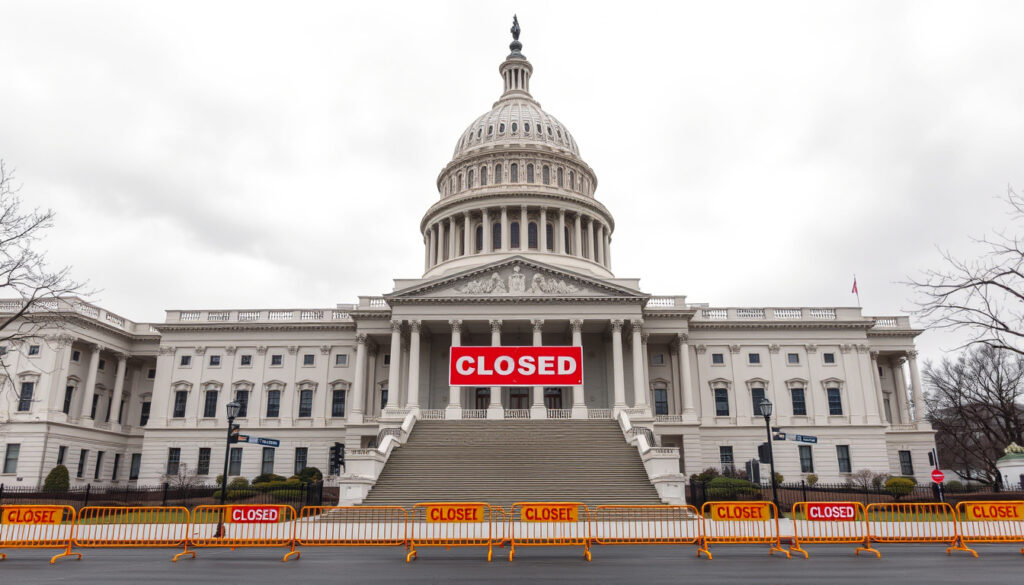
Is the Government Still Shut Down Right Now? Latest Update
The federal government is open. The most recent funding crisis—a 76-day partial shutdown of the Department of Homeland Security—ended on April 30, 2026, when President Trump signed legislation reopening the agency. The DHS shutdown was the longest in American history, surpassing the 35-day 2018-2019 record by more than double.
Current Status: Not shut down · Longest Shutdown: 76 days (2026) · Recent End: April 30, 2026 · Key Agency: Department of Homeland Security
Quick snapshot
- Government is open as of April 30, 2026 (Paychex)
- 76-day DHS shutdown ended with Trump signature on H.R. 7147 (USGovShutdown Tracker)
- Whether Congress will address ICE and CBP funding separately
- Whether another shutdown vote could occur before fiscal year-end
- Current funding runs through September 30, 2026
- Fiscal year-end could trigger fresh negotiations
- Agencies return to normal operations
- Congress may face another budget battle by fall
The Senate passed a 45-day extension on April 30, around lunchtime, which included provisions for foreign surveillance powers and warrant concerns.
Has the government reopened in the USA?
Yes. The federal government is no longer in a shutdown status as of late April 2026. The Department of Homeland Security, which had been operating under a partial funding lapse since February 14, regained full appropriations when President Trump signed H.R. 7147 on April 30, 2026.
Current status update
Federal operations have resumed following the bill signing. The legislation funds DHS agencies through the end of the current fiscal year, September 30, 2026. According to the USGovShutdown Tracker, the formal end to the shutdown came just before lunchtime on April 30 when the Senate passed a 45-day extension that included provisions for foreign surveillance powers. The House approved the same measure on a voice vote shortly afterward, clearing the way for the president’s signature.
Recent bill signing
The bill’s path through Congress was winding. House Republicans initially passed a 60-day continuing resolution to fund all of DHS, but the Senate did not take up that measure. According to Wikipedia’s documentation of the 2026 shutdowns, negotiations stalled over disagreements related to federal immigration enforcement, including concerns surrounding Customs and Border Protection and Immigration and Customs Enforcement agencies. Those agencies were excluded from the initial funding package that eventually passed.
How long is a US government shutdown?
The duration of a federal shutdown depends entirely on when Congress and the president reach agreement on funding legislation. There is no fixed endpoint—shutdowns continue until an appropriations bill passes both chambers and receives a signature, or until a continuing resolution extends current funding levels.
Historical durations
The 2026 DHS shutdown lasted 76 days, beginning February 14 and concluding April 30. It surpassed the previous record of 35 days set during the 2018-2019 partial government shutdown under the Trump administration. That earlier shutdown began December 22, 2018, and ended January 25, 2019, after 35 days.
A 76-day partial shutdown means 76 days of delayed payments, suspended services, and federal workers reporting without certainty about when they’d receive their next paycheck. The longest previous shutdown lasted just over half that duration.
Longest recorded
Based on historical records, the 2018-2019 shutdown held the record for the longest federal funding gap in modern history until the 2026 DHS partial shutdown surpassed it. Paychex’s compliance tracking notes that prior shutdowns were typically shorter, often lasting days or a few weeks before congressional compromise.
What is being affected by the shutdown?
When DHS funding lapsed in February 2026, agencies within that department faced immediate operational restrictions. Unlike a full government shutdown where all federal agencies halt operations, a partial shutdown affects only those departments without enacted appropriations.
Federal agencies
The Department of Homeland Security encompasses TSA, FEMA, USCIS, Coast Guard, Secret Service, and Cybersecurity and Infrastructure Security Agency. During the 2026 partial shutdown, TSA screeners continued working at airports nationwide, but many were working without pay. Wikipedia’s detailed timeline records that TSA payroll concerns became acute enough that President Trump signed an executive order on March 27, 2026, directing DHS to resume TSA payroll beginning March 30.
Public services
Airlines and travelers felt the strain most visibly. Transportation Security Administration officers, many of whom had worked without compensation since mid-February, faced mounting financial pressure. FEMA disaster response capabilities were limited during the funding gap, potentially affecting recovery efforts for ongoing emergencies. Passport processing through the State Department, which depends partly on DHS resources, also faced delays.
DHS had been operating with roughly half its budget since February 14. Essential security functions continued, but non-essential services and agency administrative capacity were curtailed for more than two months.
Who is affected by a shutdown?
Federal workers form the largest group directly impacted by funding gaps, but the ripple effects extend to contractors, permit applicants, grant recipients, and anyone who relies on federal services.
Federal workers
Approximately 800,000 federal employees were affected at the peak of the 2018-2019 shutdown, either working without pay or placed on furlough. During the 2026 DHS partial shutdown, tens of thousands of TSA officers, Coast Guard members, and other DHS personnel faced similar circumstances. Federal law eventually provides back pay for furloughed workers, but the delay creates genuine hardship for employees living paycheck to paycheck.
Public impacted
Citizens seeking visa processing, passport renewals, federal loans, permits, or inspection services experience delays during funding gaps. National parks and museums often close during full shutdowns, though DHS’s partial shutdown did not trigger those closures. The traveling public faced heightened uncertainty at airports as TSA staffing levels fluctuated with morale.
The next budget deadline approaches September 30, 2026. If Congress fails to pass appropriations bills or another continuing resolution before then, federal agencies could face another funding lapse. The immigration enforcement disputes that triggered the 2026 DHS shutdown have not been structurally resolved.
What happens if the US government shuts down?
A government shutdown triggers an orderly suspension of federal operations for agencies lacking enacted appropriations. Federal workers are placed on furlough or required to work without immediate pay, depending on their roles. The Office of Management and Budget coordinates shutdown plans across government, with each agency maintaining a contingency plan.
Immediate effects
Within hours of a funding lapse, non-essential federal employees receive notices instructing them not to report to work. Federal websites go offline, permit processing halts, and contracting activity pauses. Social Security and Medicare benefits continue because those programs have permanent funding, but some administrative functions may slow.
Long-term impacts
Prolonged shutdowns compound effects. Small businesses waiting on federal contract payments face cash flow crises. Clinical trials at the NIH slow or pause. Food safety inspections decline. Air travel delays mount as TSA callouts increase and maintenance inspections back up. Federal contractors, who often lack the back-pay protections available to direct federal employees, absorb the most direct financial losses.
The 2026 DHS shutdown demonstrated how quickly essential services become fragile when personnel face financial distress. TSA officers who continued screening passengers without pay had families to feed and bills to pay—the psychological toll on the workforce created a recruitment and retention risk that outlasted the funding gap itself.
Timeline
Six key moments mark the most recent federal funding crisis.
| Date | Event |
|---|---|
| January 31, 2026 | First 2026 shutdown begins, lasting four days |
| February 3, 2026 | First shutdown ends with passage of temporary funding |
| February 14, 2026 | DHS funding lapses; second partial shutdown begins |
| March 27, 2026 | President Trump signs executive order on TSA payroll |
| April 30, 2026 | President Trump signs H.R. 7147; DHS shutdown ends |
| September 30, 2026 | Current DHS funding authorization expires |
What this means: By late March 2026, the DHS shutdown had already surpassed the 35-day record set in 2018-2019, according to Wikipedia’s tracking. The executive order on TSA payroll was an acknowledgment that essential security personnel could not continue working indefinitely without compensation.
What remains uncertain
Despite the April 30 resolution, several questions linger for observers tracking federal funding stability.
Whether Congress will move separately to fund ICE and CBP—agencies excluded from the H.R. 7147 package—remains unresolved. The immigration enforcement disputes that triggered the shutdown in the first place were deferred rather than settled. Paychex’s compliance team notes that H.R. 7147 funds most DHS operations through September 30, but the agencies tied to immigration enforcement were carved out of that authorization.
Fiscal year-end negotiations in fall 2026 could reopen those debates. With current funding running only through September, another budget confrontation remains plausible. Budget watchers will be monitoring congressional activity as that deadline approaches.
From the source
Congressional negotiations during the 2026 DHS shutdown centered on immigration enforcement provisions that had proven contentious even before the funding deadline. House Republicans proposed a 60-day continuing resolution that would have extended full DHS funding, but the Senate declined to take up that measure.
H.R. 7147 funds most DHS operations through September 30, but the agencies tied to immigration enforcement were carved out of that authorization.
— Paychex compliance analysis
The final bill that passed both chambers did so on a voice vote with minimal opposition once it cleared the Senate. This rapid reversal suggests that the extended stalemate had created enough political pressure to force compromise, even among legislators who had opposed earlier proposals.
Bottom line
The federal government is not shut down right now. The most recent funding crisis—a 76-day partial shutdown of the Department of Homeland Security—ended on April 30, 2026, when President Trump signed H.R. 7147. That legislation funds most DHS operations through September 30, 2026.
For federal workers who spent weeks reporting to airports, border crossings, and disaster sites without pay, the immediate relief is concrete: they will eventually receive back pay, and their next paycheck is no longer in question. For the traveling public, TSA staffing levels should stabilize as the agency returns to normal hiring and retention operations.
Congress deferred the underlying tensions that caused the 76-day shutdown—disputes over immigration enforcement funding and the scope of CBP and ICE operations—when it passes the September 30 deadline. Budget watchers will face those same questions again, making the next vote on government appropriations the key event to track.
Related reading: 3 Branches of Government – Roles Powers Checks Explained
Frequently asked questions
Is the government still shut down right now?
No. The most recent federal government shutdown ended on April 30, 2026, when President Trump signed H.R. 7147, a continuing resolution funding the Department of Homeland Security through September 30, 2026.
When did the last shutdown end?
The DHS partial shutdown ended on April 30, 2026. President Trump signed the funding bill that same day, after the Senate passed a 45-day extension earlier in the afternoon.
What services continue during a shutdown?
Social Security and Medicare benefits continue because those programs have permanent appropriations. TSA screeners continue working at airports, as do air traffic controllers. The military continues operations. Services dependent on annual appropriations that have not been enacted face delays or suspension.
How does a shutdown start?
A shutdown occurs when Congress fails to pass, and the president fails to sign, an appropriations bill or continuing resolution before existing funding expires. When the previous fiscal year’s appropriations lapse at midnight, agencies without new funding must suspend operations.
Who pays federal workers during a shutdown?
Congress typically passes legislation granting back pay to furloughed federal employees once a shutdown ends. However, payment is delayed—sometimes by weeks or months—causing genuine hardship for workers who rely on regular paychecks.
Is another shutdown expected before 2026 ends?
The current funding authorization for DHS runs through September 30, 2026. If Congress fails to pass new appropriations or another continuing resolution before that date, another funding gap could occur. No definitive prediction is possible, but the disputes that caused the 2026 DHS shutdown remain unresolved.
Where can I check the current government shutdown status?
The USGovShutdown Tracker monitors the current federal funding status in real time. For travelers, TSA’s website provides current airport wait times that often correlate with staffing levels during funding uncertainties.
More related posts
 Travis Kelce and Taylor Swift engaged: Timeline, age gap
 Google Translate English to Spanish: Free How-To Guide
 U.S. Embassy Qatar Warning: What Travelers Need to Know
 Atlanta Braves vs Red Sox Match Player Stats (May 26)
 3 Branches of Government – Roles Powers Checks Explained
 Best High Yield Savings Account Sept 2026: Up to 4.10% APY
 Average IQ in the USA: 98, State Rankings and Global Context
