Palace of Fine Arts: SF Guide to History & Free Visits
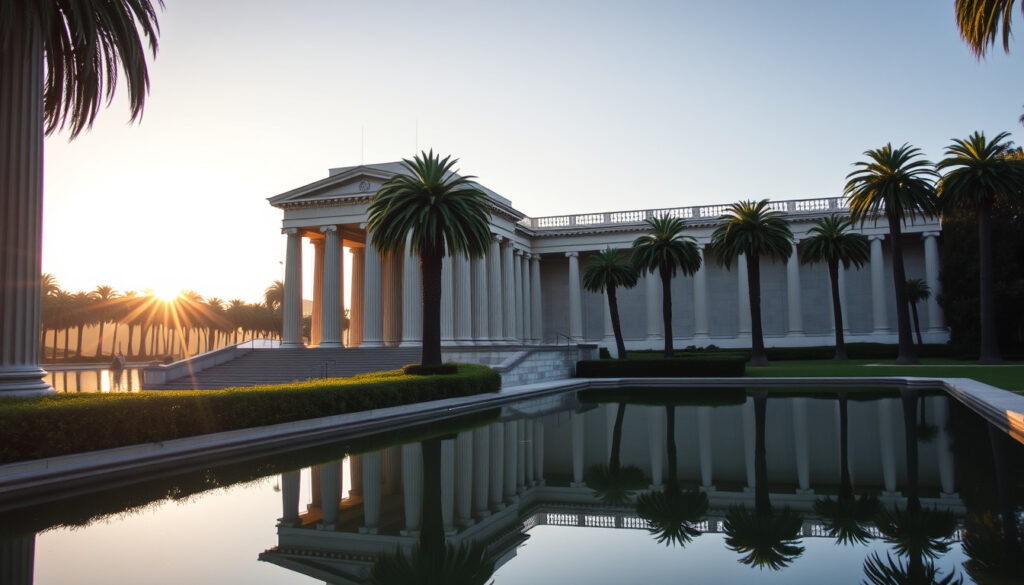
The Palace of Fine Arts looks like ancient Roman ruins—until you notice the Golden Gate Bridge rising behind it and the joggers looping the lagoon. Built for the 1915 Panama-Pacific International Exposition, this white rotunda and colonnade complex is San Francisco’s sole surviving structure from that world’s fair and remains free to wander 24 hours a day.
Location: Marina District, San Francisco · Year Built: 1915 · Event Space: 140,000 sq ft · Original Purpose: Panama-Pacific Exposition · District: Marina
Quick snapshot
- 1915 exposition origins (Palace of Fine Arts Official)
- Reconstruction story (San Francisco City Guides)
- Free exterior access (SF Tourism Tips)
- Hours and parking (Palace of Fine Arts Theatre)
- Theatre shows (Visit California)
- Venue capacity (Palace of Fine Arts Official)
- Movie locations (San Francisco City Guides)
- Photo spots (SF Travel)
Key facts about the Palace of Fine Arts at a glance:
| Fact | Detail |
|---|---|
| Location | Marina District, San Francisco |
| Address | 3601 Lyon St, San Francisco, CA 94123 |
| Built | 1915 |
| Architect | Bernard Maybeck |
| Venue Size | 140,000 sq ft |
| Site Area | 20 acres |
| Access | Free exterior, day and night |
| Visitor Center Hours | 10am–5pm daily |
What is Palace of Fine Arts famous for?
Architect Bernard Maybeck designed the Palace of Fine Arts in 1915 to evoke Roman ruins with “a sense of sadness, modified by the feeling that beauty has a soothing influence” (San Francisco City Guides). The structure was built after the 1906 earthquake to showcase San Francisco’s recovery and cultural ambition (San Francisco City Guides). During the Panama-Pacific International Exposition, the rotunda originally housed over 12,000 works of art inside its vaulted halls (Visit California).
Architecture and design
The Greco-Roman colonnade and massive rotunda dominate the 20-acre site, with a tranquil lagoon reflecting the structure and the Golden Gate Bridge visible beyond. The Palace is the only surviving building from the 1915 exposition — the rest were torn down after the fair closed (SF Travel). The original was built with temporary materials (staff, a plaster-and-gypsum mixture), which began deteriorating almost immediately after the fair ended.
- Colonnade: 56 columns with decorative capitals
- Rotunda dome: 125-foot-tall tower rising above the colonnade
- Lagoon: home to fish, birds, and turtles
- Angel statues: subject to seasonal cleaning closures (SF Rec and Park)
The pattern here reflects Maybeck’s deliberate choice: a beautiful ruin that age into authenticity rather than being demolished outright.
Cultural significance
Today the Palace hosts the 1,000-seat Palace of Fine Arts Theatre (added in 1970), which draws live performances, film festivals, and theater productions year-round (Visit California). The 140,000 square feet of event space accommodates galas, trade shows, and corporate events for groups of all sizes (Palace of Fine Arts Official). Beyond events, the site functions as a working landscape — locals jog the paths, couples photograph their weddings, and tourists simply sit on the lawns watching the city move past.
Tourists and locals alike gravitate here because it delivers two things most urban landmarks cannot: raw architectural drama and zero admission cost. The Palace of Fine Arts is San Francisco’s most iconic outdoor venue, and the math is simple — beauty that costs nothing tends to attract everyone.
Is going to the Palace of Fine Arts free?
Yes. Public access to the Palace of Fine Arts grounds is free and open day and night, 24 hours a day (SF Tourism Tips). You can walk the colonnade paths, photograph the rotunda from the lagoon shore, and enjoy the lawns without paying a cent. The catch: fees apply when you enter the theatre for a ticketed performance or attend an event inside the formal venue spaces.
Exterior access
The outdoor grounds, lagoon, colonnades, and picnic areas are all free to enter. The visitor center or exhibit hall inside opens from 10 a.m. to 5 p.m. daily for those who want historical context or restrooms (SF Travel). If you’re planning a photo walk, the best light hits the rotunda in early morning or late afternoon when the sun angles through the columns toward the lagoon.
The implication: free access transforms the Palace into a reliable fallback when budget is tight or plans are loose.
Here is how the different areas break down by cost:
| Area | Access Type | Cost |
|---|---|---|
| Grounds, colonnades, lagoon | Walk-in, 24/7 | Free |
| Picnic areas | Walk-in, daily | Free |
| Visitor center (interior exhibit) | 10am–5pm daily | Free |
| Theatre performances | Ticketed entry | Varies by show |
| Private event rental | Booked through venue | Contact for pricing |
The pattern is straightforward: outdoor exploration is free, while interior programming and private bookings carry fees. This keeps the site accessible to everyone while funding the theatre and maintenance operations.
Interior or event fees
The 1,000-seat theatre hosts ticketed performances ranging from local chamber concerts to touring productions (Visit California). Private event inquiries route through the venue’s sales team, with pricing dependent on space selection (there are multiple indoor rooms and the outdoor rotunda for ceremonies) and guest count. Group tours through San Francisco City Guides require advance booking for parties of 8 or more (San Francisco City Guides).
Free outdoor access makes this a viable budget destination even if you have nothing planned — show up, wander for 30 minutes or two hours, and leave without touching your wallet. That is rare in a city where most cultural attractions charge $20 or more per visit.
What happened to the Palace of Fine Arts?
The Palace of Fine Arts was a temporary fairground structure built for the 1915 Panama-Pacific International Exposition and was scheduled for demolition immediately after the event closed. Its survival is a story of civic attachment and a multi-decade reconstruction effort that transformed it from decaying plaster into a permanent concrete monument.
Original construction
Maybeck and his team used staff — a cheap plaster-and-gypsum mixture — to create the colonnade, rotunda, and auxiliary buildings for the exposition (San Francisco City Guides). Staff was the standard material for 19th-century fair architecture because it could be molded into elaborate sculptural forms at low cost, but it degrades when exposed to weather. Within a few years of 1915, the rotunda was cracking, columns were spalling, and the entire complex looked like what it was: a fading fairground building.
What this means: the “ruins” visitors photograph today are engineered permanence, not accidental decay.
Dismantling and reconstruction
Pressure from San Francisco residents who had adopted the building as a city symbol prevented demolition. In the 1960s, a full reconstruction project replaced every staff element with reinforced concrete while preserving Maybeck’s original design intent. The structural bones are now permanent; only the ornamental surface details require periodic restoration. Angel statues along the colonnade underwent cleaning and repair in early 2026, with intermittent closures from January 2 through March 31 (SF Rec and Park).
How long do people spend at Palace of Fine Arts?
Most visitors spend 30 to 60 minutes at the Palace of Fine Arts if they’re focused on the exterior landmarks and a quick circuit of the lagoon. Those who linger for photos, have a picnic, or walk into the nearby Presidio can stretch a visit to two hours or more.
Typical visit duration
Guided tours by San Francisco City Guides run 1.5 to 2 hours, meeting at the corner of Bay and Lyon Streets (San Francisco City Guides). Self-guided visitors who walk the full colonnade path, cross the lagoon footbridge, and circle back typically finish in 45 to 60 minutes. If you’re combining the Palace with a Presidio hike — the adjacent park offers 24 miles of trails (Visit California) — budget half a day.
Factors affecting time
Photography stops are the biggest variable. The rotunda-to-lagoon reflection shot (the most-copied composition) requires waiting for calm water, which can take 10 to 30 minutes depending on wind. Picnickers who claim a spot on the north lawn and settle in with food can easily spend 90 minutes to two hours. Events at the theatre add variable time depending on show length, with most performances running 90 minutes to two-and-a-half hours including intermission.
The catch: calm water for the signature reflection photo is unpredictable, so photographers should build in buffer time.
Angel statue restoration closures from January through late March can temporarily restrict sections of the colonnade path. Check SF Rec and Park before visiting during those months to confirm which areas are accessible.
What movies were filmed at Palace of Fine Arts?
The Palace of Fine Arts has appeared in multiple film and television productions as a stand-in for European landmarks, San Francisco scenes, and atmospheric backdrops. While a comprehensive list of every production is not publicly verified, its Mediterranean-style rotunda and colonnade have made it a reliable location choice for productions since the 1960s.
Notable films
The site’s Greco-Roman architecture has served as a European backdrop in period pieces, a dramatic San Francisco location in chase sequences, and a quiet setting for dialogue scenes. FilmLocation databases and production notes reference the Palace as a recurring location, though the official venue does not maintain a public filmography on its website (Palace of Fine Arts Official). The lagoon reflection in particular has made it a go-to establishing shot for productions needing a “classic European” look without leaving California.
The implication: every production that uses the Palace is stacking fictional layers on top of Maybeck’s original deliberate fiction.
Filming locations
Production crews typically film on the exterior grounds and around the lagoon, with the rotunda dome providing a recognizable silhouette visible from aerial shots. The colonnade offers column-lined corridors ideal for processional scenes, while the lagoon allows for reflection shots that double for Italian or Greek locations. Film permits for the site route through the venue’s event team; visitors on typical days will not encounter active shoots, but occasional closures occur when major productions book the grounds.
A structure built to look like ruins from another era has spent a century being used to create the illusion of places from yet other eras. The Palace of Fine Arts is simultaneously a fake Roman ruin and a real San Francisco landmark.
Timeline signal
- 1915: Constructed for Panama-Pacific International Exposition (Palace of Fine Arts Official)
- 1960s: Reconstructed in permanent concrete materials (San Francisco City Guides)
- 1970: 1,000-seat theatre added for cultural programming (Visit California)
- 1994: Presidio declassified as Army post; Palace now borders a national park (Visit California)
- 2026 (Jan–Mar): Intermittent closures for angel statue restoration (SF Rec and Park)
What we know
- Free outdoor access from official sources (SF Tourism Tips)
- 1915 origin from Wikipedia and official records (Palace of Fine Arts Official)
- Theatre added in 1970 with 1,000 seats (Visit California)
- 140,000 sq ft of event space confirmed by venue (Palace of Fine Arts Official)
- Visitor center open 10am–5pm daily (SF Travel)
What we don’t know
- Exact visit durations vary by visitor — no official average published
- Specific movie list incomplete — no verified comprehensive filmography
- Current 2026 event calendar unavailable in public results
- On-site parking rates vary by source; per-hour rates reported by third-party apps only (SpotAngels third-party parking data)
Getting there and practical details
Several transit and driving options reach the Palace of Fine Arts, with parking available on a first-come basis.
By public transit
Muni buses 22, 28, 30, 41, 43, and 45 all stop near the site (SF Travel). Bus 29 runs from Fisherman’s Wharf directly to the venue entrance (Palace of Fine Arts Theatre Contact). From Fisherman’s Wharf, it is 2.5 miles west — a 10-minute drive or 35-minute walk along the waterfront (SF Travel).
By car and parking
On-site parking runs along Palace Drive on a first-come, first-served basis. Additional metered event parking occupies the triangle lot along Palace Drive, with an overflow lot next to the St. Francis Yacht Club accessible via Yacht Road (Palace of Fine Arts Theatre FAQ). If the main lots fill, Crissy Field provides additional parking with signage directing drivers there (Palace of Fine Arts Theatre FAQ). Avoid taking a left turn on Marina Boulevard — it funnels directly onto the Highway 101 onramp (Palace of Fine Arts Theatre FAQ). Note: the Performing Arts Garage is at 360 Grove Street, not at the Palace site (SFMTA).
Bernard Maybeck had a brilliant vision… creating ‘a sense of sadness, modified by the feeling that beauty has a soothing influence.’
— Bernard Maybeck, Architect (from San Francisco City Guides historical documentation)
It is a reminder of San Francisco’s past, a symbol of the city’s creative spirit.
— SF Travel (San Francisco Tourism Board)
For visitors planning a San Francisco itinerary, the Palace of Fine Arts earns a guaranteed stop: it delivers one of the city’s most photographed scenes at zero cost, pairs easily with a Presidio hike or Fisherman’s Wharf visit, and offers a theatre calendar worth checking before any trip. The combination of historical weight, architectural drama, and practical accessibility makes it the rare landmark that satisfies both first-time tourists and locals looking for a quiet afternoon by the water.
Related reading: fun local activities and events · best travel guides
Frequently asked questions
The most common visitor questions, answered concisely:
What are the Palace of Fine Arts hours?
The outdoor grounds are open 24 hours a day, every day. The visitor center or exhibit hall inside operates from 10 a.m. to 5 p.m. daily. Theatre hours vary by performance schedule.
Is there parking at the Palace of Fine Arts?
Yes. On-site parking runs along Palace Drive on a first-come, first-served basis. Additional metered parking is available in the triangle lot along Palace Drive. An overflow lot sits next to the St. Francis Yacht Club, accessible via Yacht Road. If all lots are full, Crissy Field offers nearby overflow parking.
What is the Palace of Fine Arts entrance fee?
There is no entrance fee to access the outdoor grounds, colonnades, lagoon, and picnic areas. Ticketed performances at the theatre and private event rentals carry separate fees that vary by show and booking.
Where is the Palace of Fine Arts located?
The address is 3601 Lyon Street, San Francisco, CA 94123, in the Marina District. It is approximately 2.5 miles west of Fisherman’s Wharf and borders the Presidio national park.
What is the capacity of the Palace of Fine Arts?
The venue offers 140,000 square feet of event space total. The Palace of Fine Arts Theatre seats approximately 1,000 people. Smaller rooms and outdoor spaces accommodate a range of group sizes for private events.
Can you take photos at the Palace of Fine Arts?
Yes. The outdoor grounds are open for photography at any time. The rotunda-to-lagoon reflection is the most popular shot; early morning and late afternoon typically offer the best light and calmest water for reflections.
What events are upcoming at Palace of Fine Arts?
The theatre hosts live performances, film festivals, and theater productions year-round. Current event schedules are published on the Palace of Fine Arts website. Private event bookings (galas, corporate functions, weddings) are handled through the venue’s sales team.
More related posts
 Simpsons Marge Death: Non-Canonical Flash-Forward Return
 Watch Love Island UK 2026: Where to Stream & How to Watch
 Cool Things to Draw: Easy Step-by-Step Ideas for Beginners
 Cast of Fountain of Youth (2025): Full List & Characters
 Things to Do in New York: Budget, Safety & Local Laws
 How to Pack a Suitcase Efficiently: Rolling & Rules
 How to Cancel Hulu: Step-by-Step Guide for All Devices
 Dr Strange Multiverse of Madness: Hit or Flop Analysis
