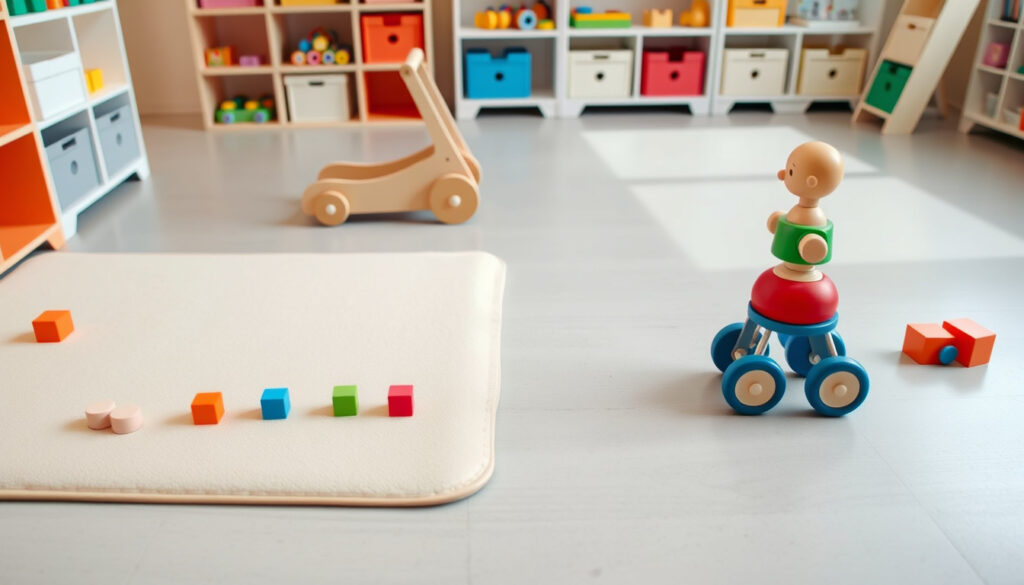
When Do Babies Start Walking? Average Age, Signs & Red Flags
Few baby milestones spark as much anticipation—and anxiety—as those first wobbly steps. Parents watch for signs, compare notes, and sometimes worry if their baby isn’t walking by their first birthday. The truth is, walking develops on a broad and individual timeline: anywhere from 9 to 18 months, with the average first step happening around 12 to 14 months (Cleveland Clinic (leading U.S. hospital system)). This guide walks you through the evidence-based milestones, the first signs to watch for, and when a late walker warrants a call to the pediatrician.
Average age to start walking: 12–14 months · Normal range for first steps: 9–18 months · Late walker threshold: 18 months · Red flag age for no walking: 2 years · Babies walking by 18 months: 90–95%
Quick snapshot
- 12–14 months is average (Cleveland Clinic)
- Normal range: 9–18 months (Lovevery)
- 90% walk by 15 months (ParentData)
- Pulling to stand (Cleveland Clinic)
- Cruising furniture (Cleveland Clinic)
- Standing alone (Cleveland Clinic)
- Not walking by 18 months (ParentData)
- Usually normal variation (ScienceDirect)
- Consult pediatrician if other delays (Pregnancy, Birth and Baby)
- No walking by 2 years (ParentData)
- Loss of motor skills (Cleveland Clinic)
- Asymmetry or stiffness (ScienceDirect)
Five key numbers capture the walking milestone landscape, one pattern: most babies walk between 9 and 18 months, but the middle of that range is where the majority land.
| Metric | Value |
|---|---|
| Average first steps | 12–14 months |
| Normal range | 9–18 months |
| Late walker definition | Not walking by 18 months |
| Red flag age | 2 years |
| Percentage walking by 18 months | 90–95% |
What is the average age for a baby to walk?
Normal walking range: 9 to 18 months
- The average age for first independent steps is 12–14 months, according to Cleveland Clinic (leading U.S. hospital system).
- ParentData (Emily Oster’s evidence-based parenting resource) reports that 50% of babies walk by their first birthday and 90% by 15 months (ParentData).
- A ScienceDirect (peer-reviewed journal) study found a mean onset of walking at 13.1 months, with 25% walking at 12 months and 75% at 14 months.
The average is a useful guide, but normal walking ages span a full nine months. A baby who starts at 9 months is early; one who starts at 17 months is still within the typical range (Cleveland Clinic).
When do most babies take first steps?
- By 12 months, half of all babies have taken their first steps (ParentData).
- By 14 months, three-quarters have walked (ScienceDirect).
- By 18 months, almost all babies (90–95%) are walking independently (ParentData).
The implication: If your baby hasn’t walked by 12 months, you’re far from alone—most babies haven’t either. The real catch-up happens between 12 and 15 months.
What are the first signs of walking?
Pulling to stand
- Cleveland Clinic lists pulling up to a stand as the first major pre-walking sign, typically emerging between 8 and 12 months.
- Pregnancy, Birth and Baby (Australian government health service) notes that babies usually pull themselves up to stand between 9 and 12 months.
Cruising along furniture
- Cruising—walking sideways while holding onto furniture—is a key indicator that walking is weeks away (Cleveland Clinic).
- Most babies start cruising between 9 and 13 months (Lovevery (child development experts)).
Standing alone briefly
- When a baby can stand for a few seconds without support, independent steps usually follow soon (Cleveland Clinic).
- This milestone typically occurs between 10 and 14 months (Lovevery).
Why this matters: These signs follow a predictable order—pull up, cruise, stand alone, walk. If a baby skips cruising and goes straight to walking, that’s still normal variation. But missing multiple signs in sequence may be worth discussing with a pediatrician.
What is the 3 6 9 rule for babies?
3 months: head control
- By 3 months, most babies can hold their head steady when held upright—a foundational skill for later motor development (Pregnancy, Birth and Baby).
6 months: sitting with support
- At 6 months, babies typically sit with support and may begin to roll over, building core strength needed for standing (Lovevery).
9 months: crawling and pulling to stand
- By 9 months, many babies crawl and start pulling themselves up to stand (Pregnancy, Birth and Baby).
- The 3-6-9 rule is a rough guide used by some pediatricians to track gross motor milestones, but it is not a strict diagnostic tool (ParentData).
The 3-6-9 rule is a handy shorthand, but it’s not a diagnostic checklist. Only 25% of children walk at exactly 12 months (ScienceDirect). The rule can reassure, but it shouldn’t replace professional judgment if milestones are delayed.
What is considered a late walker?
Late walker definition: not walking by 18 months
- A “late walker” is typically defined as a baby who has not taken independent steps by 18 months (ParentData).
- Pregnancy, Birth and Baby advises that most babies walk by 18 months, and those who don’t are considered late.
When to talk to a pediatrician
- The majority of late walkers catch up without any intervention (ParentData).
- However, if a baby isn’t walking by 18 months and also shows other developmental delays—like not crawling, not pulling to stand, or not using both arms and legs equally—a pediatrician should evaluate (Cleveland Clinic).
The trade-off: Late walking alone is rarely a problem. But when combined with other motor, communication, or social delays, it can signal an underlying issue worth investigating early.
What are the red flags for not walking?
Red flag: not walking by 2 years
- If a child has not taken any independent steps by age 2, it is considered a red flag (ParentData).
- ScienceDirect notes that children who are not walking by 2 years should receive a comprehensive developmental assessment.
Other red flags: loss of motor skills, asymmetry, stiffness
- Loss of previously acquired motor skills (e.g., a baby who once pulled to stand but no longer does) is a serious warning sign (Cleveland Clinic).
- Asymmetry—favouring one leg or arm over the other—or muscle stiffness can indicate neuromuscular issues (ScienceDirect).
- Pregnancy, Birth and Baby recommends seeking help if a baby is not walking by 18 months, especially if there are concerns about muscle tone or joint movement.
What to watch: Regression is the most urgent red flag—any loss of motor milestones warrants immediate medical attention. Asymmetry and stiffness are subtler but equally important to raise with a specialist.
What are the stages of walking in babies?
Crawling (6–10 months)
- Most babies crawl between 7 and 12 months, according to Pregnancy, Birth and Baby.
Pulling to stand (8–12 months)
- Pulling up to stand typically starts around 8–12 months (Cleveland Clinic).
Cruising (9–13 months)
- Cruising along furniture generally begins at 9–13 months (Lovevery).
Standing alone (10–14 months)
- Standing without support emerges between 10 and 14 months (Lovevery).
First independent steps (9–18 months)
- First steps can happen as early as 9 months or as late as 18 months (Cleveland Clinic).
- Encouraging walking through play—placing toys just out of reach, providing push toys, and offering lots of floor time—can help but won’t speed up the biological timetable (ParentData).
The pattern: These stages are sequential but not rigid. Some babies skip crawling and go straight to pulling up and cruising. The key is forward progression—any stall or regression warrants attention.
How to encourage your baby to walk
- Plenty of tummy time and floor play – Builds core strength and coordination (Pregnancy, Birth and Baby).
- Place toys slightly out of reach – Motivates babies to move toward them (Lovevery).
- Use stable push toys – Push toys can help babies practice balance, but avoid walkers with wheels that can tip (Cleveland Clinic).
- Hold hands and offer support – Let baby cruise between you and the sofa; never force standing or walking (ParentData).
For parents of late walkers, the playbook is the same: create a safe, low-pressure environment and trust the developmental window. If your baby is happy, moving symmetrically, and showing other milestones, patience is usually the best intervention.
Timeline: walking milestones from 6 months to 2 years
- 6–10 months: Crawling begins (Pregnancy, Birth and Baby)
- 8–12 months: Pulling to stand (Cleveland Clinic)
- 9–13 months: Cruising along furniture (Lovevery)
- 10–14 months: Standing alone briefly (Lovevery)
- 9–18 months: First independent steps (Cleveland Clinic)
- 18 months: Late walker threshold (ParentData)
- 2 years: Red flag if not walking (ParentData)
What’s confirmed and what’s still unclear
Confirmed facts
- The average age to start walking is 12–14 months (Cleveland Clinic).
- A normal walking range is 9–18 months (Lovevery).
- Not walking by 18 months is considered late (ParentData).
- Not walking by 2 years is a red flag (ScienceDirect).
What’s unclear
- The exact cause of late walking in otherwise healthy babies (ParentData).
- Whether the 3-6-9 rule applies universally across all populations (ParentData).
- Long-term outcomes for late walkers who do not receive intervention (ScienceDirect).
What pediatricians and health authorities say
“Babies can start walking as early as 9 months. It’s also normal to start at 17 or 18 months.”
— Dr. Marshall, pediatrician, Cleveland Clinic
“Babies usually start walking between about 10 and 18 months of age.”
— Pregnancy, Birth and Baby (Australian government health service)
“Among typically developing children, the age of walking ranges from 9 to 17 months.”
— Emily Oster, ParentData
Summary: what parents should take away
Baby walking is a spectrum, not a race. The average first step at 12–14 months is just that—an average—and the normal range stretches from 9 to 18 months. Late walking alone is rarely a cause for alarm, but when it’s paired with loss of skills, asymmetry, or other developmental delays, it’s time to act. For parents of a 14-month-old who hasn’t walked yet, the choice is clear: keep up the floor play, watch for the next sign, and if nothing changes by 18 months, schedule a checkup.
Frequently asked questions
What is the average age for a baby to walk?
The average age for first independent steps is 12–14 months (Cleveland Clinic).
What is the 3 6 9 rule for babies?
The rule describes gross motor milestones: head control at 3 months, sitting with support at 6 months, and crawling/pulling to stand at 9 months. It’s a rough guide, not a diagnostic tool (ParentData).
Is it normal for a 2 year old not to walk?
No. Not walking by age 2 is considered a red flag and requires a developmental evaluation (ScienceDirect).
What are the first signs of walking?
Pulling to stand, cruising along furniture, and standing alone briefly are the key pre-walking signs (Cleveland Clinic).
What is considered a late walker?
A baby who has not taken independent steps by 18 months is considered a late walker (ParentData).
What is the red flag for not walking?
The primary red flag is no walking by age 2. Additional red flags include loss of motor skills, muscle stiffness, or favoring one side of the body (ScienceDirect).
When do babies start walking confidently?
Most babies walk confidently (with steady, coordinated steps) between 14 and 18 months, though some take longer (Lovevery).
What are the stages of walking in babies?
The typical sequence: crawling, pulling to stand, cruising, standing alone, and first independent steps. Some babies skip crawling, and that’s still normal (Pregnancy, Birth and Baby).
More related posts
 Jelly Roll Weight and Height: Stats & Loss Journey
 How Old is Nezuko? Real Age Explained – Demon Slayer Guide
 Best Buy Credit Card – 2025 Rewards APR Approval Guide
 Doc (2025 TV Series) Season 1: Streaming & Episode Guide
 Bears vs 49ers Player Stats: Week 17 Final Score 42-38
 Can Dogs Eat Peas? Benefits, Risks, and Serving Tips
 Ralph Macchio Movies and TV Shows: Full Career Guide
 Danessa Myricks Blurring Balm: What It Does & How to Use
